

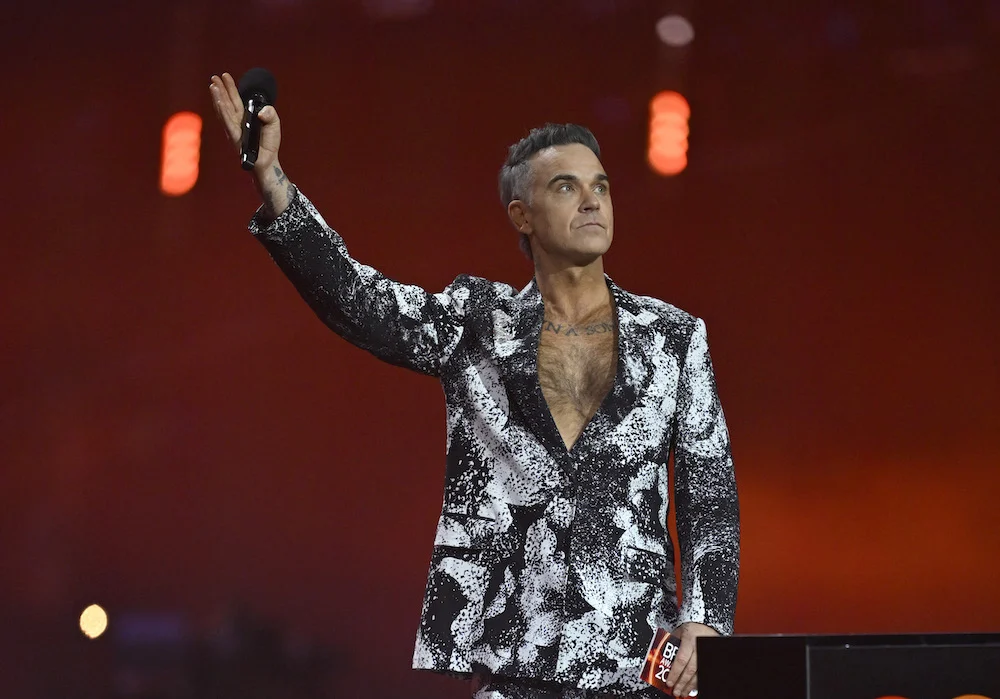
The British music industry, through its prestigious BRIT Awards, recently paid a profound tribute to the late heavy metal pioneer, Ozzy Osbourne, who passed away at the age of 76 just over half a year ago. In a ceremony that underscored his monumental impact on global music, Osbourne was posthumously awarded the Lifetime Achievement Award, an accolade reserved for artists whose careers have left an indelible mark on the cultural landscape. The evening culminated in an electrifying performance led by Robbie Williams, the most decorated artist in BRITs history, who assembled an all-star band to honor Osbourne with a rendition of his iconic 1991 hit, "No More Tears." This recognition not only celebrated Osbourne’s unparalleled contributions but also served as a poignant reminder of his enduring influence across generations and genres.
A Legacy Cast in Iron: Ozzy Osbourne’s Unforgettable Career
John Michael "Ozzy" Osbourne, born December 3, 1948, in Aston, Birmingham, England, transcended the boundaries of music to become a cultural phenomenon. His career began in the late 1960s as the frontman for Black Sabbath, a band widely credited with inventing heavy metal. Alongside guitarist Tony Iommi, bassist Geezer Butler, and drummer Bill Ward, Osbourne’s distinctive vocals and menacing stage presence helped forge a new sonic identity. Albums like "Paranoid" (1970), "Master of Reality" (1971), and "Black Sabbath Vol. 4" (1972) were foundational texts for a genre that would go on to dominate global music charts and inspire countless artists. Their dark, often occult-themed lyrics, combined with Iommi’s heavy riffs and Osbourne’s wailing delivery, tapped into a collective angst and rebellion that resonated deeply with youth culture.
Following his departure from Black Sabbath in 1979, Osbourne embarked on a solo career that, against all expectations, proved even more commercially successful and artistically daring. His debut solo album, "Blizzard of Ozz" (1980), featuring the virtuosic guitar work of Randy Rhoads, spawned classics like "Crazy Train" and "Mr. Crowley," cementing his status as a solo force. He continued this trajectory with "Diary of a Madman" (1981), and despite numerous lineup changes and personal struggles, maintained a prolific output throughout the 80s and 90s. The album "No More Tears" (1991), from which the tribute song was drawn, represented a critical and commercial high point, showcasing a more mature songwriting approach and remaining one of his best-selling records. Throughout his solo career, Osbourne collaborated with a string of exceptional guitarists, including Jake E. Lee and most notably, Zakk Wylde, who would become a long-standing musical partner.
Beyond his musical endeavors, Osbourne’s larger-than-life persona, often dubbed the "Prince of Darkness," made him an unlikely mainstream celebrity. His foray into reality television with "The Osbournes" in the early 2000s, which chronicled the eccentric daily lives of his family, introduced him to an entirely new generation of fans and further cemented his status as a pop culture icon. His later years were marked by ongoing health battles, including a Parkinson’s disease diagnosis and numerous injuries, yet he consistently demonstrated remarkable resilience, continuing to record and perform when able. His final studio album, "Patient Number 9" (2022), released shortly before his passing, received critical acclaim and featured collaborations with an array of rock legends, a testament to his enduring relevance.
The BRIT Awards: A Pinnacle of British Musical Recognition
The BRIT Awards, established in 1977 by the British Phonographic Industry (BPI), stand as the most prestigious music awards in the United Kingdom, celebrating excellence and achievement in the British music scene. Annually, the ceremony draws global attention, recognizing both established icons and emerging talents across various genres. The Lifetime Achievement Award, in particular, is a testament to an artist’s profound and lasting impact, often bestowed upon individuals whose careers have not only shaped music but also influenced broader cultural narratives. Past recipients represent a pantheon of music legends, including David Bowie, Paul McCartney, Elton John, The Rolling Stones, and Queen, each of whom redefined the parameters of popular music.
For Ozzy Osbourne to receive this posthumous honor underscores the depth of his contribution and the universal respect he commanded, even beyond the traditional confines of heavy metal. It signifies a broader acknowledgment from the mainstream music establishment of metal’s foundational role in contemporary music and Osbourne’s irreplaceable position within that history. The decision to present this award posthumously, while not unprecedented, adds a layer of solemn reverence, allowing the industry to formally acknowledge a titan whose physical presence is missed but whose artistic spirit continues to resonate. It is a moment of reflection on a career that spanned over five decades, marked by innovation, controversy, and an unwavering commitment to his unique artistic vision.
Stacey Tang, Chair of the 2026 BRIT Awards Committee and Co-President of RCA Records at Sony Music UK, articulated the profound significance of this recognition in a statement: "Ozzy Osbourne has been a mighty force in modern music. Possessing an unmistakable voice and unique presence, he reshaped the sound and spirit of rock, inspiring generations of artists who followed. This Lifetime Achievement Award recognizes a remarkable legacy built on originality and enduring influence, that continues to connect with fans worldwide." Her words encapsulate the sentiment shared by many in the industry: Osbourne was not merely a musician but a revolutionary figure who fundamentally altered the trajectory of rock music, inspiring countless musicians to explore heavier, darker, and more theatrical forms of expression.
A Star-Studded Homage: Robbie Williams and the All-Star Band
The tribute performance was a highlight of the BRIT Awards ceremony, a fittingly grand send-off for a figure of Osbourne’s magnitude. Leading the charge was Robbie Williams, a pop and rock superstar in his own right, known for his charismatic stage presence and impressive vocal range. Williams holds the record for the most BRIT Awards won by any artist, with an astounding 18 trophies, a testament to his enduring popularity and versatility. His selection for this pivotal role was reportedly a personal request from Sharon Osbourne, Ozzy’s wife and long-time manager, highlighting the trust and respect the Osbourne family placed in Williams to deliver a tribute worthy of the Prince of Darkness.
Williams was introduced by none other than country music legend Dolly Parton, whose presence further underscored the cross-genre appeal and respect commanded by Ozzy Osbourne. Parton’s brief but heartfelt introduction set the stage for an emotional and powerful performance. Williams, stepping out of his usual pop comfort zone, delivered a passionate rendition of "No More Tears," a nine-minute epic from Osbourne’s 1991 album of the same name. The choice of "No More Tears" was particularly astute; it is a complex, progressive metal track that showcases Osbourne’s vocal range, lyrical depth, and the sophisticated musicality that often underpinned his work, moving beyond the more straightforward heavy metal anthems. Its enduring popularity and challenging structure made it a perfect vehicle for a high-profile tribute.
The band assembled for the performance was a veritable supergroup, meticulously chosen to reflect Osbourne’s musical lineage and talent. It featured Zakk Wylde on guitar, a musician synonymous with Osbourne’s solo career. Wylde’s distinctive pinch harmonics, intricate solos, and heavy riffing defined much of Osbourne’s sound from the late 1980s onwards, and his presence ensured an authentic recreation of the song’s iconic guitar parts. On bass was Robert Trujillo, currently of Metallica, but also a former bassist for Ozzy Osbourne in the early 2000s. Trujillo’s thunderous bass lines and energetic stage presence brought a powerful rhythmic foundation. Rounding out the rhythm section was Tommy Clufetos on drums, who has performed extensively with both Ozzy Osbourne and Black Sabbath in recent years, known for his powerful and precise drumming. On keyboards was Adam Wakeman, another long-time collaborator with Osbourne and Black Sabbath, whose atmospheric textures are crucial to many of Osbourne’s more epic tracks, including "No More Tears."
The collective musicianship of this ensemble provided a powerful and respectful homage, demonstrating not only the technical prowess required to perform Osbourne’s music but also the deep personal connections many of these artists shared with him. Williams, while delivering his own interpretation, clearly channeled the raw emotion and theatricality characteristic of Osbourne’s performances, creating a moment that was both reverent and exhilarating. The performance served as a live testament to the enduring power and complexity of Osbourne’s catalog, captivating both long-time fans and those who may have been less familiar with the depth of his solo work.
Broader Impact and Implications
Ozzy Osbourne’s posthumous Lifetime Achievement Award at the BRITs carries significant implications beyond mere recognition. Firstly, it reinforces the legitimacy and artistic merit of heavy metal within the broader music industry. Historically, genres like heavy metal have often been relegated to niche categories, despite their massive global fan bases and profound cultural influence. This award, from one of the world’s most prominent music award ceremonies, elevates Osbourne and, by extension, the genre he helped create, to its rightful place in the pantheon of music history.
Secondly, the tribute highlights the intergenerational and cross-genre appeal of Osbourne’s music. Robbie Williams, a pop icon, leading a metal tribute introduced by a country legend like Dolly Parton, demonstrates how Osbourne’s artistry transcended traditional musical boundaries. His unique charisma and undeniable talent forged connections with audiences far beyond the core heavy metal demographic, proving that truly iconic music speaks to everyone.
Thirdly, the award solidifies Osbourne’s legacy as a true innovator and enduring influence. Stacey Tang’s statement about him "reshaping the sound and spirit of rock" is not hyperbole. From Black Sabbath’s dark, heavy riffs that laid the groundwork for countless subgenres of metal, to his solo career’s blend of hard rock, progressive elements, and theatricality, Osbourne consistently pushed artistic boundaries. His impact is visible in bands ranging from Metallica and Iron Maiden to contemporary metalcore and alternative rock acts, all of whom owe a debt to his pioneering spirit.
Finally, this recognition serves as a potent reminder of the power of posthumous honors. While awards are often given to living artists, acknowledging deceased figures ensures that their contributions are not forgotten and that new generations are introduced to their groundbreaking work. In an era of rapid musical consumption and evolving tastes, such tributes are crucial in maintaining a historical continuity and reminding us of the foundational artists who paved the way for today’s diverse musical landscape. Ozzy Osbourne’s BRITs Lifetime Achievement Award is not just an award; it is a declaration of his immutable status as a titan of music, a "mighty force" whose influence will continue to resonate for decades to come.
