

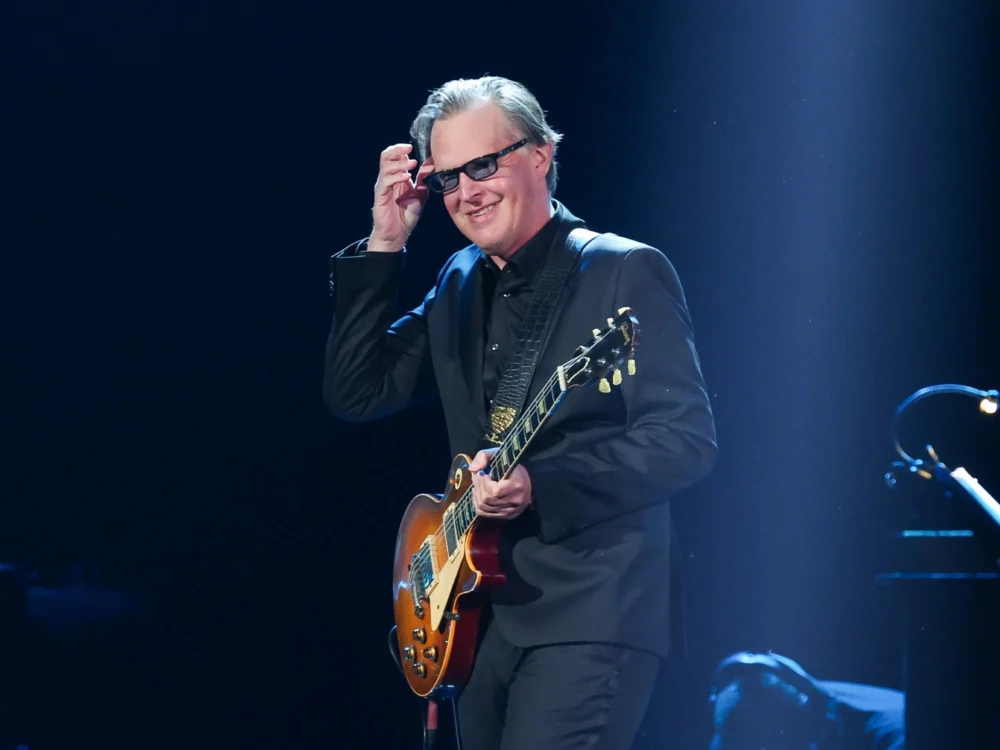
Blues-rock titan and self-professed vintage gear aficionado Joe Bonamassa has announced a significant recalibration of his prolific collecting habits, revealing that he has reached a "saturation point" and will be halting new acquisitions for his renowned "Nerdville West" museum. The decision, articulated during a recent appearance on the No Cover Charge podcast, signals a contemplative shift from accumulation to a deeper engagement with his existing, vast arsenal of instruments and amplifiers. This pivot is not merely a matter of space but a profound realization prompted, in part, by the logistical and emotional challenges posed by the Los Angeles wildfires in recent years.
The Genesis of Nerdville: A Collector’s Empire
Joe Bonamassa’s journey as a guitarist has been inextricably linked with his passion for vintage instruments. Rising to prominence as a modern blues-rock maestro, Bonamassa has carved out a unique niche, not only for his prodigious playing but also for his unparalleled dedication to preserving and utilizing the tools that shaped rock and blues history. His private collection, affectionately dubbed "Nerdville West," has become legendary within the music community, reportedly housing over 1,000 items, including a staggering count of no less than 600 guitars. This immense cache of historical artifacts ranges from iconic Gibson Les Pauls and Fender Stratocasters to rare amplifiers from Marshall, Fender, Selmer, and numerous other revered manufacturers.
For Bonamassa, Nerdville is more than just a storage facility; it is a working museum, a sonic library, and a constant source of inspiration. His reputation as a "vintage connoisseur" stems from his meticulous research, discerning taste, and an almost encyclopedic knowledge of guitar and amplifier history. He has often spoken publicly about the importance of these instruments, not just as collectibles, but as vital conduits for the authentic tones of bygone eras, tones he strives to recreate and evolve in his own music. The value of such a collection is difficult to quantify precisely, but given the escalating prices of pristine vintage instruments, it undoubtedly represents an investment of many millions of dollars. The market for vintage guitars, particularly iconic models from the 1950s and 60s, has seen consistent appreciation, often outperforming traditional investment vehicles, driven by both scarcity and increasing global demand from musicians, collectors, and investors alike.
A Shift in Philosophy: Reaching the Saturation Point
Bonamassa’s recent declaration marks a significant turning point in his collecting ethos. "As far as acquiring stuff, I’ve really slowed down, because there’s a saturation point," he explained on the No Cover Charge podcast. This sentiment reflects a growing philosophical debate among high-tier collectors about the true purpose of accumulating vast quantities of items. For Bonamassa, the drive now is not merely to possess, but to profoundly understand and utilize. "I’d like to get to the stuff that I own, and discover the sounds that I can get out of those pieces, before it just starts piling up and piling up and piling up."
This perspective resonates with many seasoned collectors who eventually find themselves overwhelmed by the sheer volume of their possessions. The joy of acquisition can give way to the burden of maintenance, cataloging, and even simply remembering what one owns. Beyond the practicalities of space and upkeep, there is a creative and intellectual saturation. A musician, especially one as dedicated to tone exploration as Bonamassa, can only meaningfully engage with a finite number of instruments at any given time. The decision to pause new purchases suggests a desire to foster a deeper, more intimate relationship with his existing collection, to extract every nuance of sound and character from instruments that represent significant historical and musical milestones. This is a common trajectory for many passionate collectors, moving from an initial phase of expansive accumulation to a more focused period of curation, study, and appreciation of their established holdings.
The Wildfires’ Sobering Revelation: Prioritization Under Pressure
The turning point for Bonamassa was starkly illuminated by the Los Angeles wildfires that threatened his property and collection last year. This harrowing experience provided a visceral, real-world lesson in prioritization and the practical limits of his collecting ambition. Faced with the imminent danger of losing his invaluable assets, Bonamassa was compelled to confront the overwhelming reality of evacuating hundreds of instruments.
"You never want to go into a situation, I’ve done this when I cleared out this place after the fires, where you’re pulling out cases and have no recollection of when, where, or how you acquired it. And it’s probably starting to get to that point," Bonamassa candidly admitted. This statement underscores the psychological burden that an unmanageably large collection can impose, diminishing the personal connection and historical memory associated with each item. The sheer volume meant that not everything could be saved, forcing a brutal calculation of what was truly irreplaceable.
The experience of having to decide which instruments would be rescued first brought into sharp focus the emotional and financial value of specific pieces. Among those designated for immediate evacuation was his iconic "Skinnerburst" Les Paul, a vintage Gibson known for its exceptional tone and historical significance. The "Skinnerburst" is a prime example of the coveted 1959 Les Paul Standard, widely regarded as the holy grail of electric guitars, with market values often exceeding seven figures. "Obviously, you can’t evacuate everything. So, you have to prioritise. And I thought about it for years. I said, ‘Well, if we gotta go, here’s what’s going.’ This being one of them, you know – Mr Skinner [Bonamassa’s ‘Skinnerburst’ Les Paul] has to come along." This incident served as a powerful catalyst, transforming a theoretical understanding of saturation into a tangible, high-stakes reality, compelling him to re-evaluate the practical implications of his vast holdings.
Bonamassa’s Strategic Approach to Acquisition: A Master Class in Vintage Procurement
While Bonamassa is now pausing new acquisitions, his previous methods of collecting provide a fascinating insight into the high-stakes world of vintage instrument procurement. His approach was highly strategic, marked by discretion and decisive action. "What I do is, I never telegraph anything. You won’t know I’m interested until I’d be like, ‘I’ll take it,’ or, ‘I’ll cut you a check,’" he revealed. This covert tactic is designed to prevent price inflation and competition, a common challenge in the highly competitive vintage market where information can quickly drive up perceived value. By keeping his intentions private until the point of transaction, Bonamassa was able to secure coveted pieces without engaging in bidding wars or public speculation.
Furthermore, Bonamassa’s strategy often involved acquiring gear in batches, a method he refers to as "a pair and a spare." This meant securing not just one, but often two or three identical or closely matched key amplifiers and instruments. He cited examples such as his Marshall JTM45 amplifiers, noting, "Like, you notice there’s two [Marshall] JTM45s. There’s three in here, and one in Nashville. So, I’m usually ‘a pair and a spare.’" This approach extended to his collection of Blackface Fender amps, Selmer amps, and Fender Tweeds, which are visibly present in multiples on his studio walls.
The rationale behind the "pair and a spare" philosophy is multi-faceted. For a touring and recording musician of Bonamassa’s caliber, reliability is paramount. Having identical backups ensures consistency in tone and performance, crucial for live shows and studio sessions where equipment failure can be costly. Moreover, subtle variations exist even between instruments or amplifiers of the same model and year. Acquiring multiples allows for selection of the best-sounding units, or to have options for different tonal requirements. It also serves as a hedge against potential damage or loss, ensuring that a signature sound can always be replicated. This methodical approach contrasts with the more impulsive collecting habits sometimes seen, highlighting Bonamassa’s professional and pragmatic view of his gear as essential tools of his trade, not just museum pieces.
Broader Implications for the Vintage Gear Market
The announcement from a collector of Joe Bonamassa’s stature inevitably carries weight within the vintage instrument market. While one individual’s pause in acquisition is unlikely to cause a dramatic market crash, it could signal broader trends or influence other collectors. The vintage guitar market has experienced significant growth over the past two decades, with prices for highly sought-after models often reaching six and even seven figures. This appreciation has been driven by a confluence of factors: the finite supply of original instruments, increasing global wealth, the cultural cachet of these iconic pieces, and their appeal as tangible assets in an uncertain economic climate.
Bonamassa’s decision to focus on his existing collection rather than expanding it could be interpreted in several ways. It might suggest that even at the pinnacle of collecting, the practical limitations of ownership become undeniable. It could also encourage other collectors to reassess their own motivations, moving towards a more curated and utilized collection rather than a purely acquisitive one. Industry experts might interpret this as a maturing of the market, where the emphasis shifts from sheer volume to quality, provenance, and the active enjoyment and study of the instruments. While prices for top-tier vintage gear are expected to remain strong due to scarcity and demand, a major figure reducing their buying activity could subtly influence market psychology, perhaps encouraging a more deliberate and less frenzied pace of acquisition among other high-end buyers.
The Future of Nerdville West: Curation and Discovery
With the brakes applied to new acquisitions, the future of Nerdville West under Joe Bonamassa’s stewardship appears to be one of profound curation and active discovery. His stated goal of wanting to "get to the stuff that I own, and discover the sounds that I can get out of those pieces" points to a deeper engagement with his existing collection. This phase could involve more rigorous documentation, extensive sonic experimentation, and potentially, new avenues for sharing his insights and the unique tones these instruments produce.
For fans and aspiring musicians, this shift could mean more content showcasing the nuances of his vast collection, perhaps through detailed video series, recordings dedicated to specific instruments, or even exhibitions. Bonamassa has already used his platforms to educate and entertain, offering glimpses into Nerdville. This new focus might amplify his role as an educator and custodian of guitar history, allowing him to share the sonic potential of his instruments in even greater depth. The emphasis will move from the thrill of the chase to the satisfaction of mastery and profound understanding, transforming Nerdville West from a growing archive into an even more vibrant laboratory of vintage sound.
In conclusion, Joe Bonamassa’s announcement to halt new vintage gear acquisitions marks a significant evolution in his journey as both a musician and a collector. Driven by the practical realities of managing an immense collection and a sobering perspective gained from natural disaster, his decision reflects a mature understanding of the true value of his instruments – not just as objects of desire, but as tools for creative exploration and historical preservation. This pivot from relentless acquisition to dedicated curation will undoubtedly shape the next chapter of Nerdville West, offering a compelling example of thoughtful stewardship in the high-stakes world of vintage instrument collecting.
