

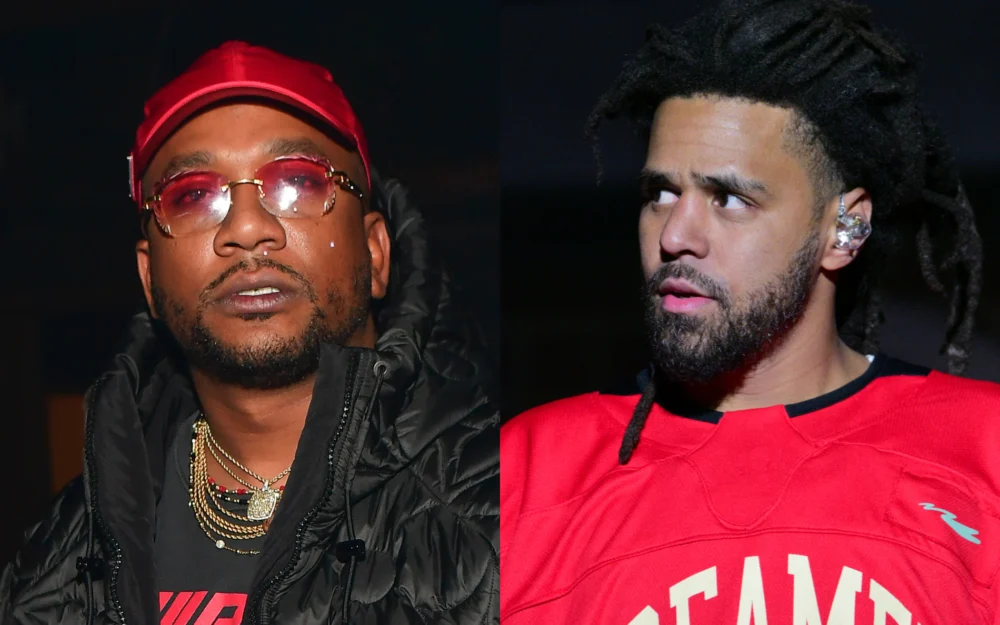
CyHi The Prynce has ignited a fresh wave of hip-hop discourse with the release of his latest track, "B.R.A Lost Control," a potent lyrical salvo aimed directly at J. Cole. Produced by Brian AllDay and Mark Byrd, the song sees the longtime Kanye West affiliate challenging Cole’s self-proclaimed "Best Rapper Alive" status, a title CyHi himself has frequently aspired to. Beyond the inherent competitive spirit of the rap game, this latest diss appears to stem from lingering animosity over J. Cole’s 2016 track "False Prophets," widely interpreted as a critical commentary on Kanye West’s then-current trajectory and creative output.
The genesis of this lyrical beef can be traced back to late 2016, a period marked by significant shifts in Kanye West’s public persona and career. J. Cole, then at the zenith of his critical acclaim and commercial success, released "False Prophets" as part of a surprise EP, "4 Your Eyez Only." The song featured poignant observations on the nature of stardom and artistic evolution, with specific verses that resonated as thinly veiled critiques of West. Lines such as "When you said you was dead, man, I was scared / When you said you was God, man, I was scared" and "What’s more important, being righteous or being king? / This is what you get when you play God" were widely dissected by fans and critics alike, many concluding that Cole was addressing West directly.
CyHi The Prynce, a loyal associate of West and a member of his G.O.O.D. Music label, was among those who perceived Cole’s track as an affront. Having built a career on his intricate wordplay and ability to deliver hard-hitting bars, CyHi saw "False Prophets" not just as criticism, but as a potential slight against his mentor and the G.O.O.D. Music empire. This perceived disrespect has evidently festered, culminating in the direct confrontation found on "B.R.A Lost Control."
A Direct Challenge to the Throne
"B.R.A Lost Control" opens with CyHi assertively questioning the notion of a singular "best rapper alive," a claim often associated with J. Cole. "I been hearing a lot of n*ggas claim the best rapper alive / Two things can be true, that’s a factual lie," he declares, immediately setting the confrontational tone. The track then pivots to a pointed reference to Cole’s brief, albeit highly publicized, lyrical exchange with Kendrick Lamar. CyHi probes, "You was scared of our good brother in that Grand National, why? / Shoulda knew you and that lil’ Honda was gonna have to collide." This allusion likely refers to a perceived power dynamic or a moment of hesitation from Cole when pitted against Lamar, suggesting a lack of unwavering confidence when facing true lyrical titans.
The animosity towards "False Prophets" is further amplified as CyHi directly addresses Cole, whom he refers to as "St. John" in a pointed rhetorical flourish. "But tell St. John that them raps just ain’t that jaw-dropping / You forgot I still owe you for ‘False Prophets’?" he raps, directly linking the current diss track to the unresolved grievances from 2016. He then contrasts Cole’s perceived lyrical shortcomings with his own formidable skills, boasting, "I rap punches that’s hard as Bernard Hopkins / And ain’t no yes men over here, my dawg, stop it." This imagery of Bernard Hopkins, a legendary and resilient boxing champion, underscores CyHi’s claim of delivering impactful and enduring lyrical blows.
CyHi’s loyalty to West and the G.O.O.D. Music collective is a recurring theme. He uses the metaphor of a band on the Titanic to illustrate his unwavering commitment, stating, "We like the band on the Titanic / We goin’ down with the ship before we go jumpin’ off it." This powerful imagery suggests that CyHi and his allies will stand by their convictions and their associates, even in the face of adversity or perceived decline, a clear parallel to the challenges West has faced in recent years. The warning, "So watch your mouth before you go overtalking / It’s cool ‘til you run into one of his underbosses," serves as a veiled threat, implying that any further provocations could lead to more significant repercussions from within the G.O.O.D. Music camp.
Showcasing Lyrical Prowess Amidst the Beef
Beyond the lyrical jabs, "B.R.A Lost Control" serves as a testament to CyHi The Prynce’s own artistic capabilities. The track is densely packed with the kind of clever punchlines, intricate wordplay, and sophisticated rhyme schemes that have become his trademark. Atlanta, his hometown, is known for producing some of hip-hop’s most innovative lyricists, and CyHi positions himself as a proud standard-bearer of this tradition.
One notable example of his linguistic dexterity comes in the first verse, where he employs a series of culturally infused metaphors: "I came back just to crash the summer / I put more fire on wax than Kwanzaa / ‘Cause whatever he brew [Hebrew] can be used by the bartender / Mazel tov! Shots to the glass or the car windshield / That might’ve went over your yarmulke / ‘Cause Hannukah might be the only event my bars miss for [bar mitzvah]." This complex wordplay, weaving together elements of Jewish holidays and cultural references with a bartender’s tools, demonstrates a high level of lyrical craftsmanship. The "brew/Hebrew" and "yarmulke/bar mitzvah" rhymes showcase his ability to connect seemingly disparate concepts with seamless execution, a skill often overlooked in favor of more straightforward diss tracks.
CyHi also ingeniously flips a classic hip-hop sample, repurposing The Pharcyde’s iconic 1992 track "Passin’ Me By." He twists the song’s title and its laid-back vibe into a more aggressive declaration of invincibility: "Gun powder, the gunfire, the harmonics / Of multiple shots going off it’s called violence / Bullets keep passin’ me by, I’m far-sided." This creative recontextualization of a beloved track highlights CyHi’s deep understanding of hip-hop history and his ability to innovate within its established frameworks. The phrase "far-sided" serves as a double entendre, referring to both his physical distance from danger and his "far-sighted" lyrical approach.
The "False Prophets" Ripple Effect
CyHi The Prynce is by no means the first G.O.O.D. Music artist to express dissent regarding J. Cole’s "False Prophets." The track sent ripples through the hip-hop community, prompting various reactions from those associated with Kanye West.
In an explosive interview with Justin Laboy in late 2022, Kanye West himself addressed "False Prophets" and its perceived impact. West revealed his awareness of the song, stating, "I just heard he had a song called ‘False [Prophets]’ and somebody told me it’s halfway about me." He further articulated his disdain for Cole’s music, asserting, "I don’t listen to J. Cole…" This direct repudiation from West underscores the deep-seated animosity that "False Prophets" generated within his inner circle.
West’s comments also touched upon J. Cole’s public apology to Kendrick Lamar, which West seemingly viewed as a sign of weakness. He referred to Cole as "pussy" for apologizing to Lamar, implying that such an action was unbecoming of a confident artist and further fueling the narrative that Cole lacked the fortitude of true rap titans. This sentiment aligns with CyHi’s own lyrical challenge in "B.R.A Lost Control," where he questions Cole’s bravery in the face of potential lyrical battles.
The ongoing saga of "False Prophets" and its aftermath highlights a persistent tension within the hip-hop landscape: the rivalry between established artists, the defense of artistic integrity, and the complex relationships between label mates and mentors. J. Cole, known for his introspective lyricism and his ability to connect with a broad audience, has often been seen as a voice of reason and artistic conscience. However, "False Prophets" demonstrated a willingness to engage in direct, albeit nuanced, criticism of his peers, a move that has clearly resonated with some as a betrayal or an act of disrespect.
Broader Implications and the Future of Hip-Hop Rivalries
The release of "B.R.A Lost Control" and its pointed criticisms of J. Cole invite a broader discussion about the nature of hip-hop rivalries in the modern era. While once characterized by overt disses and public confrontations, contemporary beefs often manifest through intricate lyrical references, subtle jabs, and the strategic release of music designed to provoke a response.
CyHi’s approach in "B.R.A Lost Control" is emblematic of this evolution. He doesn’t just resort to name-calling; instead, he dissects Cole’s perceived lyrical shortcomings, questions his standing in the rap hierarchy, and weaponizes past grievances. This strategy not only allows him to express his anger and loyalty but also to showcase his own lyrical acumen, turning a diss track into a platform for artistic self-affirmation.
The implications of this ongoing feud extend beyond the immediate artists involved. It speaks to the enduring power of lyrical skill and the importance of artistic legacy within hip-hop. J. Cole’s "False Prophets" was seen by many as a significant artistic statement, and CyHi’s response demonstrates that such statements are not always met with passive acceptance. Instead, they can spark a chain reaction of creative and competitive responses, keeping the genre dynamic and unpredictable.
Furthermore, the continued focus on "False Prophets" underscores how deeply ingrained certain narratives can become within hip-hop culture. The track has become a touchstone for discussions about artistic integrity, mentorship, and the pressures of fame. For artists like CyHi and Kanye West, it represents a perceived transgression that demands a response, not just for personal vindication but also to defend their artistic vision and their collective identity.
As the hip-hop world continues to evolve, the lyrical sparring between artists like CyHi The Prynce and J. Cole serves as a reminder of the genre’s rich history of lyrical combat and its ongoing capacity for compelling artistic dialogue. The release of "B.R.A Lost Control" is more than just a diss track; it’s a chapter in an ongoing narrative that continues to shape the discourse surrounding lyrical supremacy, artistic loyalty, and the ever-shifting landscape of hip-hop’s elite. The question remains whether J. Cole will offer a direct response or if the lyrical gauntlet thrown by CyHi will simply fade into the annals of hip-hop history, another intricate footnote in the grand tapestry of rap rivalries.
