

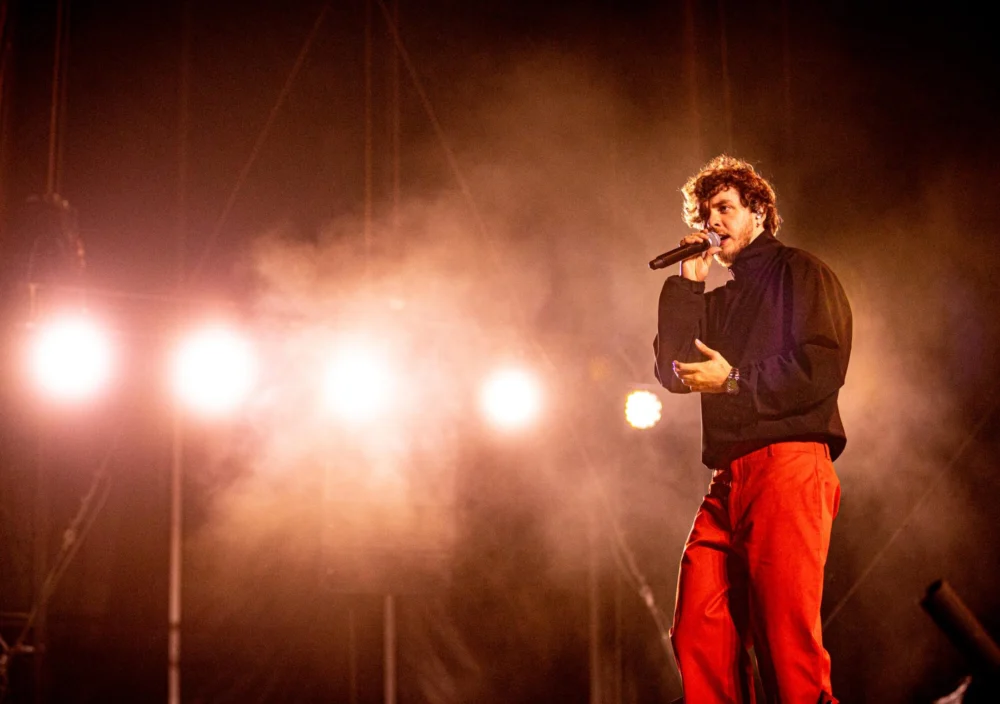
The anticipation surrounding Jack Harlow’s fourth studio album, Monica, has intensified following a series of unconventional promotional teasers designed to engage audiences through candid dialogue rather than direct musical previews. Set for release on March 13, coinciding with the rapper’s 28th birthday, the album follows 2023’s critically acclaimed Jackman and appears to build upon its predecessor’s more introspective themes. In a notable departure from traditional album rollouts, Harlow has opted for an "active listening" campaign, positioning himself as an observer in discussions about complex human relationships, drawing significant attention from both fans and industry observers.
A New Chapter: The Road to "Monica"
The promotional journey for Monica began on February 10 with the album’s official announcement, accompanied by striking cover art. The image, a motion-blurred shot of Harlow with his eyes shut, wearing shades and a brown cap, immediately hinted at a nuanced, perhaps more vulnerable, artistic statement. This visual cue set the stage for a campaign focused on depth and introspection, diverging from the high-energy, confident persona often associated with his earlier work.
The "Active Listening" Campaign
The core of Harlow’s pre-release strategy revolves around two distinct "real-talk" videos. The first, released shortly after the album announcement, featured a group of male friends engaging in frank discussions about the challenges of dating life in major metropolitan areas like New York and Los Angeles, alongside lighthearted bonding over their shared admiration for singer Brandy. This initial video established a tone of authenticity and relatable human experience, with Harlow participating in the conversation.
However, it was the second teaser, posted on Monday, March 2, that truly captured widespread attention. This video showcased Harlow in a markedly different role: primarily as an observer. Seated among a group of women, he intently listened as they delved into discussions about sex, love, and the intricate dynamics of relationships. His contributions were minimal, limited to an affirming "hmmm" and gentle head nods, underscoring a deliberate stance of receptiveness rather than opinion-sharing. This approach has been interpreted by many as a strategic move to highlight the themes of the album through lived experiences and genuine dialogue, inviting listeners to engage with the material on a deeper, more personal level.
Unpacking the Teaser Conversations
The discussions in the March 2 teaser were particularly poignant, touching on themes of vulnerability and perceived power dynamics in relationships. One participant articulated a profound observation: "I think that in the way that we say women lose their power when they have sex, I think men feel like they lose their power when they say, ‘I love you.’" This statement resonated deeply, prompting Harlow’s quiet affirmation. The inclusion of renowned sports journalist Taylor Rooks further elevated the conversation, lending it an air of credible, insightful discourse. Rooks, known for her sharp interviewing skills and ability to elicit genuine responses from high-profile figures, added her perspective with a thoughtful, albeit amused, observation: "They’ve all said ‘I love you.’" When another woman added that "it feels like it doesn’t feel good for them sometimes," Rooks quickly countered, "but they’ll say it so quickly!"
Harlow, throughout much of this exchange, remained a silent witness, occasionally petting an adorable Labradoodle, an image that further softened the intensity of the discussion. His singular spoken contribution in this particular segment, "Maybe you’re built diff[erently]," came after a participant remarked that men say "I love you" but "then it always ends up being a problem." This brief interjection, delivered with a hint of curiosity, suggested a recognition of individual variations in emotional expression and relationship experiences. The choice to feature Rooks, a figure respected for her intellectual contributions in a field outside of music, signals an intent to imbue the album’s narrative with a broader, more mature intellectual curiosity.

Jack Harlow’s Evolving Narrative
Jack Harlow’s career has been characterized by a rapid ascent from regional notoriety to global superstardom, marked by a consistent evolution in his artistic output and public persona.
From Louisville Prodigy to Global Star
Born in Louisville, Kentucky, Jack Harlow first gained significant traction with his mixtapes in the mid-2010s, cultivating a distinct style that blended confident lyricism with a charismatic delivery. His breakthrough moment arrived with the viral success of "Whats Poppin" in 2020, which earned him a Grammy nomination and catapulted him into the mainstream. Subsequent albums like Thats What They All Say (2020) and Come Home the Kids Miss You (2022) solidified his position as a commercial force, spawning hit singles such as "First Class." These early successes established Harlow as a confident, often celebratory, voice in hip-hop, known for his witty rhymes and approachable demeanor. His performances at major festivals, including the 2022 Life Is Beautiful Music & Art Festival in Las Vegas, as depicted in promotional imagery, consistently showcased his dynamic stage presence and ability to connect with large audiences.
The Introspective Turn with Jackman
The release of Jackman in 2023 marked a significant pivot in Harlow’s artistic direction. Following the immense commercial success of Come Home the Kids Miss You, which saw him embrace a more pop-friendly sound, Jackman was a deliberate return to a more raw, introspective, and lyrically focused style. The album eschewed high-profile features and radio-friendly hooks in favor of personal narratives, addressing themes of identity, privilege, and the complexities of fame. Critics largely praised Jackman for its maturity and vulnerability, recognizing it as a conscious effort by Harlow to define himself beyond commercial expectations. This album signaled a deeper engagement with his craft and a willingness to explore more serious subject matter, laying the groundwork for the thematic depth now being hinted at with Monica. The move to Electric Lady Studios in New York City, following his relocation from Kentucky, further underscores this period of artistic reinvention and exploration.
Strategic Album Rollout in the Digital Age
The promotional strategy for Monica is a prime example of how artists are adapting to the demands of the digital age, moving beyond conventional methods to create immersive, narrative-driven campaigns.
Beyond the Single: Crafting a Thematic Journey
In an era where streaming services have fragmented attention spans and made single releases the dominant promotional tool, Harlow’s approach for Monica stands out. By prioritizing conversations and thematic exploration over direct musical snippets, he is attempting to build a narrative around the album before its release. This strategy encourages listeners to think about the underlying messages and emotional landscape of Monica, rather than simply anticipating catchy beats or lyrical prowess. It suggests that the album itself might be a cohesive body of work, best understood within a broader thematic context of human connection and vulnerability. This method, while not entirely new (artists have long used interviews and documentaries), utilizes social media’s immediate and intimate nature to foster a sense of shared experience and intellectual curiosity, effectively turning the album rollout into a multi-part story.
The Role of Celebrity Collaborations
The involvement of Taylor Rooks in the promotional teaser is a calculated move that adds significant value to the campaign. Rooks is not only a respected journalist but also a prominent figure in popular culture, known for her ability to facilitate profound and authentic conversations. Her presence elevates the discourse, lending credibility and gravitas to the "real-talk" format. This cross-industry collaboration broadens the appeal of the teasers beyond Harlow’s core music fanbase, potentially attracting audiences who appreciate insightful dialogue and thoughtful commentary on social dynamics. It also positions Harlow not just as a rapper, but as an artist interested in broader societal observations, aligning with the more mature image cultivated since Jackman. The choice to feature non-musicians in these videos underscores a focus on universal human experiences, hinting that Monica might be an album that transcends genre boundaries through its relatable content.
Anticipation Builds: What "Monica" Might Offer
As the release date of March 13 approaches, the music industry and fans alike are buzzing with speculation about what Monica will ultimately deliver, particularly in light of its unique pre-release campaign.

Speculations on Tracklist and Features
At press time, no official information regarding the tracklist or any featured artists on Monica has been released. This scarcity of details is itself a strategic choice, maintaining an air of mystery and driving further speculation. Given the introspective nature of the teasers and the solo-focused feel of Jackman, some industry observers are predicting that Monica might also be a largely feature-free project, allowing Harlow’s narrative and lyrical abilities to take center stage. Alternatively, the themes of love and relationships could open the door for collaborations with R&B vocalists or other artists known for their emotionally resonant work. The absence of musical snippets in the teasers also leaves the album’s sonic direction open to interpretation, though the serious tone suggests a departure from overtly commercial singles, potentially leaning into more experimental or genre-blending sounds.
The Significance of Electric Lady Studios
The fact that Monica was recorded at the famed Electric Lady Studios in New York City is another detail that has fueled anticipation. Founded by Jimi Hendrix, Electric Lady Studios has a storied history, having hosted countless legendary artists across various genres. Its walls have witnessed the creation of seminal albums known for their artistic integrity, experimental spirit, and profound musicality. Recording in such an iconic space often signifies an artist’s commitment to craftsmanship and a pursuit of sonic excellence. For Harlow, who recently relocated to New York, choosing Electric Lady for his fourth album suggests a deliberate embrace of a rich musical legacy and a desire to create a work of lasting artistic merit, further reinforcing the idea of his artistic maturation.
The "Monica" Enigma
The album title itself, Monica, remains an enigma. Without any explicit explanation from Harlow, fans and critics are left to ponder its significance. Could "Monica" refer to a specific person who has influenced his life and art? Is it an archetype representing the women or relationships discussed in his teasers? Or perhaps it’s a symbolic title, evoking a particular mood, memory, or thematic focus within the album’s narrative? Given the conversations around love, sex, and relationships in the teasers, many are inferring that "Monica" is likely a central figure or concept tied to these interpersonal themes, perhaps embodying the complexities and emotional landscapes explored throughout the project. The title, devoid of obvious connections to previous work, adds another layer of intrigue, encouraging listeners to engage with the album as a cohesive story rather than a collection of individual tracks.
Implications for Modern Music Marketing
Jack Harlow’s campaign for Monica represents a compelling case study in modern music marketing, particularly for artists seeking to cultivate a deeper connection with their audience. By prioritizing narrative, authenticity, and intellectual engagement over traditional "hype" tactics, Harlow and his team are leveraging social media not just as a platform for announcement, but as a space for genuine dialogue and thematic groundwork. This approach suggests a growing trend where artists are becoming more adept at curating their public personas and artistic messages through multi-faceted campaigns that extend beyond pure musical content. The success of this strategy, to be fully evaluated post-release, could influence future album rollouts across the industry, highlighting the power of vulnerability, observation, and thematic consistency in capturing and retaining audience attention.
In conclusion, Jack Harlow’s Monica is shaping up to be more than just a new album; it appears to be a carefully constructed artistic statement, preceded by a thought-provoking campaign that invites listeners into a world of introspection and genuine human connection. From the strategic choice of recording at Electric Lady Studios to the innovative "active listening" teasers featuring prominent figures like Taylor Rooks, every element of the rollout points towards an artist committed to evolving his craft and engaging with his audience on a profoundly personal level. As March 13 approaches, the music world awaits to discover how these compelling conversations will translate into the sonic and lyrical landscape of Monica.
