

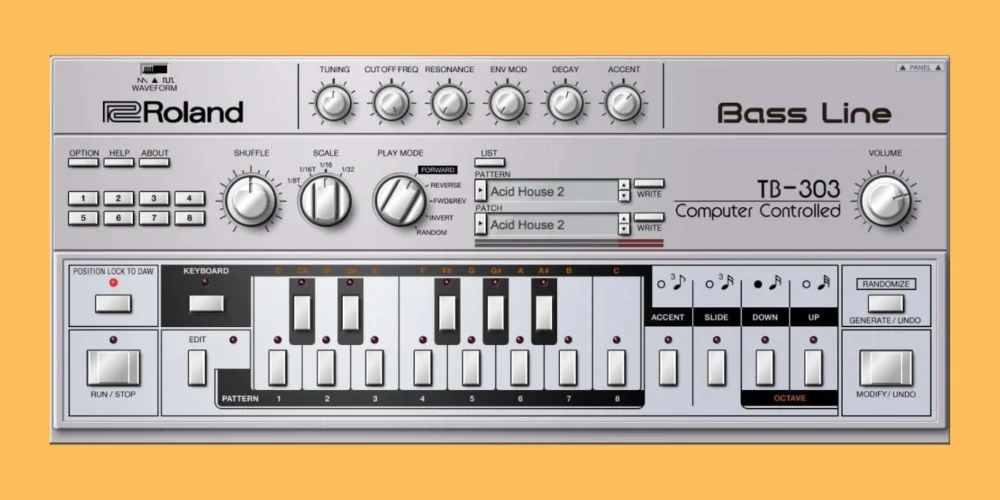
This significant price reduction makes Roland’s acclaimed software emulation of the legendary Bass Line synthesizer highly accessible to producers and musicians worldwide. The original Roland TB-303, a monophonic bass synthesizer and sequencer, was initially launched by the Japanese electronics giant in 1981. Its intended purpose was to provide bass guitar accompaniment for guitarists practicing alone, featuring an integrated sequencer to program bass lines. However, the hardware unit failed to achieve commercial success in its primary market, leading to its discontinuation after only approximately 18,000 units were produced by 1984. Despite its initial market rejection, the TB-303’s journey was far from over; it was destined for an unforeseen resurgence that would indelibly alter the landscape of electronic music.
The Unforeseen Rise of an Icon: From Commercial Failure to Cultural Phenomenon
The TB-303’s dramatic turnaround began in the mid-1980s, primarily in the burgeoning electronic music scenes of Chicago and later Europe. As units became available on the secondhand market for significantly reduced prices, often as low as $50, pioneering DJs and producers discovered its unique sonic characteristics. Unlike its intended role, its potential was unlocked through experimental manipulation. The device’s distinctive resonant filter, capable of producing a squelching, acidic sound when pushed to its limits, combined with its rudimentary step sequencer, proved to be fertile ground for innovation. Artists like Phuture, with their seminal 1987 track "Acid Tracks," are widely credited with popularizing the 303’s signature sound, effectively birthing the acid house genre. This new musical form was almost entirely predicated on the TB-303’s iconic "acid" bass lines, characterized by their hypnotic, evolving filter sweeps and rhythmic accents.
The impact of the TB-303 extended far beyond acid house, influencing genres such as techno, trance, electro, and deep house. Its sound became synonymous with electronic music culture, embodying rebellion, experimentation, and the raw energy of underground dance floors. The limited production run of the original hardware, coupled with its immense cultural significance, elevated the TB-303 to the status of a highly sought-after collector’s item, with prices for original units often reaching several thousand dollars. This created a significant demand for authentic emulations, both hardware clones and software plugins, capable of replicating its unique sonic fingerprint.
Roland’s Digital Revival: The Official TB-303 Software
In response to this enduring legacy and the widespread proliferation of third-party emulations, Roland, the original manufacturer, launched its own official software recreation of the TB-303. This move was part of Roland’s broader strategy to digitize its iconic instrument catalog, making legendary sounds accessible to a new generation of producers through modern production environments. The official Roland TB-303 software stands apart due to its proprietary Analog Circuit Behavior (ACB) modeling technology. ACB is Roland’s meticulously developed approach to digitally emulating the complex interactions within analog circuits, not just their output. This involves modeling individual components like resistors, capacitors, and transistors, as well as their interconnections, to reproduce the nuances and characteristics of the original hardware’s sound with unparalleled accuracy.
The credibility afforded by an official emulation directly from the original manufacturer is substantial. While numerous excellent 303 clones exist, ranging from boutique hardware units to sophisticated software plugins, Roland’s version benefits from direct access to the original schematics, design specifications, and the accumulated institutional knowledge of its engineers. This allows for a recreation that aims for absolute authenticity, capturing the subtle nonlinearities, sonic quirks, and the overall "feel" that made the original 303 so distinctive and challenging to perfectly replicate.
Deep Dive into the Plugin’s Architecture and Features
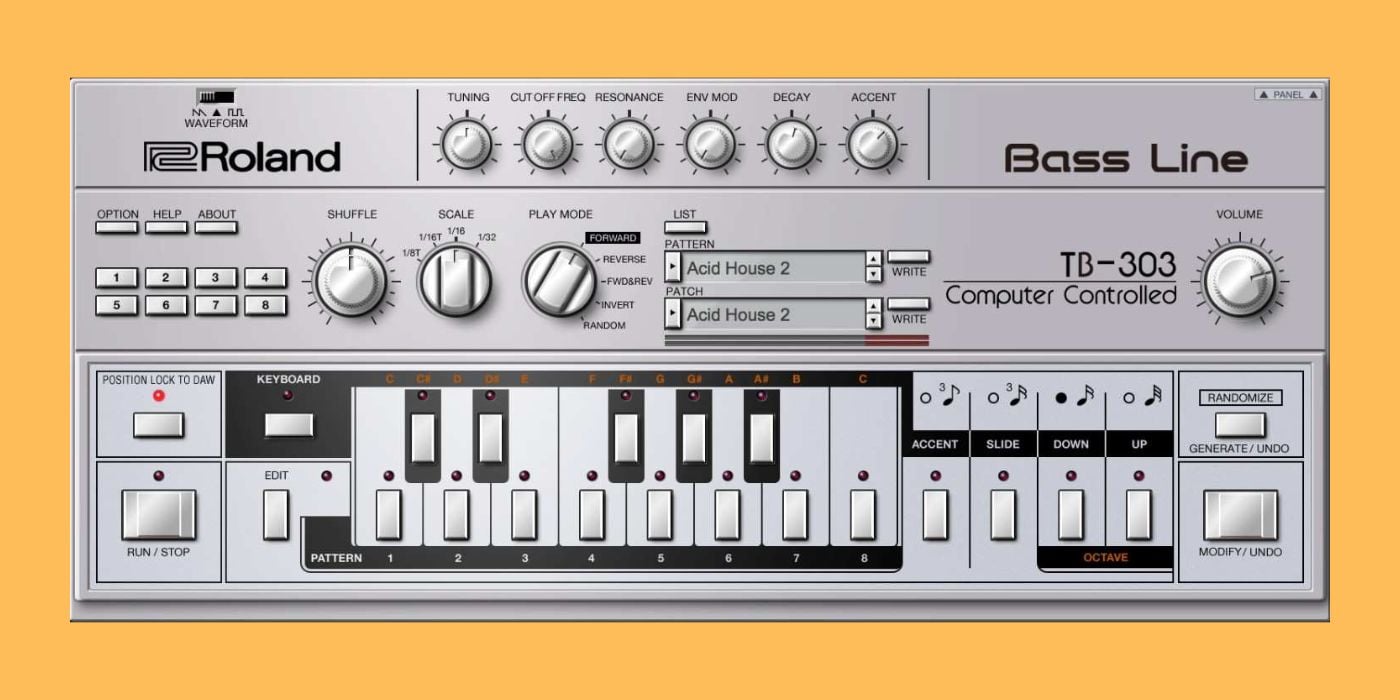
The Roland TB-303 plugin faithfully recreates the original hardware’s front panel controls, offering an intuitive interface for those familiar with its ancestor. Key parameters such as Tuning, Cutoff Frequency, Resonance, Env Mod, Decay, and Accent are all present as tactile knobs, alongside the essential waveform switch allowing users to select between the classic sawtooth and square waves – the two fundamental timbres of the 303. This meticulous attention to the original interface ensures that the plugin provides an authentic user experience, allowing producers to dial in those characteristic sounds with precision.
However, Roland recognized the opportunity to enhance the user experience and expand the sonic capabilities beyond the limitations of the 1981 hardware. This led to the inclusion of a "Secret Panel"—a hidden section that introduces parameters not found on the original TB-303. These additions significantly augment the plugin’s versatility:
- VCF Trim: This parameter allows for fine-tuning the voltage-controlled filter’s frequency range, offering greater control over the intensity and character of the filter sweeps. This can be crucial for tailoring the sound to specific mixes or exploring new sonic territories that were previously unattainable without extensive external processing.
- Condition Knob: A particularly innovative feature, the Condition knob simulates the subtle tonal variations and inconsistencies caused by age and unit-to-unit differences in the original hardware. Analog circuits are not perfectly uniform, and their components degrade over time, leading to unique sonic characteristics for each physical unit. The Condition knob allows users to dial in varying degrees of "vintage wear," from pristine factory condition to a heavily aged, character-rich unit, adding another layer of authenticity and sonic individuality.
- Master Tune: Provides global pitch adjustment, a practical feature for seamless integration into diverse musical compositions and ensuring precise tuning across multiple instruments.
- Onboard Effects Section: A significant modern enhancement, this section includes a versatile Drive unit (with Type, Tone, and Depth controls) and a Delay unit (with Type, Time, Level, and tempo sync capabilities). These integrated effects eliminate the need for external processing in many scenarios, allowing users to sculpt raw acid lines into fully produced sounds directly within the plugin. The drive can introduce anything from subtle warmth to aggressive distortion, while the delay adds spatial depth and rhythmic complexity, both crucial elements in electronic music production.
The Evolution of the Sequencer: Modern Workflow for a Classic Sound
One of the most notable improvements in the Roland TB-303 plugin concerns its sequencer. The original hardware’s step-entry system was famously cryptic and challenging to master, a factor that ironically contributed to its experimental use. Roland’s software version dramatically modernizes this aspect, offering a graphical Edit Window that visually displays the bass line. This intuitive interface allows users to easily input and edit 16-step patterns, incorporating crucial performance elements like accents, slides, octave shifts, and individual pitch per step. This visual approach significantly streamlines the workflow, making pattern creation and manipulation far more accessible than on the vintage hardware.
Further enhancements to the sequencer include:
- Pattern Variations: Patterns support up to eight distinct variations, enabling dynamic arrangements and complex evolving sequences within a single instance of the plugin.
- Pattern Manipulation: Users can rotate or transpose patterns, adjust the last step to alter pattern length, and even drag MIDI or audio data directly into their Digital Audio Workstation (DAW). The MIDI drag-and-drop functionality is particularly valuable, allowing the plugin’s internal sequencer to serve as a powerful composition tool, generating MIDI clips that can then be further edited or assigned to other instruments.
- Randomize Functions: The inclusion of "Generate" and "Modify" randomize functions offers a creative springboard. These features produce new patterns based on configurable parameters for Pitch, Gate, Accent, Slide, and a definable scale and key range. This allows for rapid ideation and the discovery of unexpected, yet musically coherent, bass lines.
- Play Modes: Diverse play modes, including Forward, Reverse, Fwd & Rev, Invert, and Random, further expand the expressive possibilities, allowing for intricate and evolving rhythmic patterns.
The plugin boasts impressive pattern and patch management capabilities, capable of holding 64 patterns and 64 patches per bank, with no practical limit on the number of banks. It ships with 32 preset patterns and 48 preset patches, providing a solid foundation for immediate creative exploration.
Integration, Ecosystem, and Market Context
For users who prefer a hands-on experience, the Roland TB-303 plugin supports MIDI Learn for most controls, allowing seamless integration with external MIDI controllers. Critically, it can also be configured to use Roland’s dedicated hardware controllers, such as the TB-03 or TB-3, as control surfaces, bridging the gap between software flexibility and hardware tactility.
Activation of the plugin requires an internet connection and a Roland Cloud account, aligning with Roland’s broader digital ecosystem strategy. The plugin is available in VST, AU, and AAX formats, ensuring compatibility with most major DAWs on macOS 11 (Big Sur) or later, and Windows 10 and 11 (64-bit).
The current sale, timed with "303 Day" (March 3rd), is a strategic move by Plugin Boutique and Roland. "303 Day" has become an unofficial global celebration among electronic music enthusiasts, recognizing the enduring legacy of the TB-303. Offering the official plugin at a 67% discount during this period not only honors the instrument’s cultural significance but also serves as a potent marketing initiative. Such promotions underscore the increasing trend in the music technology market towards making high-quality software emulations of classic gear more accessible, especially for bedroom producers and emerging artists who may not have the financial means to acquire vintage hardware.
Implications for Musicians and the Industry
This discounted offering carries several implications for both individual musicians and the wider music technology industry. For aspiring and established producers, it represents an unparalleled opportunity to acquire a definitive software recreation of one of electronic music’s most pivotal instruments at an affordable price point. This democratizes access to a legendary sound, potentially inspiring new waves of creativity and genre evolution. The combination of authentic sound reproduction, modern workflow enhancements, and an attractive price point positions the Roland TB-303 plugin as a highly compelling tool for anyone looking to inject classic acid bass lines into their productions.
From an industry perspective, Roland’s commitment to developing and aggressively promoting its ACB-powered plugins reinforces its position in the competitive software instrument market. By offering high-fidelity emulations of its most famous synthesizers, Roland not only preserves its legacy but also actively participates in shaping the future of music production. Deals like this also highlight the dynamic pricing strategies employed by retailers like Plugin Boutique, which leverage special events and community celebrations to drive sales and engage with their customer base. The inclusion of a bonus like Audiomodern’s Riffer with the purchase further enhances the value proposition, providing an additional creative tool for generating musical ideas.
The sustained interest in the TB-303, decades after its initial commercial failure, is a testament to its singular sound and the power of artistic innovation to repurpose technology in unforeseen ways. The availability of such a sophisticated and officially sanctioned emulation at a significantly reduced price ensures that the "acid" sound will continue to resonate and evolve within contemporary music production for years to come.
Availability and System Requirements
The Roland TB-303 Software Bass Line plugin is available for download at Plugin Boutique for $49 until March 8th. As an added incentive, a free copy of Riffer by Audiomodern is included with the purchase, providing users with a creative MIDI sequence generator to further enhance their music production toolkit.
The plugin requires an internet connection for activation and a Roland Cloud account. It is compatible with macOS 11 (Big Sur) or later, and Windows 10 and 11 (64-bit), supporting VST, AU, and AAX plugin formats.
This deal represents a crucial moment for producers to access a foundational piece of electronic music history, reimagined for the modern studio environment. The enduring appeal of the TB-303, combined with Roland’s meticulous digital recreation and this timely discount, ensures its legacy continues to thrive.
