

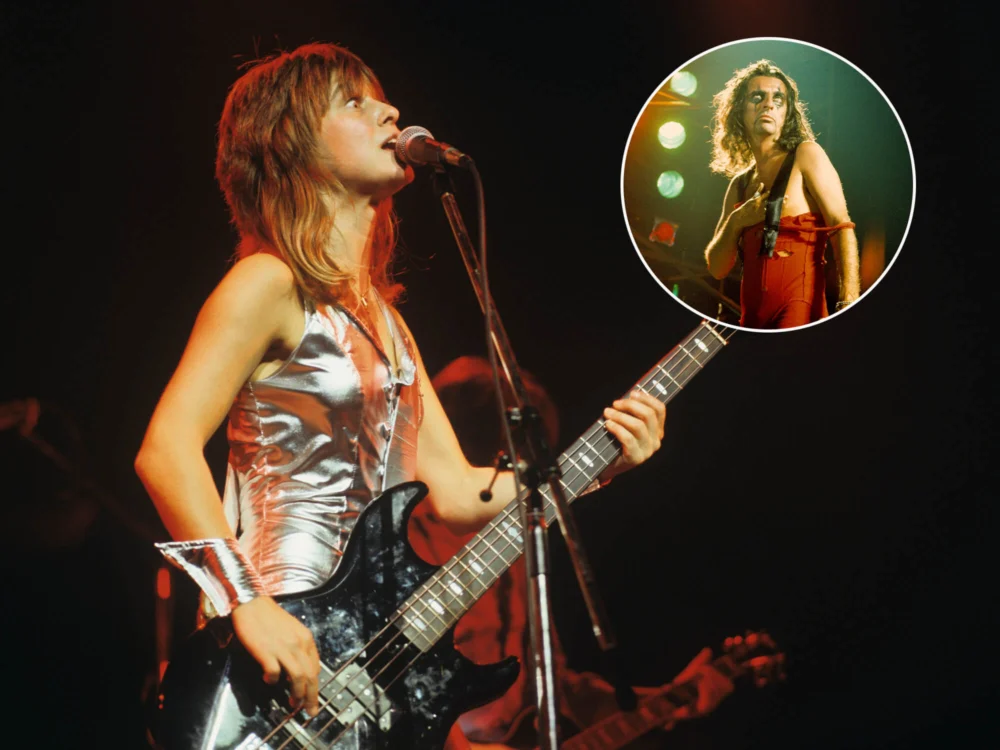
Tour antics, often born from the grueling schedules and unique camaraderie of life on the road, occasionally teeter on the edge of genuine mishap, a dynamic vividly encapsulated by Suzi Quatro’s recollection of nearly breaking Alice Cooper’s nose during their extensive 1975 Welcome To My Nightmare tour. This incident, shared by Quatro with Classic Rock magazine, offers a rare glimpse into the off-stage reality and enduring friendships forged amidst the demanding, high-octane world of 1970s rock ‘n’ roll. The encounter underscores not only the playful, sometimes competitive spirit between rock legends but also the deep mutual respect that characterized their professional and personal relationship.
The Infamous Dart-Gun Skirmish
The particular incident unfolded during a rubber dart-gun fight, a spontaneous eruption of mischief that served as a momentary escape from the relentless grind of an 85-date global tour. Suzi Quatro, a trailblazing figure in rock music, was serving as the primary support act for Alice Cooper on his monumental Welcome To My Nightmare tour. The tour, a theatrical spectacle supporting Cooper’s critically acclaimed first solo album, commenced in March 1975 and stretched through December, encompassing a vast itinerary across the United States, Canada, and parts of Europe. Such an extensive schedule often led to a unique blend of exhaustion and exhilaration, fostering an environment where impromptu diversions became a necessity.
Quatro, reflecting on the period, described the intensity of the travel: "We were on a turboprop and making at least one flight a day, if not two." For someone who admitted to being "a terrible flyer" at the time, these constant journeys added a layer of white-knuckle tension to an already demanding professional life. However, the presence of familiar faces from the vibrant Detroit music scene, including musicians she had known for years, provided a comforting familial atmosphere. This shared background and mutual understanding often led to a sense of playful abandon off-stage.
It was in this context that the rubber dart-gun fight escalated. "On a big tour like this you get a little crazy," Quatro explained. "In one hotel we decided to have a rubber dart-gun fight before a show." What began as a lighthearted diversion quickly intensified. "We hid behind mattresses in the hallway, and it got serious, dark… Who was going to win?" The stakes, though imaginary, felt real in the moment. Cooper, known for his theatrical flair and strategic stage presence, hid in a room, attempting to gain an advantage. Quatro, ever the sharpshooter, spotted her target: "Then I saw his rather large nose poking out from behind a television set, and I went [mimes shooting a pistol] ‘boink!’" The shot, delivered with precision, found its mark. Quatro confirmed, "I didn’t break it, but it was pretty close." Cooper’s immediate reaction – "Ouch!" followed by "Good shot!" – perfectly captured the blend of pain, surprise, and admiration. The profound respect between the artists was further cemented that evening when Cooper, in a gesture of camaraderie and acknowledgment of Quatro’s marksmanship, wore her tour T-shirt on stage.
The Genesis of a Legendary Tour: Welcome To My Nightmare (1975)
The Welcome To My Nightmare tour was not merely a series of concerts; it was a groundbreaking multimedia event that cemented Alice Cooper’s status as a premier showman and conceptual artist. Following the dissolution of the original Alice Cooper band in 1974, Vincent Furnier officially adopted his stage persona as his legal name and embarked on a solo career. Welcome To My Nightmare, released in March 1975, was his debut solo album, a conceptual masterpiece exploring the nightmarish subconscious of a character named Steven. The album blended hard rock with elements of Broadway theatrics and orchestral arrangements, a significant departure from the raw, garage rock sound of his earlier work.
The tour was an ambitious undertaking designed to bring the album’s narrative to life. It was a visual and auditory spectacle, complete with elaborate stage sets, choreographed dancers, projected films, and a host of macabre props including giant spiders, skeletons, and the infamous gallows. The show was directed by choreographer David Winters, who also worked on the concert film. This theatrical approach was revolutionary for its time, blurring the lines between a rock concert and a stage play. The tour played to sold-out arenas across North America and Europe, drawing millions of fans eager to witness Cooper’s unique brand of shock rock. The success of the tour was monumental, grossing millions and further solidifying Cooper’s reputation as an innovator in live performance. The accompanying concert film, Welcome To My Nightmare, released later in 1975, captured the grandeur and intensity of these live performances, allowing a wider audience to experience the spectacle.
Suzi Quatro: A Pioneer on the Rise
Suzi Quatro’s presence on such a high-profile tour was a testament to her burgeoning international success and trailblazing impact on rock music. Born and raised in Detroit, Michigan, Quatro had already established herself as a formidable force in the music industry by 1975. After fronting the band Cradle, she moved to the United Kingdom in 1971 at the invitation of legendary producer Mickie Most. Her distinctive blend of hard rock, glam, and punk-infused energy, coupled with her iconic leather jumpsuit image, quickly made her a sensation, particularly in Europe and Australia.
By 1975, Quatro had already scored major international hits like "Can the Can" (1973), "48 Crash" (1973), and "Devil Gate Drive" (1974), all of which topped charts across the globe. While she had achieved considerable success in Europe, breaking into the highly competitive American market was a key objective. Supporting Alice Cooper, a fellow Michigan native and established rock icon, on his biggest tour to date provided an unparalleled platform. It offered exposure to millions of American fans who might have been less familiar with her European chart-toppers. Her powerful stage presence and gritty rock ‘n’ roll attitude made her a perfect complement to Cooper’s theatricality, creating a dynamic double bill that thrilled audiences night after night. Her involvement in the Welcome To My Nightmare tour was a crucial step in cementing her legacy as one of rock’s most influential female artists, inspiring countless women to pick up instruments and pursue careers in a male-dominated industry.
The Detroit Connection: A Shared Heritage

The bond between Suzi Quatro and Alice Cooper was significantly strengthened by their shared roots in the vibrant and influential Detroit rock scene. Quatro often speaks of the "Detroit people around, musicians who I’d known forever," on the tour, highlighting the close-knit community that fostered a unique brand of hard-hitting rock music. The Michigan music landscape of the late 1960s and early 1970s was a hotbed of raw energy, political consciousness, and musical innovation. Bands like MC5, The Amboy Dukes (Ted Nugent’s band), and Grand Funk Railroad, all mentioned by Quatro, were integral to shaping this distinct sound.
Alice Cooper, originally formed in Phoenix, Arizona, relocated to Detroit in the late 1960s, finding a receptive audience for their confrontational, theatrical rock. The raw, working-class ethos of Detroit resonated deeply with Cooper’s rebellious image and music. Similarly, Quatro honed her skills in the city’s clubs, absorbing the intensity and authenticity that characterized the local scene. This shared cultural and musical heritage created an immediate understanding and camaraderie between Quatro and Cooper. It transcended mere professional association, evolving into a genuine friendship rooted in mutual respect for their artistic endeavors and a common appreciation for the no-nonsense attitude of Michigan rock ‘n’ roll. The "Vinnie The Boss" nickname Quatro affectionately used for Cooper further illustrates this personal connection, revealing a comfortable familiarity beyond their public personas.
Life on the Road: The Unseen Demands of 1970s Touring
The Welcome To My Nightmare tour, with its demanding schedule of "at least one flight a day, if not two," provides a window into the rigorous realities of rock touring in the 1970s. Unlike today’s highly organized and often luxurious touring environments, the logistics of major tours five decades ago were considerably more rudimentary. Bands frequently traveled on less comfortable, smaller turboprop planes or long bus rides, facing constant fatigue and the challenge of adapting to new cities and venues almost daily. The sheer physical and mental endurance required to perform at peak level night after night, often across different time zones, was immense.
In this high-pressure, confined environment, moments of levity and "getting a little crazy" were not just permissible but essential for maintaining sanity and camaraderie. Activities like "a lot of blackjack" and spontaneous dart-gun fights served as crucial outlets for stress and boredom. These shared experiences, both the triumphs on stage and the playful antics off it, forged deep bonds between musicians and crew members. The "dark" and "serious" turn of the dart-gun fight, as Quatro described it, highlights the way mundane activities could be transformed into high-stakes psychological games among individuals living in such close quarters. These anecdotal moments, far from being mere trivialities, form the fabric of rock ‘n’ roll mythology, offering fans a glimpse into the human side of their larger-than-life idols. They underscore the unique culture of a touring rock band, a transient family unit navigating the world together, creating both music and memories.
Alice Cooper’s Enduring Legacy of Stagecraft and Antics
Alice Cooper’s career has been consistently defined by his unparalleled showmanship and willingness to push boundaries, both on and off stage. From the early days of beheading chickens (a legendary but exaggerated incident) to his current elaborate productions, Cooper has always understood the power of spectacle. The Welcome To My Nightmare tour was a pivotal moment in this trajectory, showcasing his ability to craft a cohesive, immersive narrative through music and performance. His immediate reaction to Quatro’s dart shot – "Good shot!" – perfectly encapsulates his appreciation for theatricality and a well-executed prank, even when he was the target. This good-natured acceptance of the incident, followed by the symbolic act of wearing her T-shirt, speaks volumes about his character and the mutual respect he held for his fellow musicians.
This tradition of memorable tour moments continues to this day. A more recent example, highlighted in the original article, involved Cooper’s guitarist Nita Strauss. During a live show, Strauss had a close encounter with one of Cooper’s boa constrictors, which famously licked her face as she continued to play through the song "Snakebite." This incident, shared widely on social media, serves as a modern parallel to Quatro’s dart-gun story, illustrating that the element of surprise, the touch of the unexpected, and a healthy dose of rock ‘n’ roll flair remain central to the Alice Cooper experience, albeit with less potential for broken noses. These anecdotes, spanning decades, reinforce the image of Alice Cooper as not just a musician but an entertainer committed to creating unforgettable moments, whether through elaborate stage productions or spontaneous, human interactions.
Broader Implications and Enduring Friendships
The story of Suzi Quatro and Alice Cooper’s dart-gun skirmish is more than just a humorous anecdote; it offers valuable insights into the dynamics of rock ‘n’ roll fame, the formation of lasting friendships, and the rich tapestry of touring life in a bygone era. Such incidents, seemingly minor, contribute significantly to the mythology surrounding rock stars, humanizing them while simultaneously adding to their legendary status. They remind us that behind the elaborate costumes and stage personas are individuals navigating the pressures and excitements of an extraordinary profession.
The enduring friendship between Quatro and Cooper, spanning nearly five decades, is a testament to the bonds forged during these intense shared experiences. Their "connection," as Quatro described it, goes beyond professional respect, rooted in a mutual understanding of the unique challenges and triumphs of their careers. These relationships are often the true treasures gleaned from years on the road, providing a support system and a shared history that few outside the industry can fully comprehend.
Both Suzi Quatro and Alice Cooper continue to be active forces in the music world, regularly touring and releasing new material. Alice Cooper is slated to perform across the globe this year, continuing his legacy of shock rock spectacle. Suzi Quatro will also be touring the UK in April, showcasing her enduring energy and timeless appeal. Their careers, marked by innovation, resilience, and a dash of playful mischief, continue to inspire new generations of musicians and fans, proving that the spirit of rock ‘n’ roll, and the camaraderie it fosters, remains as vibrant as ever. The almost-broken nose incident stands as a charming, if slightly dangerous, reminder of a golden era of rock, and the very human stories behind the legends.
