

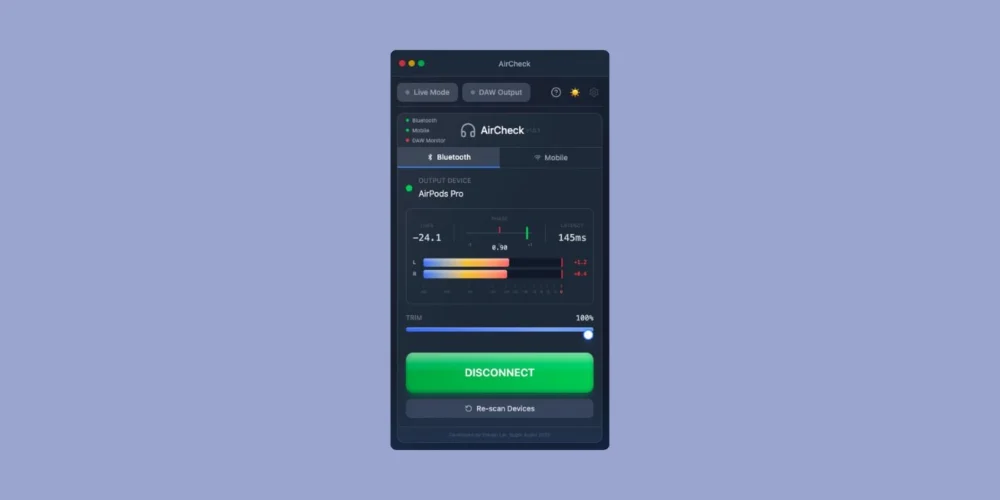
Sugoi Audio, an innovative developer in the audio software space, has announced the release of two significant utility plugins designed to streamline the audio production workflow for modern engineers and producers: AirCheck and BlindCard. AirCheck offers a novel solution for routing Digital Audio Workstation (DAW) audio to Apple AirPods and other external listening devices without the disruptive process of altering core DAW settings. Alongside AirCheck, the company has also launched BlindCard, a free and open-source blind A/B testing plugin aimed at fostering objective critical listening. This dual release addresses common pain points in contemporary audio production, from ensuring mix translation across diverse playback systems to eliminating cognitive biases during comparison.
For a limited period, readers can avail themselves of a 20% discount on AirCheck by using the coupon code bpb20 at checkout. This promotional offer is valid until April 5th, 2026, making the advanced monitoring solution more accessible to a broad audience of audio professionals and enthusiasts.
AirCheck: Bridging the Gap Between Studio and Consumer Playback
The challenge of mix translation is a perennial concern for audio engineers. A common scenario involves a mix sounding pristine on studio monitors, only to reveal significant flaws when played back on consumer-grade devices such as AirPods or smartphone speakers. This discrepancy often necessitates a tedious workflow involving exporting mixdowns, transferring files to mobile devices, and then critically listening outside the studio environment. AirCheck aims to fundamentally transform this process.
Traditionally, checking a mix on alternative playback systems meant either reconfiguring the DAW’s audio output device—a disruptive action that often requires restarting the DAW or experiencing glitches—or rendering the mix to an MP3 file and playing it back separately through a media player. Both methods severely interrupt the creative flow, forcing engineers to break their concentration and context-switch. Given that AirPods and similar Bluetooth headphones have become ubiquitous, representing a significant portion of global music consumption, ensuring a mix translates well to these devices is paramount for commercial viability and listener satisfaction. Data from recent market analyses indicates that true wireless stereo (TWS) headphones, led by products like AirPods, command a substantial and growing share of the personal audio device market, underscoring their importance as a critical reference point for audio production.
AirCheck ingeniously circumvents these workflow bottlenecks. The plugin, inserted on the master bus of a DAW, routes audio directly to selected output devices such as AirPods, other Bluetooth headphones, or even integrated computer speakers, all without requiring any changes to the DAW’s core audio preferences. The user’s primary audio interface remains connected, ensuring the studio monitoring chain is undisturbed. When AirCheck is active and routing audio externally, it automatically mutes the DAW’s main monitor output to prevent phase issues or confusing double monitoring, a thoughtful design choice that maintains audio integrity. For situations requiring simultaneous playback through studio monitors, the DAW output can be selectively re-enabled.
A key enhancement in the recent version 1.0.1 of AirCheck is the introduction of Mobile Streaming. This innovative feature generates a QR code that, when scanned by any device connected to the same Wi-Fi network, allows the mix to be heard directly in a web browser. This functionality is platform-agnostic, supporting iOS Safari and Android Chrome without requiring any dedicated app installation. Up to eight devices can connect concurrently, facilitating collaborative review sessions with clients, producers, or band members, even if they are in different rooms within the same network. While Mobile Streaming introduces an approximate latency of 300ms over LAN, its utility for remote feedback and collaborative listening is undeniable. The mobile player further enhances this experience by including playback controls and a timestamped note-taking function, allowing collaborators to pinpoint specific sections for revision or discussion.
Beyond its primary routing capabilities, AirCheck also integrates a comprehensive built-in metering panel. This panel provides essential visual feedback, including L/R peak meters for level monitoring, a phase correlation meter to identify potential mono compatibility issues, and short-term LUFS (Loudness Units Full Scale) measurement. The inclusion of LUFS metering is particularly valuable in an era where loudness standards are critical for various distribution platforms. Having these crucial analytical tools directly within the monitoring plugin on the master channel adds significant value and convenience to the mixing and mastering process.
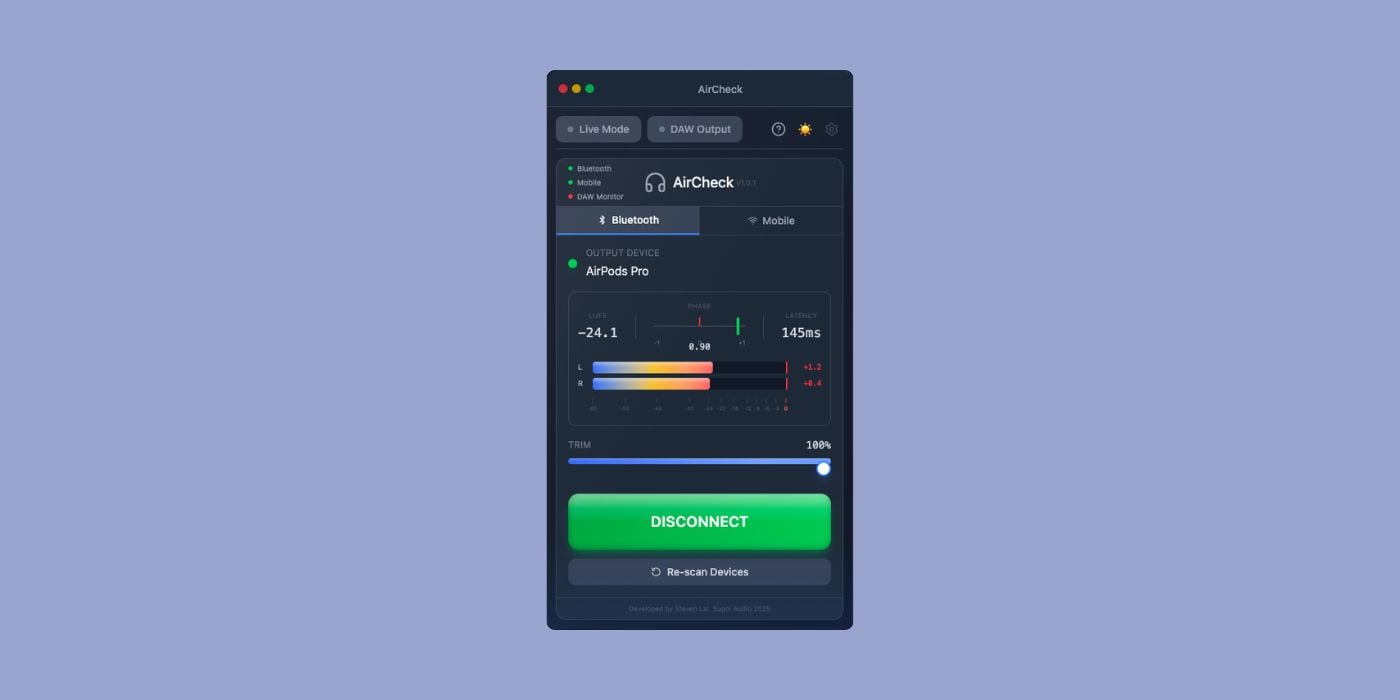
Addressing concerns about real-time performance, AirCheck offers a "Live Mode" that reduces total latency from an approximate 100-120ms range down to a more responsive 80-100ms. However, the developer advises caution, noting that Live Mode can introduce audio instability depending on the system’s processing load. For final output, AirCheck is designed to bypass automatically during export, ensuring that the integrity of the bounced audio files remains unaffected by the plugin’s internal processing or routing.
Sugoi Audio offers a free trial version of AirCheck, which includes a one-second burst of white noise every 30 seconds of playback. The full, unrestricted version is available as a one-time purchase for $14.99. The extended validity of the 20% discount until April 2026 underscores Sugoi Audio’s commitment to making this innovative tool accessible to a wide user base.
BlindCard: The Science of Objective Critical Listening
Accompanying AirCheck is BlindCard, another utility plugin from Sugoi Audio, distinguished by its status as a free and open-source offering. BlindCard directly tackles the pervasive issue of cognitive bias in critical listening—a challenge that affects even the most seasoned audio professionals. When comparing different mixes, masters, or processing chains, human perception can be heavily influenced by preconceived notions, brand loyalty, visual cues from plugin interfaces, or even the order in which tracks are presented. BlindCard provides a poker-themed interface to conduct blind A/B/X testing, ensuring decisions are based solely on auditory perception.
The plugin allows users to compare up to eight different audio tracks or processing chains. By randomizing and concealing the identities of these tracks, BlindCard forces the listener to evaluate the audio purely by ear, devoid of any visual or psychological bias. This method is crucial for making objective decisions about subtle sonic differences, such as the impact of a compressor setting, the character of an equalizer, or the overall quality of a master.
BlindCard offers three distinct testing modes to cater to various analytical needs:
- Star Rating: Users can assign a star rating to each hidden track based on their perceived quality, allowing for a quantitative comparison without knowing which track corresponds to which processing.
- Guess Mode: This mode challenges users to identify specific tracks after the blind test, serving as a self-assessment tool to gauge the effectiveness of their listening skills and the audibility of differences.
- Q&A Quiz: A more structured approach where users can answer specific questions about each track, such as "Which track has more bass?" or "Which track sounds wider?", further refining their critical listening and comparative analysis.
A critical feature of BlindCard is its automatic LUFS loudness matching. This function ensures that all compared tracks are brought to a consistent perceived volume level. This is vital because humans naturally perceive louder sounds as "better," a common bias that can easily skew comparative judgments if volume levels are not meticulously matched. By equalizing loudness, BlindCard enables truly fair and accurate comparisons.
The decision by Sugoi Audio to release BlindCard as an open-source project (under the AGPL-3.0 license) is noteworthy. It not only democratizes access to a professional-grade testing tool but also fosters community involvement, allowing developers and users to contribute to its ongoing improvement and transparency. This open-source approach aligns with a growing trend in the audio software industry, promoting collaborative development and ensuring the tool remains adaptable to evolving user needs.
Availability and Technical Specifications

Both AirCheck and BlindCard are designed for broad compatibility within modern production environments.
AirCheck is available in AU (Audio Unit) and VST3 formats for macOS 10.15 (Catalina) or later. For Windows users, it is available in VST3 format for Windows 10 or later. Currently, support for Pro Tools (AAX format) is not yet available for AirCheck.
BlindCard offers even wider compatibility, supporting macOS and Windows across AU, VST3, and Standalone formats, providing flexibility for users who may prefer to run A/B tests outside of a DAW environment.
Implications for Modern Audio Production
The release of AirCheck and BlindCard by Sugoi Audio underscores a significant trend in the audio software industry: the development of specialized utility plugins that address specific, often overlooked, workflow challenges. AirCheck directly confronts the critical issue of mix translation in an increasingly fragmented playback landscape. As consumers rely heavily on a diverse array of listening devices, from high-fidelity headphones to compact smart speakers, the ability for producers to quickly and efficiently verify their mixes across these platforms is no longer a luxury but a necessity. By simplifying this process, AirCheck empowers engineers to deliver more consistent and universally enjoyable audio experiences, ultimately improving the quality of commercially released music.
BlindCard, on the other hand, targets the psychological aspect of audio production. In a field where subjective judgment often intertwines with technical expertise, tools that promote objectivity are invaluable. The prevalence of cognitive biases can lead to suboptimal mixing and mastering decisions, costing time and potentially compromising the final product. By providing an accessible and engaging platform for blind A/B testing, BlindCard helps cultivate more disciplined and analytical listening habits among producers, leading to more informed and ultimately superior creative choices. Its open-source nature further enhances its potential impact, fostering a community-driven approach to critical listening development.
In a statement inferred from the company’s release philosophy, a representative from Sugoi Audio might emphasize their commitment to "solving real-world problems for audio creators through intuitive and powerful software. We believe that by removing technical friction and promoting objective decision-making, we can help artists and engineers achieve their best work, ensuring their music sounds great wherever it’s heard."
These plugins represent a forward-thinking approach to audio production, acknowledging both the technical complexities of contemporary studio workflows and the psychological nuances of critical listening. By offering innovative solutions at competitive price points, Sugoi Audio is poised to make a meaningful impact on how producers and engineers approach the final stages of their creative process.
More information on AirCheck, including the free trial and purchase options, is available at https://bit.ly/3OYaGBn. BlindCard, being a free utility, can be downloaded directly from https://bit.ly/4srsbZv. The release of these tools marks a notable contribution to the ever-evolving toolkit available to audio professionals, promising more efficient workflows and higher quality outputs in the dynamic world of music production.
