

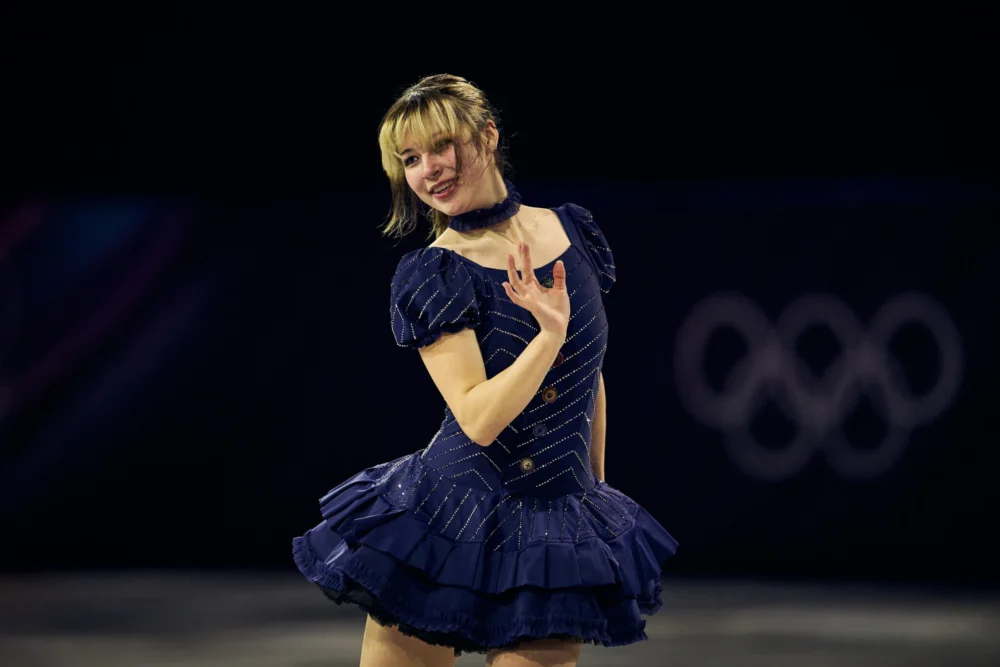
Alysa Liu, the prodigious American figure skater who captured the nation’s attention by securing the United States’ first gold medal in the Winter Olympics’ women’s free skating event since 2002, has found herself at the confluence of athletic excellence and cultural commentary. While her groundbreaking quadruple jumps and artistic prowess on the ice have cemented her status as a global sports icon, it is her eclectic and often unexpected music taste that has recently propelled her into a different kind of spotlight, sparking viral moments and intergenerational conversations about music discovery. This unique aspect of her public persona culminated in a widely reported, humorous mix-up on NBC’s TODAY show, where a popular morning program mistakenly played a pop-punk anthem in an attempt to feature her latest musical recommendation.
The Rise of a Skating Star and Her Unconventional Soundtrack
Liu’s journey to Olympic gold was marked by a blend of athletic determination and a distinctive artistic flair. Born in Clovis, California, she quickly distinguished herself as a prodigy in the competitive world of figure skating. Her early career saw her shattering records, becoming the youngest woman to land a triple Axel in international competition at just 13 years old and later the first American woman to land a quadruple lutz. These technical achievements, combined with an engaging performance style, established her as a formidable force on the ice, culminating in her historic Olympic victory. This gold medal not only ended a two-decade drought for American women in free skating but also heralded a new era for the sport, emphasizing both technical innovation and expressive artistry.
Beyond her athletic accomplishments, Liu has consistently demonstrated an independent spirit, particularly evident in her choice of performance music. Unlike many figure skaters who often opt for classical compositions or well-established cinematic scores, Liu has embraced a more contemporary and personal soundtrack. This inclination first garnered widespread public attention following her captivating performance to a track by PinkPantheress, the acclaimed British pop singer known for her unique blend of drum and bass, UK garage, and pop sensibilities. The performance resonated deeply with audiences and even earned a public acknowledgment and thank you from PinkPantheress herself, solidifying Liu’s reputation as a trendsetter within the figure skating community and beyond. This initial foray into modern, genre-bending music laid the groundwork for further inquiries into her musical preferences, setting the stage for the now-infamous "Fire In My Heart" saga.
The ‘Fire In My Heart’ Saga: A Chronology of Discovery and Misconception
The narrative surrounding "Fire In My Heart" began to unfold when Liu, engaging with media outlets following her Olympic triumph, mentioned her desire to skate to a song bearing that title. Her casual reference quickly piqued the interest of fans and journalists alike, eager to delve deeper into the musical mind of the young champion. What followed was a series of events that highlighted the generational gaps in music knowledge, the pervasive influence of social media trends, and the charming humility of a newly minted sports superstar.
The most prominent chapter of this saga occurred during Liu’s visit to the TODAY show. The morning program, known for its live interviews and lighthearted segments, attempted to surprise Liu by playing what they believed to be her requested track. As the hosts, including Craig Melvin, Carson Daly, and Hoda Kotb, geared up for the reveal, a "2013 pop-punk anthem" by the band Simple Plan began to blare through the studio. Melvin, turning to Daly, enthusiastically inquired, "Did you mention, Simple Plan’s ‘Fire In My Heart’?" Daly, a former TRL host with a background in music television, confidently affirmed, "This is it."
However, their confidence was misplaced. As the familiar chords of the pop-punk track filled the air, Liu, with characteristic grace and a hint of amusement, gently clarified the error. "No," she chuckled, "but it’s totally fine." Hoda Kotb, recognizing the mix-up, humorously asked if it was her "earworm," to which Liu politely declined. The moment, a blend of good intentions and comedic timing, quickly went viral. The TODAY show’s official social media accounts embraced the gaffe, captioning their clip with a candid "oops" and a message to Liu: "@alysaxliu we tried finding your song so last minute we’ll see you when you perform to the right ‘fire in my heart’ <3." This public acknowledgment of the error only added to the charm of the incident, endearing Liu further to a wide audience.
Later the same day, Liu continued her media circuit, appearing on Bravo’s Watch What Happens Live with Andy Cohen. By this point, Liu had managed to recall the artist behind her elusive "Fire In My Heart," putting an end to the speculation. During her conversation with Cohen, she finally revealed that the track was an obscure 1984 single by the UK new wave/synth-pop group Escape From New York. Cohen, though unfamiliar with the band, appeared intrigued by the revelation, underscoring the track’s niche status.
Escape From New York: The Unexpected Resurgence of an 80s Obscurity
The identity of the true "Fire In My Heart" artist shed light on a fascinating aspect of modern music discovery: the power of platforms like TikTok to resurrect forgotten gems from decades past. Escape From New York, originally known as Aistrip One, was a British new wave and synth-pop outfit that enjoyed only a brief moment in the sun during the mid-1980s. Their discography is remarkably sparse, consisting of just a couple of singles and no full-length album, making them a true deep cut in the annals of music history. For decades, their work remained largely within the confines of vinyl collectors and dedicated 80s enthusiasts.
However, the digital age, particularly the rise of short-form video platforms, has created new avenues for cultural artifacts to find unexpected relevance. In 2016, the independent record label Isle Of Jura undertook a reissue of Escape From New York’s limited catalog, a move that likely laid the groundwork for the song’s eventual resurgence. Fast forward to recent months, and "Fire In My Heart" inexplicably — or perhaps, predictably in the context of TikTok’s algorithms — found a new lease on life, becoming a viral sensation on the platform.
The phenomenon of old new wave and synth-pop tracks going viral on TikTok is not isolated. The platform has become a digital archaeological site where users unearth and repurpose music from various eras, often introducing it to an entirely new, younger demographic. Examples abound, from Pet Shop Boys’ "West End Girls" to Bronski Beat’s "Smalltown Boy," both of which experienced significant spikes in popularity and streams after gaining traction on TikTok. The rhythmic, often melancholic, yet danceable qualities of 80s synth-pop, combined with its distinct aesthetic, lend themselves well to the platform’s visual-driven content creation. "Fire In My Heart," with its nostalgic synth melodies and evocative lyrics, perfectly fits this mold, making its sudden popularity among Gen Z audiences, including an Olympic champion, a testament to TikTok’s unparalleled influence on contemporary music trends and discovery.
Broader Implications: Alysa Liu as a Cultural Bridge
Alysa Liu’s public exploration of her music taste, from contemporary pop phenoms like PinkPantheress to obscure 80s synth-pop acts, carries several significant implications. Firstly, it positions her as a relatable figure who transcends the typical athlete persona. Her willingness to share personal preferences, particularly those that are slightly unconventional, creates a connection with her audience that extends beyond her athletic achievements. In an era where authenticity is highly valued, Liu’s genuine enthusiasm for diverse music genres makes her an appealing and accessible role model.
Secondly, her choices subtly influence the landscape of figure skating itself. Historically, the sport has been associated with classical music, grand orchestral pieces, and traditional narratives. While these remain integral, skaters like Liu are pushing the boundaries, demonstrating that contemporary and even niche music can be equally effective in conveying emotion and complementing complex choreography. This diversification of musical selections can make figure skating more appealing to younger audiences, potentially drawing new fans to the sport who might identify with the sounds of their own generation or discover new genres through their favorite athletes.
Furthermore, Liu’s "Fire In My Heart" moment highlights the democratizing power of platforms like TikTok in shaping cultural tastes. An Olympic gold medalist’s endorsement, however unintentional, can single-handedly catapult an obscure track from decades past into mainstream consciousness, leading to increased streams, renewed interest in the artist, and a broader appreciation for musical history. It underscores how digital platforms have become crucial arbiters of cultural relevance, capable of creating unexpected bridges between generations and musical eras.
A Diverse Soundtrack for a Champion
Beyond "Fire In My Heart," Liu’s discussion on Watch What Happens Live revealed an even broader spectrum of her musical inclinations. She expressed interest in skating to Billie Eilish’s atmospheric "Chihiro," a choice that speaks to her connection with contemporary, introspective artistry. Her mention of Tchaikovsky’s iconic "Swan Lake" demonstrates a respect for classical tradition, indicating a nuanced appreciation that spans centuries of musical composition. Additionally, her desire to perform to Mitski’s emotionally charged "Star" further solidifies her alignment with indie artists known for their raw lyricism and unique soundscapes. Finally, her mention of PinkPantheress’ "Capable Of Love" reinforces her admiration for the artist who first brought her contemporary music taste into the spotlight.
Alysa Liu’s journey continues to be one of both athletic triumph and cultural influence. Her ability to seamlessly navigate the demanding world of elite sports while simultaneously shaping public discourse around music underscores her unique position. Whether she is landing a quadruple jump or introducing a forgotten synth-pop track to millions, Liu remains a compelling figure, constantly enriching the narrative of what it means to be a modern Olympic champion. Her diverse music taste is not merely a footnote to her career; it is an integral part of her identity, reflecting a dynamic personality that resonates far beyond the ice rink.
