

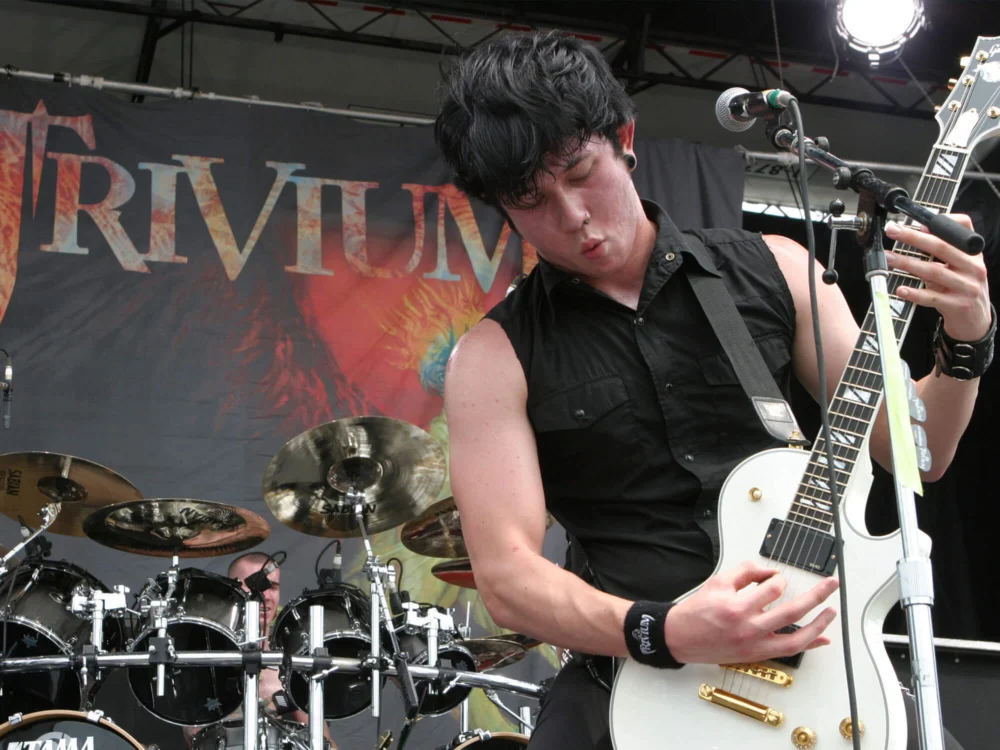
The formative years of any influential band are often marked by a confluence of talent, ambition, and sometimes, divergent personal trajectories. Such was the case for American metal titans Trivium, whose original frontman, Brad Lewter, has recently offered an illuminating perspective on his departure from the group in 2000. In a candid interview featured in the latest print issue of Metal Hammer, Lewter detailed how the intense dedication and "laser focus" of a then 13-year-old Matt Heafy, coupled with founding drummer Travis Smith’s similar drive, ultimately led him to question his place within the band’s burgeoning ambitions. This revelation provides a rare glimpse into the foundational dynamics that would eventually propel Trivium to global recognition, while also underscoring the profound impact of individual commitment on a collective artistic endeavor.
The Genesis of Trivium: An Unfolding Narrative
Trivium’s journey began in 1999 in Orlando, Florida, a fertile ground for diverse musical acts. The initial lineup featured Brad Lewter on vocals, Jarred Bonaparte on bass, and Travis Smith on drums. This early iteration of the band was characteristic of many aspiring groups: young musicians with a shared passion for heavy music, exploring their sound and identity. Lewter’s role as the inaugural vocalist placed him at the forefront of these nascent creative explorations, helping to define the band’s initial sonic blueprint. The local scene in the late 1990s and early 2000s, while perhaps not as globally connected as today, provided essential proving grounds for bands to hone their craft, perform in front of live audiences, and cultivate a distinct identity.
However, the band’s trajectory took a decisive turn with the recruitment of Matt Heafy later in 1999. At a remarkably young age of 13, Heafy joined as a guitarist, quickly showcasing a precocious talent and an undeniable drive. His arrival marked a significant shift in the band’s internal dynamics, introducing an element of relentless ambition that would prove to be both foundational to Trivium’s future success and, for some, a catalyst for departure.
Matt Heafy’s Arrival: A Catalyst for Change
Lewter’s account in Metal Hammer highlights the almost immediate impact of Heafy’s presence. He describes a palpable shift in the band’s collective energy and focus once Heafy, along with Travis Smith, began to exhibit an extraordinary level of dedication. "Heafy and Travis were really determined," Lewter recollected, explaining the stark contrast in work ethic. He vividly described their "woodshedding" — a musician’s term for rigorous, repetitive practice sessions, often involving playing the same riff repeatedly until perfected. This intense commitment to technical mastery and compositional precision became a defining characteristic of the duo.
This dedication, while instrumental for a band aiming for professional heights, diverged significantly from the approach of other members. Lewter noted that he and Jarred Bonaparte harbored "other things away from the music," implying a broader set of interests and perhaps a less singular focus on the band’s advancement. This divergence in commitment levels is a common friction point in many emerging bands, where the shared dream can be interpreted with varying degrees of intensity by individual members. For Heafy, even at 13, his "laser focus" on perfectionism was already a dominant trait, foreshadowing the relentless work ethic that would define his entire career.
The Influence of External Forces and Managerial Ambition
Beyond the internal dynamics of musical practice, Lewter also pointed to the active involvement of Matt Heafy’s father in the band’s early development. "His dad was very active in management and promotion," Lewter stated, indicating a professionalized approach to the band’s trajectory from a very early stage. This level of external support and strategic planning, while often beneficial for a young band seeking to navigate the complexities of the music industry, can also alter the perceived stakes for its members.
For Lewter, this added layer of external ambition and the rigorous demands it entailed became another factor in his re-evaluation. The prospect of being "on that train" — a metaphorical journey toward professional stardom guided by an unwavering commitment and managerial oversight — began to feel incompatible with his personal aspirations and temperament. The music industry, particularly for bands striving for mainstream success, demands not only artistic talent but also an immense amount of time, sacrifice, and a willingness to conform to various pressures of promotion, touring, and relentless creative output.
The Departure and the Path Not Taken
Ultimately, Brad Lewter made the decision to depart from Trivium in 2000, approximately a year after Matt Heafy had joined. This decision, though rooted in a clear understanding of his own priorities at the time, was not without subsequent moments of reflection. Lewter openly admitted to experiencing "some regrets about hopping off when I did," particularly as he witnessed Trivium’s meteoric rise to prominence. Seeing the band on MTV, a significant marker of mainstream success in the early 2000s, or hearing about their tours with legendary acts like Metallica, naturally stirred a sense of what might have been.

However, Lewter’s reflections are not steeped in bitterness, but rather in a mature understanding of personal fit. He succinctly articulated, "but it wasn’t for me." He identified himself as "more of an introvert," someone who found comfort and professional fulfillment in a different kind of environment. This self-awareness is crucial, as the life of a touring musician, especially in a band of Trivium’s caliber, demands an extroverted persona, constant travel, public interaction, and a willingness to live under constant scrutiny. Lewter’s preference for a "comfortable space in a dark room in front of a screen" perfectly encapsulates his current profession and personality.
Trivium’s Unstoppable Ascent: A Chronology of Dedication
Following Lewter’s departure, Trivium solidified its lineup, with Matt Heafy eventually taking over lead vocals in addition to his guitar duties, a role he has masterfully maintained ever since. This pivotal moment allowed the band to fully embrace the "laser focus" that Lewter had observed. The early 2000s saw Trivium rapidly develop their sound, blending elements of thrash, melodic death metal, and metalcore into a distinctive and powerful style.
- 2003: Ember to Inferno – Their debut album, released on Lifeforce Records, showcased their raw talent and ambitious songwriting. It garnered significant underground attention and laid the groundwork for their future success.
- 2005: Ascendancy – This album marked their breakthrough. Released on Roadrunner Records, Ascendancy was critically acclaimed, praised for its intricate guitar work, powerful vocals, and anthemic choruses. Tracks like "Pull Harder on the Strings of Your Martyr" and "A Gunshot to the Head of Trepidation" became instant fan favorites and propelled Trivium into the global metal consciousness. The album’s success led to extensive touring, including a prominent spot on the Roadrunner United project and opening slots for larger bands, exposing them to a wider audience.
- 2006: The Crusade – While polarizing some fans with its more thrash-oriented sound and cleaner vocals, The Crusade demonstrated the band’s willingness to evolve and experiment.
- 2008: Shogun – Often considered a high-water mark in their discography, Shogun combined the aggression of their earlier work with progressive elements and intricate song structures, solidifying their reputation as technical masters and creative innovators.
- Ongoing Success: Through albums like In Waves (2011), Vengeance Falls (2013), Silence in the Snow (2015), The Sin and the Sentence (2017), What the Dead Men Say (2020), and their latest, In the Court of the Dragon (2021), Trivium has consistently pushed the boundaries of modern metal. Their unwavering dedication to touring, songwriting, and fan engagement has cemented their status as one of the genre’s most respected and enduring acts. Matt Heafy’s commitment extends beyond the music, embracing streaming culture, martial arts (Jiu-Jitsu), and other entrepreneurial ventures, all while maintaining a rigorous musical schedule.
Brad Lewter’s Professional Evolution: A Different Kind of Success
While Trivium was conquering stages worldwide, Brad Lewter embarked on a distinctly different, yet equally fulfilling, professional path. He channeled his creative energies into the field of animation, a discipline that perfectly aligns with his self-described introverted nature and preference for focused, screen-based work. Today, Lewter is a professor of animation at Ithaca College in New York, a testament to his expertise and dedication in his chosen field. This career allows him to engage with creativity and artistry in a structured, academic environment, far removed from the rigors and public demands of a touring musician.
His current life, as he explains, remains connected to his past, albeit at a comfortable distance. "I am still friends with Heafy and his wife on social media," he shared, indicating an enduring respect and camaraderie despite their divergent paths. This social media connection allows him to observe Trivium’s ongoing endeavors and Heafy’s relentless schedule, reinforcing his conviction that "that’s not the kind of life I could sustain." This honest appraisal speaks volumes about understanding one’s own limits and desires, prioritizing personal well-being over the allure of rock stardom if the latter doesn’t align with one’s fundamental nature.
Implications and Broader Analysis: The Architecture of Ambition
Lewter’s story serves as a compelling case study in the architecture of ambition within a creative collective. It highlights several key implications:
- Divergent Definitions of Success: For some, success in music means global fame, extensive touring, and massive record sales. For others, it might be the pure joy of creation, local performance, or even the development of technical skill without the accompanying pressures of the industry. Lewter’s narrative underscores that there is no single, universally appealing definition of success, and true fulfillment often comes from aligning one’s path with one’s inherent personality and values.
- The Power of Singular Focus: Matt Heafy’s "laser focus" is undeniably a cornerstone of Trivium’s longevity and success. His dedication, evident from a very young age, transformed the band from a local act into an international phenomenon. This demonstrates how a concentrated, almost obsessive, commitment to a craft can be a potent force, particularly in highly competitive fields like professional music.
- Early Lineup Changes as Formative Moments: Many successful bands experience early lineup changes. These often act as crucial filtering mechanisms, ensuring that the remaining members share a sufficiently aligned vision and work ethic to endure the challenges ahead. Lewter’s departure, while personal, was ultimately a necessary step for Trivium to coalesce around a core of shared, intense ambition.
- The Role of External Support: The involvement of Heafy’s father in management and promotion highlights how early professional guidance, even from a parental figure, can significantly impact a band’s trajectory. It can provide structure, open doors, and instill a sense of serious purpose from the outset.
The Enduring Legacy and Future Outlook
Trivium’s journey from their Orlando origins to headlining international festivals is a testament to the enduring power of relentless dedication, artistic evolution, and a unified vision. Matt Heafy, now a seasoned veteran, continues to embody the same "laser focus" that Lewter observed decades ago. His commitment to the band’s output, live performance, and connection with fans remains unwavering.
As Trivium looks ahead, the band has confirmed that their 11th studio album is currently in the works, with an anticipated release in late 2026 or early 2027. This continued creative output, nearly a quarter-century after their formation, speaks volumes about the sustained energy within the group. Furthermore, the Orlando metallers have a series of shows booked across Europe this summer, continuing their legacy as a formidable live act. Fans interested in attending can find ticket information and a full list of dates at Trivium.org.
Brad Lewter’s reflections offer a valuable, human perspective on the choices made at the crossroads of ambition and personal fulfillment. His story is not one of missed opportunity, but rather of choosing a path authentically suited to his nature, while recognizing and respecting the monumental success achieved by his former bandmates. It’s a reminder that sometimes, stepping off one train allows another, more fitting journey to begin.
