

The Crow Hill Company has officially launched "Icky Bass," the latest addition to its acclaimed free Vaults collection, offering music producers and sound designers an opportunity to explore a unique sonic palette. This distinctive virtual instrument combines the rare character of a Fender Rhodes Piano Bass with the aggressive tonality of Jack White’s signature Eventide Knife Drop fuzz pedal, meticulously recorded and presented as a limited-time free download. The release underscores a growing trend in the music technology sector: the digital preservation and innovative reinterpretation of vintage and custom-engineered sounds, making them accessible to a global community of creators.
The Genesis of "Icky Bass": A Nod to Rock Pedigree
The name "Icky Bass" is a direct homage to "Icky Thump," the 2007 album by the iconic rock duo The White Stripes, a band famously fronted by guitarist and vocalist Jack White. This naming convention immediately signals the instrument’s sonic intention and its lineage, drawing a clear connection to White’s distinctive, often gritty, and raw sound. The instrument’s core sound originates from recordings of a Fender Rhodes Piano Bass, an instrument with its own rich, if somewhat understated, history. These recordings were then masterfully processed through Jack White’s bespoke Eventide Knife Drop fuzz pedal, a device renowned for its ability to impart unique distortion and analog-style synth textures.
The Crow Hill Company’s Vaults series operates on a principle of temporary free access, meaning "Icky Bass" is available for download without cost for a limited duration before it transitions into an archived status. This model incentivizes prompt engagement from users while maintaining the exclusive nature of the collection. The initiative not only provides valuable tools to musicians but also acts as a curated repository of distinct sounds, often derived from rare or custom-modified hardware.
Unpacking the Fender Rhodes Piano Bass: A Historical Perspective
To fully appreciate "Icky Bass," it is essential to delve into the origins and journey of its primary sound source: the Fender Rhodes Piano Bass. Introduced by Harold Rhodes in 1960, this instrument was a pioneering effort to provide a portable, keyboard-based solution for bass lines in live performance. It predated the more widely recognized full-sized Rhodes pianos, such as the Fender Rhodes Suitcase and Stage models, which gained significant traction in the mid-to-late 1960s and flourished throughout the 1970s.
Harold Rhodes, a visionary in musical instrument design, initially conceived the electric piano as a rehabilitation tool for injured airmen during World War II, using discarded aircraft parts. His early "Pre-Piano" models demonstrated the potential for electronically amplified tines to produce musical tones. By 1960, the Piano Bass emerged as a dedicated, compact instrument, featuring a two-octave (E-E) keyboard range, specifically designed to cover the lower registers. Its portability and unique electro-mechanical sound, characterized by a bell-like attack and warm sustain, offered an alternative to traditional upright or electric bass guitars.
Despite its innovative design and capabilities, the Fender Rhodes Piano Bass never achieved widespread commercial success comparable to its larger siblings or conventional bass instruments. Several factors contributed to its niche status. Most bands of the era preferred the tactile experience and distinct timbre of a traditional electric bassist, whose playing style and sonic contribution were deeply ingrained in popular music. Furthermore, as the full-sized Rhodes models matured through the 1970s, offering broader ranges and more versatile sounds, the Piano Bass found its practical niche diminishing. The advent of synthesizers in the late 1970s and 1980s further diversified options for keyboard bass, pushing the Piano Bass further into obscurity.
Consequently, surviving models of the Fender Rhodes Piano Bass are relatively rare today and have become highly sought-after collector’s items. Their scarcity and unique sound contribute to their allure among vintage instrument enthusiasts and professional musicians seeking specific timbres. The most iconic and widely recognized application of the Fender Rhodes Piano Bass is undoubtedly its use by Ray Manzarek of The Doors. Manzarek famously played bass lines on the instrument with his left hand, often routing it through a separate amplifier, while simultaneously playing organ or other keyboards with his right hand. This technique became a cornerstone of The Doors’ distinctive sound, allowing the band to function without a dedicated bass guitarist for much of its early career and creating a unique harmonic and rhythmic texture. The low-end thrum of the Piano Bass became synonymous with hits like "Light My Fire" and "Riders on the Storm," cementing its place in rock history despite its limited market penetration.
The Sonic Alchemy: Eventide Knife Drop and Recording Process
The transformation of the Fender Rhodes Piano Bass recordings into "Icky Bass" is largely attributed to the Eventide Knife Drop pedal, a crucial element in achieving the instrument’s distinctive character. The Knife Drop is not merely a standard fuzz pedal; it is a collaboration between the renowned audio effects company Eventide and Jack White himself, reflecting his unique approach to sound manipulation.
The pedal is designed to fuse aggressive fuzz with an analog-style synth voice, providing a wide array of tonal possibilities. Its capabilities extend beyond simple distortion, incorporating sub-octave textures and highly aggressive filtered tones. This combination allows for rich, complex harmonics and a profound sonic depth that transcends typical bass sounds. The choice of the Knife Drop for "Icky Bass" is particularly fitting, given Jack White’s known penchant for unconventional signal chains and his pursuit of raw, visceral sounds that often blur the lines between instruments. His signature sound, frequently characterized by gritty guitar tones and a deliberately lo-fi aesthetic, aligns perfectly with the pedal’s design philosophy.
The recording process for "Icky Bass" at Crow Hill HQ was meticulous, ensuring that the unique characteristics of both the Rhodes Piano Bass and the Knife Drop pedal were captured with pristine clarity and depth. The signal chain involved running the instrument through a Neve 1073 DI. The Neve 1073 is an iconic microphone preamplifier and equalizer module, celebrated for its warm, rich, and musical sound. Its DI (Direct Input) capabilities allow for instruments to be recorded directly into a console or interface, bypassing an amplifier, while imparting its characteristic sonic enhancement. The use of a Neve 1073 DI ensures that the fundamental tone of the Rhodes Piano Bass, before and after the fuzz, is captured with exceptional fidelity, dynamic range, and a subtle, pleasing coloration that is highly regarded in professional audio circles. This attention to detail in the recording phase is paramount for creating a high-quality virtual instrument that faithfully represents its source material.
Navigating the "Icky Bass" Interface: Simplicity and Control
Consistent with The Crow Hill Company’s Vaults series philosophy, the "Icky Bass" virtual instrument boasts an intuitive and user-friendly interface. This design choice prioritizes creative flow, allowing musicians to quickly dial in desired sounds without getting lost in overly complex menus or parameters. The interface is streamlined, focusing on the most impactful controls to shape the instrument’s timbre.
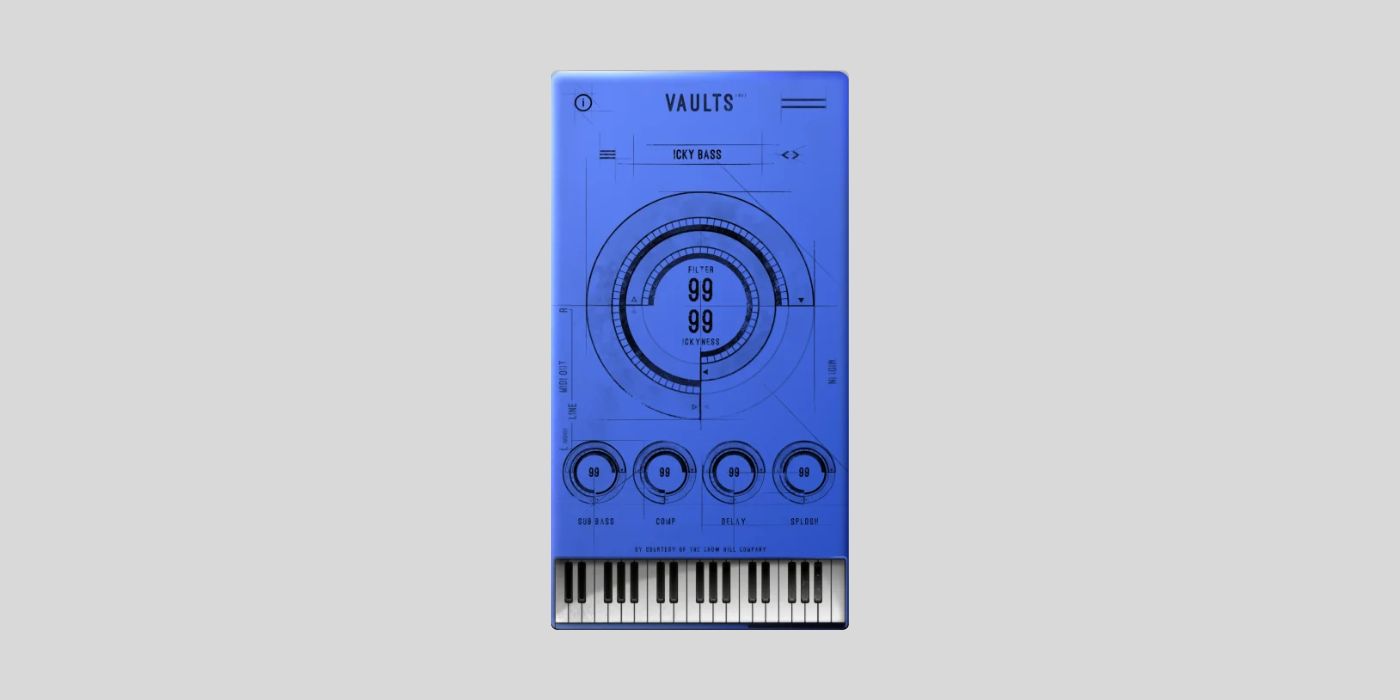
The central control is the "Knife" dial, which serves as a blend knob between the clean Rhodes Bass signal and the full Knife Drop fuzz. At its zero setting, users experience the pure, unadulterated electric piano tone of the Fender Rhodes Piano Bass, showcasing its inherent warmth and bell-like qualities. As the dial is incrementally increased, the raw, aggressive sound of the Knife Drop fuzz pedal is progressively introduced, allowing for a seamless transition from subtle saturation to full-blown, gritty distortion. This blend capability offers immense versatility, enabling users to craft everything from clean, vintage-inspired bass lines to heavily processed, industrial-edged textures.
Complementing the "Knife" dial is the "Expression" dial, which provides finer control over the bass’s timbre. While the specific parameters it controls are not explicitly detailed in the initial release, typically such a control in a virtual instrument can adjust aspects like tone, resonance, or filter cutoff, allowing for subtle yet significant shaping of the instrument’s overall character. This enables users to tailor the instrument’s voice to fit various musical contexts, from dark and brooding to bright and cutting.
Furthermore, "Icky Bass" incorporates a selection of essential effects, each controlled by smaller, dedicated dials on the interface. These effects are designed to enhance and expand the instrument’s sonic capabilities, providing immediate sound design options:
- Autowah: This effect creates a dynamic, sweeping wah response that reacts to the player’s input velocity and amplitude. It can impart a funky, rhythmic movement to bass lines or create dramatic filter sweeps, adding an expressive layer to the performance.
- Chorus: A classic modulation effect, Chorus creates a thicker, wider, and richer sound by subtly detuning and delaying copies of the original signal. It can add lushness and depth, making the bass sound more expansive and less singular.
- Phaser: The Phaser effect introduces a swirling, hollow modulation by creating phase shifts in the signal, resulting in a characteristic "whooshing" or "jet plane" sound. It can add a psychedelic or ethereal quality, enhancing the instrument’s atmospheric potential.
- Convolution Reverb: Unlike algorithmic reverbs, convolution reverb uses impulse responses (IRs) captured from real acoustic spaces or hardware units. This provides a highly realistic and naturalistic sense of space, allowing "Icky Bass" to be placed within virtual environments ranging from small rooms to vast halls, adding depth and realism to the sound.
The combination of these carefully selected controls and effects ensures that "Icky Bass" is not just a static sample library but a dynamic and expressive virtual instrument, capable of a wide range of sonic interpretations.
The Crow Hill Company’s Vaults Series: A Model of Digital Curatorship
The release of "Icky Bass" is consistent with The Crow Hill Company’s established methodology for its Vaults series. This initiative is more than just a platform for distributing free virtual instruments; it represents a thoughtful approach to digital curatorship and community engagement within the music production landscape. The core principle of the Vaults series is to offer unique and high-quality instrument libraries free for a limited period, after which they are moved to an archive, potentially becoming paid products or simply unavailable for new downloads.
This model serves multiple purposes. For users, it creates an incentive to actively monitor The Crow Hill Company’s releases and download instruments promptly, fostering a sense of discovery and urgency. For the company, it generates buzz and builds a loyal community of users who appreciate access to premium-quality tools. Moreover, by focusing on unique sound sources—whether rare vintage instruments, custom-built gear, or unconventional recording techniques—The Crow Hill Company positions itself as a provider of distinct sonic flavors that often fill gaps left by more generic commercial libraries.
The Vaults series contributes significantly to the democratization of music production, making sounds that would otherwise be prohibitively expensive or difficult to acquire accessible to a broader audience. This includes aspiring producers, bedroom musicians, and professional sound designers alike. By providing high-fidelity recordings of instruments like the Fender Rhodes Piano Bass, processed through iconic pedals like the Eventide Knife Drop, The Crow Hill Company helps preserve musical heritage in a digital format, ensuring these sounds remain available for future generations of creators. The ongoing success of the Vaults series highlights a vibrant segment of the music technology market where quality, innovation, and community engagement drive product development and distribution.
Broader Implications for Music Production and Sound Design
The introduction of "Icky Bass" carries several broader implications for the contemporary music production landscape. Firstly, it exemplifies the increasing sophistication of virtual instruments in capturing not just the raw sound of an instrument but also the character imparted by specific signal chains and recording environments. This level of detail allows producers to access artist-specific tones and rare equipment without the financial burden or logistical challenges of acquiring the physical gear.
Secondly, the release underscores the enduring influence of iconic artists like Jack White on sound design and music technology. When an artist of his stature collaborates on a pedal like the Eventide Knife Drop, it creates a specific sonic blueprint that resonates with countless musicians. Translating this into a virtual instrument allows his sonic philosophy to permeate new productions, inspiring fresh creativity and providing tools for artists to emulate or adapt elements of his signature sound.
Thirdly, "Icky Bass" highlights the role of companies like Crow Hill in digital preservation. Many vintage instruments, like the Fender Rhodes Piano Bass, are fragile, expensive to maintain, and increasingly difficult to find. By meticulously sampling and virtualizing these instruments, their unique timbres are preserved and made immune to the ravages of time and wear. This ensures that their sonic legacy continues to be available, contributing to the rich tapestry of musical expression.
Finally, the freeware model employed by the Vaults series plays a crucial role in fostering innovation and accessibility within the music production community. It allows users to experiment with high-quality sounds without financial commitment, lowering the barrier to entry for new producers and encouraging established ones to explore new sonic territories. This cultivates a more dynamic and diverse musical ecosystem, where cutting-edge tools are available to all, regardless of budget.
In conclusion, "Icky Bass" is more than just a new virtual instrument; it is a meticulously crafted fusion of vintage rarity and modern sonic aggression, steeped in rock history. Its release by The Crow Hill Company as part of its Vaults series offers a compelling example of how digital technology can democratize access to unique sounds, preserve musical heritage, and continue to inspire new generations of music creators. Given its limited-time free availability, producers are encouraged to download "Icky Bass" promptly to integrate its distinctive character into their projects.
