

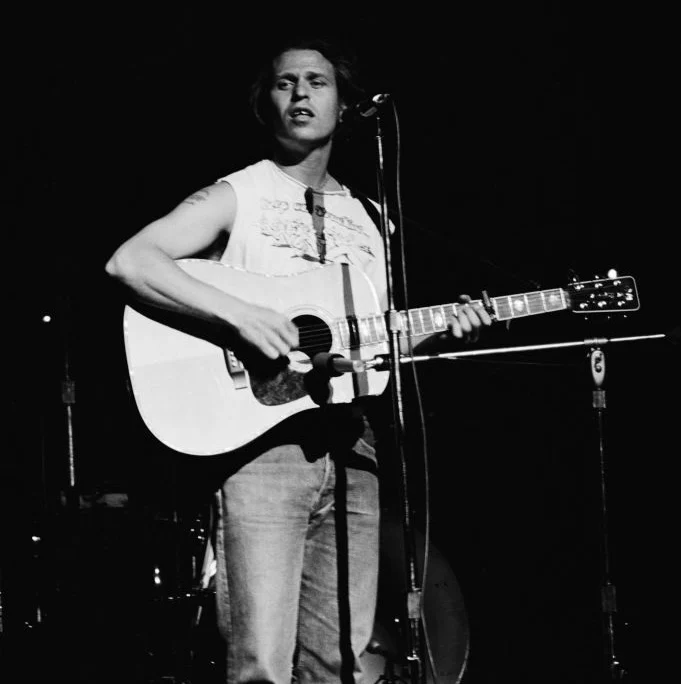
A Voice of a Generation: The Passing of a Counterculture Icon
McDonald’s death marks the end of an era for many who found their voice and their protests amplified through his music. Born Joseph Allen McDonald in Washington, D.C., in 1942, he emerged from a politically conscious household. His parents, Florence and Worden McDonald, had been members of the Communist Party in their youth, a background that subtly, yet profoundly, shaped his worldview and later activism. Raised in El Monte, California, outside of Los Angeles, McDonald’s formative years were spent amidst the burgeoning post-war American landscape, a time of both suburban conformity and simmering social unrest. As a teenager, his creative inclinations became evident; he began writing his own songs, formed his first rock band, and honed his musical skills as a member of his high school marching band, laying the groundwork for a future that would blend musical artistry with social commentary.
His path to becoming a counterculture icon was not direct. Following his high school years, McDonald served a three-year stint in the U.S. Navy. Stationed in Japan, this experience offered him a broader perspective on the world and the geopolitical landscape that would soon ignite his activism. Upon returning to the United States, he enrolled at Los Angeles State College, where his intellectual curiosity and burgeoning anti-establishment leanings found an outlet. It was during this period that he delved into publishing, creating a mimeographed zine titled Et Tu Brute. This early independent publication served as a canvas for his creative expressions, featuring "poetry and drawings and some song lyrics," providing a precursor to his later ventures in music and alternative media.
From Berkeley’s Streets to the Birth of a Band
The mid-1960s saw McDonald relocate to Berkeley, California, a vibrant hub of folk music, political activism, and intellectual ferment. Arriving in 1965 with aspirations of becoming a folk singer, he quickly immersed himself in the local scene. His days were a blend of busking on the iconic Telegraph Avenue, working at a local guitar shop, and actively participating in the burgeoning anti-Vietnam War protests that were sweeping across university campuses nationwide. This environment proved fertile ground for his artistic and political development.
It was in Berkeley that McDonald, alongside Barry "The Fish" Melton, co-launched Rag Baby, a magazine dedicated to chronicling the burgeoning Bay Area folk music scene. Rag Baby was more than just a print publication; McDonald harbored an innovative idea to release "talking issues" of the magazine, which would include audio supplements. This concept proved revolutionary and became the initial platform for Country Joe And The Fish. Co-founded in 1965, the band began self-releasing their first music through these Rag Baby "talking issues." Their sound was a unique blend of classic folk sensibilities with the exploratory, often improvisational, and "LSD-fueled psychedelia" that was then defining the San Francisco sound. This fusion of traditional roots and experimental textures quickly set them apart.
Ascension to Counterculture Icon Status: The Festivals and the Message
As their unique sound gained traction, Country Joe And The Fish relocated across the Bay to San Francisco, the epicenter of the counterculture movement. From there, their trajectory soared. They began touring extensively, playing at legendary venues and iconic festivals that would define the era. Their performances at the Monterey International Pop Festival in 1967 and New York’s Schaefer Music Festival solidified their reputation as a band that not only entertained but also provoked thought and challenged the status quo. Monterey Pop, often considered the beginning of the "Summer of Love," provided a global stage for their blend of folk protest and psychedelic rock, introducing their sound to a wider audience.
However, their outspoken nature and "snarky and progressive lyrics" often led to controversy. A notable incident involved their being banned from The Ed Sullivan Show, a prime-time television staple. The band’s refusal to conform to network censorship demands, particularly regarding their anti-war stance and perceived subversive lyrics, resulted in their exclusion from one of the most influential platforms of the era, further cementing their rebel image among their growing fanbase. This incident underscored the cultural divide of the 1960s, where mainstream media grappled with the radical messages emerging from the counterculture.
The Enduring Impact of "The Fish Cheer/I-Feel-Like-I’m-Fixin’-To-Die Rag"
The band’s most enduring and impactful contribution to the cultural lexicon of the 1960s was undoubtedly "The Fish Cheer/I-Feel-Like-I’m-Fixin’-To-Die Rag." This song, a satirical yet biting indictment of the Vietnam War, became an anthem for the anti-war movement. Its structure, beginning with the seemingly innocuous "Fish Cheer" (a call-and-response spelling of "F-I-S-H," evolving into the more provocative "F-U-C-K"), followed by the sardonic "I-Feel-Like-I’m-Fixin’-To-Die Rag," perfectly encapsulated the frustration and disillusionment felt by a generation.
The song’s zenith came during Country Joe And The Fish’s last-minute appearance at the legendary Woodstock Music & Art Fair in August 1969. With a few lineup changes, McDonald assembled the band’s final configuration for this pivotal performance. On the muddy fields of Max Yasgur’s farm, before an estimated half-million people, McDonald famously roused the crowd in an unexpected and uninhibited rendition of the "Fuck Cheer," altering the lyrics to spell out "F-U-C-K" before launching into "I-Feel-Like-I’m-Fixin’-To-Die Rag." This moment became one of the defining images and sounds of Woodstock, a powerful, spontaneous act of collective rebellion that underscored the festival’s role as a symbol of peace, love, and protest. The raw, unfiltered energy of that performance resonated deeply, making the song an indelible part of rock history and a timeless symbol of dissent. While "Not So Sweet Martha Lorraine" was their sole entry on the Billboard Hot 100 chart, peaking at No. 98 in 1967, "The Fish Cheer" achieved a far greater cultural penetration, becoming a rallying cry that transcended typical chart success.
Solo Career and Continued Activism
Country Joe And The Fish officially disbanded in 1970, but McDonald’s musical journey and commitment to activism were far from over. He embarked on a prolific solo career, releasing dozens of albums that explored a wide range of genres, from classic country standards to continued original anti-war songs. His solo work allowed him greater artistic freedom, enabling him to delve deeper into themes of social justice, environmentalism, and personal reflection. Albums like Thinking of Woody Guthrie (1969) and War War War (1971), which set poems by Robert W. Service to music, showcased his versatility and unwavering dedication to protest art. His most recent solo effort, 50, was released in 2017, demonstrating his enduring creative spirit well into his later years.
Throughout his solo career, McDonald remained a vocal advocate for peace and social change. He frequently appeared at subsequent Woodstock reunion festivals, testament to his iconic status and the enduring power of his message. He also continued to tour, occasionally reuniting with former bandmates for special performances, rekindling the spirit of Country Joe And The Fish for new generations of fans. His activism extended beyond music, as he was a steadfast supporter of veterans’ rights, particularly those affected by Agent Orange during the Vietnam War, and continued to speak out against war and injustice globally.
Legacy and Influence
Joseph Allen "Country Joe" McDonald’s legacy is multifaceted. He will be remembered not only as a pioneering figure in psychedelic folk-rock but also as one of the most articulate and courageous voices of the 1960s counterculture. His ability to blend sharp political commentary with engaging musicality created anthems that resonated with millions and continue to do so today. The "Fish Cheer/I-Feel-Like-I’m-Fixin’-To-Die Rag" remains a potent symbol of protest, its message of questioning authority and opposing unjust wars as relevant now as it was over five decades ago.
His contributions extended beyond the hits, influencing countless musicians and activists who followed. McDonald demonstrated that music could be a powerful tool for social change, a platform for dissent, and a means of fostering community among those yearning for a better world. His work with Rag Baby also underscored his foresight in independent media and alternative distribution channels, anticipating future trends in music and publishing.
McDonald’s passing due to Parkinson’s disease brings to a close a remarkable life dedicated to art and activism. The music world, along with generations of fans and fellow activists, will mourn the loss of a true original. His unique blend of humor, defiance, and musical genius ensured that he was not just a performer but a cultural architect, whose impact on American music and political consciousness will continue to resonate for decades to come. His songs served as a soundtrack to a tumultuous era, and they remain powerful reminders of the importance of speaking truth to power, even when the truth is uncomfortable.
Revisit some of McDonald’s most famous songs below, which stand as a testament to his enduring impact:
