

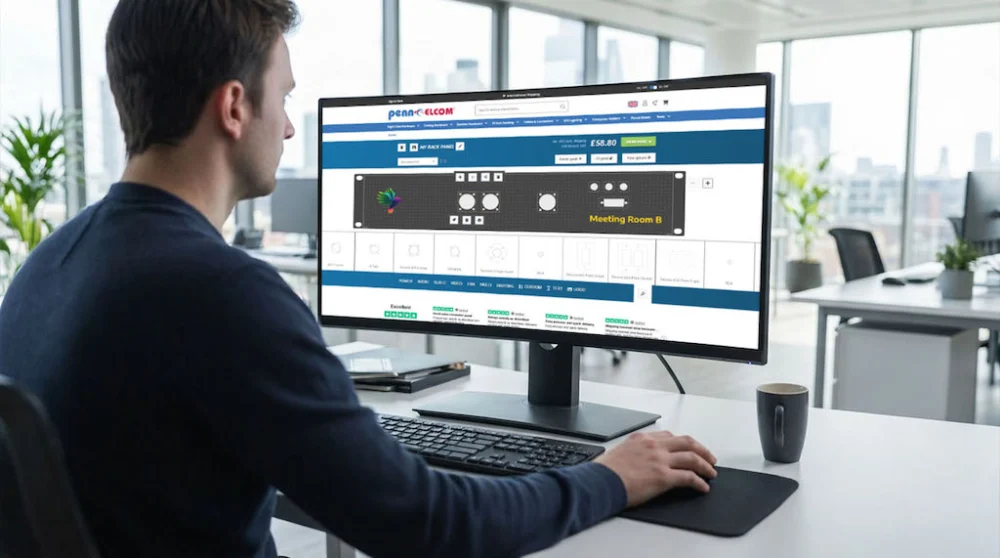
The global landscape of audiovisual (AV) infrastructure and professional rack building has undergone a significant transformation with the announcement from Penn Elcom, a world-leading manufacturer of AV rack, flightcase, and loudspeaker hardware. The company has officially released a comprehensive update to its flagship "Panel Designer" software, a move designed to streamline the workflow for system integrators, broadcast engineers, and event technicians worldwide. This web-based application, which has become a cornerstone of custom hardware design since its inception, now features an advanced DXF upload capability, effectively bridging the gap between user-friendly web interfaces and high-precision industrial engineering.
Since its initial launch in 2019, the Penn Elcom Panel Designer has served as a vital tool for professionals who require bespoke 19-inch rack panels but may not have the time or specialized CAD (Computer-Aided Design) expertise to generate technical drawings from scratch. The latest iteration of the software aims to provide even greater creative autonomy, allowing users to move beyond the constraints of pre-existing templates and libraries to create truly unique hardware solutions.
Technical Innovation: The Power of DXF Integration
The hallmark of this 2026 update is the expanded DXF (Drawing Exchange Format) upload functionality. In the previous versions of the software, users were limited to a substantial, yet finite, library of connector cut-outs and ventilation patterns. While this library covered the vast majority of industry-standard components—such as XLR, speakON, and HDMI connectors—it often posed a challenge for engineers working with proprietary hardware, legacy equipment, or emerging technologies that required non-standard mounting holes.
With the new DXF upload feature, users can now import their own custom shapes and device cut-outs directly into the web interface. This means that if a system integrator is working with a specialized piece of medical equipment, a boutique studio processor, or a unique cooling system, they can simply upload the exact geometric specifications and drag them onto their 1-unit (1U) to 6U panel layout. Once uploaded, these custom elements can be positioned with millimeter precision, ensuring that the final manufactured product aligns perfectly with the internal components of the rack.
This development is more than a simple feature addition; it represents a shift toward "Open Design" in the hardware sector. By allowing the integration of external CAD data, Penn Elcom is removing the final barriers to entry for fully customized rack environments. The software automatically validates the uploaded shapes for manufacturing feasibility, providing real-time feedback to the designer to prevent errors that could lead to costly production delays or wasted materials.
A Proven Track Record: 35,000 Panels and Growing
The release of this update is backed by impressive historical data that underscores the market’s demand for customization. According to internal figures released by Penn Elcom, the Panel Designer platform has facilitated the production of more than 35,000 individually designed panels since its debut six years ago. These units have been shipped to customers in 65 different countries, highlighting the global nature of the AV and IT integration industries.
The growth of the platform reflects a broader trend in the professional audio and lighting sectors toward "bespoke-standardization." While the 19-inch rack remains the universal standard for equipment mounting—a standard that dates back to the early 20th-century telephone industry—the internal complexity of these racks has increased exponentially. Modern racks often house a hybrid mix of high-speed data networking, high-voltage power distribution, and sensitive analog audio signals. The ability to design a panel that neatly organizes these disparate connections in a single, branded, and professionally finished interface has become a competitive necessity for high-end installation firms.
Strategic Implications for System Integrators
For system integrators, time is the most valuable commodity. Traditional methods of procuring custom rack panels often involved a multi-step process: measuring components, creating a CAD drawing, sending that drawing to a local metal fabrication shop, waiting for a quote, approving the quote, and then waiting several weeks for production. This process was prone to communication errors and was rarely cost-effective for small batches or one-off designs.
Penn Elcom’s updated Panel Designer collapses this timeline. By providing an all-in-one design-to-order ecosystem, the software allows an engineer to design a panel during a lunch break and have it enter the production queue by the afternoon. The instant pricing feature provides immediate transparency, allowing firms to accurately budget for projects without waiting for sales representatives to return calls.
Furthermore, the software’s intuitive interface means that junior technicians or project managers can handle the design phase, freeing up senior engineers to focus on system architecture and signal flow. The "what you see is what you get" (WYSIWYG) nature of the tool reduces the risk of human error, as the visual representation on the screen is identical to the laser-cut reality.
Robustness and Reliability in Touring Environments
While the software is high-tech, the physical products it generates are built for the rigors of the road. Penn Elcom has emphasized that all panels designed through the platform are manufactured using high-grade materials—typically aluminum or steel—and are finished with durable powder coatings. This is a critical consideration for the "Touring and Live Event" sector, where equipment must survive constant vibration, temperature fluctuations, and the physical stresses of frequent loading and unloading.
The update also includes enhanced features for labeling and branding. Users can incorporate text and logos directly into their designs, which are then laser-etched or printed onto the panel. This professional finish is not just aesthetic; it serves a vital functional purpose in complex live environments, where clear labeling of inputs and outputs can prevent catastrophic errors during a high-pressure show setup.
Official Commentary: Empowering the End-User
Rob Platt, Sales Director at Penn Elcom, has been a vocal advocate for the platform’s evolution. In a statement regarding the new release, Platt highlighted the concept of "user autonomy" as the driving force behind the R&D efforts.
"This release truly strengthens our customers and expands their possibilities and autonomy in creating individual rack panels," Platt stated. "Completely unique panels can now be designed, ordered, and delivered to meet exact requirements without the need for input from anyone else. It places the power of a professional machine shop directly into the hands of the designer."
Platt further explained that the upgrade was not developed in a vacuum. The engineering team at Penn Elcom spent months analyzing user feedback and identifying the most common "pain points" in the design process. The recurring request from power users was the ability to break free from the library constraints, leading directly to the implementation of the DXF upload tool.

"By integrating feedback and suggestions from our global user base, we have made the Panel Designer more powerful and flexible, while simultaneously keeping it uncomplicated and cost-efficient," Platt added. This balance between complexity of function and simplicity of use is what Penn Elcom believes will solidify its lead in the custom hardware market.
Chronology of the 19-Inch Rack and Penn Elcom’s Role
To understand the impact of this software, one must look at the chronology of rack-mount technology. The 19-inch rack standard (EIA-310) has been the backbone of the telecommunications and broadcast industries for decades. However, for a long time, the "panels" used to fill the gaps between equipment were either blank plates or required manual drilling by technicians—a messy and often imprecise process.
- Pre-2000s: Customization was limited to manual machining or expensive, large-scale industrial runs.
- 2000-2010: The rise of CNC (Computer Numerical Control) machining made small-batch custom work more feasible, but the design process remained anchored in complex CAD software.
- 2019: Penn Elcom launches the first iteration of Panel Designer, democratizing the design process via a web browser.
- 2020-2024: The platform sees rapid adoption, expanding its library to include thousands of common AV components.
- 2026: The current update introduces DXF uploads, effectively removing all design limitations and allowing for full integration with professional engineering workflows.
Industry Outlook and Upcoming Showcase
The broader implications of this update suggest a future where the line between "off-the-shelf" and "custom-made" continues to blur. As manufacturing becomes more digitized, the ability to offer mass-customization at a low price point will become the standard. Penn Elcom’s investment in software is a clear indication that they view themselves not just as a metalwork company, but as a technology partner for the AV industry.
Industry professionals will have the opportunity to experience the updated Panel Designer firsthand at the upcoming LEaT con, scheduled to take place from October 6th to 8th, 2026, in Hamburg, Germany. LEaT con has emerged as a premier networking hub for the entertainment technology sector, focusing on the synergy between Live, Entertainment, and Technology. At the event, Penn Elcom is expected to demonstrate the speed of the DXF upload process and showcase a variety of panels produced using the new features.
For those unable to attend the Hamburg event, the tool is already live and accessible via the Penn Elcom Online portal. As the AV industry continues to evolve toward higher resolutions, faster data rates, and more complex integrated systems, tools like the Panel Designer will be essential in ensuring that the physical infrastructure—the racks and panels that hold everything together—can keep pace with the digital innovations happening inside the machines.
In conclusion, Penn Elcom’s latest update is a testament to the power of listening to the market. By providing a bridge between simple web design and professional engineering, they have empowered a new generation of designers to create hardware that is as precise as it is personalized. The 35,000 panels already produced are likely just the beginning of a new era in custom rack architecture.
