

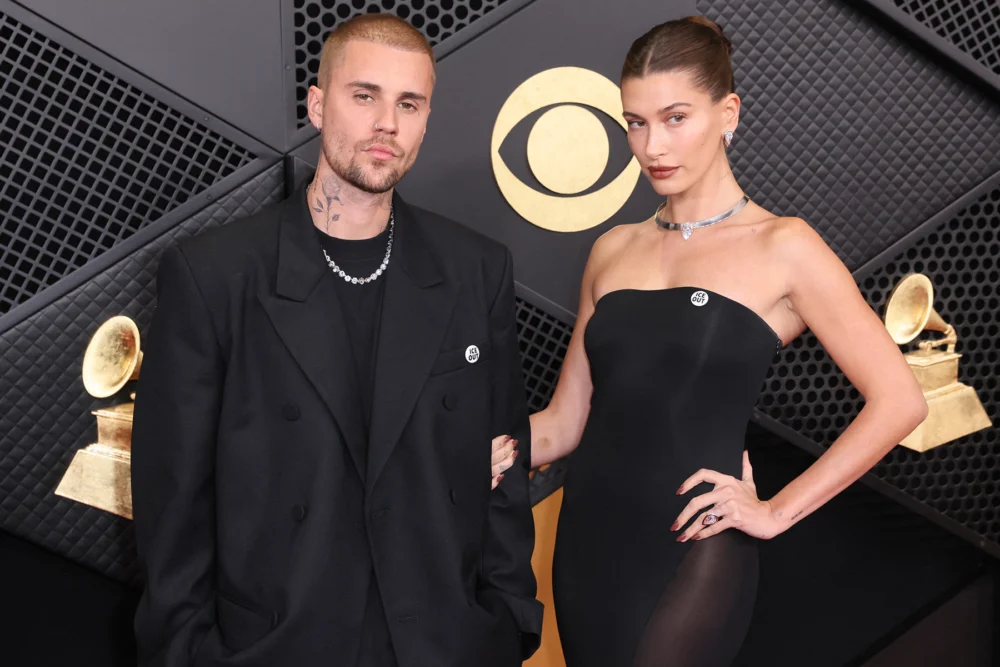
Pop superstar Justin Bieber, 32, found himself embroiled in yet another tense altercation with paparazzi on Friday, March 6, 2026, after a late-night dinner with his wife, Hailey Bieber, in West Hollywood, California. The incident, captured on video, saw the Grammy-winning artist hurl a half-empty water bottle at photographers who had swarmed his vehicle in a parking garage, further fueling the long-standing debate surrounding celebrity privacy and the persistent presence of the tabloid media. This latest confrontation adds to a well-documented history of strained interactions between Bieber and the paparazzi, underscoring the relentless pressure faced by public figures.
The Latest Confrontation: A West Hollywood Incident
The evening began with Justin and Hailey Bieber enjoying a quiet dinner at the upscale Sushi Park in West Hollywood. However, the serenity of their date night quickly dissolved upon their exit. As the couple made their way to a waiting black SUV in a dimly lit parking structure, they were met by a barrage of photographers. Footage obtained by TMZ shows Bieber visibly agitated, attempting to shield his face from the flashing cameras. Once inside the vehicle, and before it could depart, Bieber was seen throwing a Fiji water bottle from the passenger window in the direction of the paparazzi. The bottle did not strike anyone and landed harmlessly on the ground, after which the couple’s vehicle promptly drove away.
This immediate reaction, while not physically harmful, highlights the palpable frustration that can arise from constant public surveillance. The incident occurred in a public space, a parking garage accessible to the public, which often complicates legal and ethical discussions surrounding paparazzi conduct. While photographers often assert their right to capture images in public areas, celebrities frequently argue that the sheer volume, proximity, and aggressive nature of such encounters constitute harassment and an invasion of personal space, even in public settings.
A Chronology of Confrontations: Bieber’s Enduring Battle with Paparazzi
Justin Bieber’s history with the paparazzi is nearly as long as his career itself, dating back to his emergence as a global sensation at the age of 15 in 2009. From a fresh-faced teenager navigating newfound fame to a seasoned adult artist, the constant media glare has been a recurring theme, often leading to public expressions of distress and direct confrontations.
One of the most notable previous incidents occurred in August 2014 when Bieber’s Ferrari was reportedly rear-ended by a persistent photographer. The severity of this event prompted Bieber to take to social media platform X (then Twitter) to voice his profound concern, stating, "There should be laws against what I just experienced. We should have learned from the death of Princess Diana…" This poignant comparison to Princess Diana, whose tragic death in 1997 was directly linked to a high-speed chase involving paparazzi, underscored the serious safety risks Bieber perceived. His statement resonated with many who believe current regulations are insufficient to protect public figures from aggressive pursuit.
More recently, in April 2025, Bieber publicly criticized what he termed the "darkness" in Los Angeles, specifically referencing the intrusive behavior of paparazzi. He shared an Instagram video from his own perspective, illustrating the overwhelming experience of stepping out into a blinding array of camera flashes, with photographers frequently blocking his path to his car. His voice, heard disapprovingly in the video, accompanied his security guard’s repeated requests for the photographers to back up. This direct, first-person account offered fans and the public a rare glimpse into the daily reality of celebrity life under intense scrutiny, sparking renewed empathy and discussion online.

The summer of 2025, preceding the release of his seventh studio album, Swag, saw another viral moment. Bieber was filmed seemingly confronting intrusive paparazzi with the now-famous phrase, "It’s not clocking to you that I’m standing on business, is it?" The phrase, born out of frustration, quickly morphed into a widespread internet meme, ironically highlighting the very invasiveness Bieber was attempting to address. While the meme provided a moment of levity for some, it also served as a stark reminder of the ongoing tension between celebrities and the media. These recurring episodes illustrate a pattern of escalating frustration from Bieber, a pattern that the latest water bottle incident only reinforces.
The Broader Landscape: Celebrity Privacy in the Digital Age
The continuous saga of Justin Bieber and the paparazzi is emblematic of a much larger, complex issue: the erosion of celebrity privacy in an increasingly digitized and media-saturated world. The advent of social media has paradoxically both empowered celebrities to control their narratives and amplified the public’s insatiable demand for content, making the work of paparazzi even more lucrative. A single viral image or video can generate significant revenue for photographers and media outlets, creating a powerful economic incentive for aggressive pursuit.
Legally, the line between public interest and personal harassment remains blurry. In the United States, individuals generally have no reasonable expectation of privacy when they are in public spaces. This principle forms the bedrock of paparazzi operations. However, various states, including California, have enacted anti-harassment laws and specific legislation targeting paparazzi who engage in aggressive behavior, such as reckless driving or physically blocking access. For instance, California’s "anti-paparazzi" laws, strengthened over the years, aim to prevent photographers from committing assault, battery, or trespassing while seeking to capture images. Yet, the enforcement and effectiveness of these laws are frequently debated, as the pursuit often operates within legal grey areas.
Ethical guidelines for photojournalism and media conduct often emphasize respect for individuals and avoidance of undue intrusion. However, the commercial nature of celebrity photography, particularly for tabloid outlets and wire services, sometimes overrides these ethical considerations in the pursuit of exclusive or sensational content. The public’s role is also significant; the demand for candid, often unflattering, images of celebrities directly fuels the paparazzi industry, creating a cyclical dynamic that is difficult to disrupt.
The Psychological Toll of Constant Scrutiny
The cumulative effect of continuous surveillance, as experienced by figures like Justin Bieber, extends far beyond mere inconvenience. Psychologists and mental health experts have increasingly highlighted the profound psychological toll that relentless public scrutiny can inflict on individuals. Celebrities often report feelings of anxiety, paranoia, and a sense of being constantly hunted. The inability to perform simple, everyday tasks without being photographed or judged can lead to chronic stress, social isolation, and, in some cases, exacerbate existing mental health challenges.
Bieber himself has been open about his struggles with mental health throughout his career, often linking these challenges to the pressures of fame. The constant need to be "on" or to navigate public spaces while being filmed and photographed can be exhausting, eroding one’s sense of personal safety and autonomy. This unceasing intrusion can blur the lines between an individual’s public persona and their private self, making it difficult to maintain a sense of normalcy or genuine connection outside of the media’s gaze. The "fight or flight" response, triggered by perceived threats, can become a chronic state for those under constant surveillance, leading to burnout and emotional distress.
Public Discourse and Industry Perspectives
The March 6 incident, like its predecessors, immediately sparked widespread discussion across social media platforms and traditional news outlets. Public opinion often divides along predictable lines: some express sympathy for Bieber, arguing that celebrities, despite their fame, deserve a degree of personal space and protection from harassment. Many point to the Princess Diana tragedy as a stark reminder of the potential consequences of unchecked paparazzi aggression. Supporters often advocate for stronger legal protections and a more ethical approach from media outlets.
Conversely, others maintain that celebrities, by virtue of their public careers and the lucrative nature of their fame, implicitly accept a certain level of public interest and scrutiny. This perspective often argues that paparazzi are simply fulfilling a demand for content and operating within legal boundaries. There’s also a segment that views celebrity outbursts, such as throwing a bottle, as unprofessional or indicative of a lack of self-control, irrespective of the provocation.
Within the entertainment industry, the issue of paparazzi conduct is a perennial topic. Publicists and celebrity managers frequently grapple with balancing media exposure with client protection. While some level of media interaction is essential for career promotion, the intrusive and aggressive tactics of some paparazzi agencies are widely condemned. Legal professionals specializing in entertainment law often weigh in on the complexities of privacy rights, free press, and anti-harassment statutes, seeking clearer guidelines or more robust enforcement. There is a continuous, often quiet, lobbying effort for legislative changes that would offer celebrities more comprehensive protection without impinging on legitimate journalistic endeavors.
Moving Forward: Calls for Regulation and Respect
The latest confrontation involving Justin Bieber serves as a potent reminder that the tension between celebrity and paparazzi is far from resolved. As technology advances and the hunger for instantaneous content grows, the challenges of maintaining personal boundaries for public figures will only intensify. This incident, while minor in its physical impact, carries significant symbolic weight, representing a broader struggle for autonomy and respect in an environment where fame often equates to constant public property.
There are renewed calls for clearer legislative frameworks that can differentiate between legitimate public interest photography and aggressive harassment. Advocates suggest that laws could be strengthened to define safe distances for photographers, penalize dangerous driving, and create avenues for celebrities to seek legal redress more easily when their privacy or safety is genuinely threatened. Furthermore, a shift in consumer demand towards more ethically sourced celebrity content, rather than invasive candid shots, could also play a role in reshaping the industry.
Ultimately, the resolution of this ongoing conflict requires a multifaceted approach involving legal reform, ethical considerations within the media industry, and a collective societal re-evaluation of the boundaries of public access to private lives. For figures like Justin Bieber, who have spent the majority of their lives in the public eye, the quest for a modicum of normalcy and privacy remains an enduring, often frustrating, battle. The West Hollywood incident on March 6, 2026, ensures that this critical conversation will continue to resonate for the foreseeable future.
