

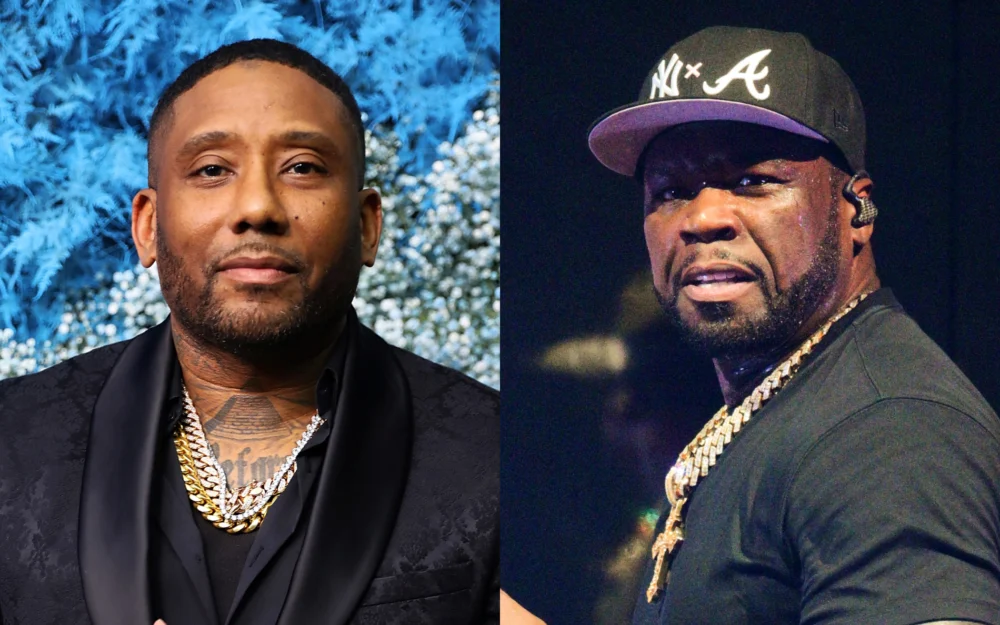
The already simmering tensions within the hip-hop community have boiled over into a direct lyrical confrontation as Brooklyn rapper Maino has released a scathing diss track aimed squarely at Curtis "50 Cent" Jackson. Titled "Bleed Like Us," the song, which dropped on Wednesday, March 11, is a direct response to 50 Cent’s recent track "No More Tricks, No More Tries," a collaboration with Max B. This latest salvo escalates a multi-faceted beef that has also involved Atlanta rap titan T.I., adding another layer of complexity to the ongoing disputes within the genre’s prominent figures.
The Genesis of the Diss: "No More Tricks, No More Tries"
The conflict that ignited this lyrical war can be traced back to 50 Cent’s track "No More Tricks, No More Tries." While many initially perceived this song as a direct jab at T.I., a long-standing rival with whom 50 Cent had been engaged in a public war of words, the accompanying music video revealed a different target. The AI-generated visual featured imagery explicitly referencing Maino, along with fellow rappers Jim Jones and Fabolous, who collectively host the "Let’s Rap About It" podcast with Dave East. In the video, 50 Cent’s aggressive ad-libs, including a stark "Fuck you!", coupled with the visual mockery of Maino’s facial scar—a memento from a prison attack—made it unequivocally clear that the G-Unit general was addressing this specific group.
50 Cent himself addressed the initial misinterpretation via an Instagram post accompanying the video: "Yall thought I was talking about the Cosby’s," he quipped, referencing T.I. and his family. "I’ll deal with Bill later. I am the algorithm!" This statement, while attempting to clarify his primary target, also implied that his disputes were far-reaching and not limited to a single artist.
Maino’s Retaliation: A Lyrical Assault on 50 Cent
Maino’s "Bleed Like Us" is not merely a reactive track; it’s a meticulously crafted diss that draws heavily from the lexicon and cadence of hip-hop’s golden era, specifically referencing The Notorious B.I.G.’s iconic "N*ggas Bleed." The song systematically dismantles 50 Cent’s persona and career, employing a barrage of accusations and taunts.
Foremost among Maino’s lyrical attacks are references to 50 Cent’s well-documented history of domestic violence allegations. By invoking these sensitive topics, Maino seeks to undermine 50 Cent’s street credibility and expose what he portrays as hypocrisy. Furthermore, Maino directly challenges the narrative of 50 Cent’s infamous shooting incident, where the rapper famously survived being shot nine times. Maino suggests that 50 Cent has exaggerated or fabricated aspects of this traumatic event, accusing him of "capping" – a slang term for lying or boasting falsely.
A particularly potent accusation leveled by Maino is the implication that 50 Cent cooperates with law enforcement against his rivals. This is a grave charge within hip-hop culture, often viewed as a betrayal of the street code. Maino directly questions 50 Cent’s allegiances and perceived motivations, rapping, "Be careful when you come at me, n*gga, you couldn’t humble me / Why the ones you beef with end up in fed custody? / 50 ways to catch a killer, is that your energy? / Only Black men, no white men, is your enemy?" This lyrical interrogation directly probes 50 Cent’s perceived targeting of Black artists, suggesting a pattern of behavior that Maino finds suspect and self-serving.
Beyond these direct accusations, Maino also demonstrates a keen understanding of 50 Cent’s discography, cleverly repurposing lines and themes from some of his most recognizable hits to deliver his punches. This lyrical dexterity serves to highlight Maino’s own prowess as a wordsmith while simultaneously deconstructing the legacy of his adversary. "Only white kids in the ‘burbs thought you was gangsta / We fucked with you ‘cause of your story, thought you was like us / Just to find out this whole time you was the wanksta," Maino spits, directly challenging the authenticity of 50 Cent’s street persona and suggesting that his appeal was largely built on a fabricated image for a suburban audience. The track concludes with an ominous warning, "Getting rich wasn’t enough, still want to die?" a chilling jab that directly references the violence that has defined much of 50 Cent’s public narrative.
The Underlying Feud: A History of Provocation
The conflict between 50 Cent and the trio of Maino, Jim Jones, and Fabolous is not a recent development. It reignited in late 2023 when the three rappers, during an episode of their "Let’s Rap About It" podcast, criticized 50 Cent’s documentary about Sean "Diddy" Combs. Jim Jones, in particular, defended Diddy, characterizing 50 Cent’s documentary as "petty behavior" and more of a "mockumentary" than a factual account.
50 Cent, known for his swift and often aggressive responses, did not let this criticism slide. He fired back on Instagram, initiating a series of posts that targeted the entire trio. His most provocative claim was that Maino, Jones, and Fabolous were delinquent in their rent payments for the building where they record their podcast. "These guys are squatters, they owe 250,000k for the space they are filming their podcast," 50 Cent sneered, adding, "These bums are trying to win best dressed award and can’t pay their bills."
This accusation escalated the feud to a new level, transforming a lyrical dispute into a potential landlord-tenant battle. Further fueling the fire, 50 Cent later claimed to have purchased the building in question, a move that would give him significant leverage over the tenants. He also posted security footage of Jim Jones allegedly attempting to force entry into the building by kicking down doors, a dramatic visual that amplified the tension.
Broader Implications and Hip-Hop Dynamics
The escalating beef between 50 Cent and Maino, along with their associates, highlights several significant dynamics within contemporary hip-hop. Firstly, it underscores the enduring power of lyrical confrontation as a primary means of settling disputes. Diss tracks, while perhaps less prevalent than in previous eras, still hold considerable weight and can significantly impact an artist’s reputation and standing.
Secondly, the feud demonstrates how deeply ingrained the concept of authenticity and street credibility remains in hip-hop culture. Accusations of fabrication, betrayal, and hypocrisy are potent weapons, capable of undermining even the most successful artists. Maino’s use of Biggie’s "N*ggas Bleed" as a template is a testament to the reverence for the genre’s history and its foundational narratives.
Thirdly, the involvement of multiple artists and the intertwining of personal grievances with professional ventures—such as the podcast and the alleged rent dispute—illustrate the complex web of relationships and rivalries that characterize the modern hip-hop landscape. The lines between personal animosity, business dealings, and artistic expression are often blurred, leading to highly publicized and often volatile conflicts.
The implications of this ongoing feud extend beyond the immediate participants. For fans, it provides a captivating narrative, a real-time drama unfolding within their favorite genre. For aspiring artists, it serves as a cautionary tale about the potential pitfalls of public feuds and the importance of navigating rivalries with strategic intent. As Maino’s "Bleed Like Us" continues to circulate, it is clear that the lyrical battle lines have been drawn, and the hip-hop world will be watching to see how 50 Cent, and potentially others, respond to this latest challenge. The repercussions of these lyrical exchanges could shape narratives, influence career trajectories, and further solidify the ever-evolving, often contentious, landscape of hip-hop.
