

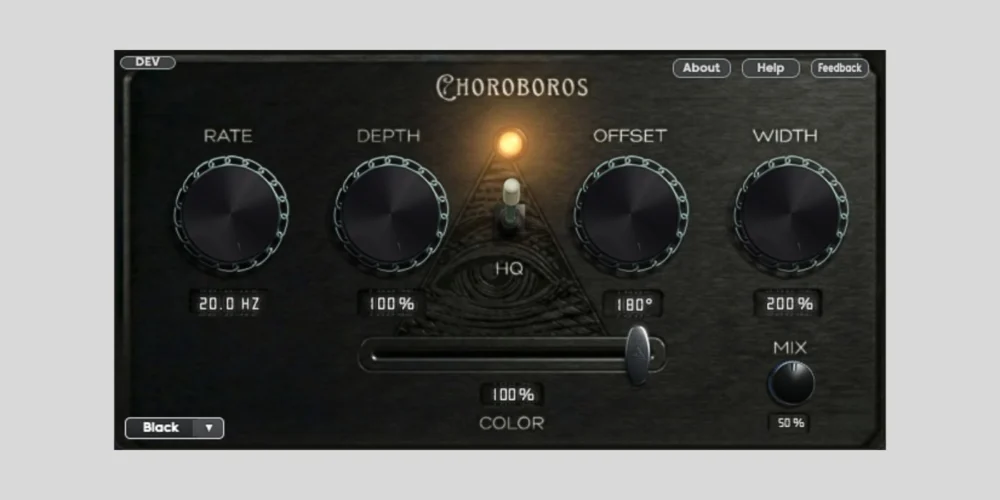
Kaizen DSP, an emerging developer in the digital audio processing landscape, has officially released Choroboros, a multi-engine chorus plugin available for macOS and Windows. Currently in an open beta phase, which is slated to conclude on May 1st, 2026, Choroboros introduces a distinctive licensing model that guarantees permanent free access to the beta version for all users who download it before the beta period ends. This strategic approach, confirmed by the developer, positions the beta release as a perpetually free, functional tool, while paving the way for a more advanced, feature-rich commercial version 1.0. The open-source GitHub repository for the beta version will also remain publicly accessible, fostering transparency and community engagement.
Following the beta’s conclusion, Kaizen DSP plans a bifurcated development path. The existing open-source beta version will be maintained as-is, serving as a robust, free core. Concurrently, new engine architectures, performance optimizations, and advanced functionalities will be integrated into a commercial version 1.0 release, available for purchase. This hybrid model seeks to build a broad user base through the free offering while providing a clear upgrade path for professionals seeking cutting-edge capabilities and ongoing development. The announcement has generated considerable interest within the audio production community, particularly regarding the plugin’s innovative feature set and its novel distribution strategy.
Deep Dive: Choroboros’s Core Features
At its heart, Choroboros is designed to be a versatile and powerful chorus effect, offering a rich tapestry of sonic possibilities. The plugin boasts five distinct chorus engines, each meticulously crafted to deliver unique tonal characteristics. To further enhance flexibility, each engine is equipped with both "Normal" and "HQ" (High Quality) modes, effectively providing users with ten unique algorithms. This extensive range allows producers to dial in everything from subtle, ethereal modulation to thick, swirling textures, catering to a wide array of musical genres and production needs.
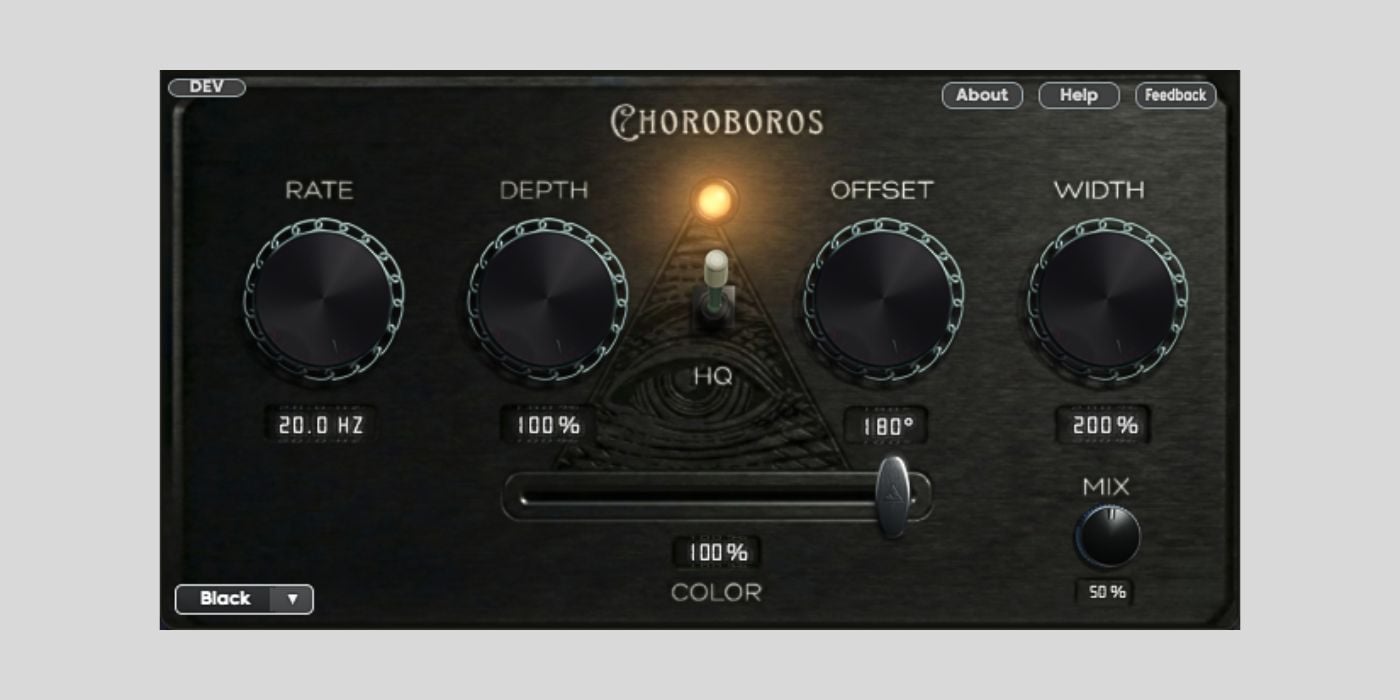
Despite the underlying complexity of its multiple engines, Choroboros maintains a remarkably streamlined user interface. All five engines share a consistent six-knob layout: Rate, Depth, Offset, Width, Colour, and Mix. This intuitive design minimizes the learning curve, enabling users to quickly grasp the core controls. However, the true depth of the plugin lies in the dynamic nature of these controls; the precise DSP (Digital Signal Processing) behavior of each knob intelligently adapts based on the active engine, offering nuanced control tailored to the chosen algorithm. This thoughtful design ensures that while the interface remains simple, the sonic manipulation capabilities are profound.
Enhancing the user workflow, Choroboros incorporates several quality-of-life features. The plugin intelligently remembers individual settings for each engine, allowing users to seamlessly switch between different algorithms without losing their carefully crafted tweaks. This facilitates quick A/B comparisons and experimentation, fostering a more fluid creative process. For precise timing, right-clicking the "Rate" knob reveals tempo-synced subdivisions, including straight, triplet, and dotted options, ensuring perfect synchronization with the host DAW. Furthermore, users can achieve exact numerical precision by double-clicking any value label to manually input specific parameters, a feature particularly appreciated by engineers requiring meticulous control.
The Revolutionary Dev Panel: Unveiling DSP Internals
One of Choroboros’s most distinctive and groundbreaking features is its built-in "Dev Panel." This sophisticated diagnostic interface provides an unprecedented level of insight into the plugin’s internal workings, typically reserved for developers in a debug environment. The Dev Panel exposes live DSP telemetry, illustrating the real-time processing activities within the plugin. Users can visualize the signal flow, offering a clear understanding of how audio is routed and processed through the various stages of the chorus effect.
Beyond signal routing, the Dev Panel integrates advanced analytical tools, including frequency analysis, detailed tape saturation transfer curves, and spectrum analyzers complete with High-Pass (HP) and Low-Pass (LP) overlays. These features are invaluable for users who wish to deeply understand the sonic impact of their adjustments. For instance, observing the frequency analysis in real-time can help producers identify unwanted resonances or understand how the "Colour" knob subtly shapes the tonal character. The tape saturation curves provide a visual representation of how the plugin introduces harmonic distortion, allowing for more informed sound design choices. By making these complex internal processes transparent, Kaizen DSP empowers users to not only apply effects but also to comprehend the underlying physics and mathematics of sound manipulation, fostering a deeper connection with their tools. This level of transparency is a significant departure from conventional plugin design and represents a notable step forward in user empowerment within the digital audio workstation (DAW) ecosystem.
A Paradigm Shift in Software Distribution: The Choroboros Licensing Model
The licensing strategy for Choroboros is arguably as innovative as its technical features. Kaizen DSP has opted for an open beta period that extends until May 1st, 2026. During this substantial timeframe, any user who downloads the plugin is granted perpetual, free ownership of that beta version. This "free forever" promise, explicitly confirmed by the developer, eliminates the typical concern of beta versions expiring or becoming unusable. It’s a bold move that prioritizes early adoption and community building.
This strategy culminates in a planned development split after the May 1st, 2026 deadline. The open-source beta version, which includes the existing five engines and the Dev Panel, will remain accessible and fully functional for those who acquired it. Simultaneously, Kaizen DSP will channel its resources into developing a commercial version 1.0. This paid release is slated to incorporate an array of new engines, further performance optimizations, and additional features that will differentiate it significantly from its free counterpart. This dual-pronged approach allows Kaizen DSP to cultivate a wide user base through the free offering, fostering a community around the plugin, while also establishing a sustainable business model through the premium features of the commercial release. The continued public availability of the open-source GitHub repository further underscores the developer’s commitment to transparency and collaboration within the audio development community, potentially allowing hobbyist developers to learn from or even contribute to the underlying code.
The Future of Chorus: Introducing the No-Code Engine Builder
Looking beyond the beta phase, Kaizen DSP has unveiled ambitious plans for the commercial version 1.0, centered around a truly groundbreaking feature: a no-code chorus engine builder. This innovative tool is poised to revolutionize how users interact with and customize chorus effects. The core concept is to empower users to visually design their own unique chorus engines without needing any programming knowledge.
The engine builder will allow users to select from a library of available DSP components, akin to digital building blocks, and assemble them into novel chorus architectures. This modular approach provides an unprecedented level of customization, enabling users to craft effects precisely tailored to their specific creative visions. Furthermore, the builder will extend to interface customization, allowing users to personalize the look and feel of their custom engines by choosing knob styles, slider designs, and even background aesthetics. Once designed, these custom engines can be exported as ".chor" files, a proprietary format for sharing.
The implications of this no-code engine builder are profound. It transforms every user into a potential engine designer, fostering a vibrant ecosystem of user-generated content. These ".chor" files can be seamlessly shared among users and loaded directly into their copies of the plugin, much like sharing presets today. This paradigm shift could lead to an explosion of unique chorus effects, collaboratively developed and shared by the Choroboros community. Imagine a scenario where a producer creates a signature chorus sound for a specific genre, and then shares that entire engine with the community, rather than just a set of parameters. This level of user-driven innovation has the potential to significantly extend the longevity and versatility of Choroboros, positioning it not just as a plugin, but as a platform for sonic experimentation and community-driven development. It represents a bold step towards democratizing DSP design, making complex audio engineering accessible to a broader audience.
Technical Foundations and Accessibility
Choroboros is designed for broad compatibility across major operating systems and plugin formats. For macOS users, it is available as a VST3 and AU (Audio Unit) plugin, alongside a standalone application. Support for AAX, the Avid Pro Tools plugin format, is also anticipated in the near future, ensuring integration into a wider professional workflow. Windows users can access Choroboros via VST3 and a standalone application, with both x64 and x86 architectures supported to accommodate various system configurations. This extensive compatibility ensures that a vast majority of digital audio producers can integrate Choroboros into their existing setups. To obtain the download link for the open beta, interested users are required to fill out a brief sign-up form on the official Kaizen DSP website, a standard procedure for managing beta access and gathering user feedback.
Broader Industry Context: Innovation in Audio Software Licensing and Design
The release of Choroboros by Kaizen DSP arrives at a time when the digital audio workstation (DAW) plugin market is increasingly competitive, pushing developers to innovate not just in sound quality but also in business models and user experience. The chorus effect itself has a rich history, dating back to analog hardware units that became staples in music production, known for thickening sounds and adding spatial depth. From iconic guitar pedals to studio rack units, chorus has evolved significantly. Its digital counterparts have similarly progressed, offering greater control and pristine sound quality. Choroboros stands out by taking this classic effect and infusing it with modern, forward-thinking features.
Kaizen DSP’s hybrid licensing model, blending a perpetually free beta with a future commercial release and an open-source component, represents a novel approach in the audio software industry. While "freemium" models are common, the guarantee of "free forever" for a fully functional beta version is less so. This strategy could be seen as a long-term investment in community building, aiming to foster loyalty and word-of-mouth promotion that could translate into commercial success for the paid version. It contrasts with models where beta versions expire or are feature-limited, potentially offering a more compelling value proposition to early adopters. Industry analysts suggest that such models, while risky in the short term, can build significant goodwill and a dedicated user base, especially when paired with a strong product.
The inclusion of the Dev Panel also aligns with a growing trend towards developer transparency and user empowerment in software. As users become more technically savvy, there’s an increasing demand for tools that not only perform a function but also explain how they perform it. This educational aspect of Choroboros positions it uniquely, appealing to both creative producers and technically curious sound designers. Furthermore, the planned no-code engine builder taps into the broader software trend of user-generated content (UGC) and customization. Platforms that allow users to create and share their own content often see exponential growth and engagement. By enabling users to design entire effects rather than just presets, Kaizen DSP is pushing the boundaries of what a plugin can be, moving it closer to a modular development environment.
Developer’s Vision and Market Reception
While direct quotes from Kaizen DSP are not publicly detailed beyond the beta information, the company’s strategy with Choroboros clearly communicates a vision centered on innovation, community, and user empowerment. The decision to offer a robust, perpetually free beta version suggests a confidence in the core product and a desire to build a large, engaged user base. This commitment to the community is further underscored by the open-source nature of the beta’s codebase, inviting scrutiny and potential contributions, fostering trust and transparency.
Industry observers and early adopters have reacted positively to the announcement, particularly noting the unique licensing model and the ambitious plans for the no-code engine builder. The prospect of designing custom chorus algorithms without coding has been highlighted as a potential game-changer, democratizing complex DSP design and opening new avenues for sonic exploration. The Dev Panel has also garnered praise for its educational value and its potential to demystify audio processing for a wider audience. The market reception indicates a strong appetite for plugins that not only sound excellent but also offer innovative ways to interact with and understand audio effects. This forward-thinking approach could establish Kaizen DSP as a significant player in the competitive audio software market, challenging conventional development and distribution paradigms.
Conclusion: A New Standard for Digital Audio Effects
Choroboros by Kaizen DSP represents more than just another chorus plugin; it embodies a forward-thinking approach to software development, distribution, and user engagement. From its versatile multi-engine architecture and intuitive controls to the groundbreaking Dev Panel that reveals its inner workings, Choroboros offers a compelling package for audio producers. The innovative licensing model, providing perpetual free access to the beta version, coupled with the ambitious vision for a no-code engine builder in the commercial release, positions Choroboros as a potential disruptor in the digital audio effects landscape. By empowering users with unprecedented control, transparency, and the ability to craft their own effects, Kaizen DSP is not just delivering a tool, but fostering a new era of creative possibilities and community-driven innovation in sound design. As the beta period progresses towards its May 1st, 2026 conclusion, the audio world will be watching closely to see how this ambitious project evolves and shapes the future of digital audio processing.
