

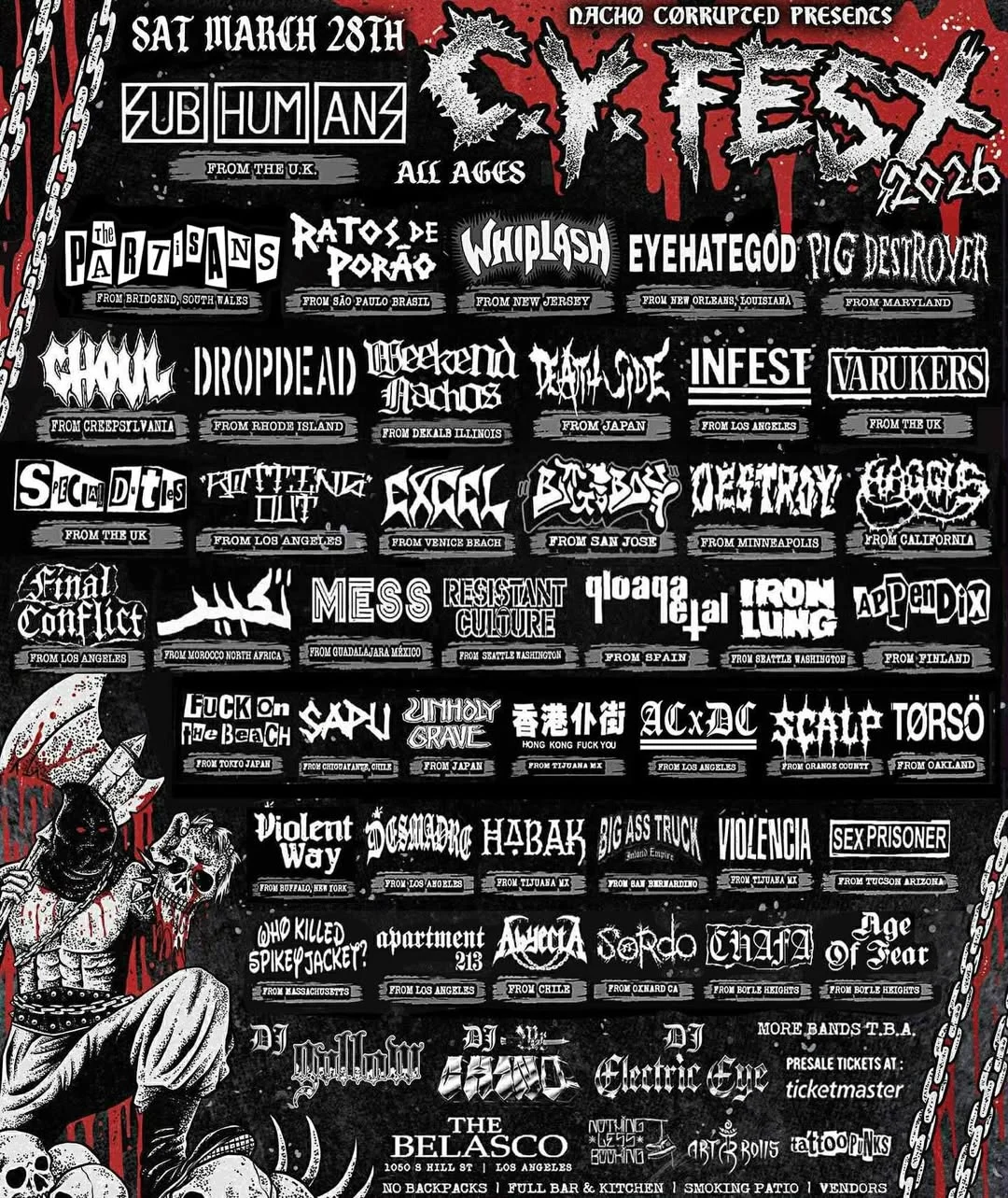
The highly anticipated 2026 CY Fest, a Los Angeles punk festival originally slated for 2025 and rescheduled, now faces an existential crisis just weeks before its scheduled commencement at The Belasco. Promoter Ignacio Rodriguera, known within the music scene as Nacho Corrupted, had curated what was widely considered an impressive lineup, featuring a powerful blend of punk, hardcore, and metal underground stalwarts such as Subhumans, Eyehategod, Pig Destroyer, and Dropdead, alongside acclaimed newer acts like Big Boy, Rotting Out, and Mess. However, the festival’s promising trajectory has been abruptly derailed by a cascade of sexual misconduct allegations leveled against Rodriguera by an online feminist collective, prompting several key bands to withdraw from the event and casting a long shadow over its immediate future.
The allegations against Rodriguera originated from the Instagram page @Feral_bonobos, which describes itself as "the beginning of a decentralized feminist coalition within the punk scene." In a series of impactful Instagram posts last week, the page issued a direct call for a boycott of CY Fest. Through a sequence of detailed slides, @Feral_bonobos asserted that "Dozens of allegations have surfaced against Nacho Corrupted who is the promoter of CY Fest in Los Angeles. The allegations state that Nacho Corrupted was part of a network of men who targeted and assaulted underaged girls within the punk scene." The group further provided a QR code, linking to an Instagram story that reportedly compiles numerous individual accusations against Rodriguera, underscoring the gravity and perceived breadth of the claims. This digital dissemination strategy highlights a contemporary shift in how such serious allegations are brought to light and gain traction within specific communities, leveraging the immediate and far-reaching nature of social media platforms.
A Chronology of CY Fest and the Unfolding Crisis
The journey of CY Fest has been marked by ambition and, more recently, controversy. Initially conceived for 2025, the festival represented a significant undertaking to bring together a diverse cross-section of the punk, hardcore, and metal underground. Its rescheduling to 2026, with a confirmed venue at The Belasco in Los Angeles, was met with considerable enthusiasm by fans eager for a large-scale event showcasing both established legends and emerging talent. The announced lineup was a testament to Rodriguera’s connections and perceived ability to attract high-caliber acts, promising a vibrant celebration of the genre’s enduring spirit. The inclusion of bands spanning several decades and subgenres was particularly noteworthy, suggesting an event designed to appeal to a broad demographic within the heavy music community.
The first public signs of trouble emerged abruptly last week with the Instagram posts from @Feral_bonobos. The explicit nature of the allegations – detailing a purported "network of men" and the targeting of "underaged girls" – sent shockwaves through the punk community, which often prides itself on its counter-cultural ethics and supposed commitment to social justice. The call for a boycott was immediate and emphatic, placing significant pressure on both the promoter and the participating bands.
In rapid succession, several bands that were scheduled to perform began to announce their withdrawal. Iron Lung, Tørsö, Apartment 213, and Tripas Sangrientas were among the first to publicly cancel their appearances. Notably, most of these bands opted for brief statements, often simply announcing their decision to no longer play without elaborating on the specific reasons. This understated approach, however, conveyed a powerful message of solidarity with the alleged victims and a refusal to be associated with the promoter under the prevailing circumstances. The swiftness of these withdrawals underscores a growing intolerance for alleged misconduct within creative communities, particularly in the wake of the #MeToo movement. As of now, Ignacio Rodriguera has maintained a public silence, offering no statement or response to the allegations, a stance that has further fueled speculation and concern within the community and among fans. The festival’s fate, with its scheduled date later this month, remains critically uncertain as the controversy continues to unfold.
Broader Context: The Punk Scene, #MeToo, and Accountability
The crisis engulfing CY Fest is not an isolated incident but rather a potent reflection of broader shifts within the music industry and society at large, particularly concerning accountability and the impact of the #MeToo movement. The punk scene, historically rooted in a DIY ethos, anti-establishment sentiment, and a professed commitment to marginalized voices, has often grappled with internal contradictions regarding power dynamics and abuse. While punk subculture champions rebellion and social critique, it has not been immune to the same systemic issues of sexual misconduct found in other creative fields. The "decentralized feminist coalition" aspect of @Feral_bonobos speaks directly to the punk scene’s grassroots nature, suggesting an internal reckoning rather than an external imposition of ethics. This approach mirrors the scene’s historical reliance on independent networks and community-driven initiatives to address issues.
The #MeToo movement, which gained significant global momentum in 2017, dramatically altered the landscape for survivors of sexual harassment and assault. By providing platforms and fostering an environment of increased belief and solidarity, it empowered countless individuals to come forward with their stories, leading to a reckoning in various industries, from Hollywood to politics, and notably, the music world. While many high-profile cases have involved mainstream artists and executives, the movement’s principles have permeated independent and underground scenes as well. The music industry, with its inherent power imbalances between established figures (promoters, label owners, older musicians) and aspiring artists or younger fans, has proven particularly susceptible to such allegations. The culture of touring, late-night events, and close-knit communities, while fostering creativity, can also inadvertently create environments where misconduct can occur and be shielded by perceived loyalty or fear of professional reprisal.
The response to the CY Fest allegations echoes a pattern seen in other instances within music. When credible allegations emerge, particularly through organized online activism, there is increasing pressure on artists, venues, and other industry stakeholders to take a stand. This pressure often manifests as artists withdrawing from events or tours, labels dropping bands, and venues refusing to host certain acts. This collective action, driven by a combination of ethical considerations and public relations concerns, demonstrates a growing expectation that silence or inaction is no longer an acceptable response. The rapid withdrawal of multiple bands from CY Fest is a clear indicator of this evolving standard of accountability, where alleged misconduct by a key figure can swiftly dismantle an entire event, regardless of its artistic merit or financial investment. This phenomenon highlights a significant shift from an era where such allegations might have been quietly managed or dismissed within insular communities.
Implications for CY Fest and the Broader Festival Landscape
The immediate implications for CY Fest are severe, bordering on catastrophic. With key acts already having pulled out, and others likely to follow, the festival’s lineup is irrevocably diminished. The viability of proceeding with the event as planned, scheduled for "later this month," appears increasingly tenuous. The financial ramifications for Ignacio Rodriguera are likely substantial, encompassing lost revenue from ticket sales, artist deposits, venue fees, and promotional expenditures. Beyond the immediate financial hit, Rodriguera’s reputation as a promoter within the punk and hardcore scenes has suffered irreparable damage, making future endeavors exceedingly difficult, if not impossible. The long-term impact on his career in music is almost certainly terminal.
The Belasco, as the venue, also faces a challenging situation. While they have not publicly commented, venues are typically bound by contracts and must navigate the delicate balance of fulfilling agreements while protecting their own brand image and ensuring the safety and comfort of their patrons. Proceeding with a festival under such a cloud of controversy could lead to protests, diminished attendance, and significant reputational harm. Conversely, canceling the event at such a late stage would entail its own set of logistical and financial complexities.
More broadly, this incident sends a stark message across the independent festival landscape. It underscores the critical importance of vetting promoters and understanding the ethical stances of all parties involved in an event. For artists, it reinforces the necessity of due diligence when agreeing to perform and the power of collective action in demanding accountability. For fans, it highlights the increasing influence of online activism in shaping cultural events and the expectation that their values will be reflected in the spaces they inhabit. The incident also shines a light on the challenges faced by DIY and independent scenes in self-policing and addressing internal issues without formal HR structures or institutional oversight. The reliance on social media and grassroots organizing, while powerful, also presents challenges in terms of verifying allegations and ensuring due process, though in many cases, the collective weight of multiple testimonies can be enough to trigger action.
Official Responses and Resources
As of the current reporting, Ignacio Rodriguera has not publicly addressed the extensive allegations made against him. This silence, while legally understandable given the potential for litigation, has been interpreted by many within the community as a tacit acknowledgment or a lack of defense, further solidifying the resolve of those calling for a boycott. The absence of a formal statement from The Belasco or any legal entities involved suggests that the situation is still primarily unfolding in the court of public opinion and within the digital sphere. However, the severity of the allegations – particularly those involving underage individuals – suggests the potential for legal consequences, should formal complaints be filed with law enforcement agencies. It is important to reiterate that these are currently allegations circulating online, and their legal status is not publicly known.
The incident at CY Fest serves as a poignant reminder of the pervasive issue of sexual abuse and the critical need for support systems for survivors. If you or someone you know is undergoing sexual abuse, please visit rainn.org or contact the National Sexual Assault Helpline at 1-800-656-4673. These resources offer confidential support and guidance for individuals impacted by sexual violence, providing a vital lifeline in times of crisis. The ongoing situation surrounding CY Fest underscores that discussions about safety, respect, and accountability within creative communities are not merely abstract ideals but urgent, practical necessities that can profoundly impact the lives of individuals and the very existence of cultural events.
