

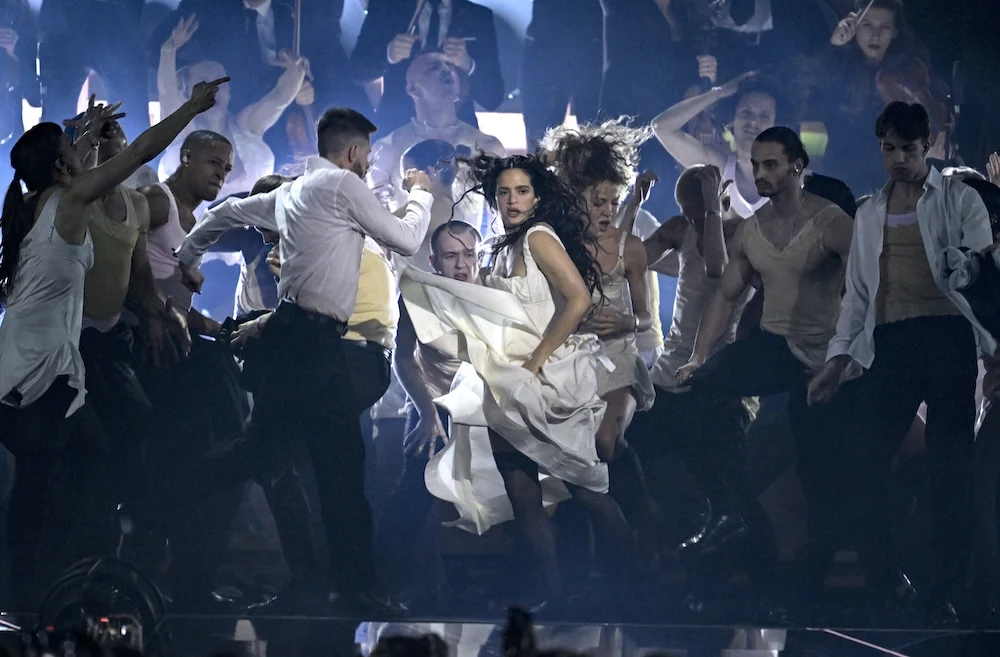
The global music landscape witnessed a striking juxtaposition this week as Spanish superstar Rosalía launched her highly anticipated Lux Tour with a spectacular, debut-heavy performance at the LDLC Arena outside Paris, mere days after issuing a public apology regarding controversial remarks about artist Pablo Picasso. This dual narrative encapsulates the intense scrutiny and dynamic career trajectory of one of contemporary music’s most influential figures, highlighting both her artistic prowess and the complex challenges of navigating public discourse in the digital age.
A Grand Opening: The Lux Tour Commences in France
On the evening of [Insert specific date of concert, e.g., March 16, 2026, or "Tonight, March 16"], the LDLC Arena in Décines-Charpieu, a suburb of Lyon, France, became the epicenter of Rosalía’s latest global endeavor: the Lux Tour. This sold-out event marked the official kickoff for the tour supporting her critically acclaimed and commercially successful album, Lux, released last year. The choice of the LDLC Arena, a modern multi-purpose indoor arena with a seating capacity of over 16,000 for concerts, underscored the significant scale and ambition of this tour, signaling Rosalía’s continued ascent as a global headliner capable of filling major venues across continents.
Fans gathered from across Europe, eager to experience the live renditions of tracks from Lux, an album praised for its innovative fusion of Rosalía’s signature flamenco influences with experimental pop, reggaeton, and electronic elements. The record built upon the groundbreaking success of her previous works, solidifying her reputation as an artist unafraid to push genre boundaries while maintaining a profound connection to her Spanish heritage. Lux garnered widespread critical acclaim, with many music publications lauding its intricate production, poignant lyricism, and Rosalía’s unparalleled vocal delivery, securing its place as one of the standout releases of the previous year. It achieved significant commercial success, topping charts in several countries and generating billions of streams globally, further cementing Rosalía’s status as a formidable force in the music industry.
The concert itself was a testament to Rosalía’s commitment to delivering a unique and immersive live experience. For the devoted fanbase, the highlight of the evening was undoubtedly the sheer volume of live debuts from the Lux album. A remarkable eleven tracks were performed for the very first time in a live setting, offering attendees an exclusive preview of the album’s intricate soundscapes and Rosalía’s dynamic stage presence. These included: "Sexo, violencia y llantas," "Porcelana," "Divinize," "Mio Cristo piange diamanti," "Sauvignon blanc," "La yugular," "Dios es un stalker," "La Rumba Del Perdón," "Novia robot," "Focu ‘ranni," and "Magnolias." Each performance was met with fervent cheers, demonstrating the deep connection between the artist and her audience, who had eagerly awaited the opportunity to witness these tracks brought to life.
The setlist, carefully curated to blend the new material with fan favorites from her earlier albums like El Mal Querer and Motomami, showcased Rosalía’s versatility and her journey as an artist. Visuals, choreography, and the overall production design of the Lux Tour are expected to be as meticulously crafted as her music, creating a multi-sensory spectacle that has become synonymous with her live shows. This tour is poised to further solidify her position as a global touring powerhouse, reaching audiences from Europe to the Americas and beyond, reinforcing the universal appeal of her distinctive artistic vision.
A Precursor: "Berghain" Debut at the BRIT Awards
The Lux Tour kickoff follows closely on the heels of another significant live debut a few weeks prior. Rosalía joined forces with Icelandic icon Björk to perform their highly anticipated collaboration, "Berghain," at the prestigious BRIT Awards. The BRIT Awards, held annually in London, represent the British Phonographic Industry’s annual music awards, recognizing excellence in music. The event commands a significant global audience, making it a prime platform for high-profile musical collaborations and premieres.
The performance of "Berghain" at such a prominent international awards ceremony generated considerable buzz. The track, a powerful and atmospheric piece, marked a rare and eagerly awaited collaboration between two artists celebrated for their innovative approaches to music and their strong individual artistic identities. The live rendition at the BRIT Awards was widely lauded, not only for its musical impact but also for bringing together two distinct generations of avant-garde pop and electronic music, underscoring Rosalía’s respect among her peers and her ability to bridge different musical worlds. This performance served as a compelling prelude to the expansive live show experience that the Lux Tour promises to deliver.
The Picasso Controversy and Public Apology
Amidst these professional triumphs, Rosalía found herself at the center of a public relations challenge earlier this week, stemming from comments she made on the "Spotify Presenta" podcast. During the podcast, in a conversation with Argentine writer Mariana Enriquez, Rosalía addressed the controversial topic of separating the art from the artist, specifically in the context of Pablo Picasso. Her initial statement suggested a personal inclination to compartmentalize an artist’s work from their personal conduct, a viewpoint that quickly drew criticism due to the widely documented history of Picasso’s abusive treatment of women.
The concept of "separating the art from the artist" has been a subject of intense debate for decades, gaining particular prominence in the wake of the #MeToo movement and broader societal re-evaluations of historical figures. Picasso, a towering figure in 20th-century art and a pioneer of Cubism, has long been celebrated for his revolutionary contributions to painting and sculpture. However, the darker aspects of his personal life, particularly his relationships with women, have increasingly come under scrutiny. Historians and biographers have detailed his complex, often tumultuous, and frequently abusive relationships with his numerous wives, muses, and lovers, including Fernande Olivier, Olga Khokhlova, Marie-Thérèse Walter, Dora Maar, Françoise Gilot, and Jacqueline Roque. Accounts frequently describe a pattern of control, manipulation, emotional cruelty, and psychological abuse, which significantly impacted the lives and mental well-being of these women, some of whom suffered severe psychological distress and even tragically took their own lives. Publications like British Vogue and numerous academic texts have extensively grappled with this uncomfortable truth, acknowledging Picasso’s artistic genius while confronting the ethical implications of his personal conduct.
Following the swift and significant backlash to her podcast comments, Rosalía issued a public apology via a video posted on social media. The apology, delivered in Spanish and subsequently translated, demonstrated a clear recognition of the gravity of the situation and a desire to address the concerns raised by her audience.
In the video, Rosalía began with a thoughtful introduction, stating, "Hey, I’ve wanted to make this video for days, but I wanted to choose the right words. I’m not comfortable with what happened when I talked about Picasso’s topic. I’m not at peace with what I said about Picasso." This opening immediately conveyed a sense of genuine remorse and a personal struggle with her previous remarks.
She further elaborated on her rationale and subsequent understanding: "It’s important not to talk about certain things when you don’t have enough knowledge. I personally thought Picasso was a great man, as people have said before. But I didn’t know there were real cases of abuse." This explanation shed light on a common societal phenomenon where the public narrative surrounding historical figures often focuses solely on their achievements, sometimes overshadowing or omitting less palatable aspects of their lives. Her admission of prior ignorance resonated with many who acknowledged the pervasive nature of such incomplete historical narratives.
Crucially, Rosalía extended her apology directly to those affected: "I want to apologize if there was a lack of sensitivity on my part during that conversation with Mariana [Enriquez], and for that absolute lack of empathy with those women and their testimonies." This direct acknowledgement of the victims and their experiences was a significant step in her apology, demonstrating a move beyond merely correcting a factual error to expressing empathy for the impact of her words. The Pop Base tweet accompanying the video also noted her clarification that she identifies as a feminist, further contextualizing her efforts to align her public statements with her personal values and the expectations of her audience.
Broader Implications and the "Art vs. Artist" Debate
Rosalía’s experience underscores the increasingly complex landscape that public figures, particularly global artists, must navigate. In an era of instantaneous communication and heightened social consciousness, comments made in seemingly casual settings can quickly escalate into widespread public discourse. For an artist of Rosalía’s stature, whose work often explores themes of female empowerment, cultural identity, and vulnerability, such controversies carry particular weight. Her swift and comprehensive apology, acknowledging her initial lack of knowledge and expressing empathy, represents a mature response to a public misstep, a strategy often advised by crisis communication experts.
The incident also reignites the perennial "art vs. artist" debate. While many argue for the independent appreciation of artistic creations regardless of the creator’s moral failings, others contend that ignoring an artist’s unethical or abusive conduct, especially when it directly impacts their work or the subjects within it, is a form of complicity. Picasso’s case is particularly potent because his relationships with women were often intrinsically linked to his artistic output, with his muses frequently becoming subjects in his most iconic works. This makes the separation even more challenging for many observers. Rosalía’s public learning experience serves as a microcosm of this larger societal reckoning, prompting discussions about historical revisionism, accountability, and the role of cultural figures in shaping public understanding.
For Rosalía, this incident, while a challenge, also presents an opportunity for growth and deeper engagement with complex social issues. Her apology demonstrates a willingness to listen, learn, and adapt, qualities that can ultimately strengthen her connection with her audience. As the Lux Tour continues its global journey, Rosalía’s artistic brilliance will undoubtedly continue to captivate millions. However, the recent Picasso controversy serves as a poignant reminder that for artists operating on such a grand scale, their platforms extend beyond music, encompassing a broader responsibility to engage thoughtfully and empathetically with cultural and social narratives. The unfolding of her tour, juxtaposed with this public reflection, illustrates the multifaceted demands placed upon a contemporary global icon, balancing artistic expression with social consciousness.
