

The global landscape of professional event technology has long been characterized by a divide between high-volume manufacturing and high-concept artistic design. However, the completion of the new Golden Sea headquarters in the Panyu district of Guangzhou, China, represents a significant shift in this paradigm. At the heart of this 13-story, high-tech industrial complex lies a dual-purpose space that challenges the traditional boundaries of the corporate showroom. Designed by Berlin-based lighting designer Martin Kuhn, the facility serves as both a cutting-edge demonstration center for Golden Sea—the world’s largest manufacturer of event lighting and the parent company of the Ayrton brand—and a fully functional Performing Arts Center. This project, which culminated in a grand opening attended by over 1,200 industry professionals, signifies a "Vision Beyond OEM" strategy, moving the manufacturer from a behind-the-scenes producer to a front-facing leader in aesthetic innovation.
The Strategic Context: A Vision Beyond Manufacturing
For decades, the Chinese manufacturing sector was often perceived through the lens of cost-efficiency rather than design leadership. Golden Sea, under the leadership of CEO Jiang Wei Kai, has spent the last several years systematically dismantling this stereotype. The company’s new headquarters is a testament to this evolution. Spanning over 200 meters in length and rising 13 stories, the facility mirrors the campus environments of Silicon Valley, featuring automated production lines, light-filled workspaces, a library, a gymnasium, and high-standard culinary facilities.
The decision to commission a Western designer, Martin Kuhn, for the flagship showroom was a calculated move by Jiang Wei Kai. While approximately 80% of the showroom’s visitors are domestic Chinese clients, the CEO sought an international perspective to create an "intercultural bridge." This partnership, which began a decade ago during a technical "shootout" in China, is built on a shared commitment to precision and aesthetic tradition. The goal was not merely to display products but to tell a story that resonates with both the heritage of Chinese art and the future of global entertainment technology.
Architectural and Functional Challenges
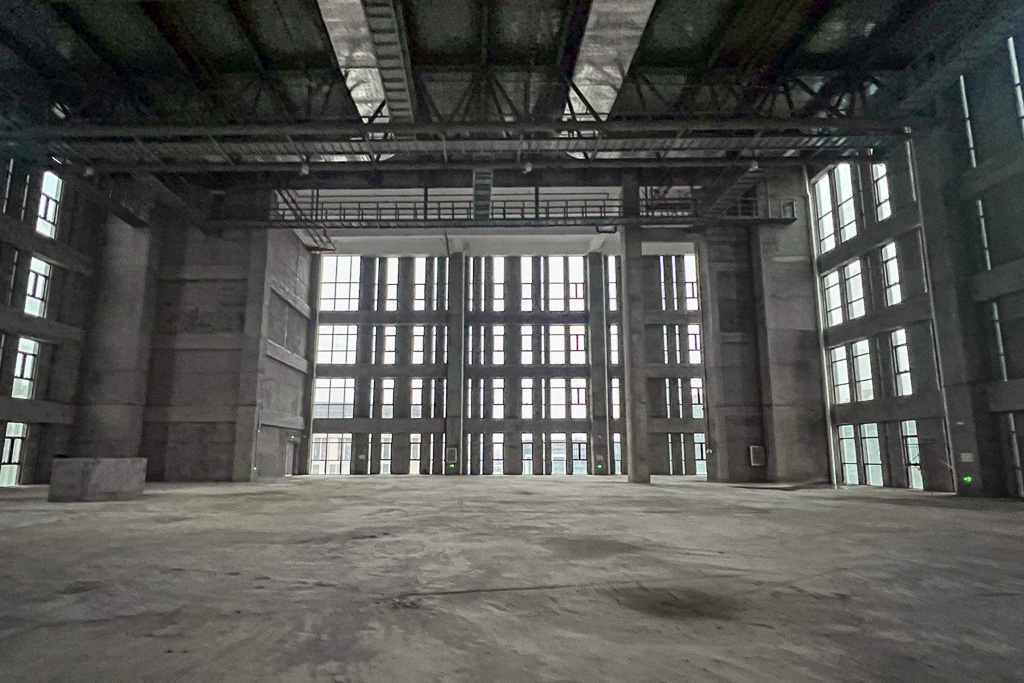
The physical dimensions of the space presented an immediate challenge to conventional showroom design. Most industry showrooms are compact environments, typically measuring 20 by 12 meters with a 10-meter ceiling, designed to create a high-intensity "visual overload" akin to a nightclub. The Golden Sea space, however, is cavernous: 60 by 40 meters with a ceiling height of nearly 20 meters.
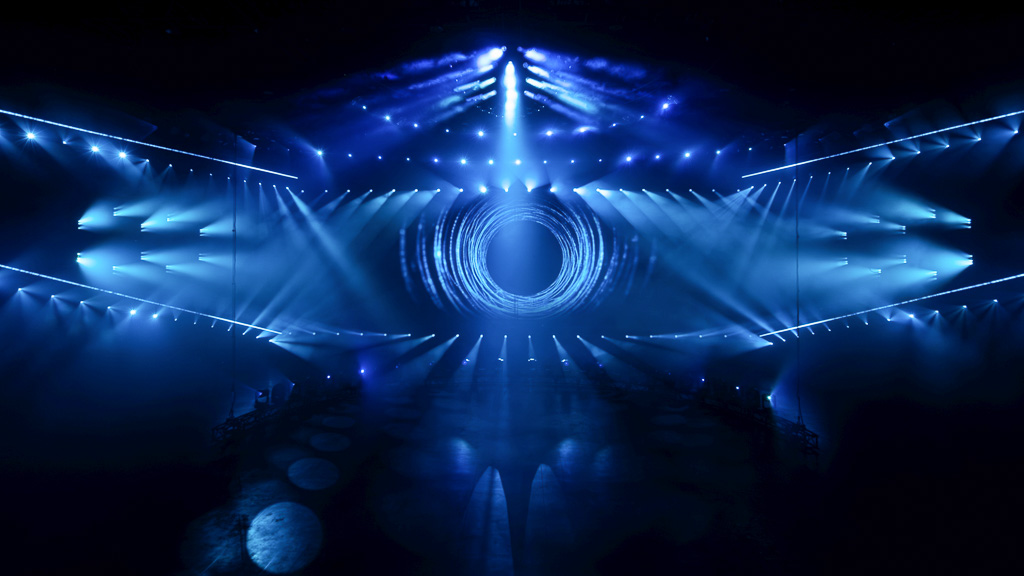
Kuhn was tasked with a difficult mandate: the room had to function as a world-class "Performing Arts Center" capable of hosting conferences, theatrical performances, and concerts, while simultaneously serving as a high-impact demonstration space for nearly 900 lighting fixtures. The solution required a departure from the "Black Box" model. The design incorporated a classic proscenium stage (20 by 10 meters) but added layers of versatility.
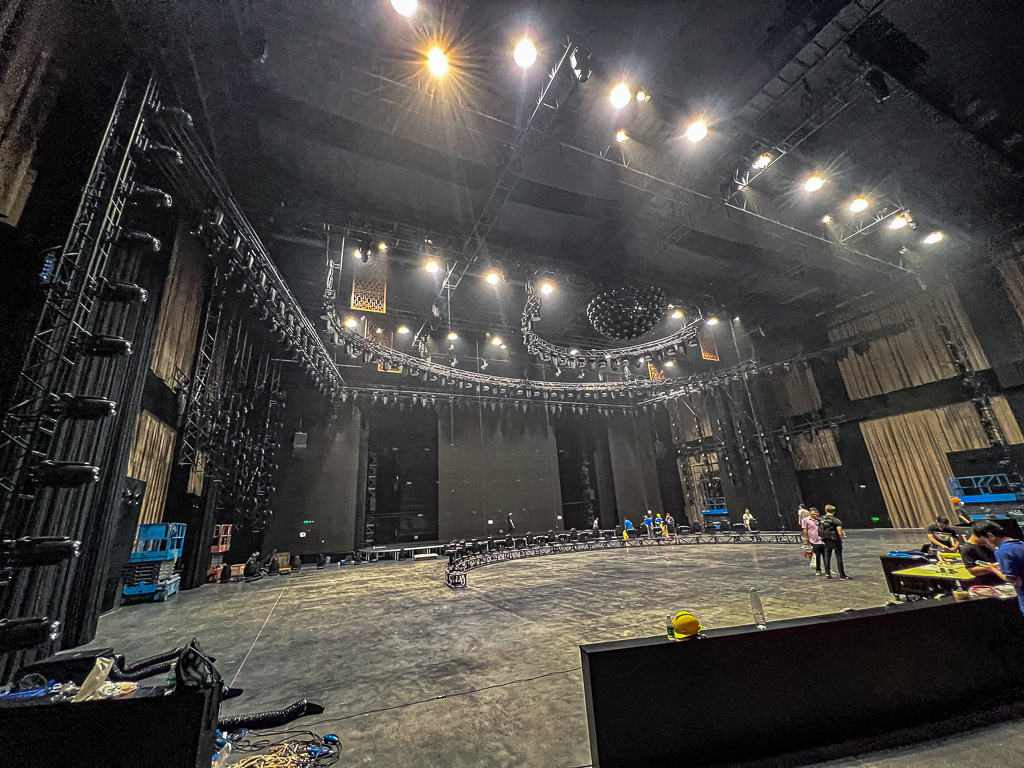
To balance these needs, Kuhn implemented a radical kinetic solution. A 20-meter-wide, semi-transparent LED wall with a 10mm pixel pitch was installed to act as a movable curtain. This screen can be opened in segments or moved entirely across the stage. Behind this screen, a fully kinetic rig consisting of 75 C1-rated hoists allows for complex geometric movements. In "Theater Mode," the entire technical rig can be retracted toward the ceiling, creating a neutral, clean environment for traditional events. In "Show Mode," the stage disappears into a landscape of light, with fixtures capable of beaming through the transparent LED wall to create depth-based effects.
Technical Specifications and Control Systems
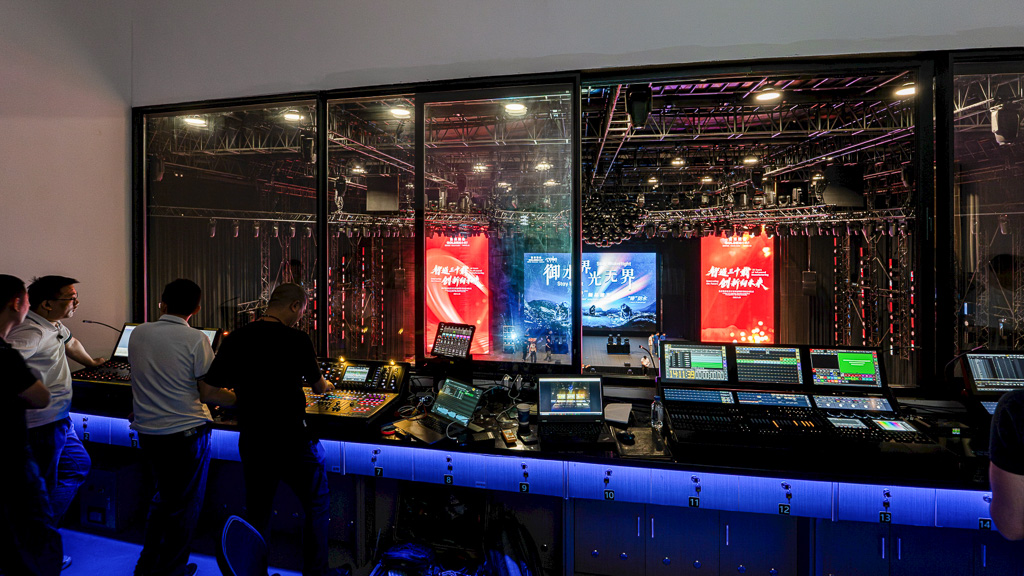
The sheer scale of the installation required a sophisticated control infrastructure. The rig features 880 fixtures, representing 24 different types. Notably, only 20 of these units utilize traditional discharge lamps; the remaining 860 are powered by LED or laser sources, reflecting the industry’s shift toward sustainable, high-output technology.
The Lighting Arsenal
The selection of fixtures was a collaborative effort between Kuhn and Golden Sea’s engineering teams. Key components included:
- Ayrton Kyalami: 123 of these laser-source fixtures were utilized, many of them concentrated in a centerpiece known as the "Supernova."
- Ayrton Veloce and Zonda: High-output profiles and wash lights used for their continuous pan-and-tilt capabilities and "liquid effect" pixel mapping.
- Terbly Hybrids: Utilized for their popularity in the Chinese market and their versatility in theatrical settings.
- SGM Striplights: 140 linear meters of video-capable, black-frosted strip lights were integrated into the six main trusses.
- GS ARC Dots: Approximately 120 small RGBW architectural "Dots" were scattered throughout the rig to simulate a flickering starfield.
Data and Programming
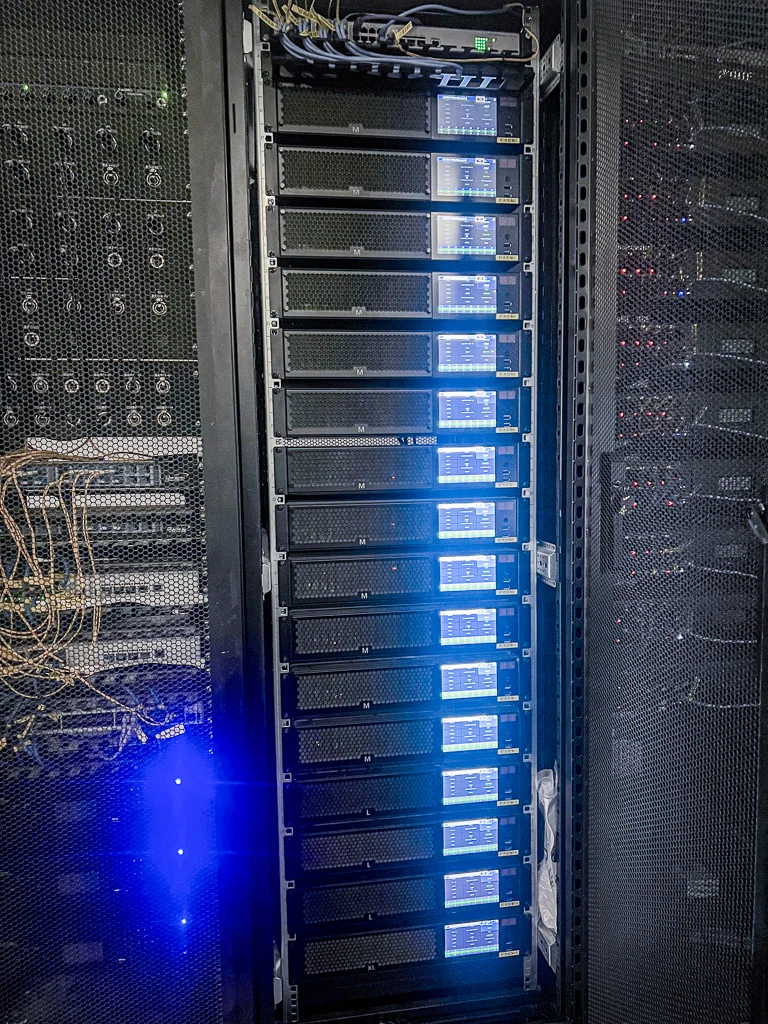
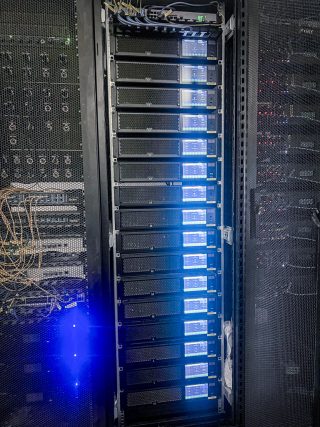
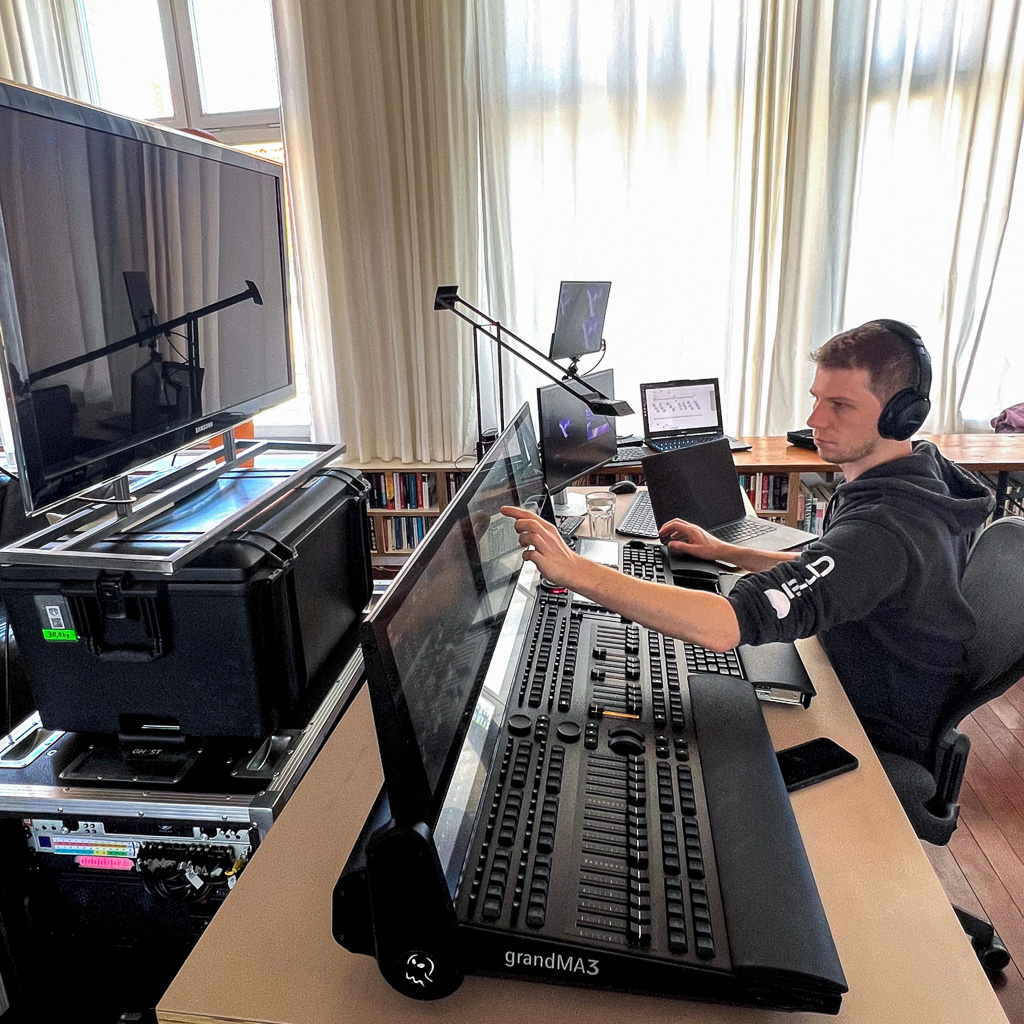
The system manages nearly 200,000 DMX parameters, a staggering volume of data that necessitated a high-performance control backbone. The programming was executed on a grandMA3 console using version 3 software, integrated with Arkaos Media Servers and MadMapper software. This setup allowed for 16-bit control over every pixel, ensuring smooth gradients and precise synchronization between the video content and the lighting movements.
Artistic Narrative: A Journey Through the Night
To move away from the "flash and trash" style of traditional lighting demos, Kuhn developed a narrative structure titled "A Journey through the Night." The show is divided into eight acts—a number chosen for its cultural significance in China, symbolizing infinity and luck.
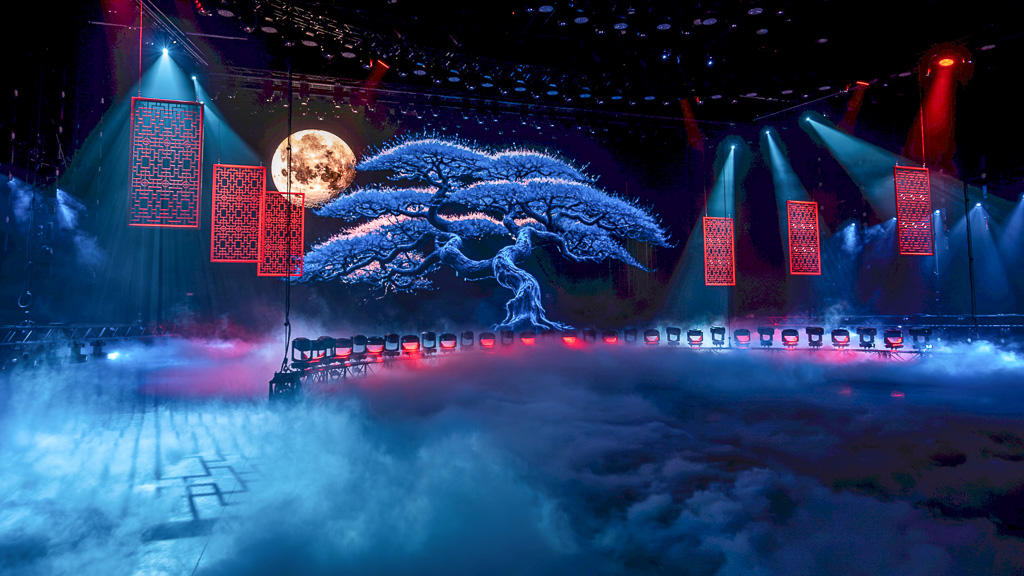
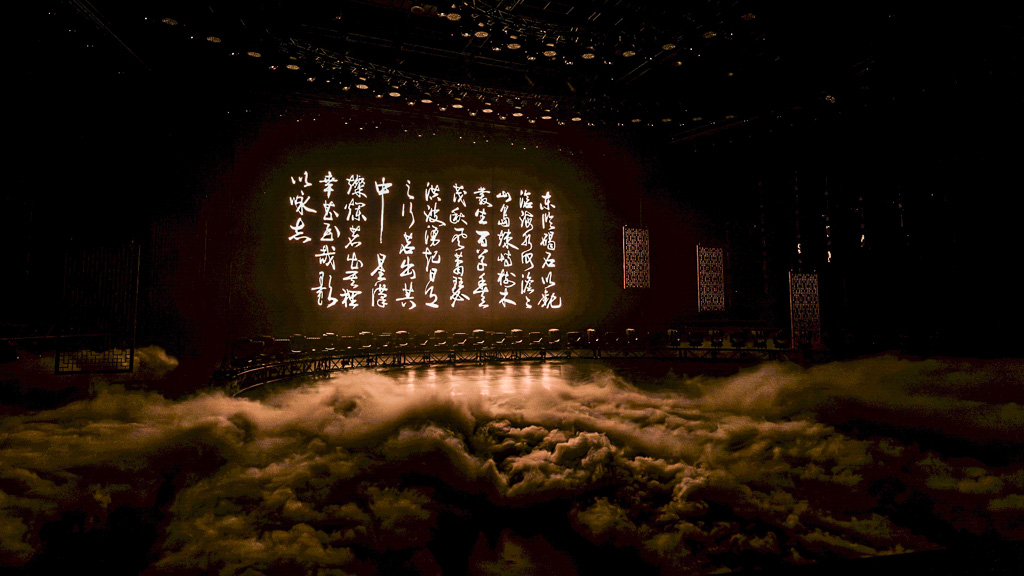
The journey begins with a tribute to traditional Chinese culture. The LED wall displays a "Jade Palace" and a classical pine tree under a moonlit sky, symbols of wisdom and spiritual endurance. A central element of this opening is a piece of calligraphy hand-painted by CEO Jiang Wei Kai, whose father was a master calligrapher. This meditative start, accompanied by a custom-composed soundscape featuring ethnic motifs and piano, uses ground fog to create a dense, atmospheric environment.
As the show progresses, it transitions through metaphorical scenes:
- Northern Lights: Featuring the Zonda 9 FX wash lights to recreate the undulating movement of the aurora borealis.
- Galaxies and Chaos: Exploring the raw power of light through rapid kinetic movements and high-intensity strobe effects.
- The Supernova: The show’s climax features a 2.5-meter diameter hemisphere packed with 123 Ayrton Kyalami fixtures. This "Deathstar"-inspired construct moves kinetically, emitting laser beams and internal fog to create a three-dimensional explosion of light.
- A New Day: The finale symbolizes the arrival in the "here and now," with the LED screen opening to reveal the stage and the technical team’s credits.
Chronology and Implementation
The project’s timeline was marked by intense international collaboration. Following the initial invitation in October 2023, the creative phase involved months of digital prototyping.
- Pre-Visualization: Kuhn and co-designer Marc Marlo Schelesnow used Depence and Wysiwyg software in Berlin to create detailed renders and "mood boards" for the Golden Sea team.
- Technical Integration: Communication was conducted almost exclusively via WeChat, utilizing AI translation tools to bridge the language gap between the German design team and the Chinese engineering staff.
- On-Site Programming: In May 2024, the design team spent ten days in Panyu for final programming. This period was characterized by a grueling schedule, where the team famously opted for Chinese fast food over traditional 90-minute corporate meals to maximize time at the console.
- Grand Opening: The facility was officially inaugurated on May 20, 2024. The event showcased the room’s versatility, transitioning from the high-tech light show to a traditional Chinese Opera performance, proving the success of the hybrid design.
Broader Impact and Industry Implications
The Golden Sea showroom represents a milestone in the "Performing Arts" sector within China. By integrating world-class acoustic treatment—designed by one of China’s leading acousticians—and a d&b audiotechnik line array system, the venue has set a new standard for corporate experience centers.
From an industry perspective, this project illustrates the growing importance of "storytelling" in B2B marketing. Manufacturers are no longer simply selling hardware; they are selling the emotional and artistic potential of that hardware. The collaboration between a Berlin designer and a Chinese industrial giant also highlights the diminishing relevance of geographic borders in the creative tech industry.
As of early 2026, the showroom remains a primary destination for international lighting designers and production managers. It serves as a living laboratory where the limits of DMX data management and kinetic rigging are constantly tested. For Golden Sea, the investment has paid off not just in brand prestige, but in providing a venue that elevates the "Made in China" label to a symbol of high-end, artistic excellence.
The project concludes as a successful "intercultural Spagat" (split)—a balance between German technical rigor and Chinese traditional aesthetics. As Martin Kuhn noted following the opening, the key to the project’s success was not the technology itself, but the patience, dedication, and communication required to align two different worlds within a single, 20-meter-high room.
