

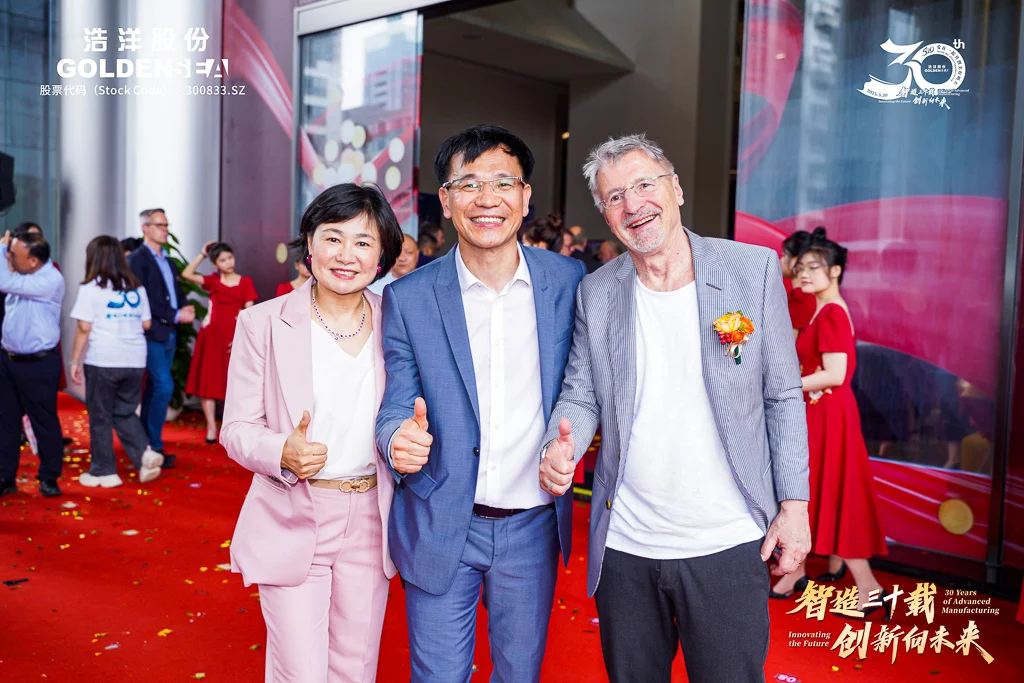
The global professional lighting landscape is undergoing a profound transformation as major Asian manufacturers transition from traditional original equipment manufacturing (OEM) roles into dominant global brand leaders. At the forefront of this industrial shift is Golden Sea, a Guangzhou-based powerhouse that has successfully navigated the complexities of international market expansion by acquiring and developing high-end brands such as Ayrton and SGM. While many regional competitors remain tethered to low-cost production models, Golden Sea has implemented a sophisticated strategy centered on internal research and development, intellectual property protection, and a localized approach to the European and North American markets. In a recent comprehensive dialogue, Jiang Wei Kai, CEO of Golden Sea, detailed the company’s trajectory, emphasizing that the distinction between a "supplier" and a "technological leader" lies in the willingness to invest in the long-term lifecycle of a product rather than just its immediate assembly.
The Strategic Pivot from OEM to Brand Leadership
For decades, the narrative surrounding Chinese manufacturing was dominated by the concept of "white-label" production, where factories produced goods for Western brands without holding the intellectual property or the brand equity themselves. Golden Sea has systematically dismantled this stereotype. By positioning brands like Ayrton and SGM within its portfolio, the company has secured a foothold in the premium segment of the entertainment and architectural lighting markets. This evolution is not merely cosmetic; it represents a fundamental change in corporate philosophy.
According to CEO Jiang Wei Kai, the core differentiator for Golden Sea is its "uncompromising commitment to R&D and innovation." The company maintains a dedicated team of over 200 engineers who specialize in highly technical niches, including software architecture, optical engineering, thermal management, and industrial design. This internal expertise allows the company to control the entire development cycle, from the initial conceptualization to the final production line. By internalizing these processes, Golden Sea can predict market trends and develop proprietary technologies rather than reacting to the innovations of others. This proactive stance is supported by a robust patent strategy, treating intellectual property as a strategic asset that creates long-term value and provides a competitive moat against lower-cost imitators.
Chronology of Global Expansion and Technological Integration
The rise of Golden Sea as a global entity has been marked by several key milestones that reflect its increasing influence in the professional lighting sector.
- Early 2000s: Establishment and growth as a high-quality OEM partner for major international lighting brands.
- The Decade of Acquisition (2010–2020): Strategic investments in established Western brands, most notably the French brand Ayrton, which became a staple in high-end concert touring and television production.
- 2022–2024: Further consolidation of the portfolio with the integration of SGM, a Danish leader in IP65-rated LED lighting, known for its architectural and outdoor performance capabilities.
- 2025–2026: The launch of the state-of-the-art "Performing Arts Center" showroom in Guangzhou and the expansion of the GS ARC and Terbly brands into specialized European distribution channels.
Throughout this timeline, Golden Sea has shifted its focus toward "Smart Manufacturing." The integration of robotics and AI-driven testing protocols has become a hallmark of their production facility. In 2026, the company continues to push the boundaries of what is possible in automated quality assurance, implementing individual optical component testing for every fixture that leaves the factory floor. This level of precision is designed to meet the rigorous demands of European and American lighting designers who require absolute consistency across large batches of equipment.
Supporting Data: The Infrastructure of Innovation
The scale of Golden Sea’s operations provides a clear indication of its market ambitions. The company’s headquarters and manufacturing hub are not merely assembly plants but a vertically integrated ecosystem.
- Engineering Manpower: With over 200 specialized engineers, Golden Sea possesses one of the largest R&D departments in the global lighting industry.
- Manufacturing Precision: The use of AI-driven testing ensures that performance metrics—such as color temperature consistency, lumen output, and motor calibration—are within tolerances that exceed standard industry requirements.
- Product Diversity: The new showroom on the 13th floor of the factory features over 20 different fixture types, ranging from high-output moving heads to kinetic truss systems and advanced LED displays.
- Corporate Welfare: The company emphasizes employee retention through a campus that includes organic dining facilities, on-site medical care, and residential accommodations, recognizing that a stable, skilled workforce is essential for maintaining manufacturing quality.
This infrastructure supports a "forward-looking" roadmap where each product generation builds upon the successes of the previous one. This scalability ensures that customers who invest in Golden Sea technology are not purchasing "dead-end" products but are instead entering an evolving ecosystem.
Meeting the Demands of the European Market
European lighting professionals are known for their stringent requirements regarding product longevity, environmental sustainability, and after-sales support. For an Asian manufacturer to succeed in this environment, it must move beyond the "disposable" product mindset. Jiang Wei Kai acknowledges that the European market values consistency and service above all else. To address this, Golden Sea has established localized technical support teams across Europe to provide rapid assistance, firmware updates, and extended warranties.
The company’s approach to the "Circular Economy" is another area where it aligns with European expectations. By focusing on modular repairability and energy-efficient designs, Golden Sea aims to reduce the total cost of ownership for rental houses and venues. This includes the use of high-grade, corrosion-resistant alloys and optics that can withstand extreme temperatures, ensuring that the fixtures remain operational in the field for years rather than months. Participation in major European trade fairs, such as LEaT con in Hamburg, serves as a platform to demonstrate these capabilities to lighting designers and distributors directly, fostering a sense of transparency and partnership.
Official Responses and Strategic Vision
During the unveiling of the new showroom concept—designed in collaboration with renowned lighting designer Martin Kuhn—CEO Jiang Wei Kai articulated a vision that transcends simple sales figures. He described the showroom not just as a display area, but as a "Performing Arts Center" that allows designers to experience the narrative potential of the lighting technology.
"We are not just delivering products; we are defining markets," Jiang stated. "Our true strength lies in our ability to combine excellent manufacturing quality with cutting-edge R&D expertise. This is why global partners see us not just as suppliers, but as technology leaders and brand developers."
This sentiment is echoed by industry analysts who note that Golden Sea’s multi-brand strategy (SGM, Ayrton, GS ARC, Terbly) allows the company to penetrate different market segments—from high-end architectural installations to cost-effective theatrical solutions—without diluting the prestige of its premium labels. By maintaining distinct identities for each brand while sharing a common technological backbone, Golden Sea maximizes its market reach and operational efficiency.
Broader Impact and Industry Implications
The success of Golden Sea signals a broader shift in the global balance of the professional electronics industry. As the company continues to invest in AI, robotics, and high-level R&D, the traditional gap between "Western innovation" and "Eastern production" is closing. Golden Sea’s ability to license its proprietary technologies to other players in the industry further cements its status as a foundational pillar of the modern lighting market.
Furthermore, the company’s commitment to sustainability and employee welfare sets a benchmark for manufacturing standards in the region. By proving that high-quality, innovative products can be produced in a socially responsible and technologically advanced environment, Golden Sea is helping to reshape the global perception of "Made in China" to "Engineered by Golden Sea."
As the industry moves toward 2027 and beyond, the focus will likely shift toward even greater integration of AI in show control and increasingly modular hardware designs. With its current trajectory, Golden Sea is well-positioned to lead these developments, ensuring that its brands remain at the center of the world’s most prestigious stages and architectural landmarks. The combination of industrial might, strategic brand management, and a deep understanding of regional market nuances makes Golden Sea a definitive force in the future of light.
