

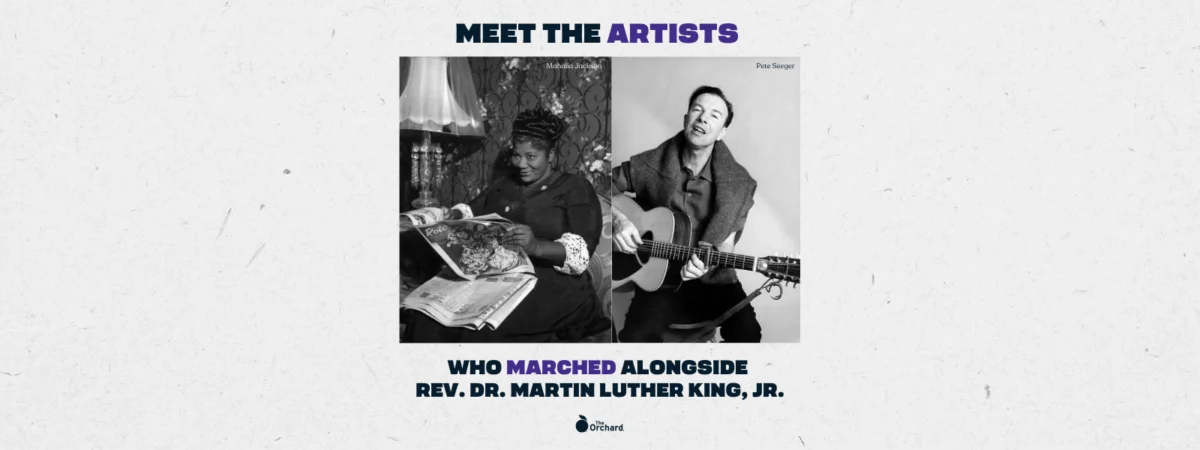
On this Rev. Dr. Martin Luther King, Jr. Day of Service, January 19, 2026, we honor the enduring legacy of the Civil Rights Movement by shining a spotlight on two pivotal figures whose voices amplified the call for justice: Mahalia Jackson and Pete Seeger. These artists were not mere observers but active participants, marching alongside Dr. King and providing the soundtrack that fueled the nation’s conscience during one of its most transformative periods. Their contributions, both on and off the stage, served as a powerful guiding light for the movement, their music resonating with hope, resilience, and an unwavering demand for equality.
The Civil Rights Movement, a complex and multifaceted struggle for racial equality that gained significant momentum in the mid-20th century, was profoundly shaped by the power of art and music. From the spirituals sung in enslaved communities to the protest anthems of the 1960s, music has consistently served as a tool for solidarity, inspiration, and resistance. Dr. King himself recognized this, often stating, "Music is the most powerful form of communication we have." It was within this context that artists like Mahalia Jackson and Pete Seeger found their voices not only as performers but as integral components of the fight for human dignity. Their involvement transcended simple performance; it was an act of profound commitment, aligning their artistic talents with the urgent moral imperative of the era.
Mahalia Jackson: The Queen of Gospel and a Spiritual Anchor
Mahalia Jackson, widely hailed as the "Queen of Gospel," was more than a celebrated vocalist; she was a deeply trusted confidante and spiritual anchor for Rev. Dr. Martin Luther King, Jr. Their friendship, forged in the crucible of the burgeoning Civil Rights Movement, was characterized by mutual respect and a shared vision for a more just America. Jackson’s powerful and soul-stirring performances were a cornerstone of SCLC (Southern Christian Leadership Conference) events, often preceding Dr. King’s impassioned sermons, setting a tone of spiritual uplift and unwavering faith.
Jackson’s most iconic contribution to the movement, an event etched in the annals of American history, occurred during the 1963 March on Washington for Jobs and Freedom. As Dr. King delivered his monumental "I Have a Dream" speech to an estimated 250,000 people gathered at the Lincoln Memorial, it was Mahalia Jackson who, from the dais, famously called out, "Tell them about the dream, Martin!" This spontaneous interjection, born from the deep well of her spiritual connection to King’s message and the collective aspirations of the crowd, is widely credited with prompting Dr. King to move beyond his prepared remarks and articulate the dream that has since become a beacon of hope worldwide. The raw emotion and profound conviction in Jackson’s voice underscored the urgency and personal resonance of King’s vision, transforming a speech into a shared prophecy.
The impact of Jackson’s music on the movement cannot be overstated. Her renditions of gospel classics like "Amazing Grace" and "Precious Lord, Take My Hand" provided solace and strength to activists facing violence, intimidation, and despair. Her performances were not merely entertainment; they were acts of spiritual warfare, bolstering the resolve of those on the front lines. The Smithsonian Folkways, a key distributor of music from freedom fighters, offers extensive collections of Mahalia Jackson’s work, allowing listeners to connect with the powerful spirit that fueled the Civil Rights era. Her music continues to inspire, reminding us of the profound spiritual underpinnings of the struggle for equality.
Pete Seeger: The Folk Troubadour of Social Justice
Pete Seeger, a prolific folk singer, songwriter, and lifelong activist, dedicated a significant portion of his career in the 1960s to championing a constellation of interconnected causes, including civil rights, labor rights, and environmental protection. His music, characterized by its accessibility and directness, served as a powerful tool for organizing and mobilizing communities. Seeger’s ability to craft anthems that resonated with ordinary people made him a beloved figure among activists and ordinary citizens alike.
Some of Seeger’s most enduring songs are direct calls to action and solidarity. "Solidarity Forever," a union anthem, became a powerful expression of collective bargaining and worker empowerment. "Which Side Are You On?" posed a direct challenge to indifference, urging individuals to commit to the struggle for justice. Perhaps his most universally recognized contribution is "If I Had a Hammer," co-written with Lee Hays, a song that evolved from a simple melody into a powerful anthem for peace, love, and justice, its message transcending generational and political divides.
Seeger’s connection to the Civil Rights Movement deepened through his engagement with "We Shall Overcome." While the song’s origins are rooted in earlier African American spirituals and labor songs, it was Seeger’s arrangement and popularization of it that cemented its status as the unofficial anthem of the Civil Rights Movement. Dr. King’s first encounter with the song was through Seeger’s rendition, and he famously quoted its hopeful refrain in his final public address in Memphis on March 3, 1968, just days before his assassination: "And I know, though I may not get there with you… we as a people will get to the promised land." This testament to the song’s profound impact highlights how Seeger’s musical efforts directly influenced the movement’s most significant voices.
In 1965, Seeger accepted an invitation from Dr. King to perform at the Selma to Montgomery marches, a pivotal series of protests demanding voting rights for African Americans. His presence and music at these marches provided a vital source of encouragement and solidarity for the participants who faced immense hostility and violence. Seeger’s legacy as a musician deeply embedded in the struggles of the common person continues to resonate, his discography a testament to his unwavering commitment to a more equitable world. Albums featuring his work are available through distributors like Smithsonian Folkways, offering a deep dive into his contributions to social justice.
The Broader Impact and Enduring Legacy
The collaboration between artists like Jackson and Seeger and the leaders of the Civil Rights Movement created a powerful synergy. Music served as a vital tool for disseminating messages, fostering unity, and providing emotional sustenance. In an era before widespread electronic media, songs could be easily learned, sung in unison at rallies, churches, and picket lines, and passed down through generations, carrying the spirit of the movement forward.
The data surrounding the Civil Rights Movement reveals the profound impact of public demonstrations and the collective spirit they engendered. The March on Washington in 1963, for instance, is estimated to have involved between 200,000 and 300,000 participants, a testament to the power of mobilization. Such gatherings were often characterized by singing, transforming large crowds into unified choirs of hope and resistance. The music provided by artists like Jackson and Seeger was instrumental in creating this shared emotional and spiritual experience.
The analysis of the movement’s success reveals that artistic expression was not a peripheral element but a central force. The songs and speeches, amplified by the voices of artists, helped to shift public opinion, galvanize support, and provide a moral framework for the struggle. The enduring power of songs like "We Shall Overcome" lies not just in their melody but in the collective memory and lived experiences they represent. These songs became a language of liberation, understood and embraced by millions.
Official Responses and Continuing Mobilization
The impact of these artists was recognized and celebrated by the leaders of the Civil Rights Movement. Dr. King himself frequently acknowledged the vital role of music and musicians in sustaining the struggle. His deep respect for Mahalia Jackson, evident in their close friendship and her prominent role in his events, speaks volumes about her importance. Similarly, his invitation to Pete Seeger to march in Selma demonstrates the value placed on Seeger’s artistic and activist contributions.
In the present day, the spirit of Dr. King’s legacy is carried forward through various initiatives. Organizations like YourCause Connect serve as platforms for individuals to engage in service and support communities, echoing the call to action inherent in the Civil Rights Movement. The ongoing work of civil rights organizations and social justice advocates continues to build upon the foundations laid by the activists and artists of the past.
Getting Involved: Continuing the March for Justice
The legacy of Mahalia Jackson, Pete Seeger, and Rev. Dr. Martin Luther King, Jr. calls for continued engagement and action. As we observe this Day of Service, opportunities abound to "SHOW UP" and contribute to the ongoing pursuit of justice and equality. Exploring resources like YourCause Connect or directly supporting organizations dedicated to civil rights and social justice are tangible ways to honor this legacy.
Furthermore, amplifying the voices and stories of those who fought for a better future is crucial. Following and engaging with social media accounts dedicated to civil rights history, activism, and social justice initiatives helps to keep these important narratives alive and accessible. By understanding the historical context, appreciating the power of art as a tool for change, and actively participating in contemporary movements, we can ensure that the dream articulated by Dr. King, and amplified by the voices of artists like Mahalia Jackson and Pete Seeger, continues to inspire progress towards a more just and equitable world for all. The music of freedom fighters, published by partners like Smithsonian Folkways, remains a potent reminder of the struggles of the past and a call to action for the present.
