

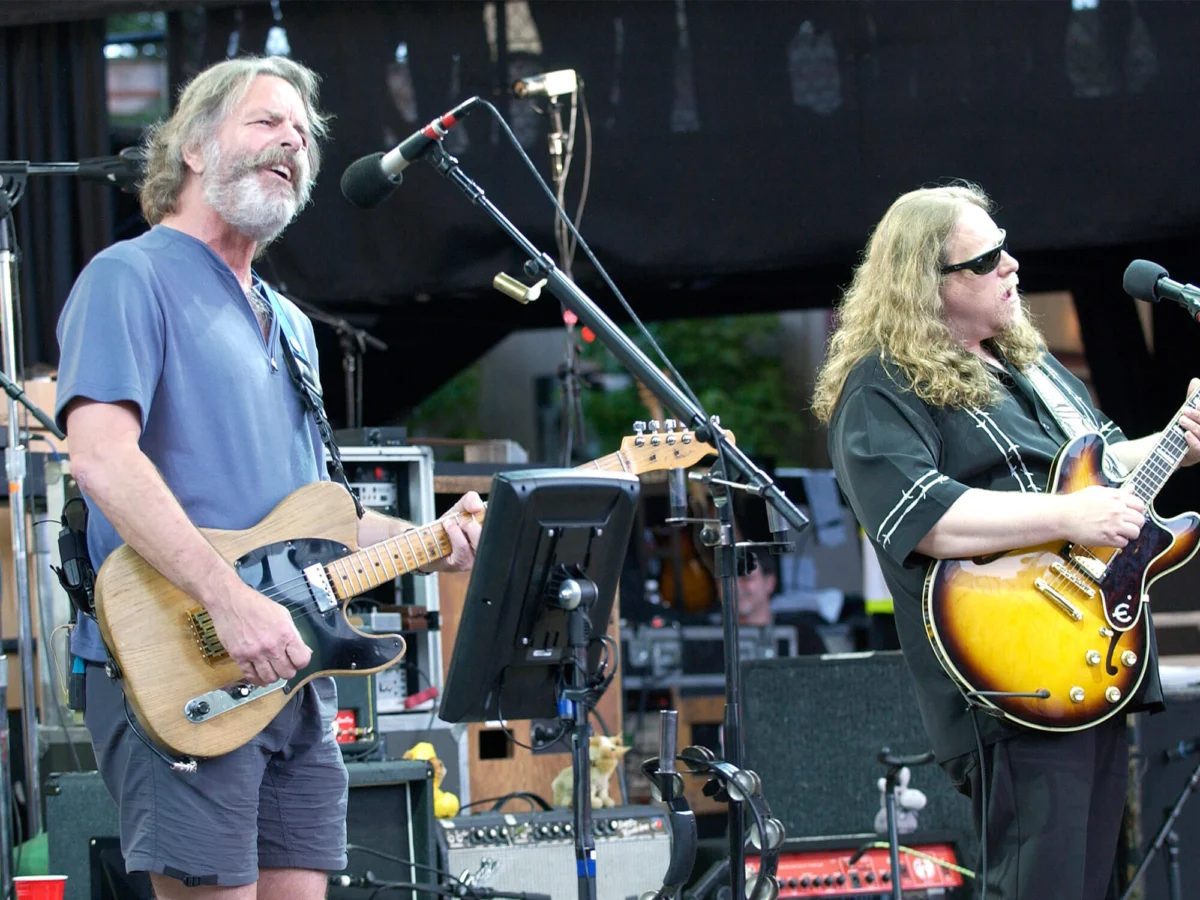
Renowned Gov’t Mule and Allman Brothers Band guitarist Warren Haynes has offered profound reflections on the singular musicianship and unyielding spirit of the late Bob Weir, the iconic rhythm guitarist and co-founder of the Grateful Dead, who passed away on January 10, 2026. Haynes, a stalwart figure in the lineage of improvisational rock and a frequent collaborator with Weir for over two decades, highlighted Weir’s rare ability to maintain a fresh, exploratory perspective on music, a quality he described as a "childlike love" that persisted throughout his extensive career. These insights, shared in a recent interview with All Alabama, underscore the deep personal and professional bond between the two artists and illuminate a defining characteristic of Weir’s approach to his craft.
A Shared Musical Tapestry: Decades of Collaboration
The collaborative history between Warren Haynes and Bob Weir spans more than two decades, forging a musical connection built on mutual respect and a shared commitment to improvisational exploration. Their paths first converged on stage in 2001 at New York’s Wetlands Preserve, an event that marked the beginning of a prolific partnership. From that initial performance, Haynes and Weir would regularly share stages, their guitars weaving intricate sonic tapestries that captivated audiences worldwide. This enduring camaraderie extended across various projects that sought to carry forward the Grateful Dead’s unique musical legacy following the passing of Jerry Garcia in 1995. Haynes, known for his versatility and soulful playing, became an indispensable presence in the post-Garcia landscape, often standing alongside Weir as they navigated the expansive repertoire of the Grateful Dead and explored new sonic territories.
The significance of their collaboration cannot be overstated. Haynes’ powerful, blues-infused lead guitar style often complemented Weir’s intricate, angular rhythm work, creating a dynamic interplay that both honored the Grateful Dead’s heritage and pushed its boundaries. Their performances together were characterized by a palpable chemistry, a testament to their deep understanding of each other’s musical instincts and their shared philosophy of spontaneous creation. This synergy was not merely technical; it was deeply rooted in a common artistic vision, one that prioritized the moment-to-moment evolution of music over rigid adherence to predefined structures.
Weir’s Philosophy: The Spirit of Perpetual Discovery
Haynes’ reflections on Weir’s musical philosophy paint a vivid picture of an artist driven by an insatiable curiosity and an unwavering commitment to novelty. "Bob approached every performance and every song from a new, fresh perspective every time," Haynes recounted. This statement encapsulates the very essence of the Grateful Dead’s improvisational ethos, where each live rendition of a song was treated not as a replication, but as a unique journey. Weir’s declared aversion to repetition was not a mere preference; it was a fundamental principle that guided his artistic output. "He never wanted to repeat what he had done in the past," Haynes emphasized, highlighting a profound dedication to innovation even within a well-established repertoire.
What truly struck Haynes was Weir’s enduring enthusiasm. "After all those decades of playing music, [he was] still excited to play every time," Haynes observed. This consistent excitement, this "childlike love for music," set Weir apart. It speaks to an artist who never allowed the rigors of touring or the familiarity of his material to diminish his joy or his capacity for discovery. This boundless enthusiasm translated into a unique openness on stage. Weir was "still open to where the music might go at any given moment and encouraging of what could happen moment by moment," a quality essential for the spontaneous, often unpredictable nature of Grateful Dead-inspired performances. Haynes concluded by calling Weir "a real joy to play with and a sweet human being," a testament to his character both on and off the stage. This combination of technical mastery, creative fearlessness, and genuine warmth cemented Weir’s place as not just a bandmate, but a mentor and an inspiration to many.
A Legacy Forged in Improvisation: Bob Weir’s Enduring Influence
Bob Weir’s contributions to music extend far beyond his role as a guitarist for the Grateful Dead; he was an architect of a unique sonic landscape and a key figure in the development of improvisational rock. Born in San Francisco in 1947, Weir’s musical journey began early, leading him to a fateful encounter with Jerry Garcia in 1963. This meeting eventually blossomed into the formation of the Grateful Dead in 1965, a band that would defy categorization and leave an indelible mark on global music culture.
Weir’s distinctive rhythm guitar style was a cornerstone of the Grateful Dead’s sound. Unlike many rock guitarists who focused on lead lines, Weir developed a complex, orchestral approach to rhythm, often playing intricate voicings and syncopated patterns that filled out the band’s expansive sound. His guitar work was not merely accompaniment; it was a dynamic, interactive element that propelled the music forward, reacting to and influencing Garcia’s solos, Phil Lesh’s bass lines, and the percussive interplay of Mickey Hart and Bill Kreutzmann. He frequently employed a variety of tunings and chord voicings, drawing inspiration from jazz and classical music, which contributed to the Grateful Dead’s unique harmonic palette. Songs like "Sugar Magnolia," "Estimated Prophet," and "Cassidy" bear his distinct compositional stamp, showcasing his lyrical prowess and his ability to craft narratives steeped in American folklore and existential inquiry.
His commitment to "never repeat what he had done in the past" was directly aligned with the Grateful Dead’s improvisational philosophy. The band was renowned for its extended jams, where songs served as launching pads for collective spontaneous creation. Weir’s role in these excursions was crucial, providing harmonic anchor points while simultaneously pushing the music into uncharted territory. This approach not only defined the Grateful Dead but also profoundly influenced the burgeoning "jam band" genre, inspiring countless musicians to embrace spontaneity and collaborative musical dialogue. His influence cultivated an entire subculture of music lovers who prioritized live performance, extended improvisation, and the unique experience of each show.
The Post-Garcia Era: Keeping the Flame Alive

The death of Jerry Garcia in August 1995 marked a pivotal moment for the Grateful Dead and its millions of devoted fans. The loss of their iconic lead guitarist and spiritual leader left a profound void, prompting questions about the future of the music. However, the surviving members, driven by a deep reverence for their shared legacy and a recognition of the music’s enduring power, were determined to keep the flame alive.
In 1998, Bob Weir, along with Phil Lesh, Mickey Hart, and Bill Kreutzmann, formed The Other Ones. This new configuration aimed to continue performing the Grateful Dead’s vast catalog while also exploring new musical avenues. The band underwent a name change in 2003, becoming simply The Dead, signifying a direct connection to their origins while acknowledging the evolution of their sound. It was during this period of resurgence and reinvention that Warren Haynes became an integral part of the Grateful Dead family. Joining The Dead’s lineup in 2004, Haynes brought his formidable guitar skills and deep understanding of the Grateful Dead’s musical language to the ensemble. His presence allowed the band to recapture some of the dual-guitar dynamics that characterized the Garcia era, while also infusing the music with his own distinct voice.
Haynes’ tenure with The Dead saw him performing countless shows alongside Bob Weir, cementing their musical bond and carrying the Grateful Dead’s improvisational spirit to new generations of listeners. This period was crucial for the continuation of the Grateful Dead’s legacy, demonstrating the music’s vitality beyond its original lineup. It also highlighted Weir’s leadership in guiding these iterations, ensuring that the spirit of exploration and connection remained at the core of every performance. Beyond The Dead, Weir continued to explore various musical projects, including RatDog, Furthur (with Phil Lesh), and Dead & Company (with John Mayer), consistently demonstrating his commitment to live music and his refusal to rest on past achievements. These ventures were all characterized by the same "childlike love for music" that Haynes so eloquently described, a continuous quest for musical truth and an open invitation for audiences to join the journey.
An Outpouring of Tributes: A Community United in Grief and Gratitude
Bob Weir’s passing on January 10, 2026, unleashed a widespread outpouring of tributes from across the globe, reverberating through the guitar community and the wider music world. The reactions underscored not only his immense musical talent but also his unique personality and profound impact on countless individuals. Fellow musicians, who had shared stages, studios, and decades of friendship with Weir, voiced their sorrow and admiration, painting a collective portrait of a revered artist and a beloved human being.
Nancy Wilson of Heart, a contemporary and peer, articulated the profound sense of loss felt by many. "This guy was such a hero," Wilson wrote, capturing the reverence with which Weir was held. Her words, "The world is a sadder place without him in it," resonated with fans and artists alike, acknowledging the void left by his absence. Wilson fondly recalled his "lifetime of magic" and the "twinkle of good nature in his eyes," emphasizing not just his musical genius but also his kind and jovial spirit. Her conviction that "His good vibrations will never end" and that "He gave such a gift to us all" speaks to the enduring legacy of joy and inspiration Weir bequeathed to the world.
Phish guitarist Trey Anastasio, a leading figure in the jam band scene directly influenced by the Grateful Dead, offered a more personal, anecdotal tribute that highlighted Weir’s endearing humility. Anastasio recounted Weir’s characteristic aversion to compliments: "Bobby was completely allergic to compliments in the most endearing way. I’d say, ‘Man, that guitar riff you were doing on that song sounded really killer’ and he’d respond, ‘Well, I’m sure I’ll fuck it up next time.’ I loved that about him." This anecdote beautifully illustrates Weir’s down-to-earth nature and his relentless pursuit of perfection, even if expressed through self-deprecating humor. It reveals a man who, despite his legendary status, remained grounded and focused on the ever-present challenge of the next performance.
Beyond these specific tributes, the collective sentiment from collaborators like Phil Lesh, Mickey Hart, and Bill Kreutzmann, though not explicitly quoted in this specific context, can be inferred to be one of profound grief for a lifelong friend and musical partner. Their shared history, stretching back to the Grateful Dead’s inception, signifies an irreplaceable bond. Younger musicians who toured with Weir in Dead & Company, such as John Mayer, would undoubtedly express deep gratitude for the mentorship and opportunity to learn from a living legend. The outpouring of grief on social media platforms and at memorial gatherings attested to the global reach of his influence, demonstrating how his music transcended generations and cultural divides. Fans shared memories of transformative concerts, cherished lyrics, and the unique sense of community fostered by the Grateful Dead experience, all of which Weir was central to.
The Broader Impact: Weir’s Indelible Mark on Music and Culture
Bob Weir’s indelible mark on music and culture extends far beyond the impressive discography of the Grateful Dead. His passing represents the loss of a foundational pillar in the edifice of American improvisational music. His unique rhythm guitar style, which defied conventional rock norms, created a sonic blueprint for countless bands that followed. He proved that rhythm guitar could be as intricate, exploratory, and vital as lead guitar, challenging musicians to think beyond traditional roles.
The implications of Weir’s departure for the future of Grateful Dead-related music are significant. While the music has always evolved and adapted, Weir’s presence provided an unbroken link to the band’s original spirit and improvisational heart. His commitment to live performance ensured that the music remained a living, breathing entity, constantly reinventing itself. Future iterations of Grateful Dead music will undoubtedly continue, carried forward by the surviving members and a new generation of musicians, but they will do so without the direct guidance of one of its primary architects. This places a greater emphasis on preserving his unique contributions and continuing his philosophy of musical exploration.
Weir’s legacy is also deeply intertwined with the cultural phenomenon of the Grateful Dead, which fostered a vibrant, communal spirit among its fans. This community, often referred to as "Deadheads," found solace, connection, and a sense of belonging in the music and the live experience. Weir’s gentle demeanor, his infectious smile, and his consistent engagement with the audience were integral to cultivating this unique bond. His passing serves as a poignant reminder of the transient nature of life, but also of the enduring power of art to create lasting connections and to transcend generations. The Grateful Dead’s music, shaped so significantly by Weir’s vision, will continue to be a source of inspiration, joy, and community for years to come.
In conclusion, Warren Haynes’ heartfelt tribute to Bob Weir resonates deeply, capturing the essence of a musician whose commitment to creative exploration and genuine love for his craft remained undimmed throughout his life. Weir’s "childlike love for music," his relentless pursuit of fresh perspectives, and his profound influence on improvisational rock have left an irreplaceable void. However, his spirit, encapsulated in the myriad notes he played and the lives he touched, will undoubtedly continue to inspire musicians and audiences alike, ensuring that the magic he brought to the world will never truly end.
