

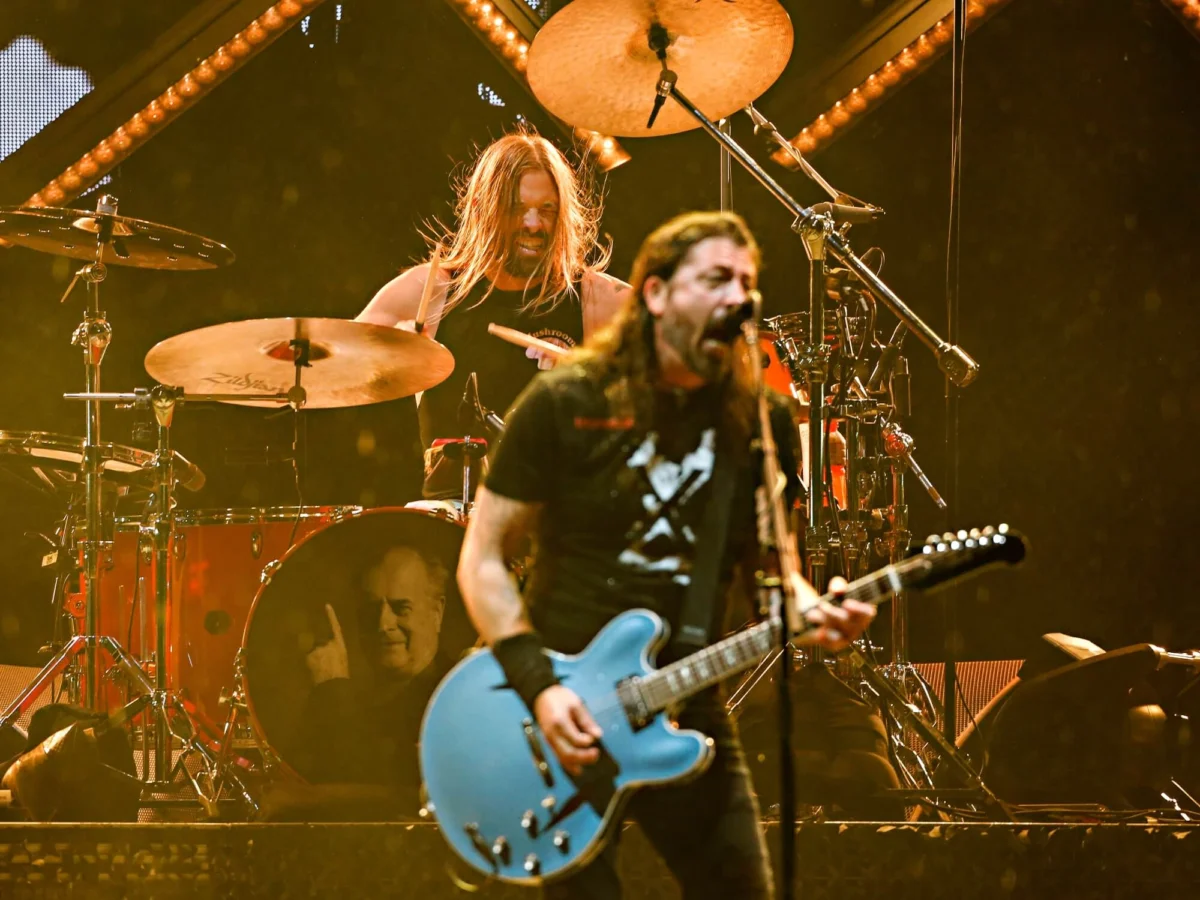
Dave Grohl, the iconic frontman of the Foo Fighters, has offered his most profound and public reflections to date on the devastating loss of the band’s beloved drummer, Taylor Hawkins. In a candid interview with MOJO magazine, Grohl revealed how music became an essential, albeit sometimes evasive, "crutch" in the immediate aftermath of Hawkins’ untimely death in March 2022. This period of intense grief, he explained, fundamentally "threw our world upside down," compelling a radical re-evaluation of his life, career, and underlying motivations.
Hawkins’ passing on March 25, 2022, at the age of 50, sent shockwaves through the global music community. The Foo Fighters were on tour in Bogotá, Colombia, when the news broke, leading to the immediate cancellation of all remaining tour dates. The band’s official statement at the time conveyed "the tragic and untimely loss of our beloved Taylor Hawkins," asking for privacy for his family. For Grohl, a musician intimately familiar with the profound impact of bandmate loss following the death of Kurt Cobain in Nirvana, this tragedy was particularly raw and deeply personal. "Losing Taylor was never meant to be," Grohl lamented in the MOJO interview. "That threw our world upside down and made me question everything about life, that it was so… It was so unfair. I still have a hard time making sense of it." This sentiment echoed the widespread disbelief and sorrow felt by millions of fans and peers who admired Hawkins’ effervescent personality and formidable talent.
The Unfathomable Loss: Taylor Hawkins’ Legacy and Departure
Taylor Hawkins was more than just a drummer; he was the vibrant, high-energy heart of the Foo Fighters, a dynamic foil to Grohl’s stage presence, and a cherished friend to his bandmates. Born Oliver Taylor Hawkins in Fort Worth, Texas, in 1972, he grew up in Laguna Beach, California, where he cultivated his passion for drumming. His early career saw him playing for Sass Jordan and later gaining significant recognition as the touring drummer for Alanis Morissette during her massively successful Jagged Little Pill tour in the mid-1990s. It was during this period that his powerful, intricate drumming style and charismatic stage presence caught the attention of Dave Grohl.
Hawkins joined the Foo Fighters in 1997, replacing original drummer William Goldsmith. His integration into the band marked a pivotal moment, solidifying their lineup and contributing significantly to their distinctive sound. From his debut on the album There Is Nothing Left to Lose (1999) through Medicine at Midnight (2021), Hawkins’ drumming was a cornerstone of the Foo Fighters’ success, blending technical prowess with raw, unbridled energy. His contributions extended beyond the drum kit; he occasionally sang lead vocals on tracks like "Cold Day in the Sun" and "Sunday Rain" and was a prolific songwriter. Outside of the Foo Fighters, Hawkins pursued various side projects, including Taylor Hawkins and the Coattail Riders, which released three studio albums, and his Queen tribute band, Chevy Metal, showcasing his diverse musical interests and deep respect for rock legends. His final album with the Foo Fighters, Medicine at Midnight, was released in February 2021, just over a year before his death, demonstrating the band’s continued creative vitality. His passing left an immense void, not just for the Foo Fighters, but for the entire rock music landscape.
Navigating the Aftermath: Grief, Silence, and the Crutch of Creativity
In the immediate aftermath of Hawkins’ death, the future of the Foo Fighters was cast into profound uncertainty. The band cancelled all scheduled performances, leaving a palpable silence where their stadium-filling anthems once roared. For Grohl, this silence was not merely external; it was a deep, internal void he found himself instinctively trying to fill with activity. He openly admitted to Mojo that he "threw himself into work" as a defense mechanism, a way to avoid the crushing weight of grief. "I think I was afraid of silence, afraid of having to feel," he confessed. This candid admission offers a rare glimpse into the coping mechanisms of an artist grappling with unimaginable loss, highlighting the common human tendency to seek distraction from overwhelming emotions.
Grohl further elaborated on this dynamic, stating, "I never want to say music is a distraction, but I was definitely using it as a crutch for some broken limb." This metaphor powerfully conveys the dual nature of his relationship with music during this period: a source of comfort and purpose, yet also a means of avoiding deeper emotional processing. It speaks to the complex interplay between creativity and trauma, where artistic expression can serve as both a healing balm and a temporary shield. For Grohl, who had previously navigated the intense public and personal grief following Kurt Cobain’s death by forming the Foo Fighters as a new creative outlet, this pattern of turning to music in crisis was deeply ingrained. However, this time, the reflection suggests a more conscious awareness of how that coping mechanism might have limited his ability to fully confront his sorrow.
A Reexamination of Ambition and Purpose
The profound shock of Hawkins’ death compelled Grohl to undertake a comprehensive re-evaluation of his entire career and his motivations as an artist. This introspection went beyond the immediate tragedy, prompting him to question the very fabric of his creative drive. "I’ve had to reexamine my ambition and intention," Grohl stated, revealing a deeper philosophical shift. He confessed that many of his past projects, which included diverse ventures like his documentary Sound City, the supergroup Them Crooked Vultures, and the metal project Probot, were driven by a need for "surface validation to prove that I could do it – not that I needed to do it."
This self-assessment sheds light on Grohl’s relentless work ethic and prolific output over decades, often characterized by a seemingly boundless energy and a desire to explore every musical avenue. He described himself as "always the guy who couldn’t sit still. I couldn’t take a vacation. I needed the TV on to put me to sleep." Underlying this constant motion was a fear: "It was the silence – the still – that scared me." This vulnerability reveals a profound personal struggle that, for years, fueled his creative endeavors but also perhaps prevented a deeper connection with himself and his emotions. The unexpected and tragic loss of Taylor Hawkins appears to have shattered this long-standing pattern, forcing Grohl into an unavoidable confrontation with the silence he once feared. This new perspective suggests a shift from external validation to internal necessity, moving toward a more authentic and purposeful creative existence.
The Path Forward: Tribute, Resilience, and New Beginnings
The period following Taylor Hawkins’ death was marked by both profound grief and an extraordinary outpouring of love and remembrance. The band, along with Hawkins’ family, organized two monumental Taylor Hawkins Tribute Concerts in September 2022 – one at Wembley Stadium in London and another at the Kia Forum in Los Angeles. These events were not merely concerts; they were global cathartic experiences, bringing together an unprecedented constellation of rock legends and musical icons to celebrate Hawkins’ life and music. Artists such as Paul McCartney, Liam Gallagher, Geddy Lee, Alex Lifeson, Joan Jett, Miley Cyrus, and members of Queen, Rush, and Metallica performed alongside the Foo Fighters, delivering emotional renditions of songs that honored Hawkins’ spirit. Dave Grohl’s powerful and often tearful performances, including a raw rendition of "My Hero," became defining moments of collective mourning and defiant celebration, allowing fans worldwide to participate in the grieving process. These concerts served as a crucial bridge, helping the band and its audience navigate the immediate aftermath of the tragedy and collectively begin to imagine a future.
Following the tribute concerts, the Foo Fighters faced the monumental decision of whether to continue as a band. In December 2022, they released a heartfelt statement confirming their intention to carry on, acknowledging that they would be a "different band going forward." The statement emphasized that Hawkins’ spirit would remain an "ever-present part of us all," signalling a commitment to honor his legacy while forging a new path. This decision was met with overwhelming support from fans, who understood the immense difficulty of such a choice. The band subsequently announced Josh Freese, a highly respected and experienced drummer known for his work with The Offspring, A Perfect Circle, and Devo, as their new touring drummer, ensuring the Foo Fighters’ powerful live presence could continue.
The tangible result of Grohl’s introspective journey and the band’s collective resilience is their forthcoming music. The MOJO interview indicates that the Foo Fighters are set to release their 12th studio album, Your Favorite Toy, on April 24. While specific details about the album’s content remain under wraps, it is almost certain to bear the indelible mark of their collective grief, healing, and renewed sense of purpose. Grohl’s invigorated perspective suggests a creative output that is more intentional and deeply felt. "Now, however, my horizon is much different," Grohl asserts. "There will be plenty of things that we’ll do in the next few years that will remind everyone that Foo Fighters love to circle the planet playing rock shows. Before, I was running on fumes and unleaded gas. Now, I’m just burning fucking diesel." This powerful metaphor speaks to a fundamental shift from a driven, perhaps frenetic, ambition to a more profound, sustainable, and emotionally charged source of energy. The new album and subsequent tours will not only be a testament to Hawkins’ enduring spirit but also a declaration of the Foo Fighters’ unwavering commitment to their music and their fans, fueled by a newly ignited passion and a deeper understanding of their collective purpose.
Broader Implications: Grief, Creativity, and the Human Spirit
The Foo Fighters’ journey through the loss of Taylor Hawkins and Dave Grohl’s subsequent reflections offer profound insights into the intersection of art, trauma, and the human spirit. Their experience underscores how profound personal loss can catalyze a re-evaluation of one’s entire life trajectory, often leading to a more authentic and purpose-driven existence. Grohl’s candidness about using music as a "crutch" contributes significantly to destigmatizing conversations around grief and mental health, particularly within high-pressure professions like the music industry. It highlights the universal human need for coping mechanisms, while also suggesting the importance of eventually confronting emotions rather than merely avoiding them.
The band’s decision to continue, honoring Hawkins’ memory while evolving, exemplifies resilience in the face of unimaginable adversity. Their path forward, marked by the powerful tribute concerts and the creation of new music, demonstrates the therapeutic power of collective expression and shared experience. For fans, the new album Your Favorite Toy will undoubtedly carry immense emotional weight, serving as both a memorial to Hawkins and a beacon of hope for the future of one of rock’s most beloved bands. The Foo Fighters, already a band with a storied history of overcoming tragedy, have once again proven their enduring spirit, transforming personal pain into a deeper, more resonant artistic purpose that continues to connect and inspire millions worldwide.
