

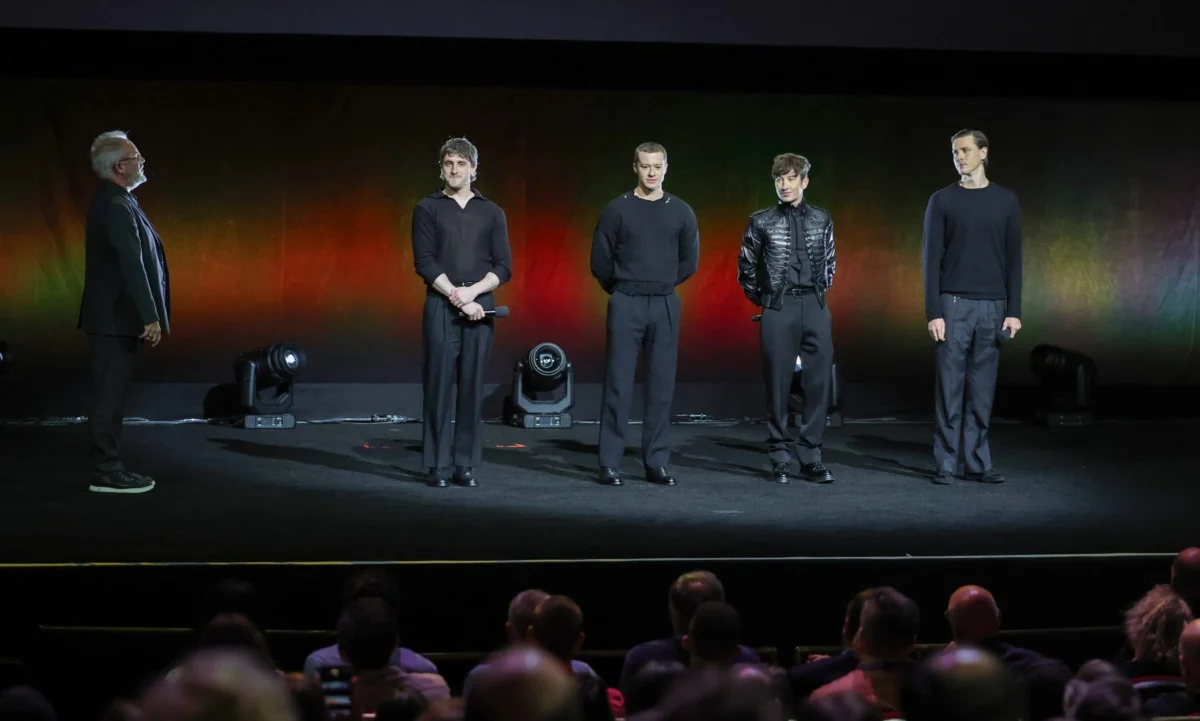
Irish actor Barry Keoghan has publicly disclosed the severe mental and emotional toll exacted by online hate and abuse concerning his physical appearance, particularly in the aftermath of his high-profile breakup with pop star Sabrina Carpenter. Speaking on SiriusXM’s The Morning Mash Up on Friday, March 20, Keoghan revealed that the relentless barrage of negative commentary forced him into a period of withdrawal, deeply affecting his personal life and professional outlook. The 33-year-old actor’s candid remarks shed light on the pervasive issue of cyberbullying and its devastating consequences for public figures, underscoring a growing concern within the entertainment industry about the unchecked nature of online discourse.
The Rise of a Star and the Spotlight’s Glare
Barry Keoghan’s journey to international acclaim has been marked by a series of compelling and often intense performances that have solidified his reputation as one of his generation’s most distinctive talents. Hailing from Dublin, Ireland, Keoghan’s early life was fraught with challenges, including time spent in foster care, which he has openly discussed as shaping his resilience and perspective. His breakout roles in films such as Christopher Nolan’s Dunkirk (2017) and Yorgos Lanthimos’s The Killing of a Sacred Deer (2017) quickly drew critical attention. He further cemented his status with an Academy Award nomination for Best Supporting Actor for his poignant performance in Martin McDonagh’s The Banshees of Inisherin (2022). More recently, Keoghan garnered significant buzz and critical discussion for his lead role in Emerald Fennell’s Saltburn (2023), a film that pushed boundaries and placed him firmly in the global spotlight.
This ascent, however, brought with it an increased level of public scrutiny, a common byproduct of celebrity in the digital age. As his star power grew, so did the intensity of attention on his personal life, culminating in a highly publicized relationship with American singer-songwriter Sabrina Carpenter. The pair first sparked dating rumors in late 2023, becoming a subject of considerable interest across social media and entertainment news outlets. Their public debut at the prestigious Vanity Fair Oscars afterparty in early 2024 confirmed their relationship, marking them as a prominent celebrity couple. Keoghan even made a notable appearance in the music video for Carpenter’s Billboard Hot 100 chart-topping single "Please Please Please," featured on her album Short n’ Sweet, a move that further integrated him into the pop culture zeitgeist and amplified their joint public profile.
The Unraveling: Breakup and Online Backlash
The relationship, which lasted approximately a year, reportedly concluded in December 2024, with sources close to the couple citing their demanding careers as the reason for their amicable split. However, the end of their romance unleashed an unforeseen wave of vitriolic commentary directed at Keoghan. Within days of the breakup reports, the actor found himself at the epicenter of a storm of online hate, much of which targeted his physical appearance.
The intensity of the abuse prompted Keoghan to take drastic action. He deleted his Instagram account, a significant step for a public figure in an era where social media engagement is often seen as integral to career visibility. Following this, he issued a lengthy and uncharacteristically raw statement on X (formerly Twitter), explaining his decision and detailing the nature of the harassment he had endured. "I can only sit and take so much," Keoghan wrote at the time, expressing his profound distress. "My name has been dragged across the internet in ways I usually don’t respond to." He elaborated on the disturbing content of the messages: "I deactivated my account because I can no longer let this stuff distract me from my family and work. The messages I have received no person should ever have to read them. Absolute lies, hatred, disgusting commentary about my appearance, character, how I am as a parent and every other inhumane thing you can imagine." This statement served as a stark public acknowledgment of the severe emotional distress caused by the online onslaught.
The SiriusXM Revelation: A Deeper Dive into Impact
Months after his initial X statement, Keoghan revisited the subject with even greater candor during his interview on SiriusXM’s The Morning Mash Up. Speaking with host Ben Harlum, he articulated the profound psychological impact of the online abuse. "There’s a lot of hate online. It’s a lot of abuse of how I look," Keoghan confessed, detailing how the negativity had led him to withdraw from public life. "I think I removed myself from online, but I’m still a curious human being that wants to go on and, if I attend an event or if I go somewhere, you want to see how it was received. And it’s not nice."
The Irish actor described how this constant exposure to negativity had fundamentally altered his behavior and perception of public engagement. "It’s made me shy away, it’s made me really go inside myself and not want to attend places, not want to go outside," he stated, painting a picture of an individual profoundly affected by public judgment. This retreat from public life is particularly challenging for an actor whose profession inherently demands a degree of visibility and interaction with the public.
Keoghan further expressed concern that the online harassment was beginning to "leak into his art," posing a significant threat to his creative spirit. "It’s becoming a problem," he emphasized. "I don’t have to hide away because I am hiding away. I don’t have to go to places because I actually don’t go to places because of these things. But when that starts leaking into your art, it becomes a problem because then you don’t even want to be on screen anymore." This sentiment highlights a critical aspect of online abuse: its potential to stifle creativity and passion, particularly for artists whose work often involves a deep personal investment.

Adding another layer of distress, Keoghan shared his worries about the long-term impact on his young son, Brando, whom he shares with former girlfriend Alyson Sandro. "It is disappointing for the fans, but it’s also disappointing that my little boy has to read all of this stuff when he gets older," he said, underscoring the intergenerational pain that online hate can inflict. The thought of his three-year-old son encountering such vitriol in the future adds a poignant and deeply personal dimension to Keoghan’s struggle, resonating with many parents who grapple with the complexities of digital footprints.
The Broader Landscape of Online Harassment and Celebrity Mental Health
Keoghan’s experience is not an isolated incident but rather a stark illustration of a pervasive issue within contemporary digital culture: the unchecked proliferation of online hate speech and its profound impact on mental health, especially for public figures. Studies consistently show that cyberbullying and online harassment can lead to severe psychological distress, including anxiety, depression, social isolation, and even thoughts of self-harm. For celebrities, this pressure is amplified by constant public scrutiny, the illusion of accessibility created by social media, and the sheer volume of negative commentary they can receive from millions of anonymous users.
The phenomenon often termed "cancel culture" contributes to this environment, where public figures are subjected to intense, often disproportionate, criticism and judgment for perceived missteps or simply for existing in the public eye. Breakups, in particular, tend to ignite frenzied online discussions, with fans and detractors alike feeling entitled to dissect, judge, and assign blame. This digital mob mentality can quickly escalate, turning benign curiosity into aggressive harassment, as seen in Keoghan’s case.
Social media platforms themselves face ongoing criticism for their role in moderating hate speech. Despite policies against harassment, the sheer volume of content makes effective enforcement challenging, often leaving individuals vulnerable to abuse. There is an ongoing debate about the responsibility of these platforms to create safer online environments, with calls for more robust reporting mechanisms, proactive content moderation, and greater transparency.
Keoghan’s candidness contributes to a growing conversation within the entertainment industry about the mental health challenges faced by artists. High-profile individuals, from actors to musicians, are increasingly speaking out about the toll of fame, the lack of privacy, and the psychological burden of constant public judgment. Organizations and advocates are working to destigmatize mental health issues and provide resources for those in the public eye, recognizing that the unique pressures of celebrity require specific support systems.
Implications for Career and Public Persona
For an actor like Barry Keoghan, whose craft relies on emotional vulnerability and a degree of public connection, the experience of online hate presents a significant professional challenge. His statement about not wanting to be on screen anymore underscores the potential for such abuse to erode an artist’s passion and confidence. Authenticity is often lauded in acting, yet the very act of revealing oneself can invite brutal criticism.
Despite these personal struggles, Keoghan’s professional commitments continue to demand his presence. He is slated to take on the iconic role of Ringo Starr in director Sam Mendes’ ambitious four-part Beatles biopic series. This high-profile project, titled The Beatles – A Four-Film Cinematic Event, is expected to hit theaters in April 2028 and will feature an ensemble cast including Paul Mescal as Paul McCartney, Joseph Quinn as George Harrison, and Harris Dickinson portraying John Lennon. Such a significant role will undoubtedly place Keoghan back in the public eye, making his current struggles with online visibility particularly poignant. The juxtaposition of his personal withdrawal and his upcoming, highly anticipated public roles highlights the complex tightrope walk many celebrities must navigate between their personal well-being and their professional obligations.
A Call for Empathy in the Digital Age
Barry Keoghan’s courage in speaking out serves as a crucial reminder of the human impact behind the screens. His story is a powerful call for greater empathy and accountability in online interactions. It reinforces the urgent need for a cultural shift towards more respectful digital discourse, where the anonymity of the internet does not become a shield for cruelty. As public figures continue to navigate the complexities of fame in an increasingly interconnected world, their experiences highlight the collective responsibility to foster a more compassionate online environment, safeguarding mental health and allowing artists to thrive without fear of relentless, unwarranted abuse.
