

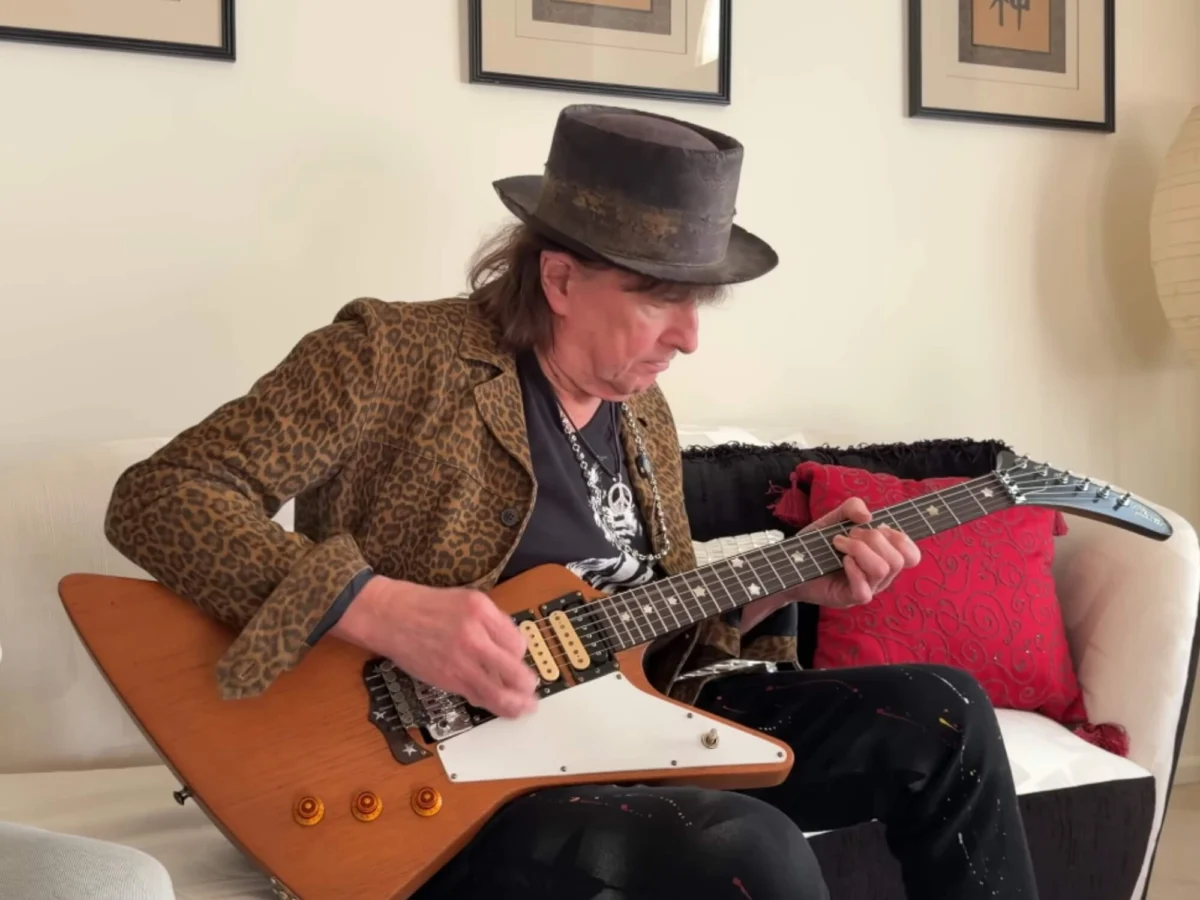
After an absence spanning nearly four decades, Richie Sambora’s original 1976 Gibson Explorer, a foundational instrument in the creation of Bon Jovi’s signature sound and responsible for some of the band’s most iconic early riffs, has been successfully recovered and reunited with its legendary owner. This remarkable reunion closes a chapter of loss and reopens possibilities for a guitar steeped in rock and roll history. The instrument, a pivotal piece of Sambora’s personal and professional journey, was stolen in 1985 during an overseas tour, vanishing without a trace until its recent discovery by a discerning vintage guitar dealer in Paris.
A Foundational Instrument: The Explorer’s Early Life with Sambora
The story of this particular Gibson Explorer begins in 1976, when a teenage Richie Sambora, then an aspiring guitarist, first acquired it. At the time, Sambora, like many young musicians, was driven by a deep passion for music and a desire to emulate his idols. He particularly admired artists such as Eric Clapton, who was known to favor the distinctively shaped Gibson Explorer. This influence directly led Sambora to seek out an Explorer for himself, a decision that would inadvertently shape the sonic landscape of one of the world’s biggest rock bands.
Financial constraints were a significant factor for the young Sambora. He recounted spotting the coveted Explorer in a music shop, a place where his budget often fell short of his ambitions, much like his earlier desire for a Les Paul. The guitar, priced at approximately $250 – a substantial sum for a teenager in the mid-1970s – necessitated a payment plan. Sambora began using the instrument even as he was still working to pay off the remaining balance, a testament to his immediate connection and commitment to the guitar. This period of early ownership was marked by intense personalization. Over roughly three years, Sambora meticulously customized the Explorer, upgrading its components piece by piece as his limited budget allowed. This hands-on process not only made the guitar uniquely his but also deepened his bond with it, transforming it from a mere instrument into an extension of his artistic identity. It was on this very guitar that Sambora would hone his craft, develop his distinctive style, and, critically, compose the foundational riffs that would define Bon Jovi’s early sound.
The Disappearance: A Theft That Left a Void
The bond between Sambora and his Explorer was abruptly severed in 1985. At this juncture, Bon Jovi was rapidly ascending, transitioning from promising newcomers to international stars. The band was engaged in an overseas tour, a period of intense activity and growing global recognition. During this tour, the 1976 Gibson Explorer was stolen from a warehouse, a common logistical hub for storing equipment between tour dates. The exact circumstances of the theft remain somewhat vague, but the outcome was unequivocal: the guitar vanished. For years, the prevailing assumption was that the instrument was lost forever, a casualty of the demanding and often unpredictable life on the road. The disappearance of such a personally significant and musically instrumental guitar represented not just a material loss but a profound emotional one for Sambora, casting a shadow over a period of immense professional triumph.
The mid-1980s were a pivotal time for Bon Jovi. The band had released their self-titled debut album in 1984, followed by 7800° Fahrenheit in 1985. While these albums laid the groundwork, it was the subsequent Slippery When Wet in 1986 that would launch them into superstardom. The Explorer, having been Sambora’s primary instrument during the formative years leading up to and including the creation of these early works, held an irreplaceable place in the band’s history. Its absence meant a tangible piece of that creative genesis was missing.
The Resurface: A Vintage Dealer’s Discovery
The four-decade mystery surrounding the Explorer’s whereabouts began to unravel when it surfaced in the hands of Matthieu Lucas, a renowned Paris-based vintage dealer who operates Matt’s Guitar Shop. Lucas, a respected figure in the specialized world of high-end vintage instruments, possesses an astute eye for unique and historically significant guitars. His daily business involves sifting through countless instruments, but this particular Explorer immediately stood out.
Speaking to Guitar World, Lucas detailed his acquisition of the instrument. "I bought this guitar from somebody who said he was from Michigan and sold it as Richie’s original Explorer," he explained. The claim was audacious, as early Bon Jovi guitars rarely, if ever, appear on the open market. This rarity, combined with the specific details provided by the seller, prompted Lucas to exercise extraordinary due diligence. He understood the potential magnitude of the claim and the ethical responsibility that came with it.
Following the transaction, Lucas embarked on a thorough verification process. He sent detailed photographs of the Explorer to Richie Sambora’s team, initiating a critical step in authenticating the instrument’s provenance. This meticulous approach quickly yielded results. "What I learned then was that it was stolen, and I immediately called Richie’s team to give Richie his sword back," Lucas recounted. His swift and principled action highlights the integrity often found within the reputable vintage instrument community, where the historical significance and rightful ownership of an instrument frequently outweigh commercial gain. Lucas’s decision to prioritize the guitar’s return underscores the deep respect for musical heritage and artist connection that drives many in his profession.
The Reunion: An Emotional Homecoming
The culmination of this extraordinary journey took place a few weeks after the initial verification. Matthieu Lucas and his team traveled from Paris to New Jersey, carrying the carefully packed Gibson Explorer for its long-awaited handover to Richie Sambora. The moment of reunion was profoundly emotional, capturing the essence of a lost treasure finding its way home.
As Lucas recalled, upon opening the case and presenting the guitar to Sambora, the legendary guitarist immediately recognized his old companion. "He grabbed the neck and said, ‘Oh yes, that’s mine!’" Lucas described the instant recognition and palpable connection. For Sambora, it wasn’t just any vintage guitar; it was the guitar that had been instrumental in shaping his early career and the sound of Bon Jovi. This moment transcended a simple transaction; it was a reunion with a tangible piece of his past, a testament to his artistic beginnings and the memories intertwined with its fretboard. Lucas’s resolve to ensure the guitar’s rightful return was evident: "I had to make it right and make sure Richie got this guitar back."
The Gibson Explorer: A Rock and Roll Icon
The Gibson Explorer itself holds a significant place in guitar history. Introduced by Gibson in 1958 as part of its futuristic "Modernistic" series – alongside the Flying V and the short-lived Moderne – the Explorer was initially ahead of its time. Its radical, angular design was not immediately embraced by the conservative market of the late 1950s, leading to very limited production runs and its eventual discontinuation. However, the 1970s saw a resurgence of interest in these unconventional designs, particularly among hard rock and heavy metal guitarists who sought instruments that matched their rebellious aesthetic and powerful sound. Gibson reissued the Explorer in 1976, the very year Sambora acquired his, and it quickly found favor with a new generation of players.
Artists like Eric Clapton, Allen Collins of Lynyrd Skynyrd, and later James Hetfield of Metallica, would famously wield Explorers, cementing its status as a hard rock icon. Its distinctive shape, comfortable playability for some, and powerful humbucking pickups contributed to its appeal. For Sambora, the 1976 Explorer was not just a stylish instrument but a versatile workhorse, capable of delivering the crunchy riffs, soaring solos, and melodic textures that characterized Bon Jovi’s sound. Its role in composing "the majority of Bon Jovi’s hit songs," as Lucas noted, underscores its profound impact on popular music.
Broader Implications: Legacy, Ethics, and the Vintage Market
The recovery of Richie Sambora’s Gibson Explorer offers a compelling narrative that extends beyond a single musician and his instrument. It highlights several important facets of the music industry, vintage guitar market, and the enduring connection between artists and their tools.
Firstly, the incident underscores the significant value and historical importance placed on instruments with celebrity provenance. A guitar used by a rock legend like Richie Sambora, especially one integral to the creation of a band’s early hits, transcends its material worth. It becomes a cultural artifact, a tangible link to a pivotal era in music history. The vintage guitar market, a multi-million dollar industry, thrives on such stories and authenticated instruments. However, it also faces challenges related to authenticity, provenance, and, unfortunately, theft.
The ethical conduct of Matthieu Lucas serves as a commendable example within this market. His prompt action to verify the guitar’s history and ensure its return to Sambora demonstrates a commitment to integrity that is crucial for maintaining trust and credibility in the vintage instrument community. Such actions help to differentiate reputable dealers from those who might prioritize profit over ethics, sending a clear message about the importance of legitimate provenance.
Secondly, the story touches upon the perennial issue of instrument security for touring musicians. High-value equipment, often irreplaceable due to its unique modifications or historical significance, is constantly at risk in the transient environment of touring. While security measures have evolved significantly since 1985, the incident serves as a stark reminder of the vulnerability of artists’ tools. The recovery of Sambora’s Explorer, decades later, offers a glimmer of hope for other musicians who have suffered similar losses, suggesting that some lost instruments can indeed find their way home, even after long periods.
Finally, the emotional and artistic implications for Sambora are profound. The return of his Explorer is not merely the recovery of property; it is the reclamation of a piece of his youth, his artistic genesis, and a tangible connection to the creative wellspring of Bon Jovi. It represents a full-circle moment, a powerful testament to the enduring bond between a musician and their most trusted instrument. Sambora’s immediate reaction upon its return – "I’m keeping this forever. However long that is for me," and his enthusiastic declaration, "I can’t wait to throw it through a Marshall" – speaks volumes. This is not an instrument destined for a museum display under glass; it is poised to return to active duty, to once again reverberate with the raw energy of live performance. This intention to bring the guitar back into the creative fold rather than simply preserving it as an artifact further emphasizes its living legacy.
A Future Recharged: Back to the Stage
Matthieu Lucas’s insights confirm this future for the Explorer. He stated that the guitar is "set to return to active duty" and "will be the first guitar he will use on stage when he gets back to it." This promise of its return to the stage adds another layer of excitement to the story. Fans will undoubtedly anticipate hearing the familiar tones of the 1976 Gibson Explorer, knowing the incredible journey it has undertaken.
Richie Sambora himself has consistently spoken about how this particular Explorer profoundly shaped his early years as a player. It was the instrument through which he channeled his influences, developed his voice, and ultimately, helped forge the sound of one of the most successful rock bands in history. Its recovery is more than a news item; it is a celebration of musical heritage, a testament to the perseverance of a legend, and a hopeful message about the enduring power of a musician’s bond with their instrument. The stage awaits, ready to welcome back a true rock and roll legend, reunited with his iconic "sword" after a journey spanning four decades.
