

The nation’s highest judicial body is poised to hear oral arguments in a monumental case that challenges a foundational principle of American citizenship, pitting the executive branch’s authority against the bedrock text of the 14th Amendment. Trump v. Barbara, a case stemming from a January 2025 executive order by former President Trump, seeks to curtail birthright citizenship, a right enshrined in the Constitution for over 150 years. As the Supreme Court prepares for this critical hearing, a powerful new voice has joined the defense of the amendment: music icon Bruce Springsteen, who has partnered with the American Civil Liberties Union (ACLU) in a poignant campaign leveraging his iconic song, "Born in the U.S.A."
The Genesis of the Constitutional Challenge: Trump’s Executive Order
The legal battle originates from a directive issued by President Trump in January 2025, which aimed to redefine who qualifies for automatic citizenship by birth on American soil. This executive order, a cornerstone of his administration’s aggressive immigration enforcement agenda, sought to interpret the 14th Amendment’s Citizenship Clause in a manner that would exclude children born in the United States to parents who are not U.S. citizens or legal permanent residents. Proponents of such a change argue that the original intent of the 14th Amendment, ratified in 1868, was primarily to grant citizenship to formerly enslaved people and that its application to children of undocumented immigrants has led to unintended consequences, often referred to pejoratively as "anchor babies." They contend that modern immigration patterns necessitate a reevaluation of this interpretation to ensure national sovereignty and control over borders.
However, legal scholars and civil rights advocates largely reject this reinterpretation, asserting that the plain language and historical context of the amendment unequivocally guarantee birthright citizenship to nearly everyone born within U.S. territory, regardless of their parents’ immigration status. The clause states: "All persons born or naturalized in the United States, and subject to the jurisdiction thereof, are citizens of the United States and of the State wherein they reside." The phrase "subject to the jurisdiction thereof" has been the subject of debate, with opponents of birthright citizenship arguing it excludes children of those not fully "subject" to U.S. laws, such as diplomats or, by extension, undocumented immigrants. This argument directly challenges decades of legal precedent and common understanding.
ACLU’s Swift Legal Response and Lower Court Rulings
The American Civil Liberties Union (ACLU) launched an immediate legal counteroffensive, filing a lawsuit challenging the executive order within hours of its issuance. The organization contended that the President lacks the constitutional authority to unilaterally alter a fundamental aspect of citizenship defined by the 14th Amendment. The ACLU’s legal strategy has emphasized the principle of jus soli (right of the soil), a concept deeply embedded in American law and practice, contrasting it with jus sanguinis (right of blood), prevalent in many other nations where citizenship is primarily determined by parentage.
Through various stages of litigation, several lower courts have consistently ruled against the Trump administration’s executive order, issuing injunctions that blocked its implementation. These judicial decisions underscored the strong legal consensus regarding the 14th Amendment’s clear intent and the limitations of presidential power in constitutional matters. The cases argued by the ACLU and allied groups highlighted the disruptive potential of the executive order, detailing how it would create a vast subclass of individuals born in the U.S. but denied fundamental rights, leading to legal limbo and societal instability. The path to the Supreme Court was set when the administration appealed these lower court decisions, seeking a definitive ruling on the scope of birthright citizenship.
Bruce Springsteen Enters the Fray: A Cultural Call to Action
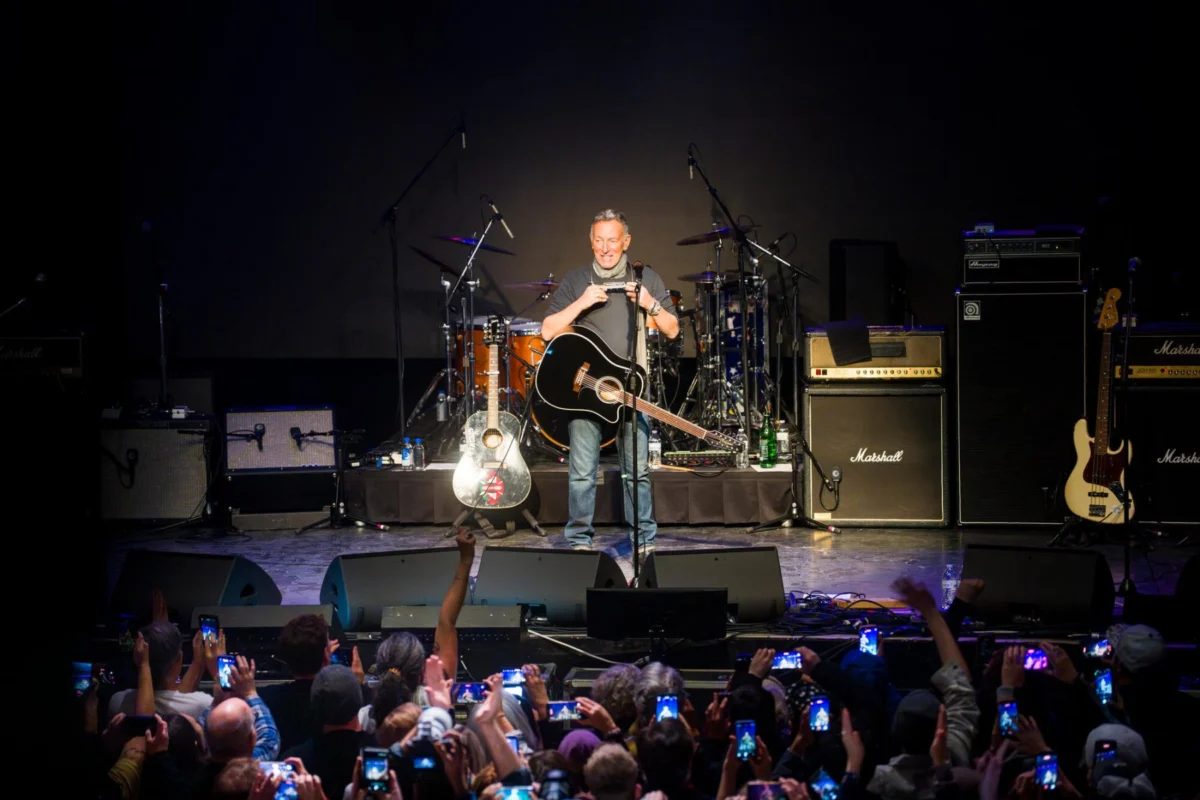
In a significant cultural intervention just a week before the Supreme Court is slated to hear oral arguments on April 1, Bruce Springsteen, often dubbed "The Boss," has lent his iconic anthem "Born in the U.S.A." to an ACLU campaign. The partnership features a powerful 30-second video soundtracked by the 1984 track, depicting a diverse array of American families whose lives could be profoundly impacted by a reversal of birthright citizenship. The video aims to remind viewers of the human faces behind the legal and political debate, showcasing the rich tapestry of American society.

For decades, "Born in the U.S.A." has been widely misinterpreted as a jingoistic, chest-thumping patriotic song, often co-opted at political rallies for its seemingly nationalistic chorus. However, Springsteen’s original intent for the song was far more complex and critical, narrating the plight of a disillusioned Vietnam veteran struggling to find his place in a country that had seemingly abandoned him. Its lyrics paint a stark picture of economic hardship, social alienation, and the betrayal of American ideals. By repurposing the song in its true spirit, the campaign seeks to reclaim its message of questioning and striving for a better America, aligning it with the ACLU’s defense of constitutional rights.
Anthony D. Romero, the ACLU’s Executive Director, revealed the inspiration behind this collaboration during an interview, tracing the idea back to an exchange with journalist Katie Couric following Trump’s inauguration. Romero recalled singing the song’s chorus to himself as he considered the administration’s early pledges to end birthright citizenship. He expressed his desire to craft a campaign that would appeal to "ordinary folks," bypassing typical political divides and reaching people who might not regularly engage with the ACLU’s message.
"Birthright citizenship is a sacred ground for those of us in the civil rights community," Romero stated, emphasizing its historical significance in addressing "America’s original sin of chattel slavery, making citizens of the children of enslaved people." He further elaborated on its role in ensuring equality in "a nation of immigrants," where "out of many, one." Romero articulated the campaign’s goal: "We began brainstorming a campaign to remind ordinary folks what it truly means to be American. What people feel in their hearts when they wear their T-shirts with the American flag… When they stand up for the national anthem at baseball and football games… When they gather with their communities on July 4, Memorial Day, Veterans Day. When, like me, they hang flags outside their homes."
Romero praised Springsteen’s consistent public stance against the Trump administration’s policies, recalling remarks from January 2026 where Springsteen described immigration crackdowns as "disgusting, and a terrible tragedy," and another six months later when he called his song "Land of Hopes and Dreams" a "prayer for America, our community and no kings." The immediate willingness of Springsteen’s team to support the ACLU’s "consequential case" underscored the shared urgency of the matter.
The 14th Amendment: A Historical Bedrock of American Citizenship
The 14th Amendment, ratified on July 9, 1868, stands as one of the most transformative additions to the U.S. Constitution. Enacted in the aftermath of the Civil War, its primary purpose was to ensure the rights and citizenship of formerly enslaved people, effectively overturning the Supreme Court’s infamous Dred Scott v. Sandford (1857) decision, which had declared that African Americans, whether enslaved or free, could not be American citizens.
Section 1 of the 14th Amendment contains the Citizenship Clause, the Due Process Clause, and the Equal Protection Clause. The Citizenship Clause, specifically, states: "All persons born or naturalized in the United States, and subject to the jurisdiction thereof, are citizens of the United States and of the State wherein they reside." This clause solidified the principle of jus soli for the vast majority of individuals born within U.S. borders.
A landmark Supreme Court case, United States v. Wong Kim Ark (1898), further cemented this interpretation. The Court ruled that a child born in the United States to Chinese immigrants who were not citizens and could not become naturalized citizens was, nevertheless, a U.S. citizen by virtue of the 14th Amendment. This decision unequivocally established that birthright citizenship applied to virtually all individuals born on U.S. soil, with only narrow exceptions such as children of foreign diplomats or invading enemy forces, who are not "subject to the jurisdiction" of the United States in the same way. The Wong Kim Ark ruling has served as the prevailing legal precedent for over a century, consistently affirming the broad scope of birthright citizenship.
Arguments and Counterarguments: A Deep Divide
The debate over birthright citizenship highlights a deep ideological and legal schism.
Arguments for maintaining birthright citizenship:
- Constitutional Text and Precedent: Proponents argue the language of the 14th Amendment is clear, and the Wong Kim Ark decision provides a century of settled law.
- Historical Intent: The amendment was designed to be broadly inclusive, particularly to prevent the creation of a permanent underclass.
- Societal Stability: Denying citizenship to children born in the U.S. would create a vast population of stateless or legally ambiguous individuals, leading to significant social and administrative challenges.
- Integration: Birthright citizenship promotes assimilation and integration by ensuring that children raised in the U.S. are fully vested in its society and institutions.
- Practicality: Determining citizenship based on parental status would be an administrative nightmare, requiring complex and invasive investigations into family histories.
Arguments for restricting birthright citizenship (as advanced by the Trump administration and its allies):
- "Subject to the Jurisdiction Thereof" Interpretation: They argue that undocumented immigrants are not fully "subject to the jurisdiction" of the U.S. in the same way citizens or legal residents are, especially regarding allegiance.
- National Sovereignty: Countries should have the right to control who becomes a citizen, and birthright citizenship, they argue, undermines this control by incentivizing illegal immigration.
- "Anchor Babies": This term refers to the controversial belief that undocumented immigrants have children in the U.S. primarily to gain legal status for themselves or to exploit welfare systems.
- Modern Context: Proponents of restriction argue the 14th Amendment was written in a different era and its application needs to be reevaluated in light of contemporary immigration challenges.
- Executive Authority: Some argue the President has the authority to issue executive orders to clarify or interpret constitutional provisions, especially concerning immigration.
Potential Implications of the Supreme Court’s Decision
The Supreme Court’s ruling in Trump v. Barbara will have profound and far-reaching implications, regardless of the outcome.
If the executive order is upheld:
- Creation of a Permanent Underclass: The ACLU projects that repealing birthright citizenship could leave five million children without birthright citizenship over the next two decades. These individuals, born and raised in the U.S., would be denied fundamental rights, access to opportunities, and the sense of belonging that citizenship provides, creating a legally precarious and socially marginalized group.
- Family Disruption: Hundreds of thousands of families would be affected, with children potentially being deported to countries they have never known or being left in legal limbo within the U.S.
- Administrative Chaos: Implementing a system where citizenship is determined by parental status would necessitate a massive, complex, and costly bureaucratic apparatus to track birth parents’ immigration status, potentially leading to errors and injustices.
- Economic Impact: A large population without full legal status could be relegated to the informal economy, with reduced tax contributions and increased reliance on social services due to limited opportunities.
- Constitutional Crisis: A ruling that allows the President to unilaterally redefine a core constitutional right could significantly alter the balance of power, diminishing the role of Congress and the judiciary in fundamental constitutional matters.
If the executive order is struck down:
- Affirmation of Constitutional Principles: It would reaffirm the long-standing interpretation of the 14th Amendment and the principle of jus soli as a cornerstone of American citizenship.
- Limits on Executive Power: The ruling would reinforce the limits of presidential authority, particularly concerning attempts to unilaterally alter constitutional provisions.
- Continuity and Stability: It would provide legal certainty for millions of families and avoid the social disruption and administrative challenges of a changed citizenship regime.
- Political Repercussions: While a legal victory for advocates of birthright citizenship, it would likely intensify political debates around immigration policy and the scope of presidential power, potentially fueling future legislative efforts to amend the Constitution or propose new interpretations.
A Broader Cultural and Political Dialogue
The involvement of Bruce Springsteen in this legal and constitutional debate underscores the profound cultural and political stakes. His campaign aims to shift the narrative from abstract legal arguments to the human impact, reminding the public that constitutional principles are not merely academic but directly affect real lives and families. It also highlights the ongoing struggle for the soul of American identity, between those who advocate for a more restrictive, nationalistic definition of citizenship and those who champion an inclusive, expansive vision rooted in the nation’s founding ideals as a land of opportunity for all.
As the Supreme Court prepares to hear Trump v. Barbara, the nation watches intently. The outcome will not only determine the future of birthright citizenship but will also send a powerful message about the enduring strength of the Constitution, the limits of executive power, and the very definition of what it means to be "Born in the U.S.A." The decision will undoubtedly reverberate through American society for generations, shaping immigration policy, social cohesion, and the fundamental rights of millions.
