

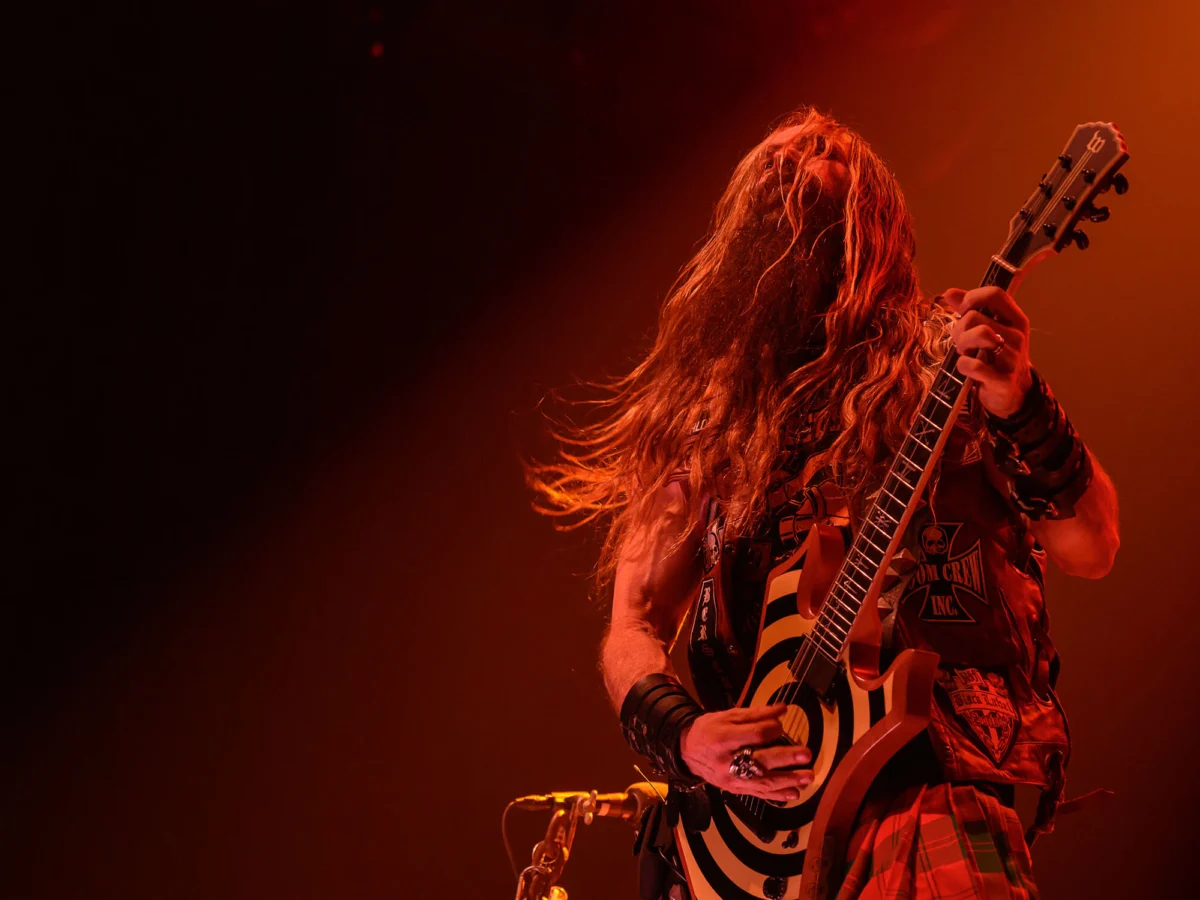
The discourse surrounding artificial intelligence’s rapidly evolving role in the music industry has intensified over the past year, becoming a focal point of discussion among artists, producers, and industry executives. At the heart of this complex debate is the fundamental question of whether AI poses an existential threat to human musicians or if it represents merely a novel tool for creative exploration. Veteran guitarist Zakk Wylde, known for his iconic work with Ozzy Osbourne and as the frontman of Black Label Society, has once again offered his perspective, steadfastly maintaining that while AI can be a "fun" and sophisticated instrument, it ultimately cannot replicate the unique spark of human artistry. His recent comments, delivered to Qobuz and subsequently reported by Blabbermouth, underscore a consistent stance he has held, asserting that the perceived threat is "no big deal" and rooted in a misunderstanding of genuine creative genesis.
Wylde’s position stands in contrast to the anxieties expressed by a significant portion of the music community. He specifically addressed the capabilities of AI music generators—systems trained on vast datasets of existing music to produce new compositions based on user prompts. While acknowledging the impressive technical feats of such algorithms, Wylde passionately argued for the irreplaceable nature of individual artistic minds. He invoked the legendary figures of Black Sabbath, stating, "Whoever the artist is that you love, whether it’s Led Zeppelin or Black Sabbath, you’ll never be able to replace what’s gonna come out of Tony [Iommi’s] riffs, what Geezer [Butler] is gonna write lyrically, what Bill [Ward] is gonna play, what melodies Ozzy’s gonna sing, because they’re creating it." This statement encapsulates his core belief: the unique synergy of individual experiences, emotions, and spontaneous inspiration that defines human creativity cannot be algorithmically reproduced.
He elaborated on this by conceding that an AI could potentially analyze and synthesize elements of an artist’s style. "If AI listens to all of Ozzy’s melodies and gets a feel for what Ozzy’s style is, and then hears Tony’s riffs and then it could hear the tendencies Bill plays, certain fills he does, and the way Geezer plays bass, and it listens to the lyrics… and it comes up with something," Wylde mused, "it’d be no different than a songwriter trying to come up with something that Black Sabbath would write." This analogy is crucial to understanding his viewpoint. For Wylde, an AI generating music "in the style of" a human artist is akin to a human tribute act or a songwriter consciously attempting to emulate a specific sound. Both are forms of imitation, however sophisticated, and neither fundamentally replaces the originators. He applied this same principle to the inimitable genius of Jimi Hendrix, stressing that while emulation is possible, the inherent "mind of Jimi Hendrix" remains beyond algorithmic grasp.
The Broader AI in Music Debate: A Chronology of Concern and Innovation
The conversation around AI’s impact on creative industries is not entirely new, with algorithmic composition existing in nascent forms for decades. However, the rapid advancements in generative AI, particularly over the last two to three years, have propelled the discussion into the mainstream. Tools capable of generating realistic vocals, intricate instrumental tracks, and even entire songs from simple text prompts have moved from experimental labs to publicly accessible platforms. This surge in capability has triggered a cascade of reactions, ranging from utopian visions of creative liberation to dystopian fears of artistic obsolescence and widespread intellectual property theft.
- Early 2020s: Commercial AI music generation tools become more sophisticated and widely available. Companies like OpenAI release models capable of generating music and human-like speech.
- Mid-2022: Public awareness of generative AI grows significantly with the rise of text-to-image models, soon followed by more advanced audio and music AI.
- Late 2022 – Early 2023: Concerns escalate as AI models are reportedly trained on vast datasets of copyrighted material without explicit permission or compensation to creators. High-profile instances of AI-generated tracks mimicking famous artists’ voices or styles spark public debate and legal challenges.
- Summer 2023: Major music labels and artist organizations begin to actively lobby for regulations and legal protections against unauthorized AI use. Universal Music Group, for instance, reportedly sends takedown notices for AI-generated music infringing on artists’ copyrights.
- Autumn 2023: Several artists and industry bodies issue open letters and statements, advocating for responsible AI development and fair compensation, and expressing alarm over potential job displacement. This period marks the peak of the "intense debate" Wylde referenced.
- Early 2024: Lawsuits begin to emerge, with artists and rights holders challenging AI companies over copyright infringement related to training data and generated outputs. Policy discussions in various governments commence regarding AI regulation.
Within this timeline, Zakk Wylde’s consistent message has been one of calm reassurance, viewing AI as a "compliment" rather than a conqueror. His statements, including the recent ones, echo a sentiment that human ingenuity, rooted in lived experience and emotional depth, offers an intrinsic value that data-driven algorithms cannot replicate.

Supporting Data and Industry Perspectives on AI in Music
The music industry’s response to AI is multifaceted, reflecting a spectrum of potential benefits and profound challenges.
- Economic Impact: A report by Goldman Sachs in 2023 projected that generative AI could add nearly $7 trillion to global GDP over the next decade. While this figure encompasses various sectors, its application in creative industries points to significant shifts. However, concerns persist about the potential for AI to devalue human creative labor. Some analysts predict a "race to the bottom" where AI-generated content, produced at minimal cost, floods the market, making it harder for human artists to earn a living. Conversely, proponents argue AI can democratize music creation, enabling independent artists with limited budgets to access sophisticated production tools.
- Copyright and Intellectual Property: This remains one of the most contentious areas. AI models are often trained on colossal datasets that include copyrighted music, lyrics, and vocal samples. The legal question of whether this constitutes fair use or infringement is currently being litigated across multiple jurisdictions. Artists and labels are pushing for transparency in training data and mechanisms for compensation when their work is used. The Human Artistry Campaig, a coalition of music organizations including the Recording Academy, RIAA, and SAG-AFTRA, has explicitly called for AI developers to secure consent and fairly compensate creators whose work is used to train AI models.
- Creative Augmentation vs. Replacement: Many in the industry view AI not as a replacement but as a powerful assistive tool. AI can aid in tasks such as mastering, mixing, generating variations on themes, or even suggesting chord progressions. Composers are experimenting with AI to break creative blocks, and producers use it to analyze and optimize sound. For example, platforms like AIVA (Artificial Intelligence Virtual Artist) can generate emotional soundtracks, while tools like Amper Music offer bespoke music for content creators. However, the line between assistance and autonomous creation blurs, leading to ethical questions about creative ownership and the definition of authorship.
- Authenticity and Emotional Resonance: Wylde’s emphasis on the irreplaceable "mind" and "soul" of artists like Ozzy Osbourne and Jimi Hendrix speaks to a core human desire for authenticity in art. A 2023 survey by MusicWatch indicated that a significant portion of music listeners still value human-created music, with many expressing skepticism about the emotional depth or originality of AI-generated tracks. The unique storytelling, life experiences, and raw emotion embedded in human performance are often cited as elements AI cannot truly replicate.
Official Responses and Advocacy
The growing concerns have prompted official responses from various music industry stakeholders:
- Artist Unions and Guilds: Organizations like SAG-AFTRA have been vocal advocates for strong protections for performers, particularly concerning voice cloning and digital likenesses. They have engaged in negotiations with studios to establish safeguards and compensation models for AI usage.
- Record Labels: Major record labels have taken aggressive stances against unauthorized AI training and generation, issuing takedown notices and pursuing legal avenues to protect their vast catalogs of copyrighted works. They are also exploring proprietary AI tools that can enhance their operations while ensuring artist compensation.
- Legislators and Policy Makers: Governments in the U.S., EU, and other regions are actively debating legislation to address AI’s impact, focusing on areas like copyright, data privacy, and ethical guidelines for AI development. The European Union’s AI Act, for instance, includes provisions related to transparency and data governance that could impact AI music tools.
Broader Impact and Implications for the Future of Music
Zakk Wylde’s perspective offers a grounded, artist-centric counter-narrative to the prevailing anxieties. His confidence in the enduring value of human creativity highlights several broader implications for the future of music:
- Reaffirmation of Human Uniqueness: Wylde’s stance reinforces the idea that true artistic genius stems from an ineffable blend of personal history, emotion, intuition, and vulnerability—qualities that algorithms, no matter how advanced, currently lack. This might lead to a greater appreciation for the "human element" in music, potentially making authentic, human-created art even more valuable in an AI-saturated landscape.
- Evolution of the Creator’s Role: While AI may not replace human artists entirely, it will undoubtedly reshape their roles. Musicians might become "AI wranglers," guiding algorithms to realize their visions, or they might focus even more intensely on live performance and the unreplicable spontaneity of human interaction. The skill set of future musicians could include prompt engineering and AI tool mastery.
- Shifting Value Propositions: If AI can generate technically proficient music, the value proposition for human artists might shift from mere technical skill to conceptual originality, emotional impact, and the narrative behind the creation. Listeners may increasingly seek out the stories and personalities behind the music, making the "why" and "who" as important as the "what." Wylde’s comment about still buying Eagles records, despite potential AI emulations, underscores this – the connection is to the artist, not just the sound.
- The Ethical Imperative: The debate forces a crucial ethical reckoning for the tech industry and society at large. How do we ensure that technological progress serves human creativity and well-being rather than diminishing it? How do we design AI systems that respect artistic rights and foster a healthy creative ecosystem?
In conclusion, Zakk Wylde’s unwavering belief in the irreplaceable essence of human artistry provides a powerful anchor amidst the swirling currents of the AI revolution in music. His assertion that AI acts as a "compliment" rather than a competitor for the Eagles, Black Sabbath, or Jimi Hendrix, challenges the fear-driven narrative and encourages a more nuanced understanding. While the technological capabilities of AI continue to expand at an astonishing rate, Wylde reminds the music world that the true magic of art lies not just in the notes played, but in the unique, unquantifiable "mind" and "soul" of the creator. As the industry grapples with the myriad implications of AI, Wylde’s perspective serves as a potent reminder that the human heart, experience, and innovative spirit remain the ultimate wellspring of compelling music.
