

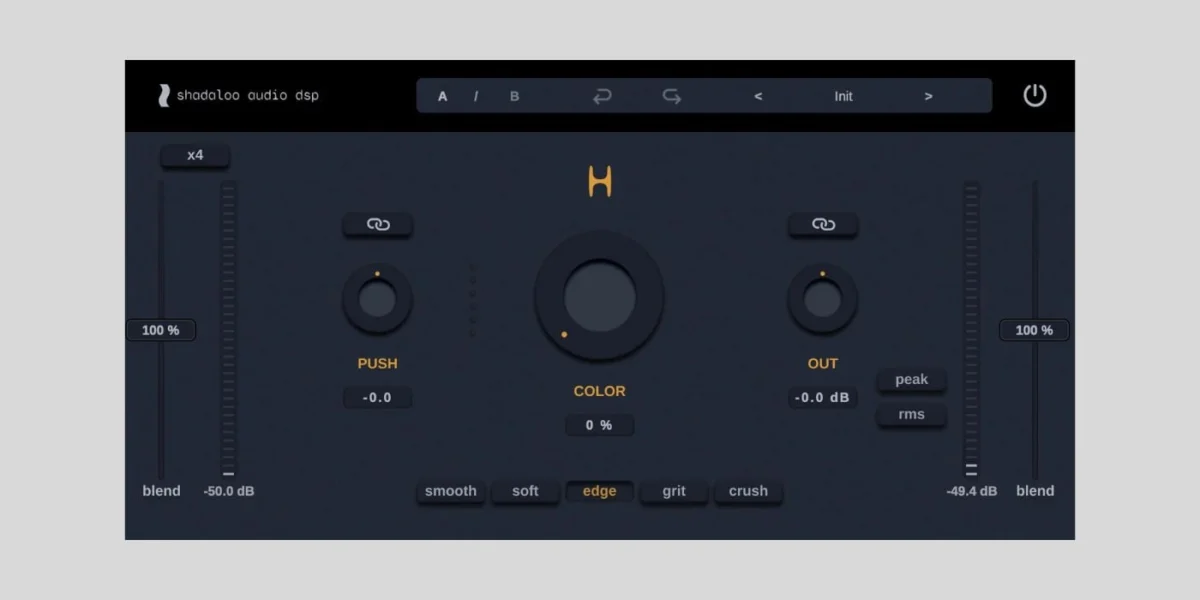
Shadaloo Audio DSP has officially launched H, an innovative and free (pay-what-you-want) tone and loudness enhancer plugin now available for macOS and Windows platforms. Developed by Fabio "Shadaloo" Caterino, a distinguished Italian multi-platinum certified mix and mastering engineer, H emerges from a professional’s personal toolkit, offering a unique approach to audio processing that eschews traditional saturation and clipping in favor of a complex, multi-stage nonlinear engine. This release marks a significant moment for producers and engineers seeking sophisticated sonic enhancement tools designed with real-world mixing challenges in mind.
The Genesis of ‘H’: From Personal Workflow to Public Utility
The journey of H began not as a commercial venture but as an indispensable component of Fabio Caterino’s personal mixing and mastering workflow. Caterino, whose extensive credits span numerous chart-topping records and collaborations with high-profile artists, developed H to address specific sonic needs he encountered in his daily professional practice. His objective was to create a tool capable of imparting subtle to pronounced harmonic richness and dynamic shaping without the predictable characteristics of conventional processors. Recognizing the unique value and versatility of his creation, Caterino made the decision to release H publicly, adopting a "pay-what-you-want" model. This approach not only democratizes access to a professional-grade tool but also fosters a direct relationship between the developer and the user community, allowing individuals to contribute based on their perceived value and financial capacity. This model reflects a growing trend in the audio software industry, where independent developers leverage community support to sustain innovation.
Fabio Caterino: A Profile in Audio Engineering Excellence
Fabio Caterino’s credentials as a multi-platinum certified engineer lend significant weight to the H plugin. His career trajectory showcases a deep understanding of audio fidelity, dynamic control, and harmonic enhancement, honed over years of working on high-stakes projects. Achieving multi-platinum status signifies not just commercial success but also consistent delivery of mixes and masters that meet the highest industry standards. Engineers of Caterino’s caliber often develop bespoke tools or specialized techniques to achieve their signature sound or overcome specific technical hurdles. H is a direct manifestation of this expert-level problem-solving, encapsulating years of practical experience and sonic philosophy into a single, intuitive interface. His decision to share such a tool underscores a commitment to advancing the craft of audio production beyond his personal studio, empowering a broader audience of producers and engineers.
A Deep Dive into H’s Technical Architecture: Beyond Traditional Processing
At its core, H distinguishes itself from typical saturators or clippers through its sophisticated multi-stage processing architecture. Unlike many single-function plugins, H’s controls are designed to interact with each other in profoundly nonlinear ways, making its behavior dynamic and context-dependent. This design philosophy aims to mimic the complex interactions found in high-end analog hardware, where component choices and circuit topologies result in nuanced sonic transformations that are difficult to replicate with simple algorithms.
The central control, "Push," is far more than a simple input gain. It drives the signal through H’s internal processing chain, ranging from gentle, almost imperceptible enhancement to more overt saturation. The developer notes that increasing Push dynamically alters the plugin’s response, even when the "Color" parameter is set to 0%. This dynamic behavior stems from a synergistic combination of quintic clipping and a level-dependent shaping stage. Quintic clipping, a form of soft clipping, employs a fifth-order polynomial function to round off signal peaks smoothly, introducing controlled harmonic distortion without the harshness often associated with hard clipping. This method preserves transient detail while adding warmth and density. Coupled with a level-dependent shaping stage, which progressively reacts as the input signal increases, Push creates a responsive and adaptive processing environment that continuously reconfigures its sonic imprint based on the input dynamics. This nuanced interaction allows for an organic enhancement that adapts to the source material rather than imposing a static effect.
The "Color" Section: Sculpting Harmonic Character
The "Color" section of H is where the plugin’s harmonic character is largely defined, offering five distinct modes: Smooth, Soft, Edge, Grit, and Crush. These modes are not merely fixed saturation curves but function more akin to "macros," fundamentally altering both the harmonic structure and the frequency-dependent behavior of the processing engine.
- Smooth: Likely provides a subtle, even-order harmonic emphasis, adding warmth and roundness without aggressive distortion. Ideal for vocals or instruments needing gentle fattening.
- Soft: Might introduce a slightly more pronounced, yet still musical, saturation, perhaps with a focus on low-mid emphasis for added weight.
- Edge: Suggests a mode designed to bring out transients and add presence, potentially by emphasizing higher-order harmonics or applying a more aggressive knee to the clipping stage.
- Grit: Implies a noticeable increase in distortion, possibly introducing odd-order harmonics for a more aggressive, textured sound, suitable for guitars or drums.
- Crush: The most extreme mode, likely designed for heavy saturation and potential signal degradation, offering creative sound design possibilities beyond simple enhancement.
Crucially, the interaction between Push, Color, the selected mode, and the "Blend" control is intentionally designed to be interdependent. This contextual behavior means that adjusting one parameter will subtly influence the effect of the others, requiring engineers to engage in an iterative and intuitive process to achieve their desired sonic outcome. This departure from independent parameter manipulation encourages a more holistic approach to tone shaping, mirroring the complex interactions within analog circuitry.
Precision Control and Workflow Integration
Beyond its core processing engine, H integrates features designed for precision and seamless workflow integration. The "Blend" control is specifically tuned for parallel-style processing, a widely adopted technique in professional mixing. Parallel processing allows engineers to introduce significant character and saturation while retaining the original, unprocessed signal’s integrity and dynamic range. By blending the processed signal with the dry source, H can add harmonic richness and perceived loudness without sacrificing the core sound’s punch or clarity, ensuring the enhanced track remains "grounded and mix-friendly." This approach is particularly valuable for drums, bass, and vocals, where adding weight and presence without losing definition is paramount.
The "Output" control works in direct conjunction with the Push parameter, facilitating cleaner gain staging and easier level balancing. Proper gain staging is fundamental to achieving optimal signal-to-noise ratios and preventing unwanted digital clipping. By offering a dedicated output control, H allows engineers to push the internal processing for character while precisely matching the output level, ensuring A/B comparisons are fair and the signal chain remains robust.
For monitoring purposes, H includes Peak and RMS output reading modes. These meters provide essential feedback for comparing levels and precisely matching output, which is critical for consistent loudness across tracks and for adherence to mastering specifications. The developer’s note on relying on Peak mode for drums and RMS for full mixes highlights common industry practices: Peak levels are crucial for managing transient information and preventing clipping in percussive elements, while RMS (Root Mean Square) provides a better indication of perceived loudness for overall mixes. While many engineers prefer dedicated third-party metering solutions, the inclusion of these built-in meters offers a convenient and accessible option for quick level checks.
Mitigating Aliasing with Oversampling
To maintain audio fidelity and prevent unwanted digital artifacts, H incorporates oversampling capabilities, configurable up to 4x. Aliasing is a common issue in digital audio processing, particularly with nonlinear operations like saturation and clipping. It occurs when frequencies generated by the processing exceed the Nyquist frequency (half the sampling rate), folding back into the audible spectrum as dissonant or unnatural sounds. Oversampling effectively increases the internal sampling rate during processing, pushing these aliased frequencies far beyond the audible range before downsampling the signal back to the project’s native sample rate. This ensures a cleaner, more pristine output, especially when H is driven hard, preserving the musicality of the harmonic content it generates.
Installation Notes and System Compatibility
As of its initial release, the Windows build of H is not yet digitally signed. This technical detail means that users attempting to install the plugin on a Windows operating system may encounter a security warning from their system. While this is a common occurrence for software from independent developers and typically does not indicate malicious content, users should be aware of this prompt and proceed with installation only after verifying the source. Digital signing provides a layer of trust and verification, confirming that the software has not been tampered with since its release. The developer is likely to address this in future updates.
H is broadly compatible with modern production environments, available in AU (Audio Unit) and VST3 formats for macOS, supporting both Apple Silicon (M1/M2/M3) and Intel-based systems. For Windows users, it is available in VST3 format for 64-bit systems. The choice of VST3 and AU ensures compatibility with the vast majority of digital audio workstations (DAWs) currently in use, offering broad accessibility to a wide user base.
The "Pay-What-You-Want" Model: A Trend in Creative Distribution
Fabio Caterino’s decision to release H under a "pay-what-you-want" model is more than just a pricing strategy; it’s a statement on accessibility and community engagement within the audio software industry. This model, popularized by artists and developers in various creative fields, allows users to download and utilize the software for free, with the option to contribute financially based on their perceived value, budget, or desire to support the developer.
Advantages of the "Pay-What-You-Want" Model:
- Increased Accessibility: Removes financial barriers, making high-quality tools available to students, hobbyists, and professionals alike, regardless of their economic situation.
- Community Building: Fosters goodwill and a direct connection between the developer and users, encouraging feedback and long-term engagement.
- Market Penetration: Allows a new product to quickly gain traction and visibility in a crowded market without requiring an upfront financial commitment from users.
- Ethical Consideration: Appeals to users who value fair compensation for intellectual property and wish to support independent creators.
Challenges and Considerations:
- Revenue Volatility: Income can be unpredictable, making long-term development and support planning challenging.
- Perceived Value: Some users might undervalue "free" software, even if its quality is professional-grade.
- Support Burden: A larger user base can lead to increased demand for technical support, which needs to be managed effectively.
Despite these challenges, the "pay-what-you-want" model for H aligns with a broader movement towards open access and community-driven development in various creative industries, particularly within the independent plugin developer scene. It allows Caterino to share his expertise widely while potentially garnering financial support directly from those who benefit most from his innovation.
Broader Implications for the Audio Plugin Market
The release of H by Shadaloo Audio DSP carries several implications for the broader audio plugin market:
- Validation of Expert-Driven Tools: It underscores the value of plugins developed by active, high-level engineers who distill their practical experience into software. These tools often offer unique perspectives and solutions not found in generic offerings.
- Emphasis on Nonlinearity: H’s design highlights a growing trend towards more complex, nonlinear DSP in pursuit of authentic "analog-like" character. As computing power increases, developers can implement more sophisticated algorithms that mimic the intricate interactions of physical circuits.
- Empowerment of Independent Developers: The success of independent developers like Fabio Caterino demonstrates that high-quality, innovative tools can emerge outside of large corporate entities, fostering a more diverse and competitive market.
- The Future of Distribution: The "pay-what-you-want" model, especially for a tool of this caliber, challenges traditional pricing structures and suggests a viable alternative for sustainable software development.
- Accessibility and Education: By making advanced tools accessible, H contributes to the education of a new generation of producers and engineers, exposing them to sophisticated concepts of tone shaping and dynamic control.
In a market saturated with countless saturation and enhancement plugins, H carves out a distinct niche by prioritizing nonlinear interaction and developer expertise. Its free (pay-what-you-want) distribution model further positions it as an accessible yet powerful addition to any producer’s toolkit, offering a taste of multi-platinum engineering insight to a global audience. The plugin’s release on March 28, 2026, as noted by Tomislav Zlatic, the last update date on Bedroom Producers Blog, marks a significant entry into the world of digital signal processing.
Download Information:
H – Tone and Loudness Enhancer is available for download at: https://shadalooaudiodsp.gumroad.com/l/h
