

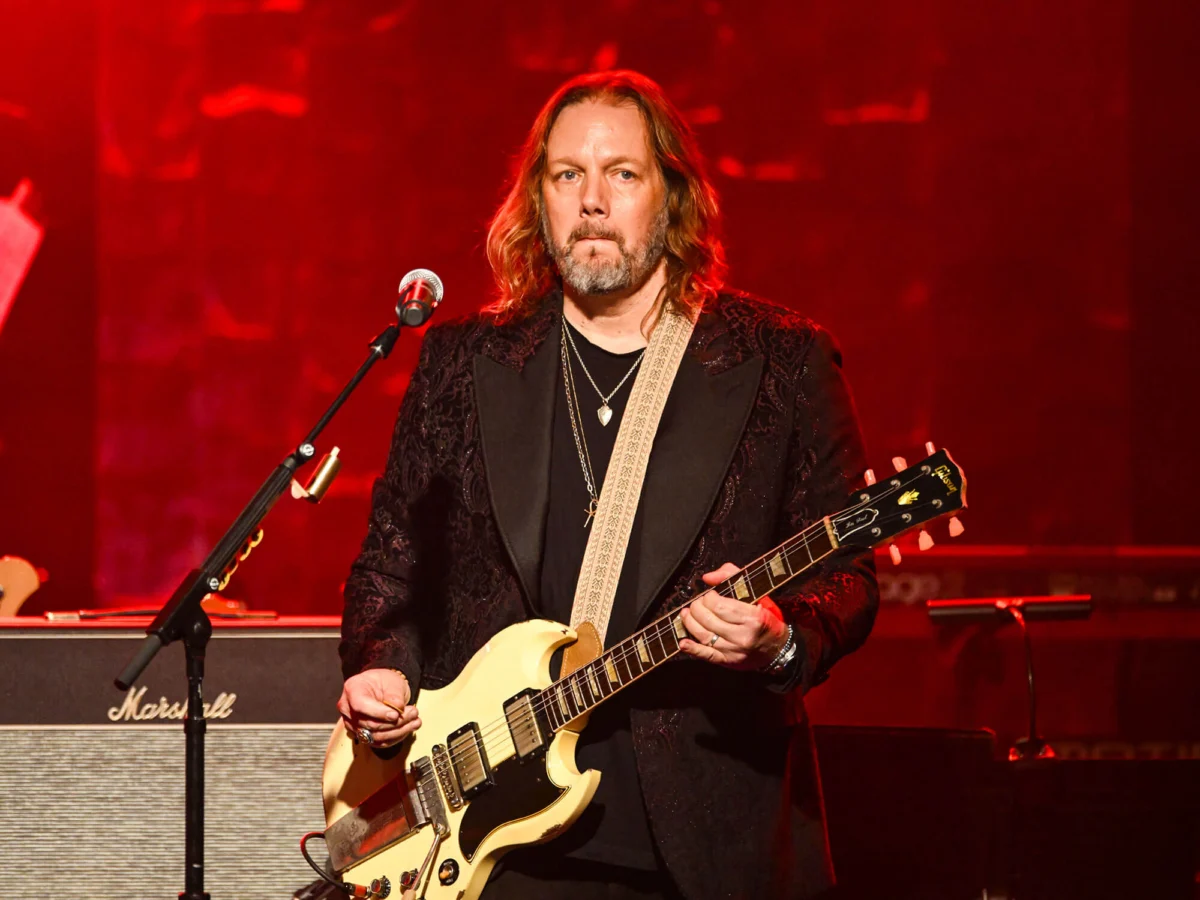
The perennial debate concerning analog versus digital guitar gear continues to bifurcate the global guitar community, with luminaries and seasoned professionals staking claims on both sides of the technological divide. In a recent interview featured in the latest print issue of Guitar World, Rich Robinson, the acclaimed guitarist for The Black Crowes, offered a nuanced yet firm perspective, asserting that while digital amp modellers are "getting close," they fundamentally cannot replicate the complex physics and visceral experience inherent to analog amplification. His comments underscore a broader philosophical adherence to the tangible, unpredictable elements that he believes define authentic rock and roll.
Robinson’s remarks arrive amidst a fluctuating landscape where digital conversion rates are steadily climbing, even as staunch traditionalists vocalize their reservations. His primary contention centers on the intricate interplay between an amplifier’s output and its immediate environment. "You can never account for the physics of a room," Robinson explained, detailing a series of environmental variables he considers crucial to sonic integrity. He cited factors such as humidity levels, oxygen concentration, altitude variations, the specific architectural shape of a performance space, and the precise placement of microphones as elements that collectively exert a significant influence on the resultant sound. These variables, he posits, contribute to a dynamic and ever-evolving sonic signature that digital simulations, no matter how sophisticated, struggle to fully capture or predict.
Beyond the purely acoustic considerations, Robinson articulated a profound connection to the "feeling aspect" of analog gear. He described a "symbiotic relationship" with an amplifier, emphasizing the physical, almost spiritual, bond between musician and instrument. "You’re literally connected to it. You’re plugged in and feeling that. It’s vibrating the floor and you’re hearing it, feeling it and playing with it. I think that’s when it becomes like this big oscillation. You’re in it," he elaborated. This immersive, multi-sensory experience, he argues, is an irreplaceable component of the creative process and live performance that digital setups, by their very nature, cannot fully replicate.
The Enduring Analog-Digital Schism: A Historical Context
The modern iteration of the analog-digital debate is deeply rooted in the evolution of guitar amplification technology over the past several decades. For much of the 20th century, tube amplifiers reigned supreme, revered for their organic warmth, dynamic responsiveness, and the unique harmonic richness produced when vacuum tubes are pushed into saturation. Icons like Leo Fender, Jim Marshall, and Vox’s Dick Denney laid the groundwork for what became the quintessential "rock guitar tone," a sound inextricably linked to the glowing filaments and transformers of their designs.
The advent of digital signal processing (DSP) in the late 1980s and 1990s introduced a paradigm shift. Early digital processors offered effects and basic amp simulations, but often suffered from latency, limited dynamic range, and a perceived "coldness" compared to their analog counterparts. However, continuous advancements in computing power and sophisticated algorithms have propelled digital amp modellers into a new era of realism and versatility. Companies like Line 6, Kemper, Fractal Audio, and Neural DSP have developed devices such as the Helix, Profiler, Axe-Fx, and Quad Cortex, respectively, which are capable of meticulously modelling the sonic characteristics and feel of classic and modern amplifiers, cabinets, and effects with remarkable accuracy.
These digital units offer undeniable practical advantages: immense versatility (hundreds of amps and effects in one compact unit), consistent tone reproduction regardless of venue acoustics, silent practice and recording capabilities, and simplified touring logistics due. The market for these devices has expanded exponentially, attracting a new generation of guitarists and even converting long-time analog users who prioritize convenience and consistency.
Voices from Across the Divide: Piera, Bonamassa, and Puget
Rich Robinson’s stance is not isolated but resonates with a significant segment of the guitar community, particularly among those who prioritize the traditional feel and sound of analog equipment. Analog Man legend Mike Piera, a revered figure in the world of boutique effects pedals, recently weighed in emphatically on the matter. Piera stated that those who exclusively rely on digital guitar gear and in-ear monitors are "missing out on a huge part of guitar tone," further asserting that digital amp modellers are "not any fun." His perspective aligns with the idea that the tactile interaction with physical gear, and the acoustic feedback from a traditional cabinet, are integral to the playing experience.
Similarly, blues-rock titan Joe Bonamassa, a renowned connoisseur and collector of vintage gear, has openly questioned the "cool factor" of digital setups. Bonamassa pondered whether guitar legends like Eddie Van Halen would have made the same groundbreaking impact "were he using a Neural DSP Quad Cortex instead of vintage analogue gear." While his comments might be interpreted as a rhetorical flourish, they highlight a common sentiment among purists that the aesthetic and historical context of vintage analog gear are intertwined with its sonic legacy and cultural significance. Bonamassa’s vast collection, housed in two physical locations in Nashville and Los Angeles, serves as a testament to his unwavering commitment to analog heritage.
However, the growing cohort of digital converts demonstrates that this narrative is far from monolithic. AFI guitarist Jade Puget, for instance, revealed in November that he had "ditched tube amps in favour of a digital Line 6 Helix." Puget articulated that traditional tube amps made him feel "constrained" sonically, indicating a preference for the expansive tonal palette and flexibility offered by digital solutions. This perspective underscores the practical benefits of digital gear, particularly for musicians navigating diverse sonic requirements and complex touring schedules. The ability to recall precise settings instantly and experiment with a vast array of sounds without transporting heavy, fragile equipment is a compelling draw for many contemporary artists.
The Physics of Sound and Performance: A Deeper Look

Robinson’s emphasis on the "physics of a room" invites a closer examination of how environmental factors genuinely influence sound. While modern digital modellers strive to capture the nuances of an amplifier’s circuitry, they typically operate under idealized conditions, processing a direct signal. A traditional amplifier, however, interacts dynamically with its surroundings.
- Humidity and Temperature: Air density, which is affected by temperature and humidity, can influence the speed of sound and its absorption properties. While the impact on guitar tone might be subtle at typical stage volumes, it can affect the overall acoustic response of a room, influencing how a player perceives their sound. Wood, used in guitar bodies and speaker cabinets, is also hygroscopic, meaning it absorbs and releases moisture, which can subtly alter its resonant properties.
- Oxygen Level and Altitude: Air pressure decreases with altitude, meaning fewer air molecules per volume. This can theoretically affect the efficiency of speaker cones and the propagation of sound waves, though its practical impact on guitar tone in a live setting is often debated and considered minor compared to other factors.
- Room Shape and Materials: These are arguably the most significant environmental factors. The size, geometry, and materials (wood, concrete, fabric, glass) of a room dictate its reverberation time, reflections, and standing waves. A "live" room with reflective surfaces will sound vastly different from a "dead" room with absorbent materials. A mic’d analog amp captures these interactions, integrating the room’s character into the recorded or live sound. Digital modellers often rely on impulse responses (IRs) to simulate cabinet and microphone characteristics, but capturing the dynamic interaction with an actual physical room in real-time remains a significant challenge.
- Microphone Placement: This is critical for capturing the desired tone from a physical amplifier and speaker. Small changes in microphone position relative to the speaker cone can dramatically alter the frequency response and character of the captured sound. This real-world variability is a cornerstone of professional audio engineering, offering an organic flexibility that digital emulations must work to replicate.
Robinson’s argument about the "feeling aspect" also delves into the psychology of performance. The physical vibration of an amplifier cabinet through the stage floor, the air moving from the speakers, and the direct acoustic coupling with the instrument itself create a feedback loop that informs a guitarist’s playing. This kinesthetic and auditory feedback is fundamental to how many musicians interact with their instruments, influencing dynamics, sustain, and overall expression. The shift from traditional stage monitors to in-ear monitors (IEMs), often favored in digital setups for clarity and consistency, also changes this dynamic, isolating the player from the raw stage sound. While IEMs offer protection and precise mixes, they can diminish the physical sensation that Robinson and others value.
Implications for Performance, Recording, and the "Human Element"
The debate extends beyond mere tone to the very philosophy of music creation and performance. For Rich Robinson, the embrace of digital technology, particularly the reliance on computers and click tracks, represents a move away from the improvisational spirit of rock and roll. "The whole purpose of rock ‘n’ roll is to [play with] abandon. It could go off the rails at any time. If everybody is on a computer listening to a click track playing their music around the light show rather than the actual songs, there’s no chance of greatness or failure… There’s nothing more boring than sitting at a computer," he stated.
This perspective highlights a tension between precision and spontaneity. Digital tools offer unparalleled control and consistency, ensuring flawless execution of complex arrangements and synchronized light shows. However, critics like Robinson argue that this pursuit of perfection can stifle the organic, sometimes chaotic, energy that defines live rock music. The "chance of greatness or failure" he refers to is the essence of raw, unadulterated performance – moments of inspired improvisation or even slight imperfections that imbue a performance with unique character and excitement.
In studio recording, this translates into a choice between the meticulous, infinitely tweakable nature of digital plugins and re-amping, versus the often more immediate, "capture the moment" approach of mic’ing physical amps. Both methods yield professional results, but the workflow and philosophical underpinnings differ significantly. For touring musicians, the practical implications are immense. Digital rigs offer lighter loads, faster setup times, and consistent sound in any venue, reducing variables for front-of-house engineers. Analog rigs, conversely, demand more careful handling, can be temperamental, and require skilled sound engineers to capture their optimal sound in diverse acoustic environments. Yet, for many, the reward of that "real" sound and feel outweighs the logistical challenges.
Rich Robinson and The Black Crowes: A Legacy of Authenticity
Rich Robinson’s staunch advocacy for analog authenticity is deeply consistent with the sonic identity of The Black Crowes. Since their emergence in the late 1980s, the band has cultivated a sound heavily indebted to classic rock, blues, and soul – genres where organic tone, raw energy, and improvisational interplay are paramount. Their music often features gritty, overdriven guitar tones, Hammond organ textures, and a vocal delivery that evokes a bygone era of rock and roll where the human element and the interaction with physical instruments were central. This aesthetic naturally aligns with a preference for tube amplification and traditional recording techniques that capture the "air" and character of a performance space.
The Black Crowes continue to champion this approach, as evidenced by their ongoing activities. The band has a series of tour dates planned throughout 2026, making stops in Australia, Japan, the US, and Europe. Their commitment to live performance, where the visceral impact of analog sound can be most fully experienced, reinforces Robinson’s philosophy. Furthermore, the recent release of their new album, A Pound of Feathers, and singles like "Profane Prophecy," demonstrate a continued dedication to their signature sound, which undoubtedly benefits from Robinson’s meticulous approach to tone and performance.
The Evolving Landscape: Coexistence and Personal Preference
Ultimately, the debate over analog versus digital guitar gear is less about one being definitively "superior" and more about artistic philosophy, practical requirements, and personal preference. The market continues to innovate on both fronts. Analog manufacturers are refining tube technology and designing more efficient, portable amplifiers, while digital developers are pushing the boundaries of realism and user-friendliness.
Many contemporary guitarists now embrace a hybrid approach, utilizing digital modellers for effects and certain sounds while retaining a core analog amplifier for its primary tone and stage presence. The choice often comes down to the specific demands of a musician’s craft, their budget, logistical constraints, and, crucially, the subjective "feel" and inspiration they derive from their equipment.
Rich Robinson’s articulate defense of analog’s unique qualities serves as a vital reminder that technology, while enabling new possibilities, should not overshadow the intrinsic human connection to music and the physical world. For many, the "search for tone" is not merely an auditory quest but a holistic experience, deeply intertwined with the tactile, emotional, and even environmental dimensions of playing a guitar through an amplifier. As the industry evolves, the conversation will undoubtedly continue, with prominent voices like Robinson ensuring that the heart and soul of analog remain an integral part of the narrative.
