

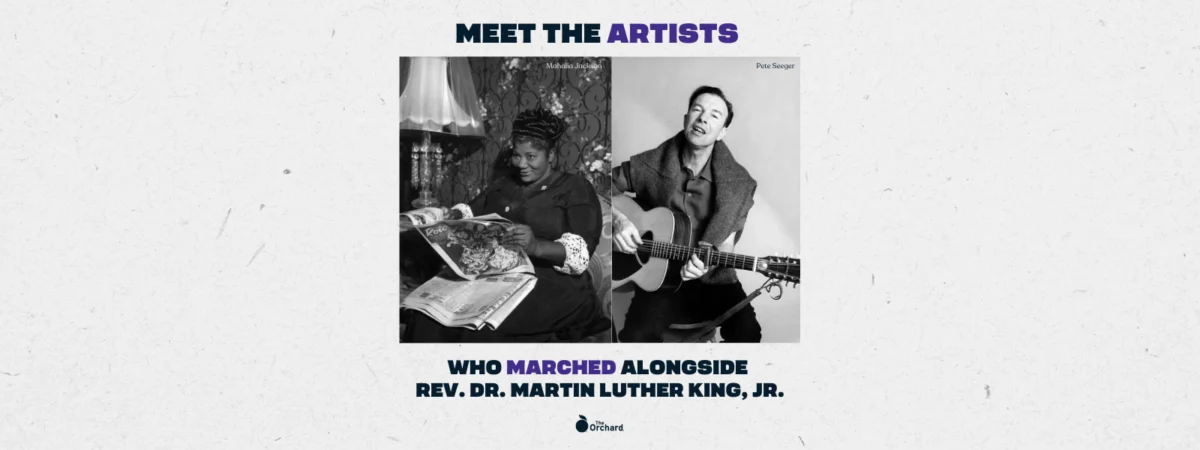
On this Rev. Dr. Martin Luther King, Jr. Day of Service, January 19, 2026, a reflection on the profound impact of music and artistry on the Civil Rights Movement reveals the indelible contributions of Mahalia Jackson and Pete Seeger, two figures who not only marched alongside Dr. King but whose voices and songs served as a spiritual and motivational bedrock for the struggle for equality. Their legacies, intertwined with the fight for justice, continue to resonate, underscoring the power of art to fuel social change.
The Civil Rights Movement, a pivotal era in American history spanning roughly from the mid-1950s to the late 1960s, was characterized by widespread nonviolent protests, civil disobedience, and legislative reform aimed at ending racial segregation and discrimination against African Americans. Central to its success was a powerful soundtrack of spirituals, gospel, folk, and protest songs that uplifted spirits, unified participants, and communicated the movement’s urgent message to a wider audience. Mahalia Jackson and Pete Seeger, though from different musical backgrounds, emerged as pivotal artists whose involvement transcended mere performance, embedding them directly within the heart of the movement.
Mahalia Jackson: The Queen of Gospel and a Beacon of Inspiration
Mahalia Jackson, widely hailed as the "Queen of Gospel," was more than just a celebrated singer; she was a close confidante and spiritual anchor for Dr. Martin Luther King, Jr. Her powerful contralto voice, capable of evoking deep emotion and profound spirituality, was a consistent presence at key moments of the movement. Jackson’s performances were often scheduled to precede Dr. King’s sermons, setting a tone of hope, resilience, and divine purpose that prepared congregations and activists for the challenges ahead. She was a frequent performer at fundraising events for the Southern Christian Leadership Conference (SCLC), the organization co-founded by Dr. King, using her considerable influence and talent to secure vital resources for the movement’s operations.
Her most iconic contribution, however, occurred on August 28, 1963, during the historic March on Washington for Jobs and Freedom. Standing on the steps of the Lincoln Memorial before an estimated 250,000 people, Dr. King delivered his seminal "I Have a Dream" speech. It was during this momentous occasion that Mahalia Jackson, from her position on the dais, famously interjected, "Tell them about the dream, Martin! Tell them about the dream!" This impassioned plea, heard by King, is widely credited with prompting him to deviate from his prepared remarks and launch into the extemporaneous, deeply moving articulation of his vision for a racially just America that would forever be etched in history. Jackson’s instinctual prompt highlighted the profound connection and shared vision between the artist and the leader, demonstrating how art could directly influence the course of pivotal historical moments.
Jackson’s dedication to the cause was not confined to major rallies. She actively participated in demonstrations, marches, and voter registration drives, often putting herself at risk. Her music provided solace and strength to those facing violence and oppression, transforming moments of despair into affirmations of faith and perseverance. Songs like "Move On Up a Little Higher," "Amazing Grace," and "Precious Lord, Take My Hand" became anthems of hope and determination, sung by activists in churches, on picket lines, and in the face of adversity. The profound spiritual depth of her gospel music resonated with the moral imperative of the Civil Rights Movement, framing the struggle not just as a political battle but as a righteous quest for human dignity and divine justice.
Pete Seeger: The Folk Troubadour of Social Justice
Pete Seeger, an American folk singer, songwriter, and passionate social activist, dedicated a significant portion of his life to championing interconnected causes, including civil rights, workers’ rights, and environmental protection. His music, characterized by its accessibility and its direct engagement with pressing social issues, made him a beloved figure among activists and ordinary people alike. In the 1960s, Seeger’s commitment to these intertwined struggles intensified, and he became a prominent voice advocating for a more just and equitable society.
Seeger’s repertoire included a wealth of songs that became rallying cries for social change. His iconic labor songs, such as "Solidarity Forever" and "Which Side Are You On?", articulated the struggles and aspirations of working people, fostering a sense of collective identity and shared purpose. He also co-wrote "If I Had a Hammer" with Lee Hays, a powerful protest song that captured the spirit of hope and the call for justice that defined the era. These songs, often sung in unison at rallies and gatherings, created a powerful sense of unity and empowerment among participants.
One of Seeger’s most significant contributions to the Civil Rights Movement was his role in popularizing "We Shall Overcome." While the song’s origins are complex, drawing from earlier spirituals and folk traditions, Seeger was instrumental in adapting and disseminating it. His version of "We Shall Overcome" was Dr. King’s first introduction to the song, and it quickly became the unofficial anthem of the Civil Rights Movement. Its simple, repetitive melody and profound message of enduring hope resonated deeply with activists facing immense opposition. The song’s power was such that Dr. King quoted its lyrics in his final public speech in March 1968, just days before his assassination, a testament to its enduring significance.
Seeger’s personal commitment to the movement was equally impactful. At the invitation of Dr. King, he performed at the historic 1965 Selma to Montgomery marches, a series of protests that played a crucial role in the passage of the Voting Rights Act of 1965. His presence on the front lines, singing alongside activists, underscored his solidarity and commitment. Seeger’s legacy as a "musician of the people" endures, with his songs continuing to inspire generations to engage in activism and advocate for social justice. His ability to translate complex social and political issues into accessible and memorable songs made him an invaluable asset to the movement, bridging cultural divides and fostering a shared sense of purpose.
Smithsonian Folkways: A Repository of Freedom Songs
The enduring power of the music that fueled the Civil Rights Movement is preserved and made accessible through various archives and distributors. The Orchard, a distribution partner of Smithsonian Folkways Recordings, plays a vital role in making this rich musical heritage available to the public. Smithsonian Folkways, a non-profit record label, has been dedicated to preserving and sharing America’s musical traditions, including a vast collection of music associated with the Civil Rights Movement. Their catalog features recordings by artists like Mahalia Jackson and Pete Seeger, as well as numerous other freedom singers and activists whose music documented and propelled the struggle for equality.
Exploring the music of these "freedom fighters" offers a direct connection to the spirit and lived experiences of those who fought for civil rights. These songs are not merely historical artifacts; they are living testaments to the courage, resilience, and unwavering hope that characterized the movement. They provide invaluable insights into the strategies, challenges, and triumphs of the era, offering a unique perspective that complements historical narratives and scholarly analyses.
Supporting Data and Context
The Civil Rights Movement was a period of immense social and political upheaval. Between 1955 and 1968, there were over 10,000 demonstrations, including boycotts, sit-ins, marches, and freedom rides. These actions were often met with violent resistance, including arrests, beatings, and bombings. For example, the Birmingham Campaign of 1963, which involved widespread protests against segregation, saw the brutal response of Public Safety Commissioner Eugene "Bull" Connor, who unleashed police dogs and high-pressure fire hoses on demonstrators, including children. It was in this climate of intense repression that the uplifting and unifying power of music became indispensable.
The music of artists like Jackson and Seeger provided a crucial psychological boost to activists. Singing together in churches or on protest lines fostered a sense of community and solidarity, reducing feelings of isolation and fear. The repetitive nature of many protest songs, such as "We Shall Overcome," served as a form of collective mantra, reinforcing the belief in eventual victory and providing a shared vocabulary of hope and resistance.
Broader Impact and Implications
The legacy of artists like Mahalia Jackson and Pete Seeger extends far beyond their direct involvement in the Civil Rights Movement. Their work serves as a powerful reminder of the role that art and culture can play in shaping public opinion, mobilizing communities, and advocating for social change. The songs they popularized and performed continue to be sung at protests and rallies for justice around the world, demonstrating the universal and enduring appeal of their messages.
The inclusion of their music in educational curricula and public archives ensures that future generations can learn from the struggles and triumphs of the Civil Rights Movement. By engaging with this music, individuals can develop a deeper understanding of the historical context, the ethical imperatives, and the human cost of the fight for equality. Furthermore, the ongoing availability of this music through platforms like Smithsonian Folkways, distributed by partners such as The Orchard, ensures that these vital cultural artifacts remain accessible for continued inspiration and education.
The concept of a "Day of Service" in honor of Rev. Dr. Martin Luther King, Jr. encourages active participation in community betterment. By highlighting the artistic contributions to the movement, this day serves as a reminder that service can take many forms, including the amplification of messages of justice and equality through art and culture. The call to "Show up" by visiting platforms like YourCause Connect or exploring relevant organizations, and to "Get social" by following and amplifying social media accounts dedicated to social justice, directly echoes the participatory spirit of the Civil Rights era, where every individual’s voice and action were considered vital.
In conclusion, the Rev. Dr. Martin Luther King, Jr. Day of Service provides an opportune moment to acknowledge and celebrate the profound artistic contributions of figures like Mahalia Jackson and Pete Seeger. Their music not only accompanied the marches and sermons of the Civil Rights Movement but also provided the spiritual sustenance, moral clarity, and unwavering hope that enabled activists to confront injustice and ultimately bend the arc of history towards righteousness. Their legacies serve as a timeless inspiration, underscoring the potent synergy between art, activism, and the ongoing pursuit of a more just and equitable world.
