

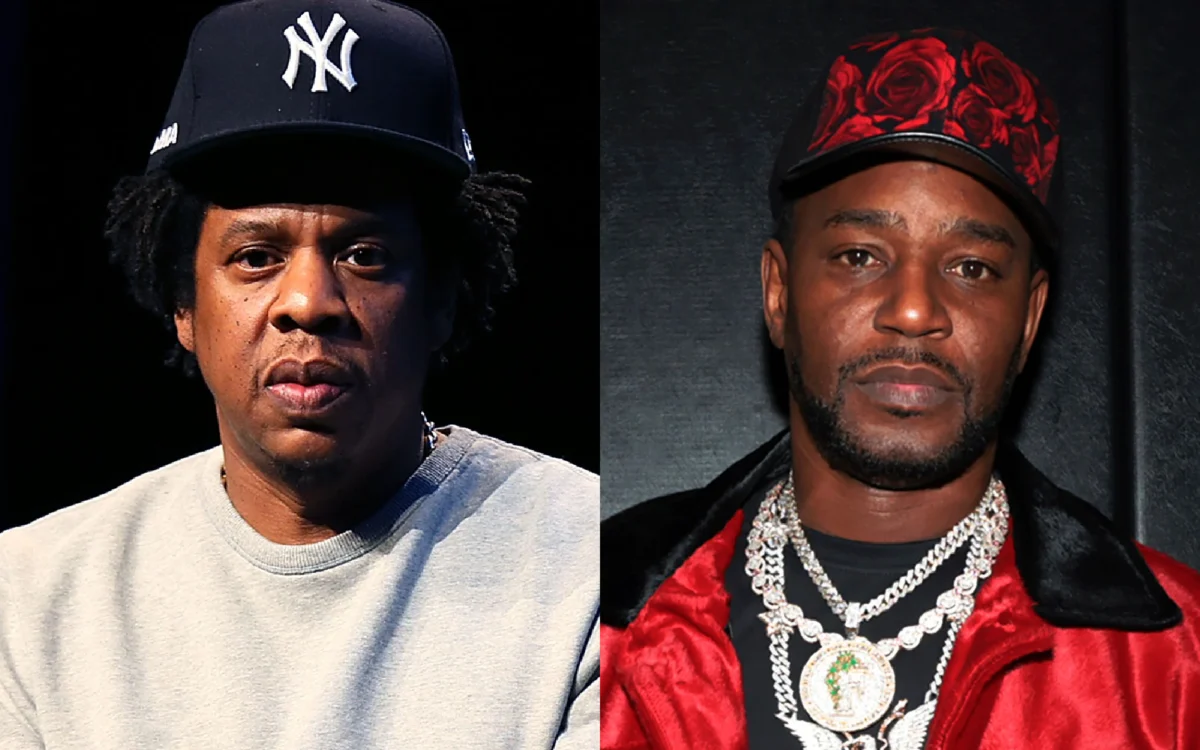
The intricate tapestry of hip-hop often hides layers of meaning, with lyrical barbs sometimes delivered with such subtlety that they remain undiscovered for years. Such is the case with JAY-Z’s contribution to the iconic 2011 hit "Otis," a collaboration with Kanye West. In a recent episode of REVOLT’s series Talk With Flee, Harlem rap legend Cam’ron revealed that JAY-Z employed a masterful lyrical maneuver, a subliminal diss directed at him, which went largely unnoticed by the public and even many dedicated fans for over a decade. This revelation sheds light on the complex dynamics and unspoken rivalries that have shaped the landscape of hip-hop.
The genesis of this long-hidden diss can be traced back to a 2010 freestyle session. Cam’ron, alongside his Dipset associate Jim Jones, released a freestyle over Kanye West’s critically acclaimed track "Runaway." During this freestyle, Cam’ron directly addressed Kanye, taking issue with a perceived slight against his former business partner, Damon Dash. The lyrics, delivered with Cam’ron’s signature bravado, included the lines: "Kanye, you a sucka ngga / Dissed Dame, so my attitude is fuck a ngga / Suckin’ Jigga, how you gon’ live with that? / Took your beat, now come get it back." This diss was not only a direct challenge to Kanye but also a veiled jab at JAY-Z, whom Cam’ron accused of "suckin’ Jigga," implying subservience or association with a perceived enemy.
It was this specific freestyle that Cam’ron believes prompted JAY-Z’s retaliatory verse on "Otis," which was released approximately a few months after the "Runaway" freestyle. Cam’ron, speaking on Talk With Flee, meticulously broke down the lyrical connection. He highlighted the line from JAY-Z’s verse: "Live from the Mercer, run up on Yeezy the wrong way I might murk ya / Flee in the G450, I might surface / Political refugee, asylum can be purchased."
Cam’ron explained that the phrase "asylum can be purchased" was a direct and pointed response to his own business dealings at the time. He had a distribution deal with Asylum Records, a fact that JAY-Z, with his keen ear for lyrical nuance and his extensive network of information, was undoubtedly aware of. By referencing "asylum" in the context of being a "political refugee," JAY-Z was subtly drawing a parallel between Cam’ron’s perceived status as a refugee from his own musical ventures and the ability to "purchase" a safe haven, implying that Cam’ron’s career choices or affiliations were driven by transactional motives rather than genuine artistic conviction.
Further adding to the layers of this subtle jab, the phrase "political refugee" could also be interpreted as a nod to the historical departure of Cam’ron’s influential crew, The Diplomats (often referred to as Dipset), from JAY-Z’s own Roc-A-Fella Records. This historical context further solidifies the intricate web of references JAY-Z wove into his verse. The fact that this multi-layered diss remained undetected for such a significant period underscores JAY-Z’s reputation as one of hip-hop’s most masterful lyricists, capable of crafting messages that resonate on multiple levels, often going over the heads of casual listeners.
Cam’ron and his co-host, Sen City, could not contain their amusement and admiration for JAY-Z’s cleverness. The revelation prompted laughter and a shared acknowledgment of JAY-Z’s unparalleled "slickness" in wordplay and strategic lyrical attacks. This moment serves as a powerful testament to the enduring art of lyrical warfare in hip-hop, where subtle implications and double entendres can carry as much weight as overt diss tracks.
JAY-Z’s Continued Presence in the Hip-Hop Discourse
Beyond this newly unearthed lyrical maneuver, JAY-Z has been a consistent presence in the headlines, fueling speculation about a potential musical comeback. In recent months, the Roc Nation mogul has been strategically reissuing rare gems from his extensive catalog, including the original version of "Dead Presidents." This move, coupled with the announcement of a series of shows at New York’s Yankee Stadium to commemorate the anniversaries of his seminal albums Reasonable Doubt and The Blueprint, has been interpreted by many fans as a soft launch for a long-awaited return to recording music. His confirmation as a headliner for the 2026 Roots Picnic festival in Philadelphia further solidifies his ongoing engagement with the live music circuit.
A Rare Interview and Reflections on the Current State of Hip-Hop
Adding to the buzz surrounding his potential musical resurgence, JAY-Z recently granted a rare and extensive interview to GQ magazine. During this conversation, he delved into a variety of topics, including the highly publicized lyrical battle between Kendrick Lamar and Drake, the ensuing controversies surrounding Kendrick Lamar’s Super Bowl halftime performance, and his personal relationship with fellow artist J. Cole.
In the GQ interview, JAY-Z also revealed his near-collaboration with the influential rap duo Clipse on their Grammy-nominated album Let God Sort Em Out. This near-miss further highlights his ongoing connection to the creative pulse of the hip-hop community. When pressed about the speculation surrounding his potential return to music, JAY-Z offered a candid and introspective response.
"I have a lot of scratch ideas and they’re all bad [laughs]," he admitted. "I got to be honest… I don’t know what I need to create currently that’s going to fulfill me and make me happy, because that’s most important. I know I just got to be honest about what I feel and where I am. Maybe I’m overthinking it. Maybe I’m stopping myself from just creating."
He elaborated on the importance of authenticity in his creative process, stating, "Whatever it is, it just needs to be a true representation of how I feel. Trying to create something that people like is where I think a lot of artists get jammed up. And people can feel that because it’s not authentic. I just got to make something timeless that I really love and that’s really honest and true to who I am."
The Enduring Legacy of Lyrical Dexterity
The revelation concerning the "Otis" diss serves as a potent reminder of JAY-Z’s unparalleled lyrical prowess and his strategic approach to his artistry. In an era where direct confrontation often dominates hip-hop narratives, JAY-Z’s ability to weave complex, multi-layered messages that remain embedded within his music for years speaks volumes about his mastery of the craft. This discovery not only adds a fascinating new chapter to the lore surrounding Watch the Throne but also reinforces JAY-Z’s status as a lyrical architect, whose influence continues to shape the genre. The fact that a diss, crafted over a decade ago, is only now coming to light speaks to the depth and enduring relevance of his contribution to hip-hop’s rich history. It highlights how, even in moments of perceived conflict or rivalry, the art form itself can provide a sophisticated and enduring platform for expression.
