

Phantom Sounds, the innovative developer acclaimed for its distinctive audio plugins like Orbit (a spatial reverb) and 56K (a digital decay effect), has announced the immediate availability of Intermod, a groundbreaking self-intermodulation effect plugin. Released as a free download, Intermod promises to redefine creative sound design by introducing a novel approach to generating harmonic content and ethereal textures. This release marks another significant step for Phantom Sounds in its commitment to offering less conventional yet highly effective tools to the audio production community.
Delving into Intermod’s Core Technology: Self-Intermodulation
At its heart, Intermod employs a sophisticated self-intermodulation algorithm, a process that multiplies the strongest components within an input signal against each other. Unlike traditional distortion or harmonic exciters that typically add integer multiples of the fundamental frequencies, self-intermodulation generates entirely new, "phantom" frequencies. These phantom frequencies are not direct harmonics but rather sum and difference products derived from the interplay of the original audio’s most prominent spectral elements. The result is an output that maintains a deep sonic relationship with the source material while simultaneously venturing into entirely new timbral territories.
The unique characteristic of Intermod lies in its ability to ensure that each input signal yields a distinct and unparalleled character profile. Because the generated phantom frequencies are directly influenced by the specific spectral content and dynamic nuances of the incoming audio, the plugin produces bespoke sonic results every time. This adaptive nature makes Intermod an invaluable asset for producers and sound designers seeking to infuse their tracks with individuality and an inimitable sonic signature, moving beyond generic effects.
A Spectrum of Sonic Alteration: Modes and Parameters
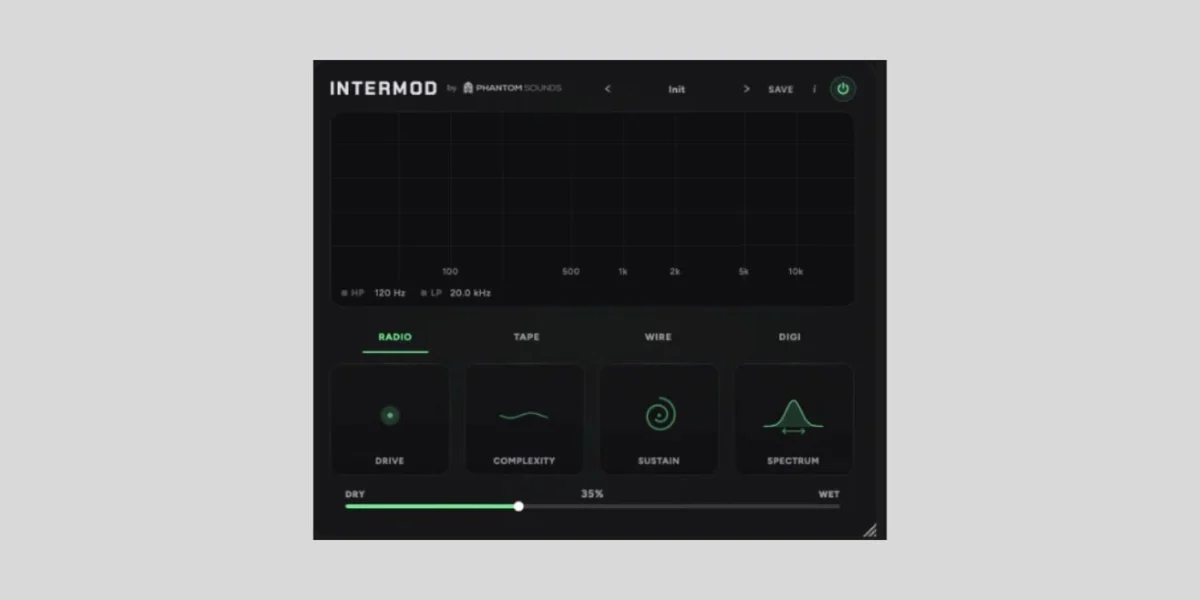
Intermod provides users with a comprehensive suite of controls to sculpt these phantom frequencies, offering both broad strokes and intricate detailing. The plugin features four distinct source modes, each designed to impart a specific flavor or characteristic to the intermodulation process:
- Radio: This mode often introduces a gritty, lo-fi quality, reminiscent of older radio transmissions with their inherent compression and unique spectral characteristics. It can evoke a sense of distance, nostalgia, or even digital degradation.
- Tape: Emulating the non-linearities and saturation often associated with analog tape machines, this mode can add warmth, subtle harmonic richness, and a characteristic flutter or wow effect that enhances the intermodulation.
- Wire: This mode tends towards a more metallic, resonant, or even abrasive quality, potentially simulating the ringing or interference found in older communication lines or electrical systems. It’s particularly effective for creating sharp, cutting textures.
- Digital: Designed to introduce artifacts more typical of early digital processing, this mode can generate sterile, aliasing-like sounds, or introduce a colder, more precise form of intermodulation, often resulting in unique tonal shifts.
Beyond these foundational modes, Intermod offers four adjustable parameters that allow for granular control over the effect’s intensity and character:
- Drive: This parameter controls the input gain feeding the intermodulation engine, directly influencing the strength and prominence of the phantom frequencies. Pushing the Drive harder typically leads to a more aggressive and saturated sound, bringing the intermodulation effects to the forefront.
- Complexity: As the name suggests, Complexity dictates the intricacy and density of the generated phantom frequencies. A low Complexity setting will yield a more stable and predictable sonic movement, suitable for sustained pads or atmospheric backdrops. Conversely, increasing Complexity introduces more chaotic and evolving textures, transforming sounds into wilder, unpredictable sonic landscapes.
- Sustain: This parameter controls the duration and decay characteristics of the generated phantom frequencies. It allows users to transform transient sounds into prolonged, almost pulsing tails, adding an otherworldly sustain to percussive elements or short vocal phrases. When combined with high Drive, especially in modes like Radio and Wire, Sustain can quickly push sounds into ethereal and highly experimental territories.
- Spectrum: This control allows users to bias the intermodulation effect towards specific frequency ranges. By adjusting the Spectrum parameter, producers can direct where the phantom frequencies are predominantly generated or influenced, offering another layer of tonal shaping and ensuring the effect integrates seamlessly or dramatically with other elements in a mix.
Further refining the sound, Intermod includes a Dry/Wet slider, providing precise control over the blend between the original signal and the processed output. This is crucial for subtle enhancements or for dialing in extreme, full-wet transformations. The plugin also features a visually intuitive frequency display, allowing users to observe the spectral changes in real-time. Positioned just below this display are high-pass (HP) and low-pass (LP) filter settings, offering an additional layer of tone shaping to surgically place the intermodulation effects within the desired frequency spectrum, preventing unwanted muddiness or harshness.
Phantom Sounds: A Legacy of Unconventional Innovation
Phantom Sounds has steadily built a reputation for developing audio plugins that challenge conventional approaches to sound design. Their previous offerings, Orbit and 56K, exemplify this philosophy. Orbit, a spatial reverb, garnered attention earlier this year for its innovative approach to creating expansive and evolving reverberant spaces that transcended typical reverb algorithms. Similarly, 56K introduced a unique digital decay effect that went beyond simple delays, offering intricate degradation and textural processing inspired by early digital communication.
The consistent theme across Phantom Sounds’ releases is a commitment to exploring the less trodden paths of signal processing. In an increasingly saturated plugin market, where countless emulations of classic gear and variations of standard effects abound, Phantom Sounds distinguishes itself by focusing on entirely new sonic paradigms. This dedication to originality is not merely a marketing ploy; it reflects a deeper understanding of the evolving needs of modern music producers and sound designers who are constantly seeking fresh sonic palettes and tools that inspire creativity rather than simply replicate existing sounds.
Tomislav Zlatic, the author of the original review, noted this consistent developer philosophy: "If we learned anything from Orbit, the last plugin we covered from this developer, it’s that Phantom Sounds tries to take a less typical approach than expected, and that’s a good thing when we have so many plugins to choose from." This sentiment underscores the value of developers like Phantom Sounds, who prioritize innovation over replication, thereby enriching the creative landscape for audio professionals and hobbyists alike.
Strategic Presets: Bridging the Gap Between Wildness and Utility
One of Intermod’s particularly commendable features is the thoughtful curation of its presets. Given the plugin’s propensity to venture into "otherworldly" and highly experimental sonic territories, one might anticipate a preset library dominated by extreme, aggressive effects. However, Phantom Sounds has wisely opted for a balanced approach, providing a diverse collection that includes both subtle enhancements and radical transformations.
These presets are specifically compiled for various instruments, offering immediate starting points for different applications. This instrument-specific approach helps users quickly grasp the plugin’s potential for guitars, synthesizers, drums, vocals, and other sound sources. For instance, a preset for a bass guitar might introduce a subtle sub-harmonic rumble and width without overpowering the low end, while a lead synth preset could launch the sound into a swirling, modulated texture. This duality of subtlety and aggression demonstrates the plugin’s versatility and its potential to serve a wide array of musical genres and production styles. The inclusion of such well-categorized presets significantly lowers the barrier to entry, allowing users to explore the plugin’s capabilities effectively without getting lost in its more complex sound design possibilities.
The Significance of Freeware in the Audio Production Ecosystem
The decision by Phantom Sounds to offer Intermod as a free download (requiring only an email address) carries significant implications for both the developer and the wider audio production community. In an industry where premium plugins can command substantial prices, providing a high-quality, innovative tool for free serves multiple strategic purposes:
- Community Engagement and Brand Building: Offering a free plugin is an excellent way to attract new users, introduce them to the Phantom Sounds brand, and foster a loyal community. Positive word-of-mouth generated by a free, high-quality tool can be more effective than extensive marketing campaigns.
- Showcasing Technological Prowess: By making Intermod freely accessible, Phantom Sounds effectively demonstrates its advanced sound design capabilities and unique algorithms to a broad audience. This can build anticipation for future commercial releases and establish the company as a leader in innovative audio processing.
- Democratizing Sound Design: Freeware tools play a crucial role in democratizing music production, allowing aspiring producers, students, and those with limited budgets to access professional-grade tools. Intermod, with its distinctive capabilities, empowers a larger segment of the creative community to experiment with advanced sound design concepts.
- Market Penetration: A free plugin can quickly achieve widespread adoption, integrating itself into countless digital audio workstations (DAWs) globally. This broad user base provides valuable feedback and helps Phantom Sounds understand how their tools are being used in diverse production contexts.
This strategy aligns with a growing trend in the plugin industry where developers offer free entry-level or unique "taster" plugins to build an audience before releasing more comprehensive commercial products. It’s a testament to Phantom Sounds’ confidence in Intermod’s quality and its ability to captivate users.
Practical Applications and Creative Horizons
Intermod’s unique self-intermodulation effect opens up a vast array of creative possibilities for producers and sound designers across various genres:
- Electronic Music: For genres like ambient, techno, experimental electronic, and IDM, Intermod can generate evolving drones, intricate rhythmic textures, and unique percussive elements by transforming conventional samples into something entirely new. Its ability to create "pulsing tails" from short sounds makes it ideal for building atmospheric soundscapes.
- Film Scoring and Game Audio: Sound designers working on film, television, or video games can leverage Intermod to craft unsettling atmospheres, alien sound effects, futuristic weapon sounds, or surreal environmental textures. The "otherworldly" territory it effortlessly accesses is a boon for creating immersive and distinct sonic worlds.
- Vocal Processing: Intermod can be used subtly to add harmonic richness and character to vocals, or more aggressively to create robotic, glitchy, or heavily processed vocal effects that stand out in a mix.
- Guitar and Bass: Beyond traditional distortion or modulation, Intermod can impart unique textures to guitars, from metallic sheen to sustained, resonant drones. On bass, it can add sub-harmonic complexity or a gritty, aggressive edge.
- Synthesizers: Intermod is a natural fit for synthesizers, allowing producers to push existing synth patches into completely new sonic dimensions, creating evolving pads, leads with unusual overtones, or rhythmic sequences with unexpected harmonic content.
The plugin’s flexibility, from subtle enhancement to extreme sonic transformation, ensures its utility across a broad spectrum of production needs. Its intuitive interface, coupled with the well-designed presets, ensures that both novice users and seasoned professionals can quickly integrate Intermod into their workflow and begin exploring its unique potential.
Conclusion and Availability
Intermod represents another strong offering from Phantom Sounds, reinforcing their reputation as a developer dedicated to pushing the boundaries of audio processing. It’s not overly complicated, yet it offers something genuinely different and profoundly creative, making it an indispensable tool for anyone interested in innovative sound design. Its ability to generate unique "phantom frequencies" from any input signal provides an unparalleled avenue for sonic exploration and individuality.
The plugin’s release on April 16, 2026, solidifies Phantom Sounds’ commitment to a consistent release schedule, following the successful launch of Orbit earlier in the year. Available as a free download, Intermod is poised to become a staple in the digital audio workstations of countless producers worldwide. Users can access this innovative self-intermodulation effect by visiting the Phantom Sounds website and registering with an email address. This move not only provides an exceptional creative tool to the community but also strategically positions Phantom Sounds at the forefront of modern audio plugin development.
Download: Intermod (FREE – email required)
Last Updated on April 16, 2026 by Tomislav Zlatic.
