

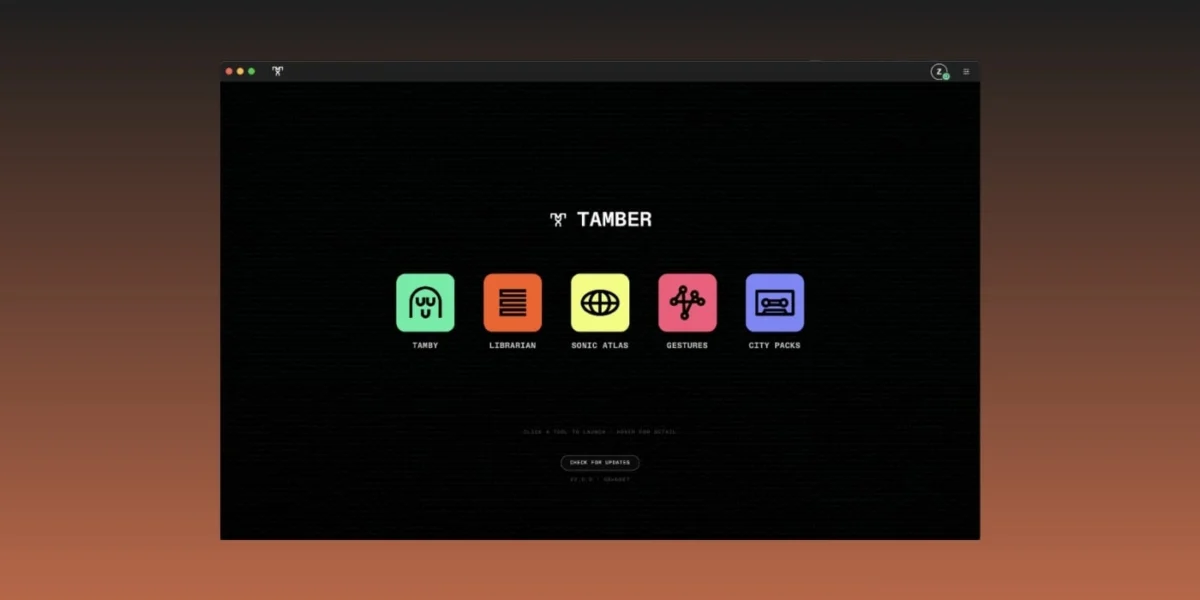
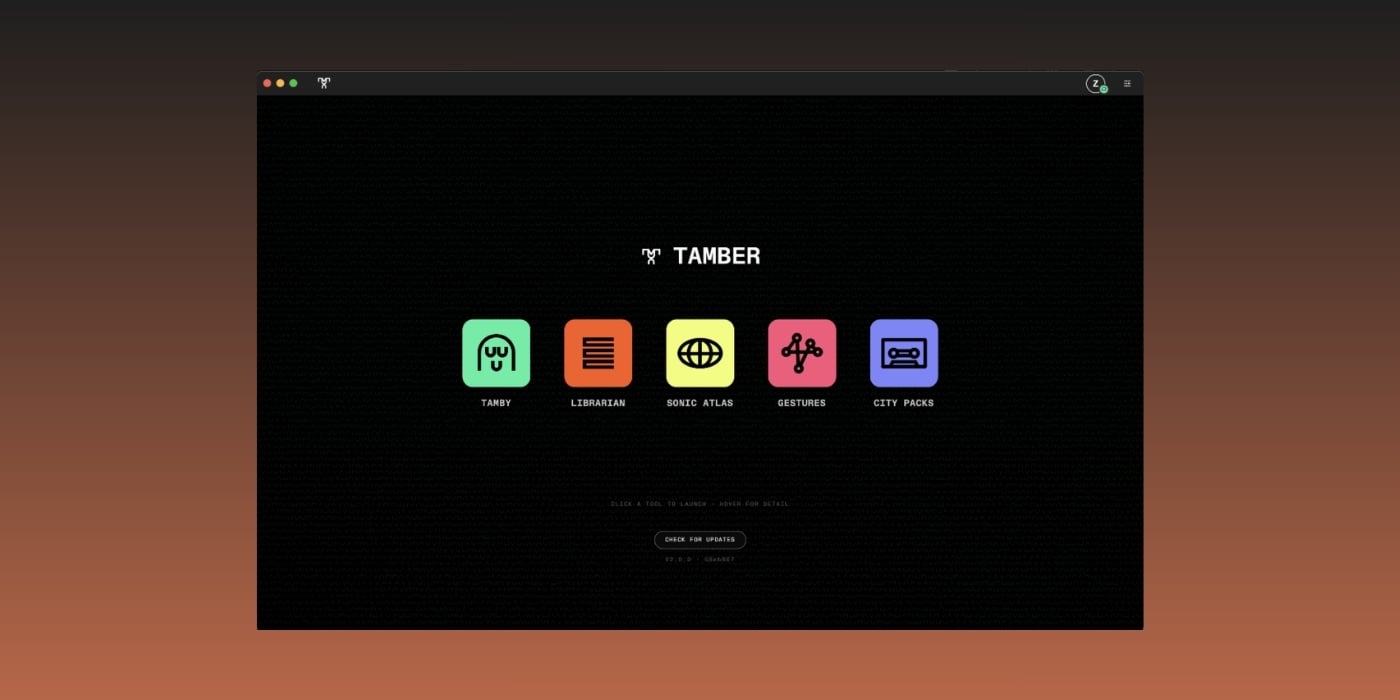
Tamber has officially launched Tamber 2.0, a monumental overhaul of its platform that redefines the interaction between musicians and their creative tools. This major redesign introduces a suite of five interconnected applications – Gestures, Tamby, Librarian, City Packs, and Sonic Atlas – alongside the highly anticipated addition of native Windows support, significantly expanding its reach to a broader user base. The new architecture transitions from a monolithic platform to a modular ecosystem, allowing users to access specific tools as dedicated apps within a unified suite, streamlining workflows and enhancing operational efficiency for modern music producers.
The Vision Behind Tamber 2.0: A Modular Ecosystem for Modern Musicians
The landscape of digital music production has undergone rapid evolution, marked by an increasing demand for intuitive interfaces, seamless integration, and powerful, yet accessible, creative aids. Tamber’s journey, from its inception to this pivotal 2.0 release, reflects a commitment to addressing these needs. The company recognized that while comprehensive platforms offer vast capabilities, they can also become cumbersome, often requiring users to load an entire system for a singular task. Tamber 2.0 directly tackles this challenge by segmenting its functionalities into specialized applications. This modular approach ensures that musicians can swiftly open only the part of the platform they require for a given session, minimizing system load and maximizing focus.
A spokesperson for Tamber elaborated on the strategic shift, stating, "Our goal with Tamber 2.0 was not just to add features, but to fundamentally rethink how musicians interact with technology. We wanted to create a more fluid, responsive, and intuitively organized environment that truly empowers creativity without unnecessary friction. The feedback from our community highlighted the need for greater flexibility and efficiency, and this redesign is a direct response to that, combined with years of dedicated research and development into next-generation creative tools." The inclusion of native Windows support is particularly noteworthy, addressing a long-standing request from a significant segment of the global music production community and ensuring cross-platform accessibility.
A New Paradigm for AI in Music: Assistive, Not Generative
At the heart of Tamber 2.0’s innovation lies its distinctive approach to artificial intelligence, which the company terms "Sonic Intelligence." In an era increasingly dominated by discussions around generative AI, Tamber firmly positions its system as assistive rather than generative. This means Tamber’s AI is meticulously designed to help musicians operate their tools, navigate complex libraries, and discover new sounds, rather than autonomously generating finished songs, stems, or samples. This philosophy underscores a commitment to augmenting human creativity, ensuring the artist remains at the helm of the creative process.
The underlying Sonic Intelligence technology is engineered to translate a remarkably diverse range of abstract concepts—including language, color, emotion, texture, taste, place, and movement—into tangible musical control. This groundbreaking system was developed through extensive collaboration with musicians who experience synesthesia, a neurological phenomenon where stimulation of one sensory or cognitive pathway leads to automatic, involuntary experiences in a second sensory or cognitive pathway. This unique developmental process has imbued Sonic Intelligence with an unparalleled capacity to bridge sensory gaps, offering musicians novel ways to express and interpret their ideas. Crucially, Tamber emphasizes that its AI system has never been trained on third-party audio. This ethical stance is vital in today’s music industry, addressing concerns regarding intellectual property, data privacy, and the potential for algorithmic bias, ensuring that Tamber’s tools are built on a foundation of originality and respect for creators.
Deep Dive into the Five Core Applications
The Tamber 2.0 suite comprises five distinct applications, each designed to address specific aspects of the music creation workflow with innovative, AI-powered solutions.
Gestures: Redefining Performance and Control
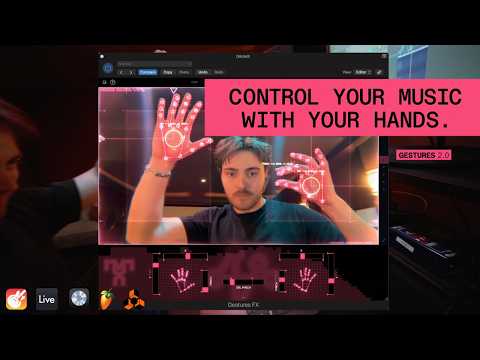
Gestures stands out as perhaps the most unconventional and captivating component of the Tamber 2.0 suite. This application leverages a standard webcam to track a user’s hand movements, transforming physical motion into musical expression. Musicians can trigger notes and chords, or control effects and parameters in real-time, simply through gestures. The 2.0 update elevates Gestures significantly, turning it into a standalone instrument as well as a VST3/AU plugin. This allows for seamless integration into virtually any digital audio workstation (DAW) environment.
Further enhancing its capabilities, Gestures now features new, integrated synth and vocoder engines, enabling users to generate sounds directly without requiring an external virtual instrument. This self-contained functionality reduces setup complexities and expands creative possibilities. A critical technical improvement in Tamber 2.0 is the substantial reduction in latency, ensuring a tighter, more immediate connection between physical movement and the resulting sound. This low-latency performance is paramount for live performance and intuitive interaction, making Gestures not just a novel input method, but a truly expressive musical instrument. The implications for accessibility are profound, potentially opening up music creation and performance to individuals who may find traditional interfaces challenging, offering a more intuitive and physically engaging way to make music.
Tamby: Natural Language Control for DAWs
Tamby introduces a revolutionary approach to DAW control through spoken or written instructions, dramatically streamlining common production tasks. Initially integrated with Ableton Live, Tamby allows users to command their DAW using natural language, executing actions such as setting inputs, arming tracks, initiating recordings, creating loops, and locating presets. This voice and text-driven interface promises to reduce the reliance on mouse clicks and keyboard shortcuts, allowing musicians to maintain a more continuous creative flow.
The new version of Tamby operates as a discreet, small overlay that intelligently disappears when not actively in use, preserving screen real estate and minimizing distractions. A persistent chat history feature keeps previous prompts and actions readily available, enabling users to recall or refine commands with ease. Tamber has already indicated ambitious plans for future updates, with expanded DAW support for Tamby being a top priority. Logic Pro and FL Studio are among the most requested options, underscoring Tamber’s responsiveness to user demand and its vision for a more universally accessible, language-controlled music production environment. This innovation has the potential to significantly enhance workflow efficiency, particularly during intensive creative sessions where rapid command execution is crucial.
Librarian: Intelligent Sample Management
For producers grappling with ever-growing sample libraries, Librarian offers an intelligent and intuitive solution to sample management. Moving beyond the limitations of conventional filenames and standard tags, Librarian leverages Tamber’s Sonic Intelligence to enable natural-language searches. Users can describe the desired sound in evocative terms, such as "a drum sound that feels like ice," and the system intelligently sifts through their collection to present relevant results. This semantic search capability transforms the often-tedious process of sample discovery into an inspiring creative act.
The "Mimic search" feature further enhances Librarian’s utility, allowing users to find similar files based on an example they record or import. This is invaluable for consistency in sound design and for exploring variations around a chosen sonic aesthetic. A new floating Mini-Librarian window allows users to drag search results directly into any DAW without the need to switch windows, maintaining an uninterrupted workflow. Additionally, Version 2.0 introduces essential organizational tools like Favorites and Crates, enabling producers to curate and categorize their samples more effectively, ensuring that their valuable audio assets are always within easy reach.
City Packs: Curated Global Soundscapes
City Packs represent Tamber’s commitment to providing unique and inspiring sonic textures derived from real-world environments. These packs contain production-ready sounds meticulously crafted from original field recordings captured by Tamber’s team in diverse locations around the globe. This approach ensures authenticity and a distinct character that sets these sounds apart from typical synthesized or stock samples.
Tamber plans to release a new City Pack every month, offering a continuous stream of fresh, geographically inspired audio content. This regular infusion of unique sounds provides producers with a rich palette of textures, ambiences, and percussive elements that can infuse their compositions with a sense of place and narrative. From the bustling streets of Tokyo to the tranquil landscapes of the Amazon, City Packs offer a sonic journey that expands creative horizons and encourages global musical exploration.
Sonic Atlas: Navigating the World of Music Discovery
Complementing City Packs’ focus on unique field recordings, Sonic Atlas takes a broader, exploratory approach to music discovery. This application allows users to delve into vast archives of popular music, exploring diverse genres, artists, and trends across different cities, countries, and historical periods. It acts as a powerful research and inspiration tool, enabling musicians to understand the sonic characteristics that define particular musical cultures or eras.
Users can identify and save useful references for later, building a personalized database of musical influences and insights. Whether researching the drum patterns of 80s synth-pop, the vocal harmonies of Brazilian bossa nova, or the atmospheric textures of Icelandic electronica, Sonic Atlas provides a structured yet intuitive way to navigate the rich tapestry of global music history, fostering deeper musical understanding and facilitating informed creative decisions.
Technological Underpinnings and Ethical Considerations
The successful implementation of Tamber 2.0’s ambitious features hinges on sophisticated technological underpinnings. The "Sonic Intelligence" engine, developed in collaboration with synesthesia-experiencing musicians, represents a significant leap in human-computer interaction within the creative domain. The ability to translate abstract concepts into musical control requires advanced machine learning algorithms capable of discerning subtle patterns and relationships across sensory modalities. This is a complex engineering challenge, particularly when combined with the requirement for low-latency performance in real-time applications like Gestures.
Tamber’s explicit commitment to not training its AI on third-party audio is a critical ethical stance in the current climate. As discussions around copyright infringement, data scraping, and the fair compensation of artists intensify within the context of generative AI, Tamber’s approach offers a model for responsible technological development. By focusing on assistive tools that empower artists rather than replace them, and by ensuring the ethical provenance of its training data, Tamber seeks to build trust within the creative community and advocate for a future where technology serves as a partner in artistic endeavors, not a competitor.
Availability, Pricing, and Future Outlook
Tamber 2.0 is now available for both macOS and Windows, ensuring broad accessibility across the two dominant operating systems for music production. Access to the full suite is offered through a subscription model, priced at $9.99 per month or a discounted annual rate of $99 per year. To allow potential users to experience the platform’s capabilities firsthand, Tamber provides a generous 14-day free trial that does not require a credit card, lowering the barrier to entry for exploration.
The company has also outlined a clear roadmap for future updates, demonstrating a commitment to continuous improvement and expansion based on user feedback. Tamby is slated to gain support for additional DAWs, with Logic Pro and FL Studio high on the list of requested integrations. Gestures will see further enhancements, including automation controls and more advanced synth features, promising even greater expressive potential. Librarian is set to receive additional search functionalities and organizational tools, further refining its ability to manage and discover sounds. This forward-looking approach positions Tamber 2.0 not merely as a product launch, but as the beginning of an evolving ecosystem designed to adapt to the dynamic needs of modern musicians.
Broader Industry Implications and the Future of Music Creation
The launch of Tamber 2.0 carries significant implications for the broader music technology industry. Its modular design, unique assistive AI philosophy, and innovative control methods could set new benchmarks for software development in music production. By offering a suite of specialized, interconnected tools rather than a single monolithic application, Tamber 2.0 presents an alternative paradigm that emphasizes flexibility, efficiency, and user-centric design.
The focus on accessibility through tools like Gestures (movement control) and Tamby (voice control) could also lower the barrier to entry for aspiring musicians, enabling a wider demographic to engage with music creation in more intuitive ways. Tamber’s principled stance on non-generative, ethically sourced AI offers a compelling counter-narrative to the prevailing discourse around AI in the arts, advocating for technology as a tool for human augmentation rather than autonomous creation. As the music industry continues to navigate the complexities and opportunities presented by artificial intelligence, Tamber 2.0 emerges as a significant player, poised to influence the direction of creative software and redefine the relationship between artists and technology in the digital age.
