

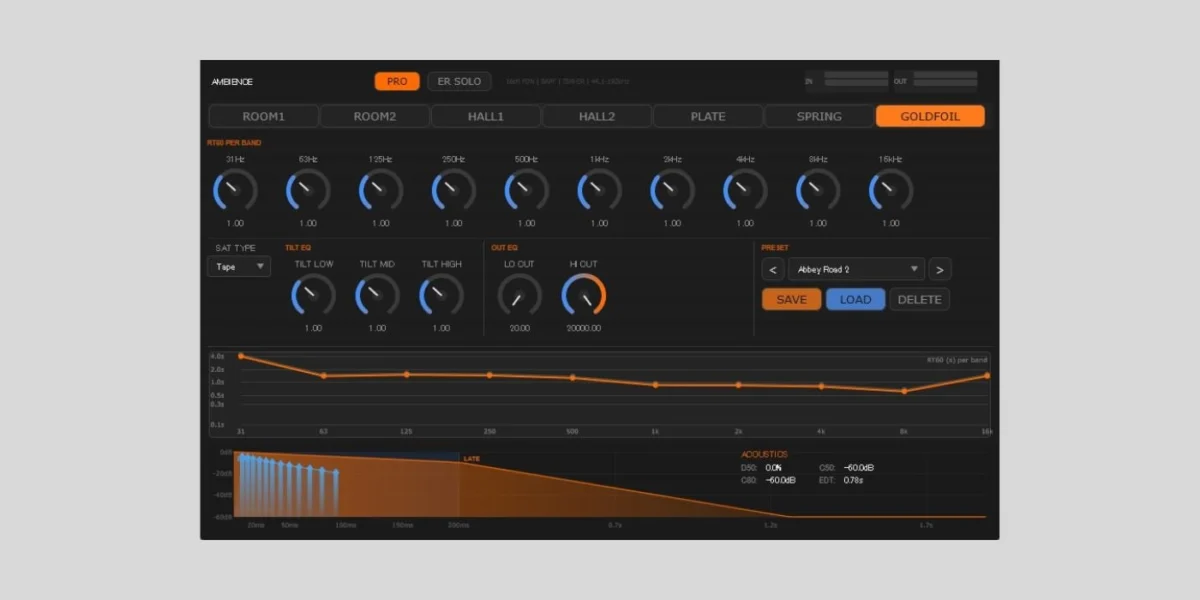
OTODESK has officially launched "Ambience," a groundbreaking free and open-source algorithmic reverb plugin exclusively for Windows users. Developed by Makoto Iida, a solo developer and hobbyist producer operating under the OTODESK moniker, Ambience distinguishes itself through its advanced 16-channel Feedback Delay Network (FDN) architecture and a unique development narrative involving extensive use of artificial intelligence. This release marks a significant contribution to the digital audio workstation (DAW) plugin ecosystem, offering a sophisticated reverb solution without a price tag and with full code transparency.
The Genesis of Ambience: A Developer’s Vision and AI Collaboration
Makoto Iida, the mastermind behind Ambience, is not a conventionally trained audio engineer. His journey into plugin development is a testament to the power of self-education and modern technological collaboration. Instead of relying on traditional audio engineering curricula, Iida meticulously reconstructed the plugin’s algorithms from academic papers, a process that underscored his commitment to foundational scientific principles. What truly sets Ambience’s development apart, however, is Iida’s innovative integration of artificial intelligence. He utilized AI extensively as a pair-programming and debugging partner throughout the C++ coding phase. This unconventional approach highlights a burgeoning trend in software development, where AI augments human capabilities, accelerating intricate coding tasks and identifying potential errors with remarkable efficiency.
Iida emphasized that while AI played a crucial role in the technical implementation and refinement of the code, the core design choices remained firmly rooted in human insight and research. His process involved a deep dive into academic literature, the strategic selection of specific algorithms, meticulous definition of the FDN topology, precise tuning of the absorption model, and the crucial, subjective process of adjusting presets by ear against a curated library of reference recordings. This blend of scientific rigor, technological assistance, and artistic discernment underscores the thoughtful craftsmanship embedded within Ambience.
Technical Core: A Deep Dive into Algorithmic Reverb
Ambience’s technical foundation is both sophisticated and distinct. At its heart lies a 16-channel Feedback Delay Network (FDN) for generating the reverb core, a design choice known for its ability to produce dense and natural-sounding decay tails without the repetitive artifacts often associated with simpler delay-based reverbs. Crucially, Iida confirmed that Ambience operates purely on algorithmic principles, eschewing convolution entirely. This means the plugin does not rely on sampled impulse responses (IRs) from real-world spaces, a common technique in many contemporary reverb plugins that often combine both algorithmic and sampled approaches. Instead, Ambience’s various hall and studio presets are algorithmic approximations, meticulously shaped using parameters such as RT60 (reverberation time) curves, early reflection patterns, and precise absorption settings.
The generation of early reflections, a critical component in defining the perceived size and character of a space, is handled by the Image Source Method. This technique computationally models the initial sound reflections off virtual walls and surfaces, creating a realistic sense of spatial dimension before the diffuse FDN tail takes over. The combination of the Image Source Method for early reflections and the FDN for the dense reverb tail represents a robust and computationally efficient strategy for simulating complex acoustic environments.
To further enhance the realism and diffusion of the reverb, the FDN core employs a Fast Walsh-Hadamard Transform (FWHT) feedback matrix. The FWHT is an orthogonal transform, similar in concept to the Fast Fourier Transform (FFT) but utilizing Walsh functions instead of sinusoids. Its application in the feedback matrix helps to scatter the delayed signals effectively, preventing undesirable modal ringing and creating a smoother, more diffuse reverb decay. Complementing this, the 16 delay lines within the FDN are "prime-tuned," meaning their lengths are carefully chosen to be prime numbers or coprime integers. This technique is a well-established method in digital audio to avoid obvious comb filtering and to ensure that the individual delay lines do not resonate at harmonically related frequencies, thereby contributing to a richer and more natural-sounding reverb tail.
Advanced Absorption Modeling and Signal Processing
A standout feature of Ambience is its advanced absorption modeling. Each of the 16 FDN channels incorporates a 10-band Graphic Equalizer (GEQ) absorption stage, based on the highly regarded Valimaki-Liski approach. This sophisticated system allows for frequency-dependent RT60 shaping, meaning the reverb can decay differently across various parts of the frequency spectrum. This capability is paramount for creating convincing acoustic spaces, as real-world materials absorb different frequencies at varying rates. For instance, soft furnishings absorb high frequencies more readily than low frequencies, leading to a warmer, darker decay. The ability to finely tune these spectral decay characteristics is a major factor in making a simulated space feel either genuinely natural or intentionally stylized.
Beyond its core reverb engine, Ambience integrates an ADAA (Anti-Aliased Distortion Algorithm) saturator. This feature offers four distinct modes—Warm, Tape, Tube, and Hard—allowing users to infuse the reverb signal with analog-style character without introducing unwanted aliasing artifacts, which are common in poorly implemented digital distortion. This adds a layer of sonic versatility, enabling producers to add grit, warmth, or aggression to their reverb tails.
For engineers requiring precise feedback on acoustic properties, Ambience provides live acoustic readouts for key metrics: D50, C50, C80, and EDT.
- D50 (Definition): Measures the clarity of a sound by comparing the energy within the first 50 milliseconds to the total energy. Higher D50 indicates greater clarity.
- C50 (Clarity Index at 50ms) and C80 (Clarity Index at 80ms): These metrics quantify the ratio of early arriving sound energy (within 50ms or 80ms, respectively) to the late-arriving reverberant energy. They are crucial indicators of speech intelligibility and musical clarity within a space.
- EDT (Early Decay Time): Often perceived as the most influential factor for the subjective impression of reverberance, EDT measures the time it takes for the initial 10 dB decay of the sound. These real-time readouts provide invaluable insights for fine-tuning the reverb’s character to specific production needs.
The plugin also features a "Pro mode," which unlocks an even deeper level of control. This mode provides per-band RT60 multipliers ranging from 31 Hz to 16 kHz, offering granular control over frequency-specific decay times. Additionally, Low/Mid/High Tilt controls allow for broad spectral adjustments to the reverb, and the saturation type selector provides quick access to the various ADAA modes. This level of detail caters to both novice users seeking inspiring presets and experienced audio engineers demanding precise acoustic sculpting.
Diverse Algorithms and Iconic Presets
Ambience arrives with a comprehensive suite of seven distinct reverb algorithms: ROOM1, ROOM2, HALL1, HALL2, PLATE, SPRING, and GOLDFOIL. This variety covers a wide spectrum of spatial simulations, from intimate room acoustics to vast concert halls and classic mechanical reverbs.
The factory preset list is equally impressive, offering 21 meticulously crafted spaces and reverb types. These presets draw inspiration from some of the world’s most renowned acoustic environments and legendary studio equipment, including:
- Abbey Road Studio 2: Famous for its unique acoustic properties, particularly its drum sound.
- Vienna Musikverein and Concertgebouw: Two of the most celebrated concert halls globally, known for their rich, expansive acoustics.
- Carnegie Hall: Another iconic venue revered for its warm and resonant sound.
- EMT 140 plates: Replicating the distinct, shimmering sound of the classic electro-mechanical plate reverb units.
- Spring tanks: Emulating the characteristic twang and splash of spring reverbs, often found in guitar amplifiers.
- Cathedrals: Simulating the immense, long-decaying reverberations of large ecclesiastical spaces.
This curated selection provides users with immediate access to a professional palette of reverb sounds, serving as both starting points for customization and ready-to-use solutions for various musical genres and audio post-production tasks.
The Open-Source Paradigm and Community Engagement
A defining characteristic of Ambience is its commitment to the open-source philosophy. Released under the GPLv3 license, the project’s entire C++ codebase is publicly available for inspection on GitHub. This transparency offers several key benefits:
- Trust and Verification: Users can examine the code to understand exactly how the plugin functions, verify its integrity, and ensure there are no hidden functionalities.
- Learning and Education: Aspiring plugin developers and audio engineers can study a professionally developed, advanced reverb algorithm, gaining invaluable insights into digital audio signal processing.
- Community Contribution: The open-source nature invites developers from around the world to contribute to the project, suggesting improvements, fixing bugs, or even developing new features. This collaborative potential can foster a vibrant community around Ambience, ensuring its continuous evolution and adaptation.
- Long-Term Viability: Should the original developer ever cease active development, the community can theoretically fork the project and continue its maintenance, guaranteeing its longevity.
This commitment to open-source not only democratizes access to high-quality audio tools but also reinforces a spirit of shared knowledge and collective advancement within the audio software community.
System Requirements and Compatibility
Ambience is designed to run on Windows 10 and 11, available in both VST3 plugin and standalone application formats. A crucial hardware requirement is an AVX2-capable CPU. AVX2 (Advanced Vector Extensions 2) is a set of CPU instruction extensions that significantly accelerate vector processing, allowing for highly efficient parallel computation. This capability is essential for handling the complex mathematical operations involved in a 16-channel FDN and other advanced algorithms within Ambience without excessive CPU load. Modern CPUs typically support AVX2, but users with older hardware should verify compatibility.
The plugin’s development and testing were conducted primarily within Ableton Live 11 and 12, ensuring optimal performance and stability within this popular DAW environment. While Ambience functions as a standard VST3 plugin, OTODESK currently recommends Ableton Live due to unverified compatibility with other DAWs. Notably, macOS and the AU (Audio Unit) plugin format are not supported in this initial release, limiting its immediate reach to Windows-based producers. This focus on a specific platform and plugin format likely streamlined the development process for a solo developer, allowing for a concentrated effort on core functionality and stability.
The Broader Impact and Implications
The release of Ambience carries significant implications for the landscape of digital audio production.
- Democratization of High-Quality Tools: By offering a sophisticated algorithmic reverb for free, OTODESK lowers the barrier to entry for aspiring producers and provides professional-grade tools to those who might not have the budget for premium commercial plugins. This contributes to a more equitable and accessible production environment.
- Validation of AI in Development: Ambience serves as a compelling case study for the effective integration of AI in specialized software development. Iida’s successful use of AI as a "pair-programming and debugging partner" could inspire other independent developers to leverage similar tools, potentially leading to faster development cycles and more robust code in niche software domains.
- Growth of the Open-Source Audio Ecosystem: Ambience joins a growing number of high-quality, open-source audio plugins. Its technical sophistication and free availability further legitimize open-source as a viable and competitive model for audio software, potentially attracting more developers and users to this collaborative paradigm.
- Challenges and Opportunities: While free and open-source, Ambience will still face the challenge of gaining widespread adoption in a market saturated with established commercial reverbs and other free alternatives. Its unique technical features and the transparent development process will be key differentiators. Future opportunities lie in community contributions, potential expansion to other platforms (like macOS and Linux), and further algorithmic enhancements based on user feedback.
In an era where digital audio production is increasingly accessible, OTODESK’s Ambience stands out not just as a new plugin, but as a testament to innovative development methodologies and a commitment to the open-source ethos. It offers a powerful, technically advanced, and sonically versatile reverb that is poised to become a valuable tool for producers seeking high-quality spatial processing without financial outlay, while simultaneously pushing the boundaries of how audio software is created. This release underscores the vibrant and evolving nature of the audio plugin community, driven by passionate developers and cutting-edge technology.
