

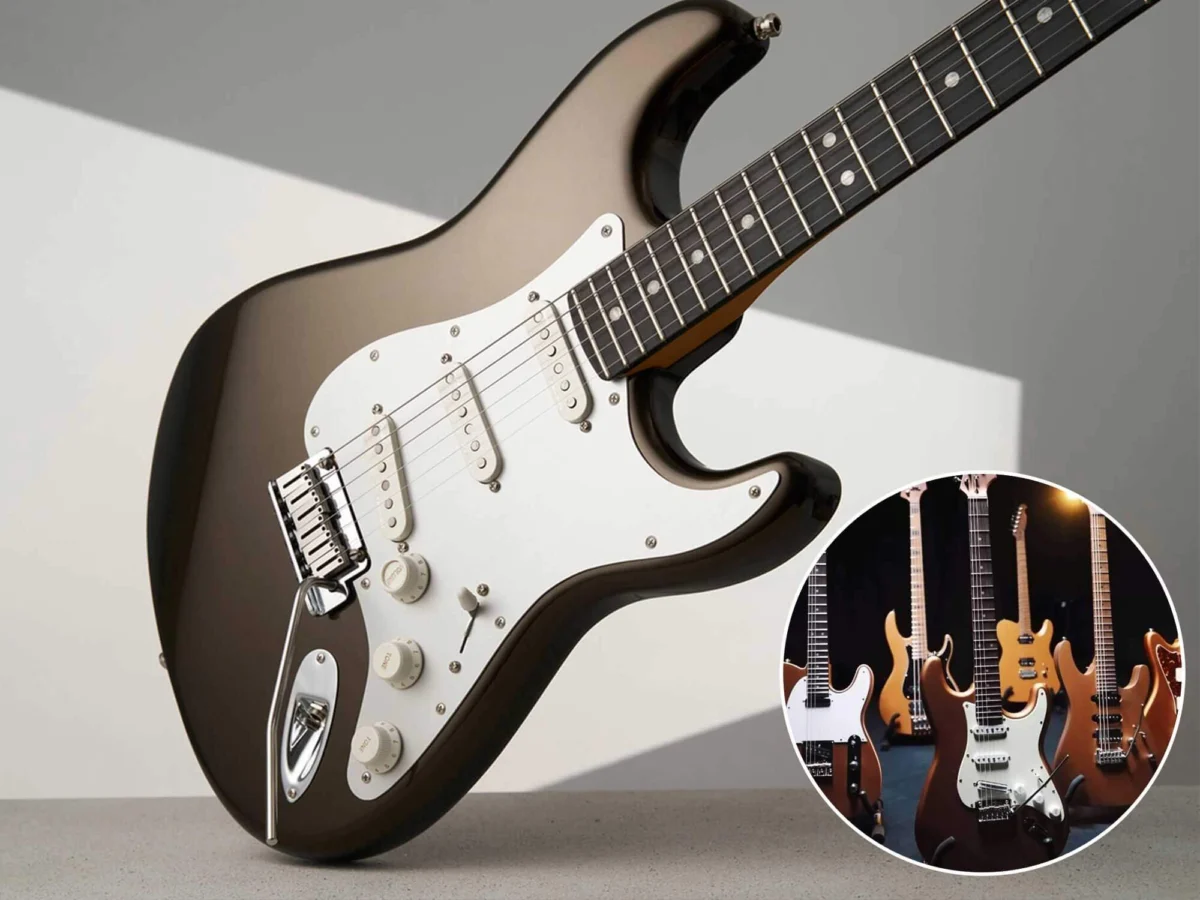
The long-simmering dispute over the iconic Stratocaster body shape has escalated significantly, as Fender Musical Instruments Corporation has formally filed an infringement action against German retail giant Thomann. This legal manoeuvre, lodged in the Regional Court of Düsseldorf, marks a pivotal moment in Fender’s aggressive campaign to protect its intellectual property, setting the stage for a high-stakes legal confrontation between two of the music industry’s most influential entities. The move comes as a direct response to Thomann’s earlier proactive legal challenge, which sought a declaration of non-infringement, effectively daring Fender to take its claims to court.
A Chronology of Escalation: From Cease and Desists to Courtroom Showdown
The current legal offensive by Fender is the culmination of months of heightened activity surrounding the Stratocaster design. The saga began in earnest in May, when Fender dispatched a flurry of cease and desist (C&D) letters to a wide array of guitar manufacturers and retailers across Europe. These letters demanded an immediate halt to the production and sale of electric guitars deemed to closely mimic the distinctive contours of the Stratocaster. Among the notable recipients were California-based LsL Instruments, global powerhouses PRS Guitars and Yamaha, and, crucially, Thomann.
Fender’s initial wave of C&D letters was bolstered by a preceding legal victory in the Regional Court of Düsseldorf. In that instance, Chinese manufacturer Yiwu Philharmonic was found to have infringed upon Fender’s copyright for the Stratocaster body shape. The ruling against Yiwu Philharmonic was a default judgment, issued after the Chinese firm failed to appear in court to defend itself. This judgment, however, provided Fender with a significant legal precedent in Europe, which it subsequently leveraged as the basis for its broader enforcement efforts.
The industry response to Fender’s C&D campaign was swift and varied. While many smaller companies reportedly engaged in dialogue with Fender or made design adjustments, Thomann, Europe’s largest musical instrument retailer and a major Fender retail partner, chose a different path. Thomann, which also owns the highly popular budget gear brand Harley Benton—a prominent seller of Stratocaster-style guitars—announced its intention to take legal action against Fender. Thomann’s declared aim was to have the matter "clarified in court not only for our own company, but for all parties involved," positioning itself as a defender of smaller guitar builders who might lack the financial and legal resources to contest such claims independently. This pre-emptive strike by Thomann, seeking a declaration of non-infringement, effectively escalated the dispute from a series of individual demands into a direct legal challenge.

Fender’s recent filing in the Regional Court of Düsseldorf is its direct counter-response to Thomann’s lawsuit. By initiating its own infringement action in the same court that previously affirmed its copyright, Fender is committing to a legal battle on a familiar and favourable judicial battleground. This move transforms what Fender initially presented as a series of "conversations" into a full-blown legal conflict with significant ramifications for the entire guitar manufacturing and retail landscape.
The Enduring Legacy of the Stratocaster and the Nuances of IP Law
The Fender Stratocaster, introduced in 1954, stands as one of the most iconic and recognizable electric guitar designs in history. Its sleek, double-cutaway body, three-pickup configuration, and synchronized tremolo system revolutionized guitar design and profoundly influenced popular music across genres. Over its nearly 70-year lifespan, the Stratocaster has been wielded by countless legendary musicians, cementing its status not just as a musical instrument but as a cultural icon. This deep-rooted legacy forms the bedrock of Fender’s intellectual property claims.
Protecting guitar body shapes under intellectual property law is a complex and often contentious area. In the United States, such protection typically falls under design patents or trade dress (a type of trademark that protects the visual appearance of a product or its packaging). In Europe, however, the concept of "copyright protection for the Fender Stratocaster body shape as a work of applied art" (as recognized by the Düsseldorf court) provides Fender with a potent legal tool. This distinction is crucial, as copyright protection for a work of art can be broader and longer-lasting than a design patent, and less reliant on proof of consumer confusion than trade dress. Fender’s assertion that the Stratocaster design qualifies as a "work of applied art" under European law is a key component of its legal strategy, potentially offering robust protection against similar designs.
The guitar industry has a long history of design emulation and intellectual property disputes. From the "lawsuit era" Japanese guitars of the 1970s that closely copied American designs (e.g., Ibanez and Gibson), to more recent battles over single-cutaway guitar designs (e.g., PRS vs. Gibson), the tension between homage, inspiration, and outright infringement has consistently challenged legal boundaries. Many manufacturers have long produced "S-type" guitars that share a similar aesthetic to the Stratocaster, often with subtle modifications to avoid direct infringement claims. Fender’s current actions indicate a more aggressive stance, suggesting a re-evaluation of what constitutes acceptable differentiation.
Key Players and Their Respective Stakes

The legal clash pits two titans of the music industry against each other, each with substantial commercial interests and influence:
- Fender Musical Instruments Corporation: As one of the world’s leading manufacturers of guitars and amplifiers, Fender’s motivation is clear: to safeguard a core asset that generates significant revenue and defines its brand identity. The Stratocaster is not just a product; it is a symbol of Fender’s heritage and innovation. Protecting this design, Fender argues, is essential for maintaining its market position, preventing consumer confusion, and preserving the integrity of its brand. The company’s global reach and substantial legal resources position it as a formidable enforcer of its intellectual property rights.
- Thomann GmbH and Harley Benton: Thomann is a behemoth in musical instrument retail, commanding a significant share of the European market. Its extensive inventory includes a vast range of instruments, including many Fender products. The company’s in-house brand, Harley Benton, has gained immense popularity for offering highly affordable guitars, many of which are clearly inspired by classic designs, including the Stratocaster. Thomann’s decision to initiate legal action against Fender, rather than comply with the C&D, underscores its belief in the legality of its products and its willingness to challenge a major supplier. Furthermore, by framing its actions as a defence of smaller builders, Thomann seeks to rally broader industry support and potentially influence public opinion. The financial implications for Thomann, particularly regarding its Harley Benton line, are substantial, as a negative ruling could necessitate significant product redesigns and potential damages.
Fender’s Public Statement and the Industry’s Divided Reaction
Following its formal filing, Fender released a comprehensive statement, shared with publications like Reuters and Guitar World, attempting to clarify its position and motivations. The statement emphasized Fender’s preference for "dialogue and practical solutions – not litigation." It highlighted that many companies had "chosen to work collaboratively with us to explore practical solutions, including design modifications that clearly differentiate their products."
However, Fender drew a clear distinction with Thomann: "This matter is different. Thomann isn’t a small independent guitar builder. It is one of the world’s largest musical instrument retailers, one of Fender’s largest retail partners, and the owner of Harley Benton, one of Europe’s largest guitar brands." This suggests Fender perceives Thomann’s actions as a more significant and deliberate challenge to its IP, necessitating a more robust legal response.
Fender reiterated that its actions are not aimed at stifling competition but at promoting innovation and preventing direct copying of its "iconic design." The statement asserted, "What doesn’t move the industry forward is copying someone else’s iconic design instead of creating the next iconic design. We believe the guitar industry is strongest when innovation flourishes, musicians have meaningful choices, and companies compete by bringing new ideas to players around the world."
Despite Fender’s attempts to frame its actions as a defence of innovation, the broader guitar community has largely reacted with ire and concern. Prominent online guitar personalities and educators, including Rick Beato, Rhett Shull, and Tim Pierce, who collectively command hundreds of thousands of followers, have publicly criticised Fender’s aggressive stance. Many view Fender’s C&D letters and subsequent legal actions as an attack on an established industry practice of producing affordable, "inspired-by" instruments that allow aspiring musicians access to classic designs. There is a widespread sentiment that the Stratocaster design has been so ubiquitous for so long that its shape has entered the public domain of general aesthetic inspiration, making strict enforcement appear heavy-handed.

This public backlash directly contradicts an earlier attempt by Fender CEO Edward "Bud" Cole to de-escalate the controversy. At a dealer event, Cole had stated that Fender was "not suing anybody," characterising the C&D letters as merely "reach[ing] out thoughtfully and [respectfully] to a handful of companies whose guitars come extremely close to replicating the iconic Fender Stratocaster design." The formal infringement action against Thomann, however, undeniably shifts the narrative from "dialogue" to direct litigation, underscoring the seriousness of Fender’s commitment to defending its intellectual property.
Broader Implications and the Future of Guitar Design
The outcome of Fender v. Thomann will undoubtedly send ripples throughout the global musical instrument industry. The implications are far-reaching and touch upon several critical aspects:
- Impact on Small Builders: While Thomann has positioned itself as a champion for smaller companies, the broader legal climate generated by Fender’s actions could still disproportionately affect independent builders. Even if the court sides with Thomann, the precedent of aggressive IP enforcement might deter smaller entities from producing instruments that bear any resemblance to classic designs, regardless of how minor the similarities. This could stifle innovation at the grassroots level and limit affordable options for consumers.
- Consumer Choice and Affordability: The proliferation of "S-type" guitars from various manufacturers, particularly budget brands like Harley Benton, has historically provided consumers with diverse and affordable alternatives to high-end instruments. A successful outcome for Fender could lead to a reduction in such options, potentially driving up prices or limiting the aesthetic choices available to musicians, especially those on tighter budgets.
- The Balance of Innovation vs. Homage: This case will force a re-examination of the delicate balance between protecting original designs and allowing for design evolution and homage within a creative industry. While Fender champions "original thinking" and "bold ideas," the reality is that many classic guitar designs have inspired generations of instrument makers. The court’s decision will help define the legal boundaries for what constitutes legitimate inspiration versus unlawful copying.
- Precedent in IP Law: The Düsseldorf court’s interpretation of the Stratocaster body shape as a "work of applied art" under European copyright law is a crucial element. The final judgment in the Fender v. Thomann case could establish a significant precedent for how iconic product designs, particularly in the music industry, are protected and enforced across Europe. This could have implications beyond guitars, affecting other industries where product aesthetics play a significant role.
- Market Dynamics and Relationships: Fender’s decision to sue one of its largest retail partners highlights the severity of the intellectual property dispute. Regardless of the outcome, this legal battle will inevitably strain the commercial relationship between Fender and Thomann, potentially leading to shifts in distribution strategies and market alliances within the industry.
As the legal proceedings unfold in the Regional Court of Düsseldorf, the eyes of the global guitar community will be fixed on the developments. The conflict between Fender and Thomann is more than just a dispute between two companies; it represents a fundamental challenge to the established norms of design, competition, and intellectual property within the musical instrument world. The resolution of this case will not only determine the future availability of Stratocaster-style guitars but also set a new standard for how classic designs are protected and how innovation is fostered in an industry built on both tradition and creativity.
