

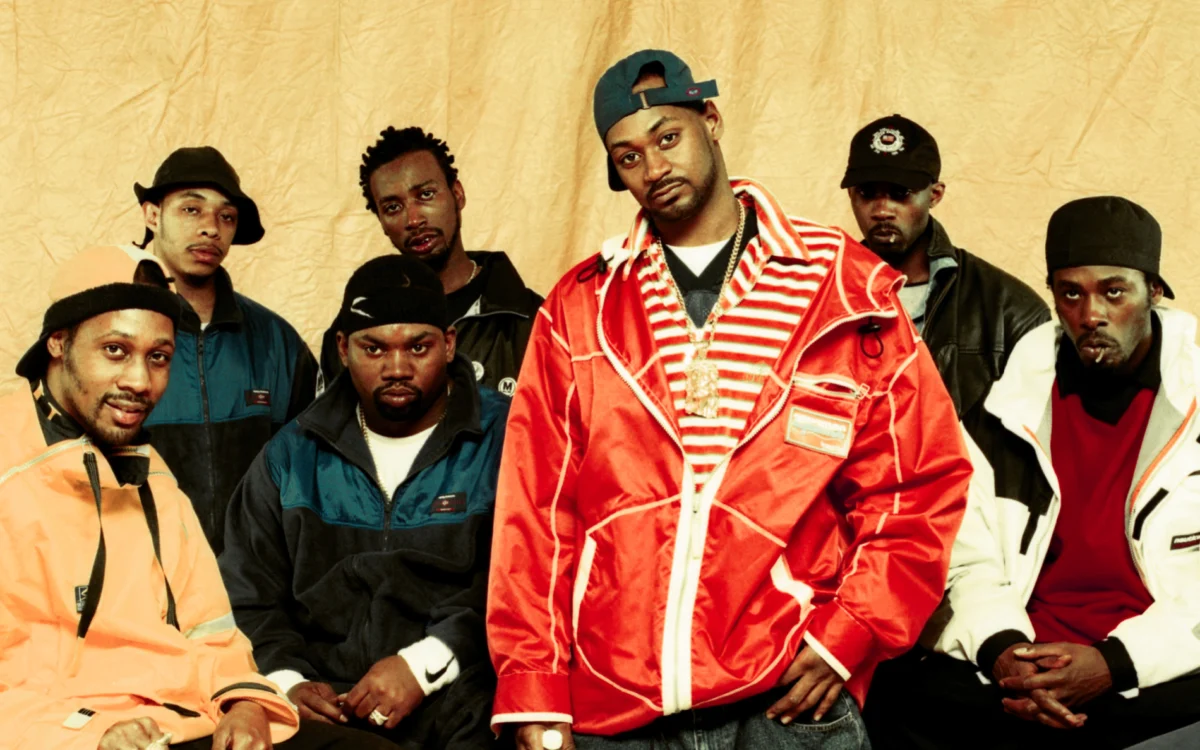
The seminal hip-hop collective Wu-Tang Clan has officially secured its place in the pantheon of musical legends, having been voted into the Rock & Roll Hall of Fame as part of the Class of 2026. The announcement, made on Monday, April 13, marks a monumental achievement for the Staten Island group, recognizing their profound and lasting impact on music and popular culture. This induction positions Wu-Tang Clan among an esteemed group of artists spanning various genres, including rock, soul, and other influential musical movements.
The Class of 2026 inductees, revealed to a global audience, includes a diverse array of iconic artists. Alongside Wu-Tang Clan, the honorees comprise the enigmatic British band Sade, the soulful crooner Luther Vandross, the influential British rock group Oasis, the heavy metal titans Iron Maiden, the legendary British singer-songwriter Phil Collins, the punk-rock icon Billy Idol, and the post-punk pioneers Joy Division/New Order. This eclectic mix underscores the Rock & Roll Hall of Fame’s commitment to acknowledging a broad spectrum of musical excellence and historical significance.
Further cementing the presence of hip-hop within the Rock & Roll Hall of Fame, fellow rap pioneers Queen Latifah and MC Lyte will also be honored. They are set to receive the prestigious "Early Influence" award, a recognition that celebrates their groundbreaking contributions to the genre and their role as cultural trailblazers. This dual recognition for hip-hop artists highlights the genre’s undeniable evolution and its integral place in the broader narrative of rock and roll.
A Historic Milestone for Hip-Hop’s Architects
The induction ceremony for the Class of 2026 is scheduled to take place on November 14 at the Peacock Theater in Los Angeles. This highly anticipated event will formally enshrine these artists into the annals of music history. For fans eager to witness this momentous occasion, the ceremony will be broadcast in December on ABC and will also be available for streaming on Disney+.
The news has been met with overwhelming enthusiasm and a sense of profound accomplishment from the members of Wu-Tang Clan and their associates. Rapper and producer RZA, a central figure in the group’s creative output, shared his emotional response on Instagram. "In all Humility. This announcement filled me with joy, proudness, profound achievement, and awe," he wrote, reflecting on the culmination of years of hard work and artistic innovation. "I’m grateful to all my brothers and those who helped us on the path. Thank you Rock & Roll Hall of Fame. This is a true Triumph – Wutang Forever." His words encapsulate the collective pride and gratitude felt by the group and their dedicated fanbase.
Fellow Wu-Tang Clan member Raekwon echoed RZA’s sentiments, expressing the historical weight of this honor. "History books will know this club! this my grammy. what we talking bout! haaaaaaaaaaa. shout out to all our mothers who birth these men. they won tonite," he stated, drawing a parallel between the Hall of Fame induction and the Grammy Awards, signifying the ultimate recognition in the music industry. GZA, another key lyricist within the Clan, acknowledged the collaborative nature of their success. "We couldn’t have reached this milestone without our hip hop predecessors, fans, collaborators, friends and family. We thank you," he conveyed, highlighting the interconnectedness of the hip-hop ecosystem and the support network that facilitated their journey.
The Road to Recognition: A Legacy of Innovation
Wu-Tang Clan’s journey to the Rock & Roll Hall of Fame is a testament to their enduring influence and their ability to consistently push the boundaries of hip-hop. Formed in the early 1990s, the group, comprised of RZA, GZA, Ol’ Dirty Bastard, Inspectah Deck, Raekwon, U-God, Ghostface Killah, Method Man, Masta Killa, and later, Cappadonna, emerged from the urban landscape of Staten Island with a raw, unvarnished sound and a distinct lyrical prowess. Their debut album, "Enter the Wu-Tang (36 Chambers)" released in 1993, is widely regarded as a landmark in hip-hop history, lauded for its gritty production, intricate storytelling, and the introduction of a unique philosophical and martial arts-inspired aesthetic.
The group’s innovative approach extended beyond their music. They pioneered a business model that allowed individual members to pursue successful solo careers while remaining under the Wu-Tang umbrella, a strategy that yielded a remarkable string of critically acclaimed and commercially successful albums from artists like Method Man, Raekwon, Ghostface Killah, and GZA. This decentralized yet cohesive structure fostered a creative environment that allowed for diverse artistic expressions while maintaining the core identity of the Wu-Tang Clan.
Their lyrical complexity, often weaving tales of street life, social commentary, and philosophical introspection, set a new standard for storytelling in rap. The distinctive vocal deliveries of each member, coupled with RZA’s groundbreaking production, which often incorporated soulful samples, kung fu movie snippets, and a dark, atmospheric soundscape, created a sonic identity that was both innovative and instantly recognizable.
Expanding Hip-Hop’s Footprint in the Hall of Fame
The inclusion of Wu-Tang Clan, Queen Latifah, and MC Lyte brings the total number of hip-hop acts enshrined in the Rock & Roll Hall of Fame to 18. This growing representation reflects the genre’s undeniable evolution from its underground roots to a dominant force in global music. The narrative of hip-hop’s integration into the Rock & Roll Hall of Fame began in 2007 with the induction of Grandmaster Flash and the Furious Five, the pioneers of scratching and turntablism.
Since then, a steady stream of influential hip-hop artists has followed. Run-DMC, instrumental in bringing rap music to mainstream audiences in the 1980s, were inducted in 2004. The Beastie Boys, known for their genre-bending fusion of rock and hip-hop, were recognized in 2012. Public Enemy, celebrated for their politically charged lyrics and socially conscious message, were inducted in 2013. N.W.A., pioneers of gangsta rap and a voice for disenfranchised communities, earned their place in 2016.
More recent inductees include JAY-Z, a lyrical titan and business mogul, who was inducted in 2021, and Eminem, the best-selling rapper of all time, inducted in 2022. The iconic 2Pac and The Notorious B.I.G., two of hip-hop’s most influential and tragically short-lived figures, were inducted together in 2017. The innovative duo OutKast, known for their eclectic sound and artistic vision, were inducted in 2014. Missy Elliott, a visionary artist and producer celebrated for her groundbreaking music videos and forward-thinking musical style, was inducted in 2023. A Tribe Called Quest, known for their jazz-infused beats and positive, conscious lyrics, were inducted in 2024.
Beyond direct induction as performers, other hip-hop luminaries have been recognized through special awards. LL Cool J, a pioneering rapper and actor, received the Musical Excellence Award in 2021. Salt-N-Pepa, the groundbreaking female rap trio, were honored with the Musical Excellence Award in 2021. DJ Kool Herc, widely regarded as the father of hip-hop for his foundational innovations in block parties and breakbeats, was recognized with the Musical Excellence Award in 2023. These acknowledgments underscore the Hall of Fame’s expanding recognition of hip-hop’s diverse contributions.
Unsuccessful Nominations and the Evolving Criteria
While this year’s inductions celebrate significant achievements, the nomination process also highlights the competitive nature of Hall of Fame selection. Several prominent artists, including Lauryn Hill, Mariah Carey, and Shakira, were nominated but did not receive sufficient votes from the international voting body, which comprises over 1,200 inductees, historians, and music industry professionals. This underscores the rigorous selection process and the vast pool of talent that contributes to music’s rich tapestry. The continued presence of hip-hop artists among the nominees and inductees suggests a growing acknowledgment of the genre’s integral role in shaping the global musical landscape over the past several decades.
The Rock & Roll Hall of Fame, established in 1986, aims to recognize artists, producers, and other individuals who have had a significant impact on the development and preservation of rock and roll music. While its name suggests a singular focus, the institution has increasingly embraced artists from genres that have influenced or been influenced by rock and roll, including soul, funk, R&B, and, notably, hip-hop. This evolution reflects a broader understanding of music history, acknowledging that the spirit of rock and roll—its spirit of rebellion, innovation, and cultural impact—permeates across diverse musical forms.
Wu-Tang Clan’s induction serves as a powerful affirmation of hip-hop’s artistic merit and its indelible mark on popular culture. Their inclusion is not merely an acknowledgment of their past achievements but a validation of their enduring legacy as innovators, storytellers, and cultural architects. As the Class of 2026 prepares for their formal induction, the recognition of Wu-Tang Clan solidifies hip-hop’s vital and irreplaceable place within the grand narrative of music history.
