

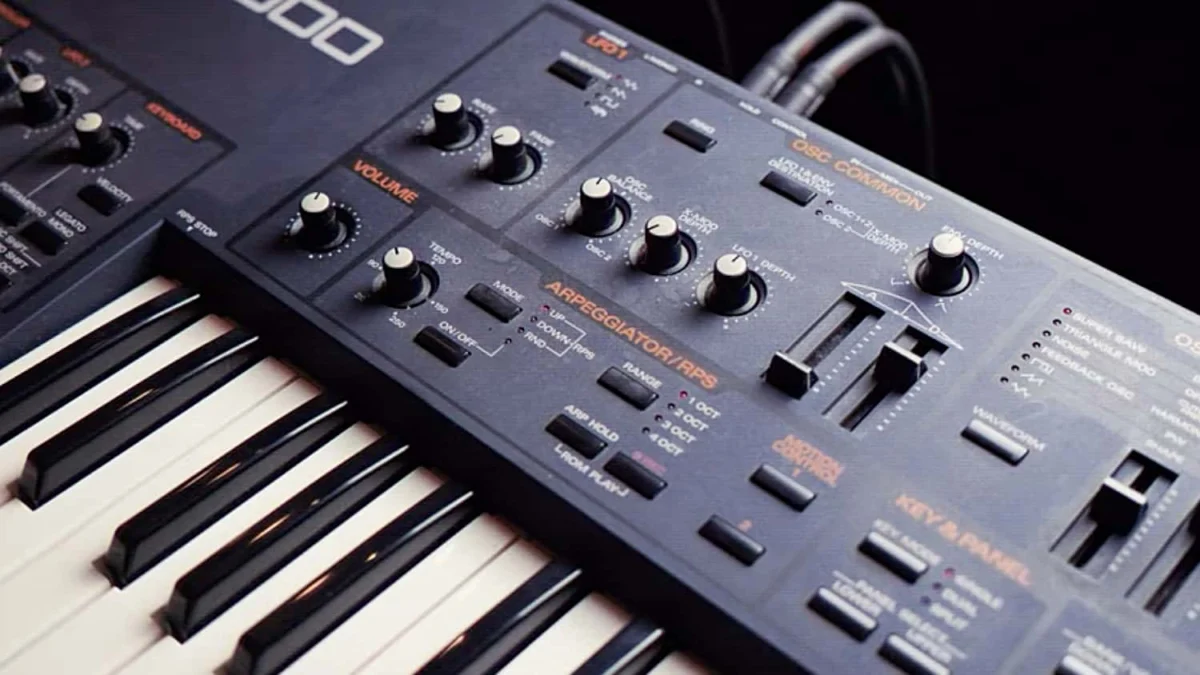
The landscape of electronic music production underwent a seismic shift in the mid-1990s, transitioning from the analog purism of the 1980s and the complex frequency modulation (FM) synthesis of the early 90s toward a new frontier known as Virtual Analog (VA). At the heart of this revolution was the Roland JP-8000, a synthesizer released in 1996 that would eventually become the sonic backbone of the global trance movement. In a comprehensive new retrospective, acclaimed synthesist and historian Alex Ball provides an in-depth examination of this instrument, exploring its technical architecture, its historical significance, and the peculiar story behind its development. The JP-8000 was not merely a tool for musicians; it was a technological pivot point that allowed digital processing to emulate the warmth and tactile immediacy of analog hardware, forever changing the texture of dance music.
The Dawn of Virtual Analog and the 1996 Pivot
By the middle of the 1990s, the music industry was at a crossroads. While professional studios still coveted vintage analog gear like the Roland Jupiter-8 or the Juno-106, these instruments were becoming increasingly expensive and difficult to maintain. Conversely, the digital workstations of the era, though powerful, often lacked the hands-on control surfaces that allowed for real-time performance and sound design. Roland’s response was the JP-8000, a 49-key synthesizer designed to offer the "best of both worlds."
The JP-8000 was Roland’s first foray into Virtual Analog synthesis. Unlike true analog synthesizers, which use physical oscillators and filters to generate sound, the JP-8000 used Digital Signal Processing (DSP) to model the behavior of analog circuits. This allowed for greater stability, MIDI integration, and, perhaps most importantly, the inclusion of a massive array of sliders and knobs. This design philosophy encouraged "performance-based" synthesis, where the musician could sweep filters and modulate parameters live—a requirement for the emerging rave and trance scenes in Europe and North America.
Technical Innovation: The Super Saw Waveform
While the JP-8000 featured several oscillator types, including triangle, pulse, and noise, its most enduring contribution to music history was the "Super Saw" waveform. In his analysis, Alex Ball highlights how this specific feature defined an entire genre. The Super Saw was created by layering seven sawtooth waves on top of one another and slightly detuning them. The resulting sound was thick, lush, and harmonically rich, providing a "wall of sound" that could cut through dense club mixes.
Prior to the JP-8000, achieving such a sound required multiple analog synthesizers synced together, a feat that was both technically demanding and financially prohibitive for bedroom producers. Roland’s DSP engineers managed to condense this complexity into a single oscillator selection. This "Trance Lead" sound became the signature of artists like Ferry Corsten, Rank 1, and Tiësto. The Super Saw was so influential that it remains a standard feature in nearly every software synthesizer produced today, nearly thirty years after its debut.
Chronology of the Roland JP Series
The release of the JP-8000 initiated a timeline of products that would solidify Roland’s dominance in the digital synthesizer market throughout the late 90s and early 2000s.
- 1996 – The JP-8000 Launch: The original keyboard version is released, featuring 8-note polyphony and an integrated ribbon controller.
- 1998 – The JP-8080 Rackmount: Following the success of the keyboard, Roland released a rackmount version. The JP-8080 was more than just a repackaging; it expanded the polyphony to 10 notes and added a built-in vocoder and an external input for processing other sounds through its filters.
- Late 1990s – Software Integration: As computer-based recording (DAWs) began to take over, the JP-8000’s influence moved into the virtual realm, with developers attempting to replicate its unique filter behavior and Super Saw characteristics in VST format.
- 2006-2010 – Successor Models: Roland eventually moved on to the SH-201 and the GAIA SH-01, which utilized updated versions of the Virtual Analog engine developed for the JP-8000.
- 2020s – Modern Legacy: The JP-8000 is now considered a "modern classic." In recent years, Roland has integrated the JP-8000 sound engine into its "Roland Cloud" software suite and hardware like the Jupiter-X, allowing a new generation of producers to access the 1996 algorithms.
The Prototype and Development Insights
One of the highlights of Alex Ball’s video is the exploration of the JP-8000’s development phase. He delves into the "Story of the Prototype," revealing that the instrument was a calculated risk for Roland. During the mid-90s, the company was heavily invested in PCM-based (sample-based) synthesis, which powered their popular JV and XP series workstations. The decision to return to a knob-per-function interface was seen as a nostalgic move, yet it was precisely what the market needed.
Ball’s research indicates that the engineering team focused heavily on the "Motion Control" feature. This allowed users to record their knob movements and play them back as part of a sequence—a precursor to the automation lanes now standard in digital audio workstations. This feature, combined with the onboard arpeggiator and RPS (Realtime Phrase Sequencer), made the JP-8000 a powerhouse for live electronic acts who needed to manipulate sounds dynamically on stage.
Comparative Analysis: The Usual Suspects
To understand the JP-8000’s impact, it must be viewed alongside its contemporaries. Alex Ball categorizes these as "The Usual Suspects"—the rival synthesizers that defined the VA era.
- The Clavia Nord Lead (1995): Often cited as the first true VA synth, the Nord Lead had a distinctively sharp, aggressive sound. While the Nord Lead was favored for industrial and techno, the JP-8000’s smoother filters and the Super Saw gave it the edge in the melodic trance and progressive house genres.
- The Access Virus (1997): Released shortly after the JP-8000, the Virus offered more polyphony and multitimbrality. However, many producers argued that the Roland had a more "musical" character, particularly in its resonant filter, which was modeled after the classic Jupiter-8.
- The Korg MS2000 (2000): While it arrived later, the MS2000 competed for the same market. It featured a vintage aesthetic but lacked the specific "anthemic" weight of the Roland oscillators.
The JP-8000’s success was largely due to its specific "sweet spot." It was easy to program, looked futuristic with its blue chassis and numerous sliders, and possessed a unique digital sheen that perfectly complemented the high-fidelity production standards of the late 90s.
Broader Implications for Electronic Music
The legacy of the Roland JP-8000 extends far beyond the "Trance Machine" moniker. It represented a democratization of sound design. By placing all parameters on the front panel, Roland invited musicians to experiment rather than rely on factory presets. This shift encouraged a more DIY ethos in electronic music, where producers were expected to craft their own unique textures.
Furthermore, the JP-8000 helped bridge the gap between the hardware-centric past and the software-centric future. Its internal architecture was essentially a computer in a box, proving that digital code could successfully replicate the emotional resonance of analog hardware. This realization paved the way for the current era of "hybrid" workflows, where digital precision meets analog warmth.
Industry analysts note that the JP-8000 also influenced the aesthetic of music hardware. Its layout influenced the design of subsequent Roland products for over two decades. Even today, the second-hand market for the JP-8000 remains robust, with units often selling for significantly more than their original inflation-adjusted retail price, driven by a nostalgia for the "Golden Age of Trance."
Conclusion and Future Outlook
Alex Ball’s deep dive serves as a reminder that the tools of the past continue to shape the sounds of the future. The Roland JP-8000 was a product of a specific moment in time—a period of technological transition and cultural explosion. Its Super Saw waveform remains a foundational element of modern pop and dance music, heard in everything from underground techno to chart-topping EDM.
As Roland continues to update its "Zen-Core" ecosystem, the DNA of the JP-8000 is still visible. Whether through software emulations or modern hardware recreations, the "Trance Machine" continues to resonate. For the synthesist, the JP-8000 is more than a vintage instrument; it is a masterclass in how thoughtful interface design and a single, well-engineered feature can define the sound of an entire generation. Alex Ball’s video not only pays tribute to this iconic machine but also provides a vital historical record for a device that turned digital code into some of the most emotional and enduring melodies in electronic music history.
