

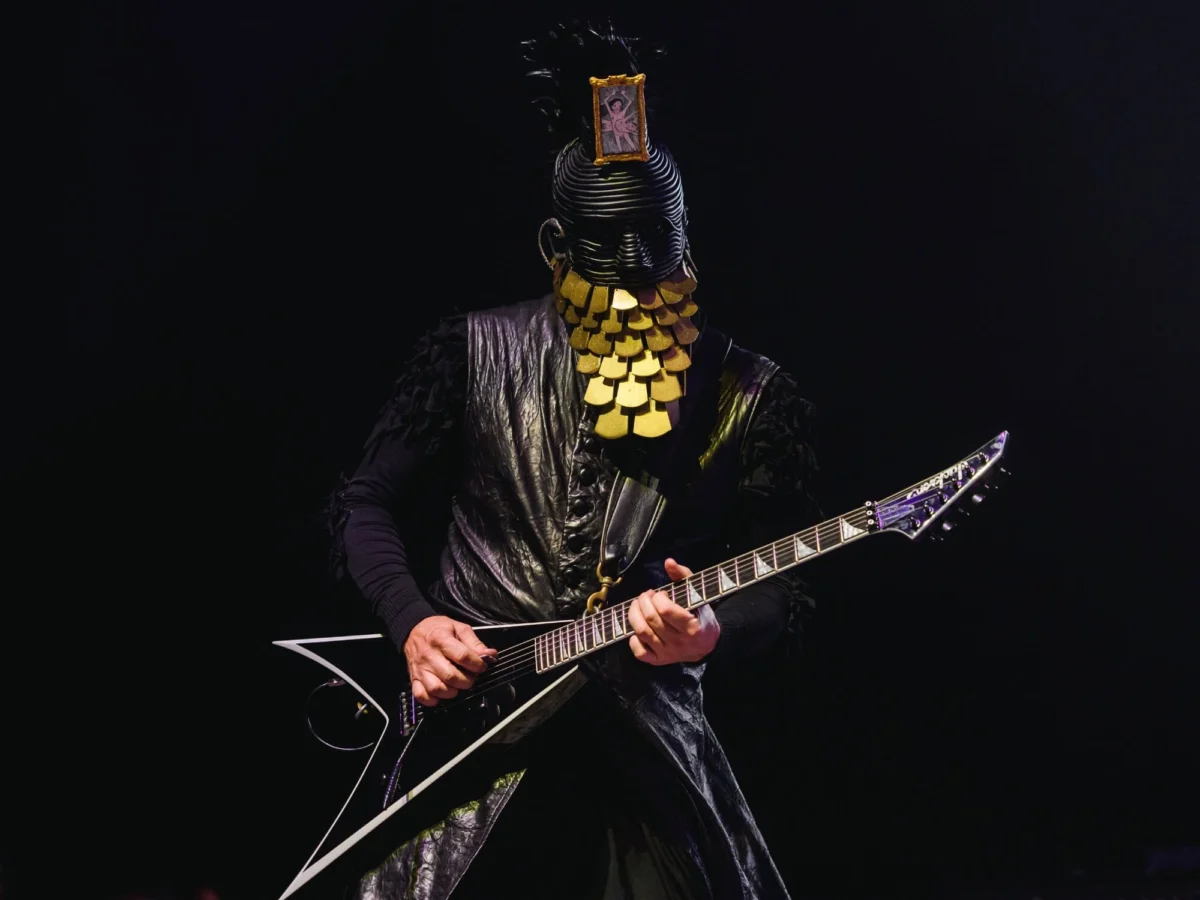
In an industry often characterized by meticulously planned product launches and carefully crafted artist collaborations, the origin story of Wes Borland’s new Jackson King V signature model stands as a testament to serendipity, improvisation, and the profound personal connection between a musician and their instrument. Far from emerging from years of dedicated design sessions, the iconic Limp Bizkit guitarist’s distinctive signature V-shaped guitar trace its roots back to an unexpected find: an accidental left-handed custom shop reject that Borland himself transformed into a cherished, one-of-a-kind instrument. This unconventional genesis not only underscores Borland’s unique approach to gear but also offers a compelling narrative about how unforeseen circumstances can shape artistic expression and commercial success.
The Unconventional Origin: A Custom Shop Anomaly
The revelation surfaced during a recent interview with Gear4Music Guitars, where Borland peeled back the curtain on the unexpected beginnings of his signature Jackson. Unlike many signature models that begin as a blank slate or a specific artist’s detailed vision presented to a manufacturer, Borland’s journey with his foundational King V began with a phone call about a guitar no one else wanted. This particular instrument, a reverse-headstock King V, had been returned to Jackson’s custom shop after its original prospective owner expressed dissatisfaction, claiming its ebony fretboard looked too much like rosewood—a subtle yet significant aesthetic detail for discerning customers.
The call came from Mike Tempesta, Jackson’s American Artists Relations representative, who offered Borland the unusual piece. Tempesta presented it as an available reverse-headstock King V, a style already favored by Borland for its distinctive look and playability. Borland recounted Tempesta’s offer: "He called me and he said that there was a guitar — it was a reverse headstock King V — that they just got in. There was a return from a customer that said the fretboard was supposed to be ebony and the ebony looked like rosewood… He goes, ‘Come in and you can have it. It’s great.’" This initial proposition seemed straightforward enough, aligning with Borand’s known preferences and offering him a high-quality instrument at no cost, albeit one that had been deemed imperfect by a previous client.
A Serendipitous Discovery: The Left-Handed Twist
However, the story took an unforeseen turn upon the guitar’s arrival. What was believed to be merely a reverse-headstock King V with a contentious fretboard quickly revealed its true, more peculiar nature. As Borland vividly recalled, the moment the case was opened, a critical detail emerged that transformed a simple acquisition into a personal project. "We opened the case and it was a left-handed. He goes, ‘Oh, it’s not reverse headstock. It’s left-handed.’" For many guitarists, this unexpected orientation would have been a deal-breaker, rendering the instrument unusable or requiring an immediate return. Yet, for Borland, known for his experimental mindset and willingness to defy conventions, it sparked an entirely different reaction. His immediate response encapsulated his artistic spirit: "And I just went, ‘That is not a problem. I will make a project out of it.’" This pivotal moment marked the true beginning of the instrument that would eventually inspire his signature model, transforming a reject into a foundation for innovation.
The perceived flaw of the original guitar’s fretboard — the distinction between ebony and rosewood — highlights the meticulous nature of custom guitar craftsmanship and the specific aesthetic demands of high-end clients. Ebony, known for its dense, dark, and smooth properties, is often preferred for its sleek appearance and snappy attack, while rosewood, with its warmer tones and visible grain, offers a different tactile and sonic experience. For a customer to reject a guitar based on this visual nuance speaks to the high expectations placed on custom shop instruments, inadvertently setting the stage for Borland’s unique acquisition.
Borland’s DIY Philosophy: Crafting Personal Connection
True to his word, Borland embarked on an extensive modification journey, transforming the left-handed King V into a right-handed instrument tailored to his exact specifications. This was no minor adjustment; it involved a significant overhaul of the guitar’s fundamental architecture. Working in tandem with his guitar technician, Borland personally undertook a substantial portion of the work. He detailed the intricate process: "Between my tech and I, I did a lot of the routing and he sort of did the fine tuning, but we got a new bridge and a new nut and changed the whole thing around. We routed a new electronics cavity so that it could be in the correct place… and filled in the holes." This hands-on approach went far beyond a simple setup or minor tweak, involving structural alterations that effectively reversed the guitar’s intended orientation.
The decision to invest such significant time and effort into modifying a reject guitar, rather than simply acquiring a standard reverse-headstock King V, might seem counterintuitive to some. Indeed, Borland acknowledged that he had faced such questions: "People have said, ‘Why would you do that? Just get a reverse headstock V.’" However, his rationale stems from a deeply personal and artistic philosophy. For Borland, the act of customisation and repair imbues an instrument with a unique sentimental value, forging a deeper bond between player and gear. "But for me, it’s like taking part in your instrument, like customising it. You feel like you’ve had something to do with it. Or like you’re a part of it. It becomes a little more sentimental," he explained.
This philosophy extends beyond initial customisation to the repair and restoration of damaged instruments. Borland drew a compelling parallel to Kintsugi, the traditional Japanese art of repairing broken pottery with lacquer mixed with powdered gold, silver, or platinum. This technique treats breakage and repair as part of the object’s history, highlighting the mended cracks as part of its beauty rather than concealing them. "Especially when I’ve had guitars that have accidentally gotten broken on stage, I like putting them back together," Borland elaborated. "It’s almost like that Japanese technique [Kintsugi] where something breaks and they fill the cracks with gold — except in this case it’s just epoxy or wood glue. It makes the guitar unique." This perspective highlights a profound respect for the instrument’s journey and an appreciation for the character that imperfections and repairs can impart. It speaks to a broader artistic temperament that values authenticity and individuality over pristine, mass-produced uniformity.
Crafting the Signature Sound: From Project to Pro Model
When the opportunity arose to develop a signature model with Jackson, Borland knew precisely which elements of his Frankenstein-esque King V were non-negotiable. The personal modifications and the unique aesthetic born from the left-handed conversion had become integral to his identity as a guitarist. The most visually striking and functionally significant aspect was the headstock. "Keeping the Jackson headstock upside down — the reverse headstock with the logo upside down — was really important," he asserted. This particular detail, a direct consequence of converting a left-handed guitar, lent the instrument an instantly recognizable and distinctive visual flair, perfectly aligning with Borland’s avant-garde stage persona within Limp Bizkit.
Beyond the aesthetics, the functional specifications were equally crucial to replicating Borland’s aggressive, genre-bending sound. His signature King V is streamlined for maximum impact and efficiency, reflecting the raw power and minimalist approach often found in metal and nu-metal guitars. "It’s just a fantastic King V: one volume, one [Seymour Duncan] Invader and a Floyd Rose," Borland detailed. Each of these components is critical to his tone and performance:
- Seymour Duncan Invader Pickup: This high-output humbucker is renowned for its crushing tone, massive ceramic magnets, and oversized pole pieces, delivering a powerful, aggressive sound with excellent clarity and sustain. It’s a staple in metal and hard rock for its ability to push amplifiers into saturated distortion, perfectly suited for Limp Bizkit’s heavy riffs and dynamic shifts.
- Floyd Rose Tremolo System: A locking tremolo system is essential for Borland’s expressive playing, allowing for extreme dive bombs, pitch manipulation, and aggressive vibrato without sacrificing tuning stability. This is particularly vital for the energetic and often chaotic live performances Limp Bizkit is known for.
- Single Volume Control: The minimalist control scheme reflects a "plug and play" ethos, prioritizing directness and raw output over complex tonal shaping via onboard controls. This simplicity ensures that Borland can focus entirely on his performance, with his core sound coming directly from the pickup and his amplifier setup.
The collaboration with Jackson on this signature model speaks volumes about the brand’s commitment to artist individuality. Jackson Guitars has a long-standing reputation for crafting high-performance instruments favored by metal and hard rock musicians, known for their distinctive body shapes, shred-friendly necks, and powerful electronics. By embracing Borland’s unique origin story and incorporating his specific, hands-on modifications into a production model, Jackson not only honored a celebrated artist but also offered guitarists a piece of that authentic, rebellious spirit. The Pro Series Signature Wes Borland King V KV, now available through Jackson, embodies this fusion of custom shop ingenuity, artist-driven modification, and production-model accessibility.
Broader Impact and Implications: Beyond the Instrument
Wes Borland’s story transcends the mere creation of a signature guitar; it offers several broader implications for the music industry and aspiring musicians:
-
The Celebration of DIY Culture: In an era of mass production, Borland’s narrative champions the spirit of do-it-yourself modification and personal craftsmanship. It validates the idea that some of the most meaningful instruments are those that have been altered, repaired, or built by hand, fostering a deeper connection and uniqueness that factory models often lack. This resonates with a large segment of the guitar community that enjoys tinkering, customizing, and building their own gear.
-
Innovation Through Accident: The accidental discovery of a left-handed guitar, initially a "problem," became the catalyst for a unique and highly personalized instrument. This highlights how unexpected circumstances and perceived flaws can often lead to innovative solutions and creative breakthroughs, challenging the notion that perfection must always be meticulously planned.
-
Authenticity in Artist-Brand Collaborations: The genesis of Borland’s signature model showcases an authentic and organic collaboration between an artist and a brand. Rather than a purely marketing-driven endeavor, it reflects a genuine story of personal connection to an instrument that Jackson chose to celebrate and reproduce. This authenticity can resonate more deeply with consumers who seek products with a genuine backstory.
-
Inspiring Aspiring Musicians: Borland’s willingness to take a rejected, left-handed guitar and transform it into a functional, beloved instrument can inspire aspiring musicians to look beyond conventional options, embrace experimentation, and develop a hands-on relationship with their gear. It encourages creativity not just in playing, but also in instrument maintenance and modification.
-
Jackson’s Legacy and Adaptability: For Jackson, this signature model reinforces its image as a brand that understands and caters to the specific, often unconventional, demands of its artist roster. It demonstrates an adaptability and willingness to incorporate unique artistic visions into its product line, further solidifying its standing in the high-performance guitar market.
In conclusion, Wes Borland’s Jackson King V signature model is more than just a new guitar on the market. It is a narrative of accidental discovery, personal transformation, and artistic conviction. From a custom shop reject to a cherished instrument, and ultimately to a commercially available signature model, its journey reflects Borland’s distinctive approach to music and gear—an approach that values personal connection, embraces imperfections, and champions the power of individual creativity. This compelling origin story not only enriches the lore surrounding one of rock’s most enigmatic guitarists but also serves as a powerful reminder that sometimes, the most extraordinary creations emerge from the most unexpected of circumstances.
