

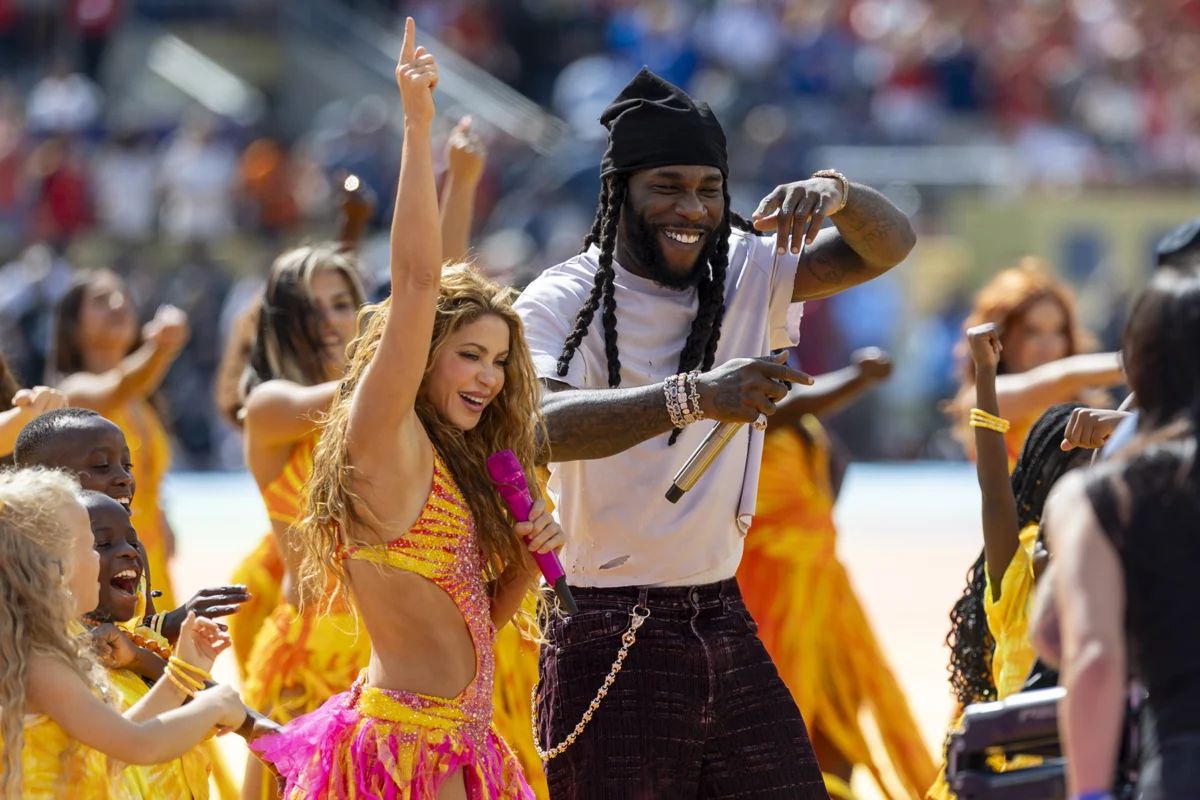
Grammy-winning artist Burna Boy offered an unprecedented glimpse into the meticulously planned day culminating in one of the most significant performances of his career: the inaugural FIFA World Cup Final halftime show. Captured in a compelling "Day in the Life" video diary for Billboard, the exclusive footage meticulously chronicles the journey of the genre-blending superstar as he navigated the pressures and exhilaration of the global spectacle. From the moment he received a police escort in the early hours to the electrifying rush of stepping onto the colossal stage at New Jersey’s MetLife Stadium, the video provides a transparent and intimate timeline of the events surrounding his high-profile appearance on Sunday, July 19, 2026. This landmark event, which saw Spain triumph over Argentina in the FIFA World Cup Final, was not only a sporting culmination but also a significant cultural moment, ushering in a new era of entertainment for the world’s most-watched sporting event.
The Chronology of a Monumental Day
The narrative presented in Billboard‘s exclusive feature begins long before the stadium gates opened to the throngs of football fanatics. Burna Boy’s day commenced with the kind of logistical precision typically reserved for heads of state, underscoring the magnitude of his role. A dedicated police escort ensured his timely and secure arrival at MetLife Stadium, a venue renowned for hosting events of international scale. This early start highlighted the extensive preparations required for such a grand production, with Burna Boy’s focus evident even in the pre-dawn hours. The video captures the quiet intensity of an artist preparing for an audience of billions, a testament to the meticulous planning involved in coordinating a performance of this magnitude.
Upon arrival at the sprawling complex, the atmosphere shifted from quiet contemplation to a vibrant hum of activity. Backstage, the video reveals a series of memorable interactions that punctuated Burna Boy’s preparations. A significant highlight was his reunion and photo opportunity with global icon Shakira, his collaborator on the official 2026 FIFA World Cup anthem, "Dai Dai." Their camaraderie was palpable, reflecting the synergy that brought their chart-topping track to life. "Dai Dai" had already cemented its place in music history, spending a second consecutive week atop the Billboard Global 200 and an impressive fourth week at No. 1 on the Billboard Global Excl. U.S. chart, demonstrating its immense global appeal even before the halftime show.
Beyond his musical partner, Burna Boy’s day was peppered with encounters with other prominent figures. He was seen engaging with popular streamer iShowSpeed, whose presence at major sporting events often amplifies their digital footprint. A particularly unexpected and heartwarming moment involved an embrace with global pop sensation Justin Bieber, who made a surprise cameo. The introduction to Bieber was delivered by none other than Ted Lasso star Jason Sudeikis, adding another layer of celebrity wattage to the already star-studded event. These interactions, far from being mere distractions, underscored the cross-cultural and inter-genre appeal that FIFA and the World Cup represent, drawing in figures from across entertainment, sports, and digital media.
As the clock ticked closer to kickoff, Burna Boy’s focus sharpened. The video shows him squeezing in a final, intense practice session, a crucial step to ensure every note, every movement, and every transition was perfected for the live global broadcast. This dedication to craft, even amidst the chaos of a major event, speaks volumes about his professionalism and commitment to delivering a flawless performance. The culmination of these preparations saw Burna Boy step onto the field, the roar of the crowd serving as a powerful prelude to his and Shakira’s electrifying set. The camera captured the sheer elation and celebratory energy as the performance concluded, with Burna Boy flashing a triumphant smile before retreating into the players’ tunnel. Backstage, he was met with commendations from Chris Martin, the Coldplay frontman who curated the entire halftime show and co-wrote "We Dance," the finale song, with his bandmates. Martin’s praise affirmed the success of the performance and the collaborative spirit that defined the event.
The Global Stage: FIFA World Cup 2026 and Its Inaugural Halftime Spectacle
The FIFA World Cup 2026 holds a unique place in the tournament’s storied history. Co-hosted by the United States, Canada, and Mexico, it marks the first time three nations have shared hosting duties, signifying an expanded vision for global football. The final match, held at the New York New Jersey Stadium (MetLife Stadium) in East Rutherford, NJ, was not just a sporting contest but a cultural phenomenon. For the first time, FIFA introduced an official halftime show for its final match, a strategic move that mirrored the highly successful model of the NFL’s Super Bowl halftime show. This decision aimed to elevate the entertainment value of the World Cup, broadening its appeal beyond core football fans and cementing its status as a premier global entertainment event.
MetLife Stadium, with its impressive capacity and state-of-the-art facilities, proved an ideal venue for such a groundbreaking initiative. Having previously hosted numerous high-profile concerts, major sporting events, and even a Super Bowl, the stadium was well-equipped to manage the logistical complexities and immense scale of a World Cup Final halftime performance. The choice of Burna Boy and Shakira as headliners was a deliberate nod to global diversity and musical excellence, aligning with FIFA’s goal of presenting a truly international spectacle.
Artistic Powerhouses: Profiles of the Performers and Curators
The selection of Burna Boy, Shakira, and Chris Martin for such a pivotal event was no accident. Each artist brings a unique blend of global appeal, artistic integrity, and proven stage presence, essential ingredients for captivating a worldwide audience.
Burna Boy, born Damini Ebunoluwa Ogulu, has rapidly ascended to become one of Africa’s most influential musical exports. His "genre-blending" style, often described as Afro-fusion, seamlessly weaves together elements of Afrobeats, dancehall, reggae, R&B, and hip-hop. His rise to global stardom has been marked by multiple Grammy nominations and a win for Best Global Music Album for Twice as Tall in 2021. Burna Boy’s music often carries messages of social consciousness and cultural pride, resonating deeply with a diverse international fanbase. His performance at the World Cup Final not only showcased his immense talent but also significantly elevated the global visibility of African music on the grandest stage. This moment served as a powerful affirmation of Afro-fusion’s growing dominance in the international music landscape.
Shakira, the Colombian superstar, is a veteran of World Cup anthems and mega-events. Her iconic "Waka Waka (This Time for Africa)" for the 2010 World Cup and "La La La" for the 2014 tournament became synonymous with the tournaments themselves, showcasing her ability to craft globally appealing, high-energy tracks. Known for her distinctive vocal style, unparalleled dance moves, and dynamic stage presence, Shakira commands immense respect and adoration worldwide. Her consistent ability to blend pop, Latin, and global sounds makes her a perennial favorite for large-scale international events, and her collaboration with Burna Boy on "Dai Dai" was a masterful fusion of their respective musical strengths.
Chris Martin, the frontman of the globally renowned band Coldplay, took on the crucial role of curating the inaugural halftime show. His involvement brought a wealth of experience in orchestrating large-scale performances, including Coldplay’s acclaimed Super Bowl 50 halftime show. Martin’s artistic vision, coupled with his collaborative spirit (as evidenced by co-writing "We Dance" for the finale), ensured a cohesive and impactful production. His ability to blend different musical styles and manage diverse artistic personalities was instrumental in shaping a show that was both entertaining and culturally significant. The choice of Martin as curator underscored FIFA’s commitment to delivering a world-class musical experience on par with the athletic prowess on display.
"Dai Dai": The Anthem’s Triumph and Its Chart Dominance
The official 2026 FIFA World Cup anthem, "Dai Dai," a collaboration between Burna Boy and Shakira, emerged as a runaway success even before its live performance. The track quickly captivated audiences worldwide, thanks to its infectious rhythm, uplifting message, and the undeniable chemistry between the two artists. Its blend of Afro-fusion and Latin pop elements created a truly global sound, perfectly embodying the spirit of the international tournament.
The commercial and critical success of "Dai Dai" was reflected in its impressive chart performance. The song spent a remarkable second week consecutively atop the highly competitive Billboard Global 200 chart, a testament to its widespread streaming and sales across territories. Furthermore, it secured a fourth consecutive week at No. 1 on the Billboard Global Excl. U.S. chart, highlighting its particularly strong resonance with international audiences outside of the United States. This consistent chart dominance underscored the song’s cultural impact and its effective role in building anticipation for the World Cup. The live performance at the halftime show served as a powerful capstone to its already successful run, further solidifying its status as a memorable World Cup anthem.
Behind the Scenes: Production, Vision, and Broader Implications
The decision by FIFA to launch an official halftime show for its World Cup Final represents a significant evolution in its approach to event presentation. Inspired by the commercial and cultural success of similar entertainment spectacles, particularly the Super Bowl halftime show, FIFA aims to enhance the global appeal of football beyond the ninety minutes of play. This move transforms the final from merely a sporting contest into a comprehensive entertainment package, designed to captivate a broader demographic and generate unprecedented levels of engagement across traditional and digital media.
The production of such a show is an undertaking of monumental scale, involving hundreds of technicians, choreographers, musicians, and support staff. The "Day in the Life" video, while focusing on Burna Boy, subtly hints at this vast logistical operation. From the complex stage setup and breakdown that must occur within a very tight timeframe to the coordination of lighting, sound, and pyrotechnics, every detail is meticulously planned to ensure a seamless and spectacular delivery. Chris Martin’s role as curator would have involved overseeing these intricate details, ensuring that the artistic vision translated into a flawless live performance for an audience of billions.
The broader implications of this inaugural halftime show are multifaceted. For Burna Boy, it represents a definitive moment in his career, cementing his status as a truly global superstar capable of commanding the world’s largest stages. It serves as a powerful platform for Afro-fusion music, demonstrating its universal appeal and further opening doors for African artists on the international scene. For Shakira, it reinforces her legacy as a go-to artist for global events, showcasing her enduring relevance and collaborative spirit. For FIFA, it sets a new benchmark for future World Cup finals, establishing a precedent for high-caliber entertainment that will likely become a cornerstone of the tournament’s identity.
The interactions with figures like Justin Bieber and Jason Sudeikis also speak to the increasing convergence of sports, music, and popular culture. Major events like the World Cup are no longer confined to a single sphere; they are cultural melting pots that draw in diverse personalities and audiences, creating shared experiences that transcend traditional boundaries. The transparent nature of Billboard‘s "Day in the Life" video provided fans with an unprecedented connection to the artist and the event, fostering a deeper appreciation for the effort and passion invested in delivering such a monumental performance.
A New Chapter for Global Sports Entertainment
The inaugural FIFA World Cup Final halftime show, headlined by Burna Boy and Shakira, and curated by Chris Martin, marks a pivotal moment in the history of global sports entertainment. It underscores a strategic shift by FIFA to elevate the World Cup beyond a mere sporting event, transforming it into a comprehensive cultural spectacle designed to engage and enthrall audiences worldwide. The success of "Dai Dai" and the electrifying performance on the grand stage of MetLife Stadium signal a new chapter where music and sport converge to create unforgettable global moments. This event not only celebrated the pinnacle of international football but also championed the power of music to unite, inspire, and entertain billions, leaving an indelible mark on the landscape of global popular culture. The world now eagerly anticipates how future World Cup halftime shows will continue to push the boundaries of entertainment, following the impressive precedent set in 2026.
