

The year 1991 stands as one of the most transformative periods in the history of modern music, serving as the bridge between the flamboyant, synthesizer-heavy production of the 1980s and the raw, alternative aesthetics that would define the remainder of the 1990s. While the year is often remembered for the seismic shift caused by the release of Nirvana’s Nevermind, which signaled the death knell for "hair metal" and the rise of grunge, the pop charts remained a vibrant, eclectic battlefield of genres. Amidst this cultural flux, several artists managed to capture the zeitgeist with singular, massive hits that dominated airwaves but failed to sustain long-term chart dominance. These "one-hit wonders"—specifically Londonbeat’s "I’ve Been Thinking About You," Natural Selection’s "Do Anything," and Corina’s "Temptation"—provide a lens through which to view the commercial and sonic complexities of early 1990s pop music.
The SoundScan Revolution and the 1991 Musical Landscape
To understand the success of these tracks, it is necessary to examine the infrastructure of the music industry in 1991. This was the year Billboard began using Nielsen SoundScan data to track actual point-of-sale transactions rather than relying on the often-subjective reports from record store employees. This transition, which occurred in May 1991, fundamentally altered how hits were measured, revealing that genres like country, rap, and dance music were significantly more popular than previously estimated.
The early months of 1991 were characterized by a "carry-over" effect from the late 1980s. Rhythm-heavy pop, freestyle, and soulful dance-pop were the dominant currencies of Top 40 radio. It was within this environment that Londonbeat, Natural Selection, and Corina found their respective windows of opportunity. Each artist utilized the high-gloss production standards of the era to deliver tracks that were meticulously engineered for both FM radio and the burgeoning MTV video rotation.
Londonbeat and the Global Reach of "I’ve Been Thinking About You"
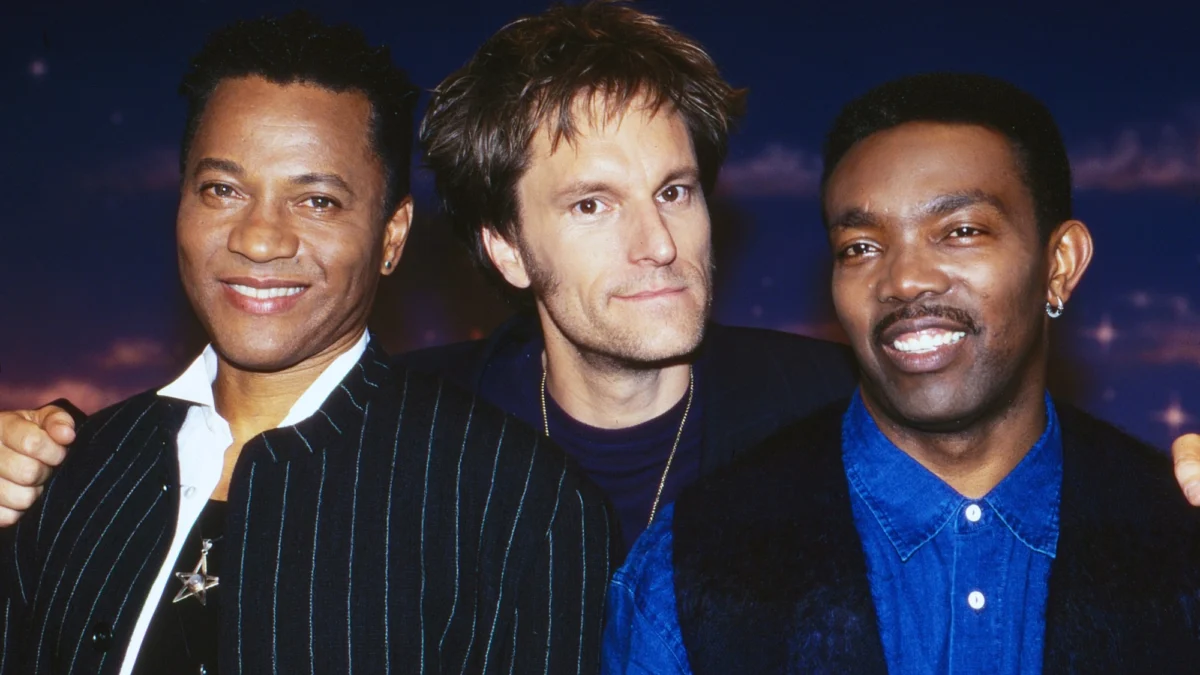
Londonbeat, a British-American band, achieved what few groups managed during the transition: a truly global number-one single. Released as the lead track from their sophomore album, In The Blood, "I’ve Been Thinking About You" was a masterclass in the soulful dance-pop that bridged the gap between 80s R&B and 90s Eurodance. The group consisted of a diverse lineup including Jimmy Chambers, George Chandler, Jimmy Helms, and William Henshall. Jimmy Helms, in particular, brought a seasoned vocal pedigree to the project, having been a successful soul singer in the 1970s.
The track reached the pinnacle of the Billboard Hot 100 in April 1991, a testament to its broad appeal. Lyrically, the song explored themes of romantic obsession and confusion, anchored by the repetitive and infectious refrain: "I guess I’m all confused about you / I feel so in love / Oh baby, what can I do?" The production featured a driving, syncopated beat and a distinctive guitar riff that made it instantly recognizable.
While "I’ve Been Thinking About You" became a worldwide phenomenon—topping charts in the United States, Germany, Australia, and Switzerland—the group struggled to replicate this success. Their follow-up singles, such as "A Better Love," failed to break the Top 10 in the U.S., cementing Londonbeat’s status as a definitive one-hit wonder in the American market. The song’s enduring quality was later validated when it was covered by the Grammy-winning artist Rita Coolidge, further proving the strength of the original songwriting by the four band members.
Natural Selection and the Minneapolis Influence
As Londonbeat dominated the spring, the late summer and autumn of 1991 saw the rise of Natural Selection, a project led by Elliot Erickson. Their breakout hit, "Do Anything," peaked at No. 2 on the Billboard Hot 100, held off the top spot only by Bryan Adams’ record-breaking ballad "(Everything I Do) I Do It For You."
"Do Anything" is particularly notable for its heavy "Minneapolis Sound" influence, a style popularized by Prince and producers Jimmy Jam and Terry Lewis. The track featured a prominent spoken-word contribution from Ingrid Chavez, a Prince protégé who had starred in the film Graffiti Bridge and was a co-writer on the track along with Erickson and Frederick Thomas. Chavez’s breathy, rhythmic delivery provided a sophisticated counterpoint to the song’s upbeat, danceable tempo.
The lyrics of "Do Anything" reflected the devoted, almost sycophantic nature of early 90s pop romance: "Honey, I’ll stay up late for you / And wait for your call / Buzz me up at 5 AM / And I don’t mind at all." Despite the song’s massive popularity and the follow-up "Hearts Don’t Think (They Feel)" reaching the Top 15, the group’s momentum dissipated quickly. Natural Selection remains a fascinating footnote of the era, representing the tail end of the funk-pop crossover that had defined much of the previous decade.
Corina and the Zenith of Freestyle Music
While Londonbeat and Natural Selection occupied the mainstream pop-dance space, Corina (born Corina Katt Ayala) represented the peak of the "freestyle" movement. Freestyle, a genre rooted in the Latin communities of New York City and Miami, blended electronic dance music with emotional, often melancholic lyrics. Corina’s 1991 hit "Temptation," from her eponymous debut album, reached No. 6 on the Billboard Hot 100, marking one of the genre’s final major commercial successes before the industry shifted toward alternative rock and hip-hop.
"Temptation" was a collaborative effort, written by Corina alongside Carlos Berrios, Franc Reyes, and Luis Capri Duprey. Unlike many pop songs of the time that focused on idealized love, "Temptation" delved into the moral complexities of infidelity. The lyrics were strikingly candid: "Just try to ease your mind ’cause I don’t mean to hurt you / It’s just he knows to treat me like a special lady / Maybe someday you’ll understand / Temptation is a part of life."
The song’s impact extended beyond its initial chart run. Its inclusion in Rolling Stone’s "200 Greatest Dance Songs of All Time" highlights its technical merit and its importance to the freestyle subculture. Although Corina released subsequent singles, they failed to achieve the cultural saturation of "Temptation," leaving the track as a singular monument to a specific moment in New York’s club-to-radio pipeline.
Chronology of the 1991 Pop Transition
The trajectory of these three hits illustrates the timeline of the 1991 musical year:
- January – March 1991: The charts are dominated by traditional ballads and late-80s style pop. Londonbeat’s "I’ve Been Thinking About You" begins its steady climb.
- April 1991: Londonbeat reaches No. 1, signaling the peak of soulful, transatlantic dance-pop.
- May 1991: SoundScan is implemented. The industry begins to see the "true" numbers behind sales, though pop radio remains entrenched in established formats.
- August – October 1991: Natural Selection’s "Do Anything" and Corina’s "Temptation" reach their peaks. This period represents the "last hurrah" for polished, synth-driven dance-pop before the mainstreaming of grunge.
- November – December 1991: The influence of Nirvana’s Nevermind and the rise of "G-Funk" in rap begin to reshape the Top 40, making the sounds of Londonbeat and Corina feel like artifacts of a previous era almost overnight.
Broader Impact and Industry Implications
The phenomenon of the one-hit wonder in 1991 was not merely a matter of "luck," but a byproduct of how the industry was structured. Major labels in the early 90s were still heavily reliant on "singles" as promotional tools for albums. When a single like "Do Anything" or "Temptation" became a runaway success, the labels often rushed to capitalize on the momentum, sometimes at the expense of long-term artist development.
Furthermore, the rise of MTV meant that an artist’s visual identity was just as important as their sound. All three of these artists benefited from high-frequency video rotation. However, once the visual aesthetic of the "grunge" and "gangsta rap" eras took hold, the polished, brightly lit aesthetics of the 1991 pop stars became unfashionable.
The enduring legacy of these songs lies in their "digital afterlife." On streaming platforms like Spotify and YouTube, these tracks continue to garner millions of plays, fueled by 90s nostalgia and their inclusion in "throwback" playlists. They serve as sonic time capsules, capturing the optimism and the high-fidelity production standards of a year that stood on the precipice of a cultural revolution. While Londonbeat, Natural Selection, and Corina may not have built multi-decade careers, their contributions in 1991 remain essential components of the decade’s musical DNA, proving that a single, well-crafted song can leave an indelible mark on history.
