

SoundMorph, a developer renowned for its innovative sound design tools and effects, has initiated the permanent retirement of its original standalone TimeFlux software, effective July 31. This strategic decision comes alongside a significant, limited-time promotional offer, allowing potential users to acquire the powerful sound manipulation tool for just $9, a substantial reduction from its regular price of $149. The impending discontinuation marks the end of an era for the distinctive standalone application, which has carved a niche among sound designers and experimental musicians for its unique approach to audio transformation.
The Impending Farewell: TimeFlux’s Retirement Explained
The announcement, communicated via an official email from SoundMorph, underscores a pivotal moment for both the company and its user base. After July 31, the original TimeFlux standalone software will be irrevocably removed from the SoundMorph store, ceasing all future sales and distribution. This move is presented as a definitive cessation of the product line in its current form, ensuring that the current promotional window represents the absolute final opportunity for acquisition. While the news brings an element of finality for dedicated users and prospective buyers, the drastic price reduction aims to soften the impact, presenting an undeniable value proposition for those seeking to integrate TimeFlux’s unique capabilities into their creative workflows before its permanent withdrawal.
A key characteristic of TimeFlux, and one that distinguishes it within a market increasingly dominated by integrated plugins, is its nature as a standalone application. Unlike VST or AU plugins that operate within a Digital Audio Workstation (DAW), TimeFlux functions as an independent software environment. This design choice has historically offered a focused, distraction-free interface for intensive sound design tasks but has also presented integration challenges for users accustomed to a DAW-centric production paradigm. The retirement of a standalone product, particularly in the context of a robust plugin ecosystem, often signals a developer’s strategic pivot towards more widely adopted formats or a consolidation of resources on newer, potentially more integrated, product offerings.
A Strategic Shift for SoundMorph
While SoundMorph has not issued an exhaustive public statement detailing the precise strategic motivations behind TimeFlux’s retirement beyond its permanent removal, industry observers often point to several common factors influencing such decisions. These can include the natural evolution of software development cycles, the desire to streamline product portfolios, the allocation of development resources to newer technologies or flagship products, or the changing landscape of user preferences that increasingly favor tightly integrated plugin architectures. For a company like SoundMorph, which consistently pushes the boundaries of sonic experimentation, redirecting focus could enable the development of next-generation tools that align with contemporary production methodologies and technological advancements. The decision to retire an older standalone product might free up significant engineering and support resources that can then be invested into new research and development, ultimately benefiting the broader SoundMorph ecosystem and its future offerings.
The End of an Era for Standalone Software
The lifecycle of audio software, particularly in specialized niches like advanced sound design, is dynamic. Products are conceived, developed, refined, and eventually, some reach an end-of-life stage. TimeFlux, having been a staple in SoundMorph’s catalog for a considerable period, has likely seen several operating system updates and technological shifts since its initial release. The discontinuation could be attributed to the complexities of maintaining compatibility with rapidly evolving operating systems (macOS and Windows), the challenges of updating an older codebase to modern standards, or simply a strategic decision to conclude support for a product that no longer aligns with the company’s long-term vision. The current offer, therefore, serves not only as a final sales push but also as a graceful exit for a product that has undoubtedly contributed to countless creative projects over its operational lifespan.
Unpacking the TimeFlux Experience: Features and Functionality
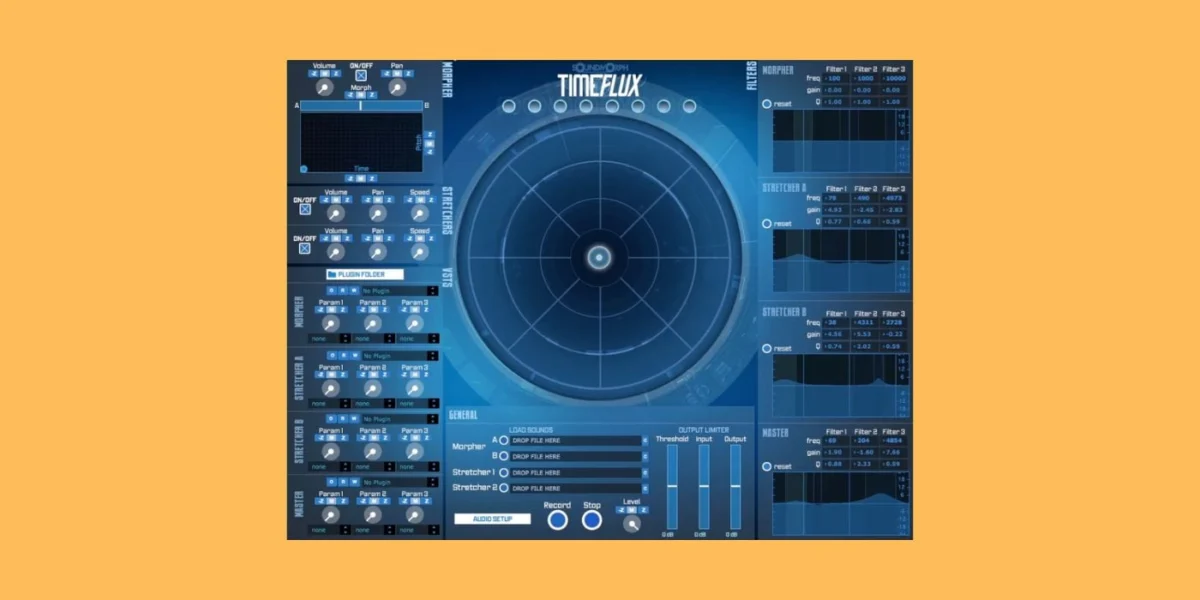
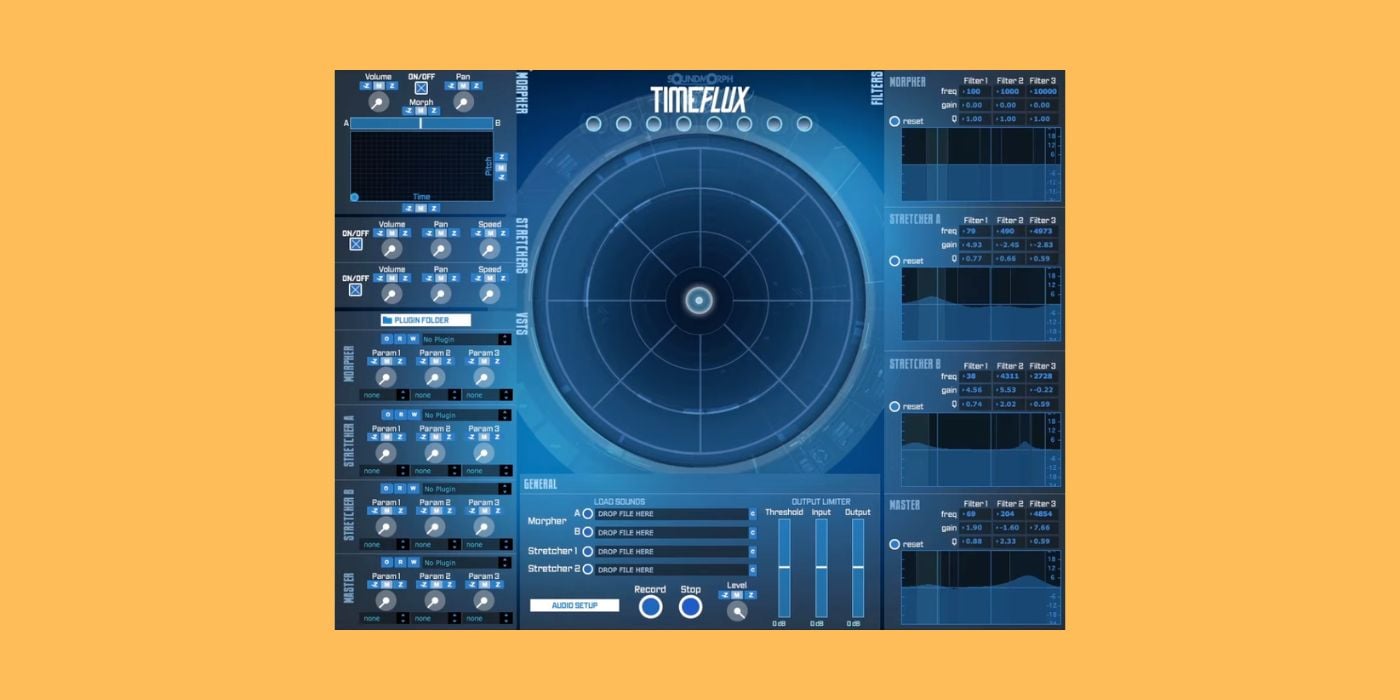
At its core, TimeFlux is a powerful engine for extreme audio manipulation, designed to stretch, pitch, filter, and morph sounds into entirely new sonic textures. Its design caters to users who seek to push the boundaries of conventional sound processing, offering a suite of tools for generating complex and evolving soundscapes. The software allows users to load their own audio files, providing a flexible foundation for personalized sound design. A standout feature is its ability to create eight distinct processing snapshots, which can then be navigated and blended using the innovative Sphere controller. This unique interface transforms the act of sound manipulation into a dynamic performance, with the movement between snapshots recorded and exportable as a high-quality WAV file, capturing the entirety of the user’s sonic journey.
The Intuitive Sphere Controller and Snapshot System
The Sphere controller is a central element of the TimeFlux user experience, offering an intuitive and visually engaging method for real-time parameter control. Functioning akin to an XY pad, the Sphere allows users to smoothly transition between the eight saved processing snapshots. Each snapshot represents a distinct configuration of TimeFlux’s various engines and filters, effectively acting as a predefined sonic state. By moving the controller across the Sphere, users can interpolate between these states, creating evolving textures, fluid transitions, and complex modulations that are difficult to achieve with traditional linear controls. This performance-oriented approach encourages improvisation and experimentation, making TimeFlux a tool for both meticulous design and spontaneous sonic discovery. The ability to record these performances directly within the software and export them as WAV files further streamlines the creative process, allowing users to capture their dynamic manipulations for integration into other projects or further refinement.
Dual Engines for Time and Spectral Manipulation
TimeFlux’s advanced capabilities are underpinned by its sophisticated audio processing architecture, which includes two dedicated time-stretching engines and a distinct morphing engine. The time-stretching engines are designed to alter the duration of audio samples without affecting their pitch, enabling users to create dramatic slow-motion effects, ethereal pads, or rhythmically complex patterns from simple source material. These engines typically employ advanced algorithms, such as granular synthesis or phase vocoder techniques, to preserve audio fidelity even under extreme stretching conditions.
The morphing engine, in contrast, delves into the spectral domain. Users can load sounds into the morpher, which then converts them into spectral files. This allows for deep manipulation of the sound’s frequency content over time. An integrated XY pad facilitates scrubbing through time and pitch within the spectral realm, offering granular control over the sound’s evolution. The ability to morph between different saved states around the TimeFlux orb further expands the creative possibilities, enabling the seamless blending of disparate sonic characteristics to forge entirely new, hybrid sounds. While the two stretcher slots are optimized for regular audio files and conventional time manipulation, the morpher section leans heavily into spectral movement and complex sound transformation, providing a comprehensive toolkit for both temporal and timbral sculpting.
Internal VST Hosting: Expanding Creative Horizons
One of TimeFlux’s most powerful, yet often overlooked, features is its capacity to host up to four VST plugins internally. This functionality significantly extends the software’s inherent processing capabilities, allowing users to integrate their favorite third-party effects directly within TimeFlux’s signal chain. By leveraging external VSTs, sound designers can introduce a virtually limitless array of effects—from intricate reverbs and delays to advanced modulation and distortion units—before recording the final performance. This internal hosting capability effectively bridges the gap between TimeFlux’s standalone nature and the vast ecosystem of VST plugins, enabling the creation of extraordinarily complex and unique processing chains that would otherwise necessitate multiple software applications or extensive routing within a DAW. It empowers users to tailor the sound generation process to their precise needs, making TimeFlux an even more versatile and potent tool for high-level sound design.
The Comprehensive 3.6 GB Sound Library
Beyond its robust processing engines, TimeFlux includes a substantial 3.6 GB sound library, a valuable asset for any sound designer. This library, co-created by SoundMorph and Ivo Ivanov of Glitchmachines, is a curated collection of cinematic effects and experimental textures. Ivo Ivanov, known for his groundbreaking work in glitch, industrial, and experimental sound design, brings a distinctive aesthetic to this collection. The collaboration ensures a library rich in high-quality, production-ready sounds that range from deep drones and unsettling atmospheres to sharp impacts, intricate transitions, and futuristic machine noises. These sounds are not merely static samples but are designed to be malleable, serving as ideal starting points for TimeFlux’s manipulation capabilities. Their utility extends beyond cinematic applications, proving equally effective in music production across genres such as ambient, industrial, experimental electronic, and even in crafting unique intros, breakdowns, and layered textures. The sheer size and quality of this library alone make the $9 offer an exceptional value, providing a rich resource that can inspire countless creative endeavors.
Targeting Creativity: Who Benefits from TimeFlux?
TimeFlux’s unique blend of time-stretching, spectral morphing, and performance-oriented control makes it an invaluable tool across a broad spectrum of creative disciplines. Its capabilities resonate particularly strongly with professionals and enthusiasts engaged in sound design for visual media, but its utility extends far beyond these traditional boundaries.
Beyond the Studio: Applications in Film, Games, and Trailers
For those working in film, television, and game audio, TimeFlux offers a direct pathway to crafting compelling and distinctive soundscapes. Its ability to stretch and morph sounds into new textures is ideal for generating:
- Cinematic Textures: Evolving drones, unsettling ambiences, and otherworldly soundbeds that can underscore dramatic scenes or establish an immersive atmosphere.
- Trailer Effects: Powerful impacts, tension-building risers, dynamic whooshes, and complex transitions that are crucial for creating high-impact promotional content.
- Game Audio: Unique UI sounds, environmental ambiences, creature vocalizations, and futuristic weapon effects that enhance player immersion and narrative depth.
- Foley and Sound Effects: The capacity to transform mundane recordings into hyper-real or fantastical sounds, providing unique sonic signatures for various in-game or filmic elements.
The ability to host internal VST plugins further empowers these professionals to sculpt sounds with incredible precision and creativity, ensuring their output is tailored to the specific demands of their projects.
Forging New Soundscapes in Music Production
While often highlighted for its cinematic applications, TimeFlux’s potential within music production is equally profound, especially for genres that thrive on sonic experimentation and texture.
- Ambient and Drone Music: Its time-stretching and morphing capabilities are perfect for generating long, evolving pads, rich harmonic drones, and expansive sonic tapestries that characterize ambient compositions.
- Industrial and Experimental Electronic Music: The tool excels at creating gritty, distorted, and complex rhythmic or arrhythmic textures, offering new avenues for sonic aggression and avant-garde sound design.
- Cinematic Intros and Breakdowns: Musicians can leverage TimeFlux to build tension, create dramatic swells, and design intricate sonic layers for song intros, interludes, or climactic breakdowns, adding a professional, film-score quality to their tracks.
- Sound Layers and Textural Elements: Beyond specific genres, TimeFlux is invaluable for adding subtle or overt textural layers to any track, enriching the sonic palette and providing depth that traditional synthesis or sampling might not achieve.
The integration of the 3.6 GB sound library, featuring contributions from Glitchmachines’ Ivo Ivanov, provides an immediate wealth of sounds perfectly suited for these experimental and cinematic musical endeavors, making TimeFlux a versatile asset for any adventurous producer.
The Deal of a Lifetime: A Final Acquisition Opportunity
The core of SoundMorph’s recent announcement revolves around the singular opportunity to acquire TimeFlux for an unprecedented $9. This dramatic price reduction from its standard $149 represents a staggering discount of over 94%, making it an exceptionally attractive proposition for both seasoned professionals and budding sound designers. However, the transient nature of this offer cannot be overstated: the software will be available at this price point and then removed permanently from sale after July 31.
Understanding the Limited-Time Offer
The promotional period is strictly defined, concluding at the end of July. This deadline is critical for anyone considering the purchase, as SoundMorph has explicitly stated that there will be no further sales or availability of this specific standalone version thereafter. The offer includes the original TimeFlux application, the interactive Sphere controller, functionality for WAV performance recording and export, and the complete 3.6 GB TimeFlux sound design library. This comprehensive package ensures that purchasers receive the full, unadulterated experience of the software as it was originally conceived and developed. The finality of the offer underscores SoundMorph’s commitment to discontinuing the product, transforming what might otherwise be a somber announcement into a celebratory clearance for those quick enough to capitalize on the deal.
Considerations for Prospective Buyers
For those contemplating the purchase, several factors warrant consideration. While the price point is undeniably compelling, it is crucial to remember that this is the "original standalone" version, and its retirement implies an end to official support and updates. This means future compatibility with new operating systems or hardware cannot be guaranteed, and any potential bugs or issues discovered post-discontinuation will likely not receive official patches. However, for many users, particularly those on stable existing systems or those comfortable with the inherent risks of end-of-life software, the immense value offered by the $9 price tag far outweighs these considerations. The included sound library, a robust collection from respected designers, itself represents a significant asset that justifies the minimal investment, even if the software’s long-term operational viability becomes a concern. The decision ultimately rests on individual needs, existing system configurations, and a willingness to embrace a powerful tool with a defined shelf-life for official support.
Implications and the Future Landscape of Audio Software
The retirement of TimeFlux is not merely an isolated event concerning a single product; it reflects broader trends and strategic shifts within the audio software industry. For SoundMorph, it signifies an evolution, while for the wider market, it reinforces the enduring dominance of certain technological paradigms.
SoundMorph’s Evolving Product Portfolio
The discontinuation of TimeFlux allows SoundMorph to reallocate its resources and focus its development efforts on newer technologies and product lines. This could translate into enhanced support for their existing plugin offerings, the development of entirely new and innovative tools, or a strategic pivot towards cloud-based solutions or subscription models. Companies often streamline their catalogs to maintain a cutting edge and respond to market demands. By concluding TimeFlux, SoundMorph is likely clearing the path for future innovations that align more closely with contemporary user workflows and technological capabilities, ensuring their continued relevance in a highly competitive market. This move could ultimately lead to a stronger, more focused product ecosystem from the developer.
The Broader Trend Towards DAW Integration
TimeFlux’s identity as a standalone application has become increasingly rare in an industry that has largely consolidated around DAW-integrated plugins (VST, AU, AAX). The convenience of having all processing tools accessible directly within the primary production environment—without the need for external routing, separate application launches, or file transfers—has made plugins the preferred format for most producers and sound designers. The retirement of a standalone product like TimeFlux serves as a stark reminder of this prevailing industry trend. While standalone applications can offer a focused, often unique, user experience, the advantages of seamless integration, real-time automation within a DAW, and universal project recall often outweigh the benefits of isolated environments. This trend suggests that future innovations in audio software are likely to continue prioritizing compatibility and integration within established DAW ecosystems, further solidifying the plugin model as the industry standard.
In conclusion, SoundMorph’s decision to retire the standalone TimeFlux software, accompanied by an extraordinary $9 promotional offer, marks a significant moment for the audio production community. It provides a final, unparalleled opportunity to acquire a powerful and unique sound design tool, complete with a substantial 3.6 GB sound library, before its permanent removal from the market on July 31. While the discontinuation signals the end of an era for this particular product, it also reflects the ongoing evolution of audio software development and SoundMorph’s strategic adaptation to a dynamic industry landscape. For those seeking to expand their sound design arsenal with a distinctive and capable tool at an exceptionally low price, the TimeFlux retirement deal represents an unmissable opportunity to secure a piece of innovative audio history.
Download: SoundMorph TimeFlux ($9 until July 31)
