

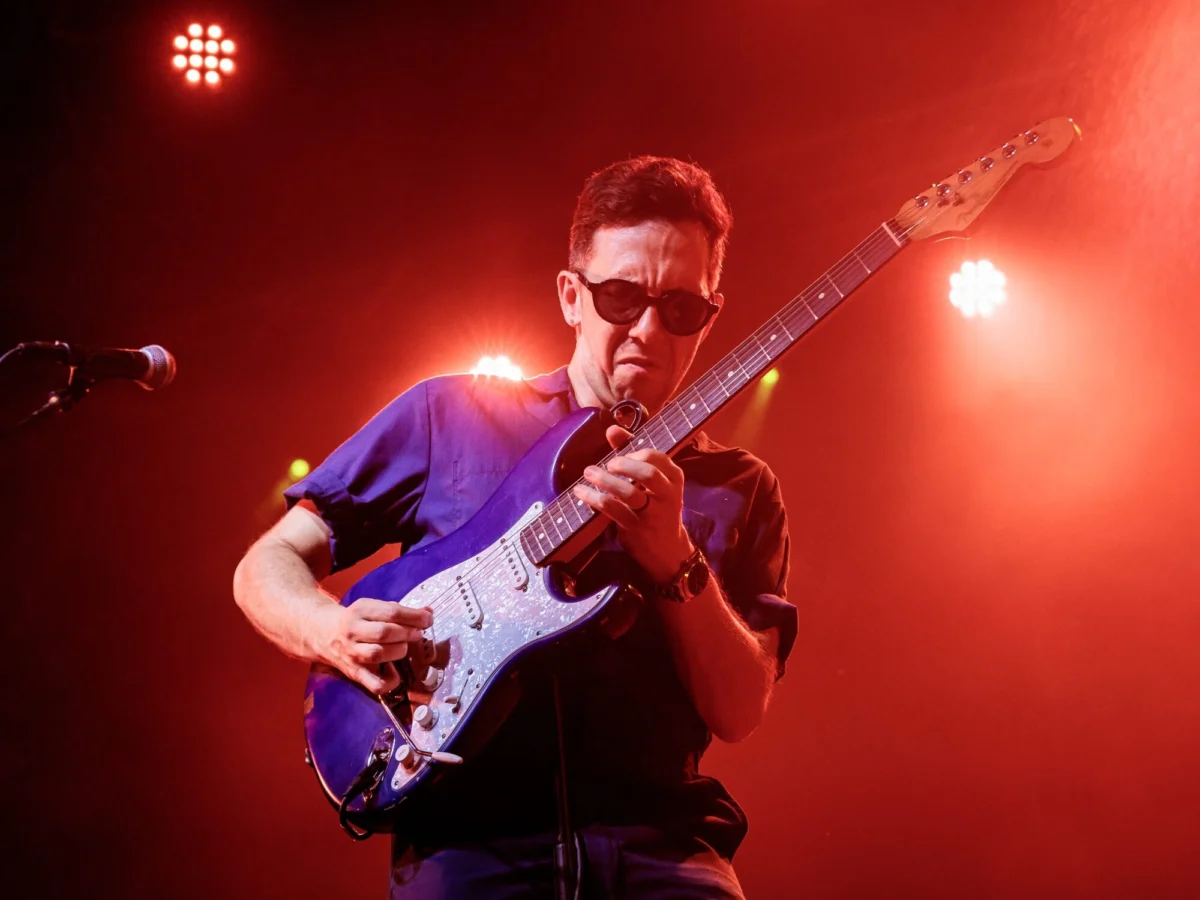
Jazz-funk virtuoso Cory Wong has articulated a profound shift in his creative methodology, asserting that his overarching "artistry" took precedence over his specific "guitar playing" during the production of his twelfth studio album, Lost In The Wonder. This revelation, shared in a recent interview with Guitar.com, highlights a deliberate and strategic approach to album creation, where the instrumental prowess for which Wong is celebrated becomes a component serving a larger artistic vision rather than the sole driving force. The album, which features a diverse array of 12 guest vocalists, stands as a testament to this philosophy, showcasing a producer’s meticulous orchestration of talent and sound to achieve a cohesive and expansive musical statement.
A Paradigm Shift in Creative Philosophy
Wong’s statement marks a significant moment in the career of an artist widely recognized for his distinctive rhythmic guitar style and prolific output. For Lost In The Wonder, Wong embraced the challenging dual role of both the performing artist and the album’s primary producer. This dual responsibility necessitated a constant mental negotiation between two distinct creative mindsets: the innate instincts of a virtuosic guitarist and the expansive, holistic vision required to steer an entire album project. This internal dialogue ultimately led him to the conclusion that his broader artistic identity—encompassing composition, arrangement, and overall sonic direction—was the foundational element, with his guitar playing emerging as a natural and expressive byproduct of that larger artistic intent. This perspective is not merely a philosophical musing but a practical framework that profoundly influenced every decision made during the album’s intricate production process.
The Dual Role: Artist and Producer
Taking on the mantle of producer for one’s own work is a demanding endeavor, requiring a unique blend of self-awareness and objective detachment. Wong elaborated on the multifaceted responsibilities inherent in a producer’s role, delineating several key functions that extend far beyond simply recording tracks. "A producer’s got several jobs. One of them is getting this thing finished and delivered. One of them is being a good casting director," Wong explained, underscoring the logistical and creative demands. This encompasses not only the technical aspects of recording, mixing, and mastering but also the crucial task of curating talent and guiding performances to realize a coherent artistic vision.
The self-production journey for an artist like Wong involves a delicate balancing act. While the artist naturally brings an intimate understanding of their own music and creative desires, the producer must maintain an objective distance, critically assessing performances, arrangements, and overall impact. This requires the ability to step outside one’s own artistic ego and evaluate contributions dispassionately, prioritizing the song’s needs over individual inclinations. For Wong, this meant actively separating his identity as "Cory Wong, the guitarist" from "Cory Wong, the producer," a mental partitioning he found essential for effective project management and artistic integrity.
The Art of Collaboration and "Casting"
Central to Lost In The Wonder‘s unique sound is Wong’s role as a "casting director," meticulously selecting and integrating a diverse roster of guest vocalists. The album features an impressive twelve guest vocalists, including notable figures such as Taylor Hanson (of the pop-rock band Hanson), viral sensation Cody Fry, and acclaimed Dutch indie-pop artist Benny Sings. This expansive collaborative approach meant that each song was not merely written and then performed, but rather built intrinsically around the specific talents and unique voices of the chosen artists. Wong’s "Rolodex of musicians," as he described it, became a vital resource, allowing him to match specific vocal styles and artistic sensibilities with the nascent musical ideas, thereby shaping each track’s identity from its inception.
This method diverges significantly from a more traditional album production, where a primary artist might write all material and then seek guest features. Instead, Wong’s process appears to be one of organic co-creation, where the guest vocalists are not merely additions but foundational pillars around which the musical architecture is constructed. This strategic curation of talent not only enriches the album’s sonic palette but also underscores Wong’s commitment to a broader artistic vision, one that prioritizes collaborative synergy and vocal storytelling alongside his renowned instrumental prowess. The selection of artists like Taylor Hanson, known for his distinctive pop sensibilities, alongside the intricate orchestral pop of Cody Fry and the smooth, laid-back charm of Benny Sings, suggests a deliberate effort to explore a wide emotional and stylistic spectrum, appealing to a diverse audience base while pushing Wong’s own creative boundaries.
"My Artistry Comes First": Defining a New Creative Hierarchy
The core of Wong’s revelation lies in his statement: "My artistry comes before my guitar playing. My guitar playing is a byproduct and expression of my artistry, so I think of my artistry as being more important." This declaration redefines the hierarchy of his creative output, placing the holistic concept of "artistry"—which encompasses songwriting, arrangement, production, and emotional conveyance—above the technical execution of his primary instrument. For a musician whose public identity is so intrinsically linked to his exceptional guitar skills, this is a profound statement of creative maturity and self-discovery.
This philosophy guided Wong’s decision-making throughout the creation of Lost In The Wonder. It meant asking what the song needed, rather than what opportunities existed for a guitar solo. It involved considering the overall mood, the narrative conveyed by the vocalists, and the sonic landscape of the entire album. This approach positions the guitar not as a standalone showpiece but as an integral voice within a larger ensemble, contributing texture, rhythm, and melodic counterpoint where most effective. This distinction between mere technical proficiency and comprehensive artistic vision is a crucial one, particularly in an era where instrumental virtuosity can sometimes overshadow the broader musical narrative. Wong’s commitment to artistry first ensures that every note, every chord, and every arrangement choice serves the overarching creative purpose of the album.
The Strategic Deployment of Guitar
Paradoxically, Wong explains that by stepping back from the instrument and adopting a producer’s mindset, he believes he recorded some of his strongest guitar work to date. This outcome underscores the power of intentionality and strategic restraint. As a producer, his perspective shifted to consider the guitar’s role within the grander scheme of the composition. "As a producer, I’m thinking about the writing and how to treat the production of it, knowing that the artist is a guitar player, knowing that the artist is collaborating with a bunch of people, and that the artist is a band leader and arranger," Wong elaborated. This multi-faceted consideration allowed him to precisely shape "what is being asked of the guitar."
This meant resisting the common temptation to fill every available space with flashy solos or complex licks. Instead, Wong consciously sought out moments where the guitar could make the most significant impact, often in the form of "instrumental hooks." These hooks, typically memorable melodic phrases or rhythmic patterns, serve to anchor the listener and provide distinct sonic identity to a track, much like a vocal chorus. "It’s not solos, but it’s definitely like, ‘Here’s a moment for the guitar.’ Here’s how to incorporate the guitar as a featured instrument," he clarified. This approach prioritizes melodic craftsmanship and rhythmic sophistication over overt technical display, ensuring that when the guitar does step into the spotlight, its contribution is impactful and essential to the song’s structure and feel. Furthermore, the producer brain encouraged experimentation with "weird, cool, interesting tone," pushing the boundaries of sonic texture and further integrating the guitar into the album’s unique soundscape.
Background and Evolution of Cory Wong’s Career
Cory Wong has carved out a distinctive niche in contemporary music, primarily known for his electrifying jazz-funk guitar playing, often characterized by intricate rhythm guitar work, a clean tone, and an infectious groove. His rise to prominence has been a gradual but steady ascent, building a dedicated fanbase through a prolific output and dynamic live performances.
Born in Minnesota, Wong’s musical journey began early, leading him to study at the McNally Smith College of Music. He first gained widespread recognition through his association with the acclaimed funk band Vulfpeck, where his contributions as a touring and recording guitarist helped define their signature sound. His solo career truly blossomed in the late 2010s, with albums like The Optimist (2018) and Motivational Music for the Syncopated Soul (2019) showcasing his unique blend of funk, jazz, and pop sensibilities. These albums cemented his reputation as a "funk-forward" instrumentalist capable of crafting complex yet accessible music.
Wong’s discography is remarkably extensive, with Lost In The Wonder marking his twelfth studio record. This prolific output underscores not only his dedication but also a relentless creative drive. Over the years, he has consistently experimented with formats, from purely instrumental albums to collaborations with various vocalists and instrumental ensembles, including his own "Cory Wong and The Wongnotes" big band. His live shows are renowned for their high energy, tight musicianship, and engaging stage presence, further solidifying his status as a modern guitar hero who transcends traditional genre boundaries. The trajectory of his career demonstrates a continuous evolution, moving from a focus on instrumental mastery to an increasingly expansive artistic vision, culminating in the philosophical shift articulated with Lost In The Wonder.
The Broader Implications for Modern Musicianship
Wong’s approach to Lost In The Wonder carries significant implications for the broader landscape of modern musicianship, particularly for those aspiring to navigate the complex music industry. His embrace of the dual role of artist and producer reflects a growing trend towards multi-hyphenate artists who are not just performers but also composers, arrangers, engineers, and entrepreneurs. In an era where traditional record label structures have evolved, artists increasingly take control of their creative and business destinies, demanding a more comprehensive skillset.
This shift also highlights a re-evaluation of what constitutes "virtuosity" in contemporary music. While technical proficiency remains highly valued, Wong’s philosophy suggests a move towards a more holistic definition, where true artistry encompasses vision, collaboration, and the ability to serve the song above all else. This can be a powerful lesson for aspiring instrumentalists, encouraging them to develop skills beyond their primary instrument—such as songwriting, arrangement, and basic production—to better realize their complete artistic potential. The emphasis on "instrumental hooks" over gratuitous solos, for instance, reflects a mature understanding of songcraft and audience engagement, prioritizing memorability and emotional impact.
Furthermore, Wong’s willingness to build an entire album around guest vocalists, even as a celebrated instrumentalist, showcases a progressive collaborative spirit. This approach not only broadens his artistic scope but also offers a template for how artists can leverage diverse talents to create richer, more varied musical experiences. Such collaborations can expand an artist’s reach, introduce their work to new audiences, and foster a dynamic creative ecosystem within the music community. The commercial advantages of this approach are also noteworthy; diverse vocal features can attract fans of those individual artists, potentially expanding the album’s market appeal beyond Wong’s established fanbase.
Critical Reception and Fan Expectations
Lost In The Wonder, with its distinct emphasis on vocal collaborations and a producer-led artistic vision, naturally presents a unique proposition for both long-time Cory Wong fans and new listeners. For devotees accustomed to his signature instrumental funk, the album’s focus on guest vocalists might initially represent a departure. However, given Wong’s established reputation for musical innovation and his consistent ability to deliver high-quality, groove-laden compositions, it is anticipated that this album will be met with considerable interest and appreciation. The strategic deployment of his guitar, focusing on impactful hooks and textural contributions rather than overt soloing, is likely to be perceived by many as a demonstration of artistic maturity and a testament to his ability to evolve beyond instrumental showmanship.
Early indicators and the general trajectory of Wong’s career suggest that Lost In The Wonder is likely to garner positive critical reception for its thoughtful arrangements, diverse collaborations, and sophisticated production. Music critics often praise artists who demonstrate growth and a willingness to explore new creative avenues, and Wong’s explicit articulation of his "artistry first" philosophy aligns perfectly with this. The album’s collaborative nature may also open doors to a broader audience, drawing in fans of the featured vocalists and introducing them to Wong’s distinctive musical world. This cross-pollination of fanbases could be a significant factor in the album’s commercial success and cultural resonance, solidifying Wong’s position as a forward-thinking and versatile artist in the contemporary music landscape.
Conclusion: A Blueprint for Artistic Growth
Cory Wong’s Lost In The Wonder stands as more than just his latest musical offering; it is a profound statement on artistic evolution and the multifaceted nature of creativity. By consciously prioritizing his overarching artistic vision over his celebrated guitar playing, Wong has provided a compelling blueprint for how musicians can grow beyond their established identities. His meticulous approach as a self-producer, from "casting director" to visionary arranger, underscores the value of holistic musicianship in an increasingly complex industry. The album’s success will not only be measured in its musical quality but also in its ability to inspire a new generation of artists to explore the depths of their own artistry, recognizing that true mastery extends far beyond technical skill to encompass vision, collaboration, and an unwavering commitment to serving the song. Lost In The Wonder is a testament to the fact that sometimes, by stepping back from what one is best known for, an artist can achieve their most profound and impactful work.
