

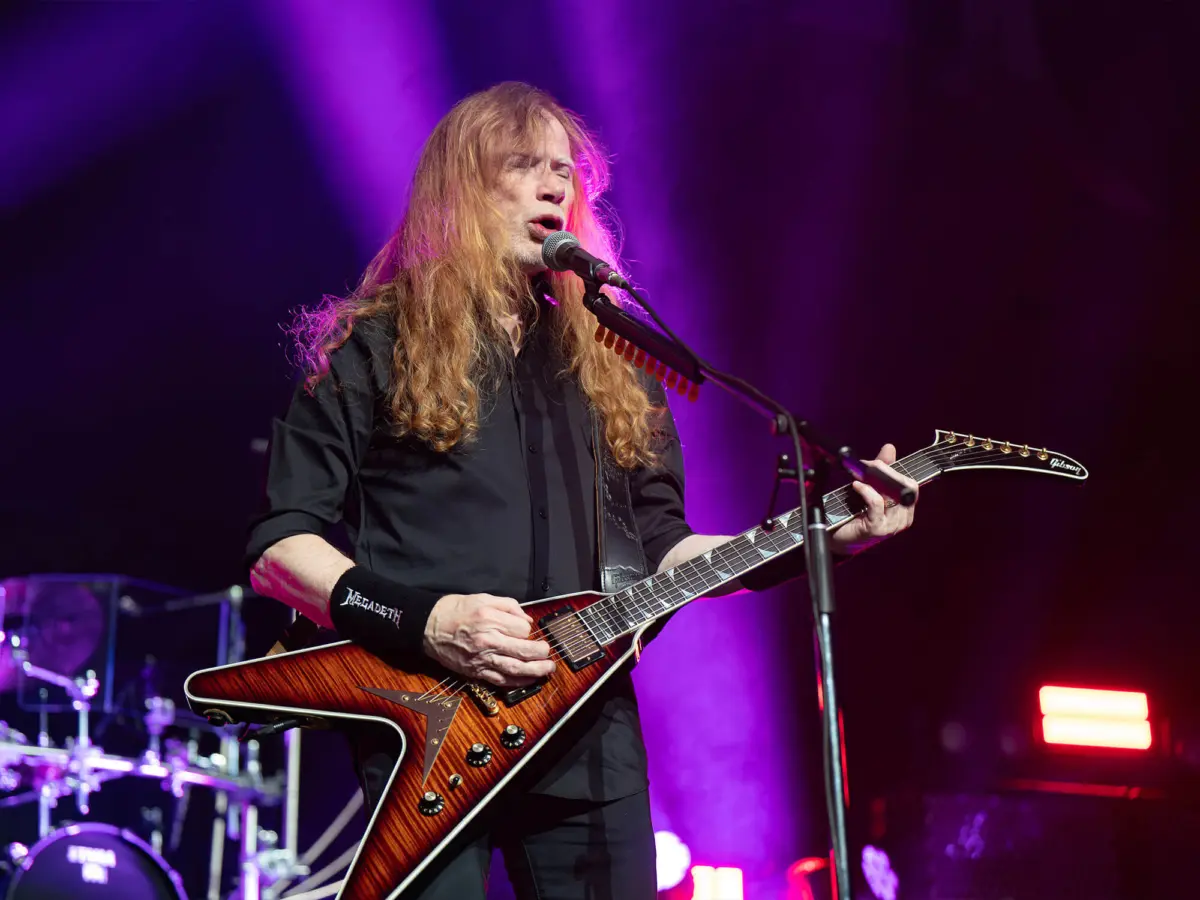
In an era where bands like Greta Van Fleet evoke the classic rock sound of yesteryear, a discernible shift in audience preference has caught the attention of veteran musicians. Dave Mustaine, the iconic frontman of thrash metal pioneers Megadeth, has observed a notable influx of younger fans at Megadeth’s current world tour, eager to immerse themselves in the raw energy of old-school metal. According to Mustaine, this burgeoning interest is not merely a nostalgic trend but a reaction to what he perceives as a decline in "genuine" music in contemporary times. His recent statements have rekindled a long-standing debate within the metal community regarding genre purity, artistic authenticity, and the ever-evolving landscape of musical expression.
Mustaine articulated his views during a recent interview with Chris Jericho, where he posited that the music industry underwent a significant transformation when the demarcation lines between genres began to blur excessively. His critique specifically honed in on the nu-metal movement that gained prominence in the late 1990s and early 2000s. "Our generation of metal… I think that the music was more genuine," Mustaine stated, drawing a stark contrast. He continued, "I think that there came a time – not saying that any of these bands were responsible for it – but around the Linkin Park era… bands were doing metal with keyboards and stuff like that." This observation underscores a recurring tension between traditionalists who value perceived instrumental prowess and structural conventions, and innovators who seek to push boundaries through fusion and new sonic textures.
The Nu-Metal Phenomenon: A Contextual Look
Nu-metal, emerging in the mid-to-late 1990s, was characterized by its eclectic blend of heavy metal riffs, hip-hop vocal styles (rapping and turntablism), industrial elements, grunge aesthetics, and often, prominent keyboard or electronic samples. Bands like Korn, Limp Bizkit, Slipknot, and Linkin Park spearheaded this movement, achieving massive commercial success and bringing a new generation of listeners into the broader metal sphere. Linkin Park, in particular, became a global phenomenon with albums like Hybrid Theory (2000) and Meteora (2003), selling tens of millions of copies worldwide and frequently topping charts. Their fusion of aggressive guitar, melodic vocals, rap verses, and electronic textures resonated deeply with a youth demographic seeking a sound that reflected their complex, often angsty, realities.
Mustaine’s criticism of the "Linkin Park era" and the inclusion of keyboards touches upon a broader philosophical divide within metal. For purists, the essence of metal often lies in its guitar-centricity, intricate solos, and raw, unadulterated instrumental performance. The integration of elements perceived as "non-metal," such as synthesizers or programmed beats, can be seen as diluting the genre’s core identity. Mustaine’s past comments further illuminate his stance; in a LifeMinute interview last year, he explicitly blasted 2000s nu-metallers, suggesting their reliance on keyboards and rapping was a compensatory mechanism for a perceived lack of instrumental skill, particularly in guitar solos. He famously remarked, they "didn’t do any solos" because they "couldn’t do any solos." His subsequent declaration, "Thank God that genre went away – people started to learn how to do solos!" encapsulates his strong preference for traditional metallic virtuosity.
The Shifting Landscape of Music Production and Chart Dynamics
Mustaine’s argument extends beyond mere stylistic preference to the very integrity of music production and industry metrics. He drew a parallel between Linkin Park’s chart influence and the significant alteration of Billboard’s chart calculation methodology in the 1990s, which he claimed "ruined the charts." Prior to 1991, Billboard’s charts relied on surveys of retail stores, often prone to inaccuracies and regional biases. The introduction of SoundScan in 1991 revolutionized this by electronically tracking actual point-of-sale data from retailers across the United States. While SoundScan provided a more accurate reflection of sales, it also revealed that genres previously considered niche, such as country and hip-hop, had significantly larger audiences than previously accounted for, leading to a broader diversity on the charts.
For some, this shift democratized the charts, reflecting genuine consumer tastes rather than industry gatekeepers’ projections. However, from a traditional rock or metal perspective, the perceived "dilution" of the charts by non-rock genres, or even hybrid rock genres like nu-metal, could be interpreted as a loss of prominence for their preferred sound. Mustaine’s sentiment about "manufactured records that band members didn’t play on" further underscores his concern with technological advancements blurring the lines between genuine musicianship and studio wizardry. The increasing use of digital audio workstations (DAWs), auto-tune, and session musicians in popular music production has indeed raised questions about authenticity and credit within the industry, though it has also enabled unprecedented creative freedom and sonic innovation. This debate is not unique to metal but pervades discussions across various music genres, reflecting a perennial tension between traditional craft and technological progress.
A Historical Perspective on Genre Evolution and Backlash
The history of popular music is replete with instances where new subgenres face resistance from established artists and purists. When thrash metal itself emerged in the early 1980s, pioneering bands like Metallica and Megadeth were often viewed with skepticism by fans of traditional heavy metal, who found the faster tempos, aggressive vocals, and raw production jarring. Similarly, subgenres like grunge, alternative rock, and punk all encountered initial backlashes before becoming widely accepted or even celebrated. Nu-metal’s trajectory follows a similar pattern: initially embraced for its freshness and accessibility, it later faced critical reappraisal and, in some circles, outright dismissal, particularly as its commercial peak subsided.
Mustaine’s observations about younger generations gravitating towards "old school metal" could be interpreted as part of a cyclical trend in music appreciation. Just as younger fans rediscovered classic rock in the 1980s or punk in the 2000s, a new cohort is now exploring the foundational sounds of thrash and traditional heavy metal. Bands like Greta Van Fleet, with their explicit homage to 1970s hard rock, exemplify this phenomenon, demonstrating a market for music that consciously evokes a bygone era. This suggests that while innovation continues, there remains a persistent human desire for the perceived "genuineness" and craftsmanship associated with earlier forms of rock and metal.
Reactions from the Scene: The Korn Perspective
Mustaine’s critical stance on nu-metal was not merely a recent revelation; it has been a consistent theme throughout his career, often leading to palpable tension within the music community. Korn frontman Jonathan Davis provided a vivid account of this dynamic during a 2011 interview with ExploreMusic, recalling his experience opening for Megadeth on tour. Davis candidly shared, "It was hard touring with Megadeth because at that time Dave Mustaine was really mean and just had attitude… It was scary being on there… I respected him and everything, but I kind of got my feelings hurt, because he was mean at times."
This anecdote provides a rare glimpse into the personal interactions shaped by these stylistic and ideological divides. While such "beefs" are not uncommon in the competitive music industry, Davis’s comments highlight the direct impact of Mustaine’s strong opinions on fellow musicians. It underscores how passionate debates about genre authenticity can translate into real-world professional friction, reflecting the deep personal investment artists have in their craft and their chosen musical identity.
Mustaine’s Eclectic Influences: A Paradox of Purity?
Despite his fervent advocacy for "genuine metal" and his pointed criticisms of genre-blending, Mustaine himself reveals a surprisingly eclectic musical palate. In the same interview with Chris Jericho, he spoke of his admiration for German electro-synth pioneers Kraftwerk. This appreciation for a band diametrically opposed to the raw, guitar-driven ethos of thrash metal presents an intriguing paradox.
Mustaine explained that listening to Kraftwerk instilled in him a "tangled creation" mindset when it came to music composition. This influence encouraged him to move beyond conventional song structures, such as the standard "4/4 verse, chorus, bridge, outro" format. Kraftwerk’s pioneering use of electronic rhythms, repetitive melodic loops, and innovative song structures challenged traditional notions of musicality and composition, which Mustaine evidently absorbed. This suggests that while he may champion a particular aesthetic outcome in metal, his creative process is informed by a broader appreciation for musical experimentation and unconventional approaches.
Further illustrating this point, Mustaine recounted a humorous anecdote involving former Metallica bassist Cliff Burton, who tragically passed away in a tour bus crash in 1986. Mustaine remembered Burton as a "very, very, very sweet man," with one notable exception: his incessant listening to Lynyrd Skynyrd, particularly the iconic track Sweet Home Alabama. This exposure, Mustaine recalled, led to a moment in a Metallica rehearsal where, prompted by Lars Ulrich for a "slow part" for their 1983 track The Four Horsemen, Mustaine instinctively played a riff heavily influenced by Sweet Home Alabama. This integration of a southern rock motif into a foundational thrash metal track, albeit under Burton’s pervasive influence, showcases how even in the nascent stages of thrash, diverse musical ideas could organically seep into the creative process, shaping the very sound that would later be championed for its "purity." These examples from Mustaine’s own career add layers of complexity to his statements, suggesting that while he holds strong convictions about genre identity, his personal musical journey is far more nuanced and open to diverse influences than his rhetoric might initially imply.
Megadeth’s Ongoing Legacy and the Future of Metal
As Megadeth continues its extensive world tour, drawing in both longtime fans and a new generation of listeners, Mustaine’s comments serve as a powerful reminder of the enduring debates within music. His critique of nu-metal and his call for "genuineness" resonate with a segment of the metal community that values tradition and perceived instrumental authenticity. Simultaneously, it sparks discussion about the nature of artistic evolution, the role of technology, and the subjective definition of "real" music.
The sustained interest in traditional rock and metal, as evidenced by Megadeth’s tour attendance and the popularity of bands like Greta Van Fleet, suggests a cyclical appreciation for musical forms that emphasize raw instrumentation and established structures. However, the continuous innovation and blending of genres also demonstrate that music is a living, evolving art form that defies rigid categorization. Dave Mustaine, a figure synonymous with metal’s aggressive integrity, remains a vocal proponent of his vision for the genre, ensuring that the conversation about authenticity, skill, and the very soul of heavy music continues to reverberate through its hallowed halls. His statements, while controversial to some, undoubtedly contribute to the vibrant and often fiercely debated landscape that defines metal culture.
