

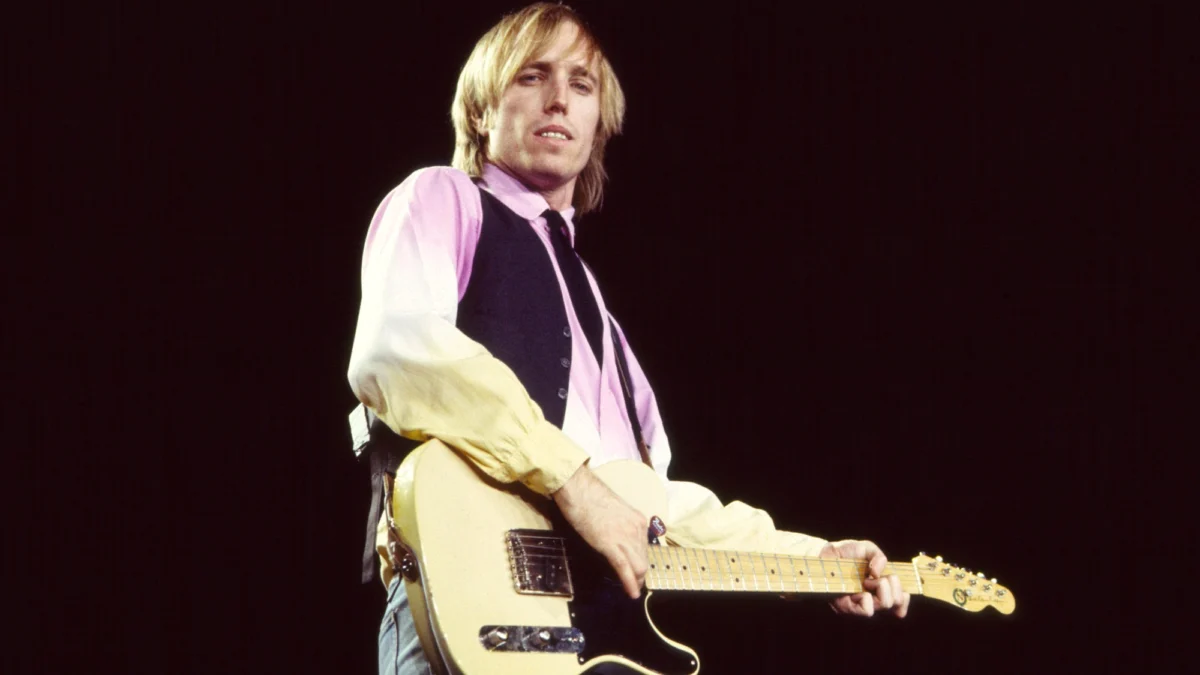
Tom Petty remains a foundational figure in the landscape of American rock and roll, occupying a space that bridges the gap between the traditionalism of the 1960s and the evolving sounds of the late 20th and early 21st centuries. Throughout a career that spanned more than 50 years, Petty established himself as a master of the three-minute rock song, blending Heartland rock, power pop, and folk influences into a cohesive and universally accessible sound. His passing in October 2017 left a significant void in the music industry, yet his influence continues to resonate through a vast catalog of hits and deep cuts. Among the extensive discography of Tom Petty and the Heartbreakers, as well as his solo ventures, four songs stand out as essential pillars of his legacy: "I Won’t Back Down," "Free Fallin’," "American Girl," and "Saving Grace." While these tracks represent different eras of his artistic evolution, they collectively illustrate the resilience, narrative depth, and melodic precision that defined his career.
The Architect of Heartland Rock: A Historical Context
Born in Gainesville, Florida, in 1950, Tom Petty’s journey into music began with a chance meeting with Elvis Presley and a subsequent obsession with The Beatles. His early work with the band Mudcrutch laid the groundwork for what would become Tom Petty and the Heartbreakers. Formed in 1976, the band consisted of Mike Campbell, Benmont Tench, Ron Blair, and Stan Lynch. Together, they navigated the shifting tides of the music industry, surviving the punk explosion and the rise of MTV by adhering to a philosophy of "don’t bore us, get to the chorus."
Petty’s career is often categorized into three distinct phases: the early Heartbreakers era (1976–1987), the solo superstar era (1989–1994), and the elder statesman era (1999–2017). Across these periods, he sold more than 80 million records worldwide, making him one of the best-selling music artists of all time. His induction into the Rock and Roll Hall of Fame in 2002 cemented his status as a legend. To understand the gravity of his impact, one must look at the specific compositions that served as the soundtrack for multiple generations.
American Girl: The Song That Almost Wasn’t
Released in February 1977 as the second single from the band’s self-titled debut album, "American Girl" is widely considered one of the greatest rock songs of all time, despite its initial lack of commercial success. In a surprising historical footnote, the song failed to chart on the Billboard Hot 100 during its first release. It wasn’t until the song was re-released in 1994 to support Petty’s Greatest Hits album—and after years of heavy FM radio rotation—that it became recognized as a definitive anthem.
Musically, "American Girl" is a masterclass in the "Byrds-ian" 12-string guitar sound, featuring a driving Bo Diddley beat and a soaring lead guitar solo by Mike Campbell. The lyrics tell a story of yearning and the search for something greater, a theme that would become a hallmark of Petty’s songwriting. The line "Raised on promises / She couldn’t help thinkin’ that there / Was a little more to life somewhere else" resonated with a youth culture seeking identity in a post-Vietnam America.
The song’s longevity was further validated in 2024 when country music star Dierks Bentley released a bluegrass-infused cover as the lead single for Petty Country: A Country Music Celebration of Tom Petty. Bentley’s version reached the Top 25 on the Country Airplay charts, proving that Petty’s songwriting transcends genre boundaries. The inclusion of "American Girl" in films like The Silence of the Lambs and its frequent use as a closing number for Petty’s live shows have ensured its place in the American cultural canon.
The Solo Revolution: Full Moon Fever and the Influence of Jeff Lynne
By the late 1980s, Tom Petty felt the need to experiment outside the confines of the Heartbreakers. This led to the 1989 release of Full Moon Fever, his first solo album. Produced by Jeff Lynne of Electric Light Orchestra (ELO), the album marked a shift toward a cleaner, more polished production style. It was during these sessions that two of Petty’s most iconic songs were born: "I Won’t Back Down" and "Free Fallin’."
I Won’t Back Down: An Anthem of Defiance
"I Won’t Back Down," released in April 1989, served as the lead single for Full Moon Fever. Written by Petty and Jeff Lynne, the song is a simple but powerful declaration of resilience. Its minimalist arrangement—featuring backing vocals and guitar work from Petty’s Traveling Wilburys bandmate George Harrison—allowed the message of the lyrics to take center stage.
The song reached No. 12 on the Billboard Hot 100 and No. 1 on the Album Rock Tracks chart, where it stayed for five weeks. Beyond its chart performance, "I Won’t Back Down" has been utilized in numerous political and social contexts, often serving as a rallying cry for those facing adversity. In 2015, the song returned to the headlines during a legal dispute with British singer Sam Smith. Petty’s estate and Smith’s team reached an amicable settlement after it was noted that Smith’s hit "Stay with Me" bore a striking resemblance to "I Won’t Back Down." Petty handled the situation with characteristic grace, stating that he bore Smith no "hard feelings" and recognized the similarities as a common occurrence in songwriting.
Free Fallin’: The Geography of the Soul
Following the success of "I Won’t Back Down," Petty released "Free Fallin’" in October 1989. While "I Won’t Back Down" was about standing one’s ground, "Free Fallin’" was about the sensation of letting go—for better or worse. The song is famous for its specific references to Southern California landmarks, such as Reseda, Ventura Boulevard, and Mulholland Drive.
The track peaked at No. 7 on the Billboard Hot 100, becoming Petty’s highest-charting solo single. Critics have often noted that the song captures the "languid, sun-drenched desperation" of Los Angeles. In a 2009 interview, Petty revealed that he wrote the song in just two days to amuse Jeff Lynne, never expecting it to become a career-defining hit. Its cultural impact was further cemented by a memorable scene in the 1996 film Jerry Maguire, where Tom Cruise’s character sings along to the track in his car, symbolizing a moment of personal liberation.
Saving Grace: The Late-Career Resurgence
As Petty moved into the 2000s, he continued to produce music that challenged the notion that rock stars lose their edge with age. In 2006, he released his third solo album, Highway Companion, again produced by Jeff Lynne. The lead single, "Saving Grace," proved that Petty’s knack for a bluesy, stomping rhythm remained intact.
"Saving Grace" is notable for being written solely by Petty, showcasing his ability to craft a compelling narrative around themes of travel, sin, and redemption. The song reached No. 1 on the Billboard Heritage Rock chart, making it Petty’s final No. 1 single before his death. The track’s gritty slide guitar and steady beat echoed the road-trip aesthetic of the album, reinforcing Petty’s image as a "highway companion" for his listeners.
Statistical Analysis and Industry Impact
The enduring popularity of these four songs is reflected in modern streaming data and sales figures. As of 2024, "Free Fallin’" and "I Won’t Back Down" consistently rank among the most-streamed rock songs of the 1980s on platforms like Spotify and Apple Music. Full Moon Fever has been certified 5x Platinum by the RIAA, while the 1993 Greatest Hits compilation, which features "American Girl," has reached Diamond status (over 10 million copies sold).
Industry experts often point to Petty’s "middle-of-the-road" appeal as the secret to his longevity. He was never too experimental to alienate the mainstream, nor too commercial to lose his "cool" factor among critics. His peers held him in the highest regard; Bob Dylan, who toured with the Heartbreakers and joined Petty in the Traveling Wilburys, described him as "a great performer" and "full of light."
Conclusion: A Legacy of Integrity
Tom Petty’s death in 2017 was met with an outpouring of grief from the music community, but the subsequent years have seen a concerted effort to preserve and celebrate his work. From the release of the An American Treasure box set to the 2024 country tribute album, the industry continues to find new ways to engage with his catalog.
The four songs discussed—"American Girl," "I Won’t Back Down," "Free Fallin’," and "Saving Grace"—serve as a roadmap of a career defined by integrity and a refusal to compromise. Whether he was a young Floridian trying to make it in L.A. or a rock veteran reflecting on the "saving grace" of the road, Petty’s voice remained authentic. He did not just write songs; he wrote the "American" experience into the chords of his guitar, ensuring that his music will remain relevant for as long as there are people looking for a little more to life somewhere else.
