

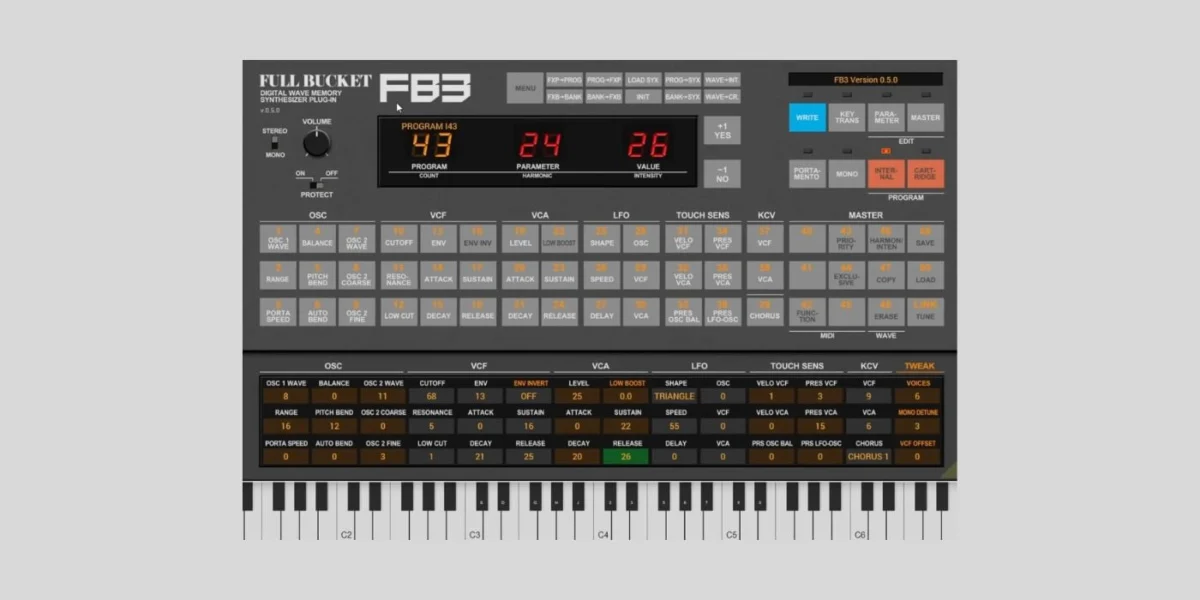
The acclaimed developer Full Bucket Music is poised to release FB3, a comprehensive and free software emulation of the iconic Kawai K3 hybrid synthesizer, originally launched in 1986. This forthcoming plugin marks another significant contribution from Björn Arlt, the driving force behind Full Bucket Music, known for his dedication to meticulously recreating vintage hardware synthesizers in accessible software formats. The initial public unveiling of FB3 occurred via a report on Synth Anatomy, an industry news portal, followed by a detailed beta preview video from synthesizer expert Espen Kraft, offering the first substantial look at the plugin’s capabilities.
The Genesis of FB3: Emulating a Hybrid Legend
The decision by Full Bucket Music to emulate the Kawai K3 is particularly noteworthy given the synthesizer’s unique place in electronic music history. Released during a pivotal era for synthesis, the K3 stood out with its innovative hybrid architecture, combining the precision and versatility of digital waveform generation with the warmth and character of analog filtering and envelopes. This approach allowed the K3 to carve out a distinct sonic identity, offering textures that were both cutting-edge for its time and enduringly appealing to sound designers and musicians.
At its core, the original Kawai K3 featured two digital oscillators capable of generating 32 distinct waveforms, which could then be routed through a resonant analog low-pass filter. This marriage of digital and analog components provided a broad sonic palette, ranging from crystalline digital pads and metallic textures to rich, evolving analog-like sweeps and basses. It also included two ADSR envelopes for modulating the filter and amplifier, and an LFO with delay, offering considerable sound design flexibility. A distinctive feature of the K3 was its ability for users to create their own custom waveforms through harmonic synthesis, a capability that provided an even deeper layer of sonic exploration.
The Kawai K3 emerged in a competitive landscape dominated by digital synthesizers like the Yamaha DX7 and evolving analog/digital hybrids from Korg (e.g., DW-8000) and Roland (e.g., Alpha Juno series). While perhaps not as commercially ubiquitous as the DX7, the K3 garnered a loyal following for its unique sound and approachable interface, especially for those seeking to blend the best of both digital and analog worlds. Its MSRP at launch positioned it as a professional-grade instrument, making its sounds primarily accessible to those with significant investment capabilities. The forthcoming FB3 aims to democratize this distinct sonic legacy, making it available to a vastly wider audience without financial barriers.
Full Bucket Music: A Legacy of Free and Authentic Emulations
Full Bucket Music, spearheaded by the German software developer Björn Arlt, has cultivated an exceptional reputation within the music production community for producing high-quality, free software emulations of classic synthesizers. Arlt’s commitment to accuracy, efficiency, and user-friendliness has positioned his plugins as indispensable tools for countless musicians, producers, and sound designers worldwide. His work is characterized by meticulous attention to the nuances of the original hardware, often replicating idiosyncratic behaviors that contribute significantly to the character of vintage instruments.
Prior to FB3, Full Bucket Music gained widespread acclaim for emulations of various Korg synthesizers, most notably the Fury-800 (a recreation of the Korg Poly-800), the Mono/Poly, and even more complex instruments like the Korg PS-3300. The Fury-800, for instance, has been prominently featured in educational contexts, including its selection as a mandatory instrument in the BPB Monthly Music Challenge, underscoring the trust and respect the community holds for Arlt’s work. These emulations are lauded not only for their sonic fidelity but also for their low CPU consumption, making them practical for use in demanding production environments. This consistent track record of excellence has established Full Bucket Music as a benchmark for free software instruments, setting high expectations for every new release. The introduction of FB3, moving beyond the familiar Korg territory to embrace the Kawai K3, serves as a compelling reminder of Full Bucket Music’s broad expertise and dedication to preserving diverse chapters of synthesizer history.
Detailed Examination of FB3’s Features and Architecture
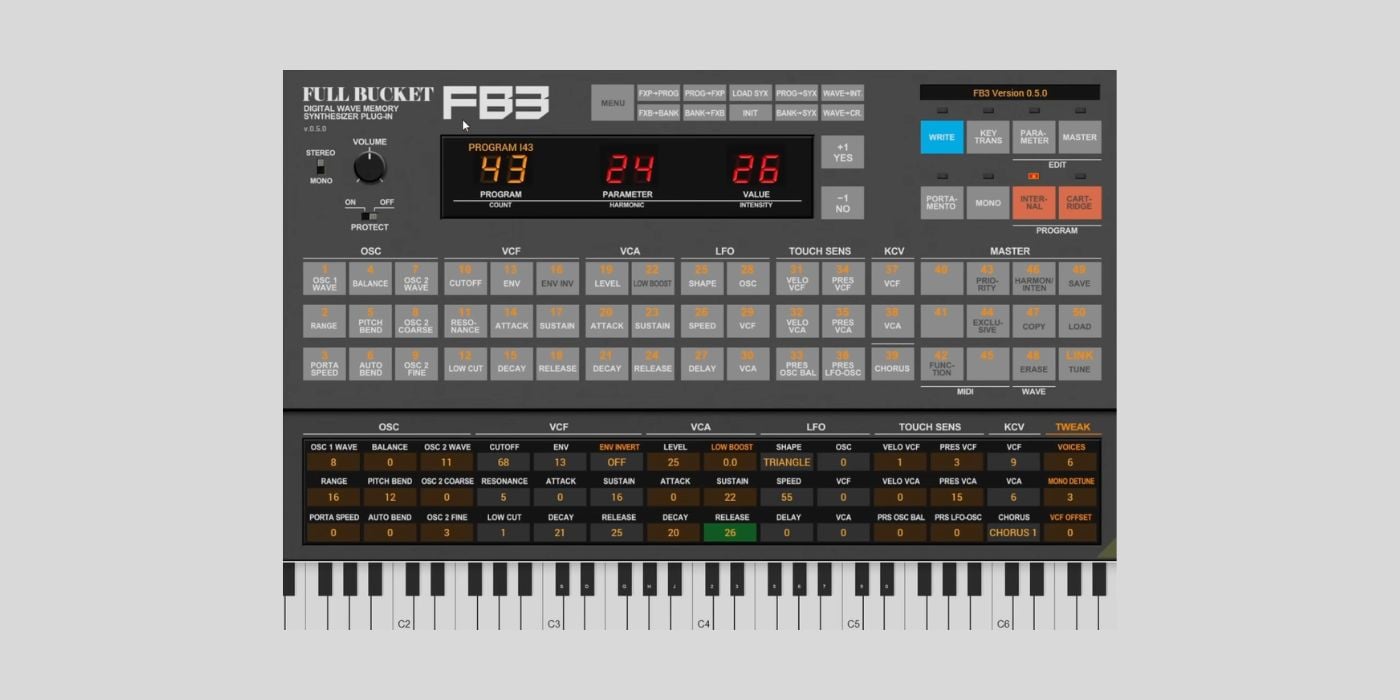
Based on the preliminary information and the beta preview, FB3 faithfully adheres to the core architecture of the original Kawai K3. The plugin incorporates two oscillators, providing access to the original 32 digital waveforms that defined the K3’s unique sonic palette. Users will have granular control over oscillator balance and range, along with coarse and fine tuning capabilities for oscillator 2, allowing for intricate harmonic layering and detuning effects.
Central to the K3’s hybrid character, FB3 includes a resonant low-pass filter, essential for shaping the digital waveforms with analog warmth and bite. Additionally, a high-pass filter is implemented, expanding the timbral sculpting possibilities. The plugin features two dedicated ADSR envelopes, one for the filter and another for the amplifier, providing dynamic control over the sound’s evolution. An LFO (Low-Frequency Oscillator) with a delay function is also included, capable of being routed to both the VCF (Voltage Controlled Filter) and VCA (Voltage Controlled Amplifier), enabling expressive modulation for vibrato, tremolo, and filter sweeps.
Modern production workflow considerations are evident in FB3’s design, with velocity and aftertouch sensitivity included for both filter and amplifier parameters. This allows for highly expressive performances that react dynamically to a player’s touch, a crucial feature for contemporary musicality. A significant technical achievement for a free plugin is its ability to load Kawai K3 SysEx (System Exclusive) patches. This feature is invaluable for owners of the original hardware or those who have archived K3 patches, enabling them to seamlessly transfer and utilize their existing sound libraries within the FB3 environment. The beta version of FB3 also supports the import of additional waveforms, suggesting a degree of expandability beyond the original K3’s fixed set. However, Espen Kraft’s preview notes that the original K3’s distinctive harmonic user-wave editing functionality—a powerful feature allowing users to construct waveforms by adjusting individual harmonics—does not appear to be implemented in the current beta. While this omission might be a point of consideration for purists, the core emulation of the K3’s digital waveforms and analog processing remains intact, promising a rich sonic experience.
Unveiling and Anticipation: A Chronology
The journey of FB3 from development to public awareness began with initial whispers in the synthesizer community, culminating in its formal unofficial announcement. The first substantive mention of FB3 emerged on Synth Anatomy, a respected platform for electronic music hardware and software news, run by Tom. This initial report piqued significant interest, leveraging Full Bucket Music’s established reputation.
The most comprehensive preview to date came from Espen Kraft, a prominent figure in the synth community known for his insightful reviews and demonstrations of vintage and modern synthesizers. Kraft’s video, based on a beta version of the plugin, offered the first practical demonstration of FB3’s sound and functionality, allowing potential users to hear its capabilities firsthand. His observations, including the absence of harmonic user-wave editing in the beta, provided valuable early insights into the plugin’s current state of development.
As of the last update on July 27, 2026, FB3 is still in its "coming soon" phase, with no precise release date announced. However, the comprehensive nature of the beta preview and the high level of polish typically associated with Full Bucket Music’s releases suggest that the official launch is imminent. The anticipation within the music production community is palpable, fueled by the promise of another high-quality, free instrument from a trusted developer.
Broader Impact and Implications for Music Production
The impending release of Full Bucket Music’s FB3 carries significant implications for the landscape of music production and the preservation of synthesizer history.
Democratization of Vintage Sound: Perhaps the most profound impact of FB3, like all Full Bucket Music offerings, is its role in democratizing access to vintage synthesizer sounds. The original Kawai K3, while not prohibitively expensive compared to some flagship synths, still represents an investment in hardware that requires maintenance, space, and often technical knowledge. By providing a free, high-fidelity software emulation, FB3 enables countless bedroom producers, aspiring musicians, and educators to experience the unique sonic character of the K3 without financial barriers. This expands creative possibilities and fosters a more inclusive environment for sound design and music creation.
Preservation of Sonic Legacy: Beyond accessibility, FB3 serves as an act of digital preservation. Vintage synthesizers are mechanical and electronic devices susceptible to wear, tear, and eventual failure. Accurate software emulations ensure that the distinctive sounds and operational quirks of these instruments are preserved for future generations, allowing them to be studied, appreciated, and incorporated into new musical contexts long after the original hardware becomes rare or non-functional. This is particularly crucial for instruments like the K3, which possess unique hybrid architectures that might otherwise be overlooked.
Influence on the Plugin Market: Full Bucket Music’s consistent delivery of professional-grade free plugins continues to raise the bar for the entire software instrument market. Their success demonstrates that high quality does not always equate to a high price tag, challenging developers of commercial plugins to innovate further and justify their pricing structures. This competition ultimately benefits consumers by driving improvements in both free and paid software.
Creative Inspiration and Hybrid Synthesis Revival: The K3’s hybrid architecture – digital oscillators paired with analog filters – offers a distinct sonic signature that sets it apart from purely analog or purely digital instruments. FB3’s release may spark a renewed interest in hybrid synthesis, encouraging sound designers to explore the unique textures and timbres that arise from this fusion. For electronic musicians, film composers, and sound artists, the FB3 presents a fresh palette for creating evolving pads, sharp digital leads, and characterful basslines that carry the authentic flavor of the mid-1980s while fitting seamlessly into modern productions. The ability to load SysEx patches also encourages community engagement, allowing users to share and discover new sounds for the K3 emulation.
Technical Accessibility and Modern Compatibility: The announcement that FB3 will be available for macOS and Windows in VST, VST3, AU, CLAP, and AAX plugin formats, with native Apple Silicon and Intel Mac support, ensures broad compatibility across virtually all major digital audio workstations (DAWs). This commitment to modern technical standards means that FB3 will be a practical and reliable tool for producers using current computing environments, further solidifying its potential widespread adoption.
In conclusion, Full Bucket Music’s FB3 is shaping up to be more than just another free plugin; it is a significant cultural contribution that bridges the gap between vintage synthesizer history and contemporary music production. By making the unique sound of the Kawai K3 accessible to all, Björn Arlt continues to empower musicians globally, enriching the sonic landscape and ensuring that the legacies of these iconic instruments endure. The music community eagerly awaits its official release, anticipating another excellent addition to the indispensable library of Full Bucket Music’s software synthesizers.
