

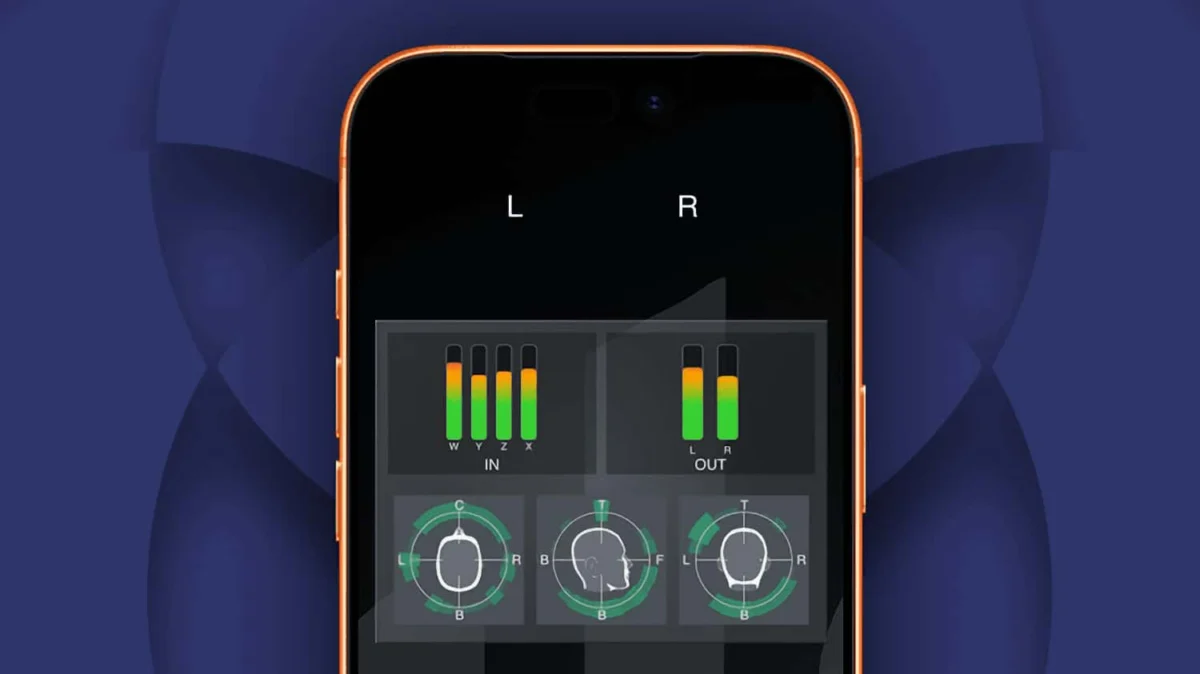
The landscape of mobile audio production has reached a significant milestone with the official release of ab Recorder, a sophisticated application developed by Audio Brewers designed to transform the ubiquitous iPhone into a professional-grade Ambisonics field recorder and audiovisual capture system. This technological advancement represents a shift in how spatial audio is captured, moving away from the requirement of specialized, often cumbersome hardware towards a more integrated, software-driven approach that leverages the increasingly powerful internal components of modern smartphones. By providing users with the ability to record immersive, three-dimensional soundscapes directly to their mobile devices, Audio Brewers is positioning itself at the forefront of the democratization of spatial audio technology.
The Technical Foundation of ab Recorder
Ambisonics is a full-sphere surround sound format that, unlike traditional stereo or surround sound, covers the space above and below the listener in addition to the horizontal plane. Traditionally, capturing such audio required a tetrahedral microphone array—four distinct microphone capsules arranged in a specific geometry—and a dedicated multi-channel recorder. The ab Recorder app simplifies this workflow by utilizing the existing microphone arrays found in the iPhone, combined with proprietary digital signal processing (DSP) algorithms, to derive a spatial audio field that can be exported for use in immersive media environments.
The application allows for the capture of both audio-only files and audiovisual content where the spatial audio is synced directly to the video feed. This dual functionality is particularly relevant for creators working in Virtual Reality (VR), Augmented Reality (AR), and 360-degree video, where the congruence between visual movement and auditory localization is critical for maintaining the "sense of presence." The software is designed to handle the complex mathematics of B-Format conversion, which is the standard format for Ambisonics, allowing creators to capture "Ambiences" that are ready for post-production in any major Digital Audio Workstation (DAW).
Field Implementation and Performance Analysis
To demonstrate the capabilities of the new software, Audio Brewers released a series of field tests conducted in Athens, Greece. These recordings focused on capturing the complex acoustic environments of urban spaces, historical sites, and crowded thoroughfares. The choice of Athens, a city known for its unique blend of ancient stone architecture and modern bustling traffic, provided a rigorous testing ground for the app’s ability to distinguish between direct sound sources and diffuse environmental reflections.
In these demonstrations, the ab Recorder was shown to accurately place sound sources within a 360-degree sphere. Observers noted that the app successfully captured the height information of the city’s ambient noise—such as birds overhead or the echoes of footsteps bouncing off high walls—which is typically lost in standard stereo recordings. The ability to record these nuances without the need for an external Ambisonics microphone like the Sennheiser AMBEO or the Zoom H3-VR highlights a significant reduction in the barrier to entry for high-quality field recording.
A Chronology of Spatial Audio Innovation
The release of ab Recorder does not exist in a vacuum but is the latest entry in a decade-long evolution of spatial audio accessibility. In the early 2010s, Ambisonics was largely confined to academic research and high-end film post-production. The timeline of its mainstream emergence can be traced through several key industry shifts:
- 2015-2016: The rise of consumer VR headsets, such as the Oculus Rift and HTC Vive, created an immediate demand for immersive audio content.
- 2017: YouTube and Facebook introduced support for first-order Ambisonics in their 360-degree video players, standardizing the format for social media creators.
- 2019-2021: Major hardware manufacturers released "all-in-one" Ambisonics microphones, making the technology portable for the first time.
- 2022-2023: The "Spatial Audio" movement, led by Apple Music and Dolby Atmos, brought immersive sound to the general public via headphones.
- 2024: Audio Brewers introduces ab Recorder, removing the hardware requirement entirely for entry-level and mid-tier professional spatial capture.
This timeline illustrates a clear trajectory toward the "software-fication" of audio hardware. As smartphone processors (such as Apple’s A-series chips) have gained the computational power to handle real-time spatial encoding, the necessity for external processors has diminished for many standard field-recording use cases.
Supporting Data and Market Implications
The launch of ab Recorder comes at a time when the global spatial audio market is experiencing unprecedented growth. According to industry analysis, the spatial audio market was valued at approximately $2.5 billion in 2023 and is projected to grow at a compound annual growth rate (CAGR) of over 15% through 2030. This growth is driven by the expansion of the gaming industry, the integration of 3D audio in automotive entertainment systems, and the increasing adoption of smart wearables.
By offering ab Recorder as a free-to-download application with in-app purchases, Audio Brewers is employing a "freemium" model that targets a wide demographic. This strategy allows hobbyists to experiment with spatial audio at no initial cost while providing professional-tier features—such as high-resolution export formats and advanced calibration tools—as paid upgrades. This model is expected to increase the volume of spatial content available on platforms like SoundCloud and YouTube, as more creators gain the tools necessary to produce immersive soundscapes.
Furthermore, the environmental impact of this shift is noteworthy. By reducing the need for plastic-heavy hardware and specialized batteries, software-based recording solutions offer a more sustainable path for the electronic music and film production industries. The consolidation of multiple devices into a single smartphone reduces the carbon footprint associated with manufacturing and transporting professional audio gear.
Official Responses and Industry Reception
While official statements from competing hardware manufacturers have been reserved, the response from the independent creator community has been overwhelmingly positive. Industry experts suggest that while a smartphone microphone array cannot fully replicate the signal-to-noise ratio of a $2,000 dedicated Ambisonics rig, the "convenience factor" of ab Recorder makes it an indispensable tool for "run-and-gun" creators.
"The best microphone is the one you have with you," noted one sound designer in an early review of the app. "For years, field recordists had to choose between lugging a dedicated kit or missing the moment. With ab Recorder, the fidelity is high enough for professional B-roll and atmospheric layers in film, which is a massive win for the industry."
Audio Brewers has emphasized that the app is designed to work in tandem with their existing suite of desktop plugins. This ecosystem approach ensures that once a recording is captured on an iPhone, it can be seamlessly integrated into a professional studio environment for further manipulation, decoding, and mixing into formats like Dolby Atmos 7.1.4.
Broader Impact and the Future of Immersive Capture
The implications of ab Recorder extend beyond simple convenience; they touch upon the future of digital memory and documentation. As spatial audio becomes the standard for personal media, the way we record and relive experiences will change. A video of a family gathering or a protest captured in Ambisonics provides a level of immersion and historical context that traditional media cannot match. By placing these tools in the pockets of millions of users, Audio Brewers is contributing to a future where our digital archives are as three-dimensional as the world they represent.
Looking ahead, the success of ab Recorder is likely to spur further innovation in the mobile audio space. Competitors may look to integrate artificial intelligence to further enhance the spatial separation of recordings made on mobile devices, or to offer real-time cloud-based processing for complex Ambisonics decoding. Additionally, as hardware manufacturers like Apple and Samsung continue to improve the physical microphone components of their devices, the gap between smartphone-based recording and dedicated professional equipment will continue to narrow.
In conclusion, Audio Brewers’ ab Recorder is more than just an app; it is a catalyst for the next phase of the spatial audio revolution. By successfully bridging the gap between high-end professional requirements and mobile accessibility, the company has provided a vital tool for the modern era of immersive storytelling. As creators continue to explore the possibilities of the 3D soundstage, the ability to capture the world in its full acoustic glory—anywhere and at any time—will undoubtedly lead to a richer, more vibrant media landscape.
The application is currently available on the Apple App Store, offering a gateway for anyone with a compatible iPhone to begin their journey into the world of Ambisonics. As the technology matures, Audio Brewers remains committed to updating the platform to reflect the latest advancements in spatial audio science, ensuring that the ab Recorder remains a staple in the toolkit of sound enthusiasts and professionals alike.
