

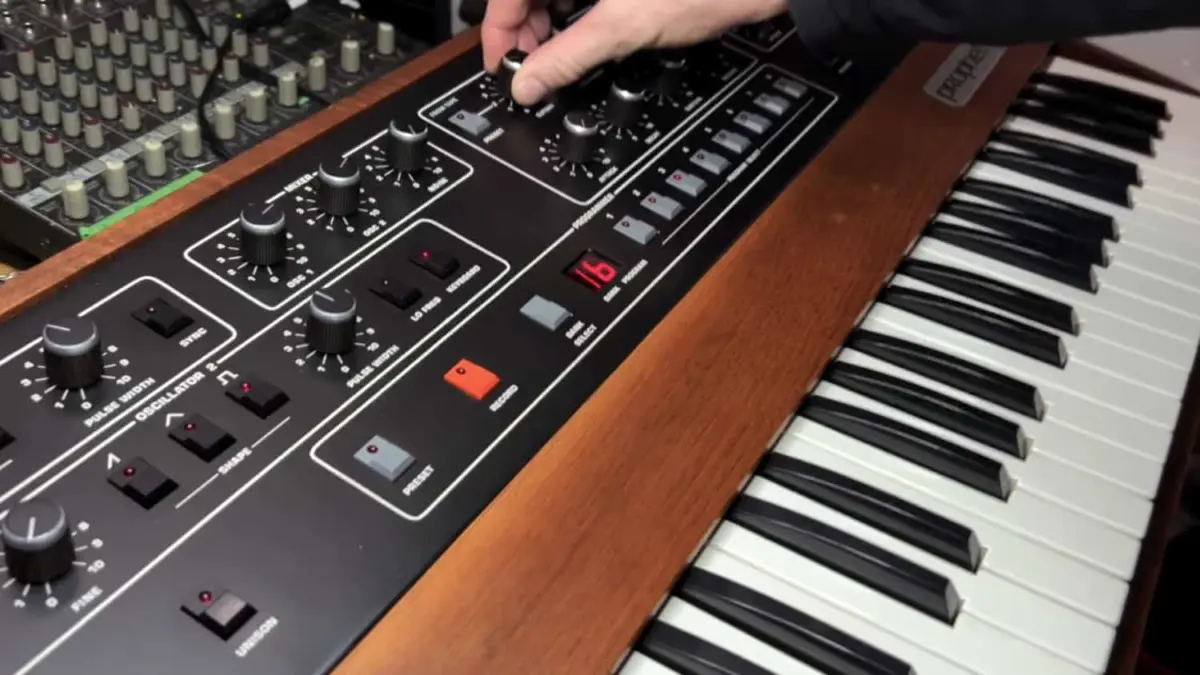
The landscape of modern analog synthesis is witnessing a significant shift as the line between factory-restricted hardware and community-driven software continues to blur. In a major development for the synthesizer community, a new open-source project titled prophet-rev4-mods has emerged, offering a comprehensive alternate firmware for the Sequential Prophet-5 and Prophet-10 Rev4. This independent software initiative introduces a suite of highly requested features—including a polyphonic step sequencer, a versatile arpeggiator, and octave shifting—to instruments that were previously designed to adhere strictly to their vintage, feature-minimalist roots. By leveraging the existing digital control architecture of these flagship synthesizers, the project provides a significant utility expansion without necessitating any physical alterations to the hardware.
The Genesis of the Prophet-5 Rev4 and the Demand for Modern Utility
To understand the impact of the prophet-rev4-mods project, one must first look at the history of the Sequential Prophet-5. Originally released in 1978 by Dave Smith and Sequential Circuits, the Prophet-5 was the world’s first fully programmable polyphonic synthesizer. It went through three major revisions (Rev 1, Rev 2, and Rev 3) before production ceased in the mid-1980s. In September 2020, Sequential—under the leadership of the late Dave Smith—announced the Prophet-5 Rev4. This new version was designed as a "greatest hits" compilation of the previous revisions, featuring genuine Curtis analog filters and Dave Rossum-designed SSI filters, along with a "Vintage" knob to simulate the stable-to-unstable behaviors of various production eras.
Despite its modern construction, the Rev4 was intentionally designed with a "purist" philosophy. Unlike Sequential’s other modern offerings, such as the Prophet-6 or the OB-6, the Prophet-5 and Prophet-10 Rev4 lacked an onboard arpeggiator and sequencer. Sequential’s design goal was to provide an authentic vintage experience, focusing on the raw tonal quality and the immediate, one-knob-per-function interface. However, as the Rev4 found its way into the hands of contemporary producers and performers, a vocal segment of the user base began requesting the integration of modern performance tools that have become standard in the 21st-century studio.
Technical Breakdown: What prophet-rev4-mods Delivers
The prophet-rev4-mods project, hosted on GitHub under the MIT license, represents a sophisticated feat of reverse engineering and software enhancement. The firmware is specifically designed for the Revision 4 hardware, which utilizes a modern digital control layer to manage the analog voice boards. By patching the official Main OS 2.1.0 firmware, the developer, known by the handle "dangerous," has successfully injected new subroutines into the operating system’s code.
1. Polyphonic Step Sequencer
Perhaps the most significant addition is the polyphonic step sequencer. While the Prophet-6 and OB-6 have long featured 64-step polyphonic sequencers, the Prophet-5 Rev4 was limited to external sequencing via MIDI or CV/Gate. The prophet-rev4-mods firmware enables a 64-step internal sequencer that supports polyphonic input, allowing users to record complex chord progressions and melodic lines directly on the unit. Furthermore, the mod introduces patch-level sequence memory, meaning that sequences can be saved and recalled alongside individual presets—a feature that significantly enhances the synthesizer’s utility in live performance settings.
2. Multi-Mode Arpeggiator
The inclusion of an arpeggiator addresses one of the most common critiques of the Rev4’s feature set. The mod provides standard arpeggiation modes, including Up, Down, and Random, which can be synchronized to internal or external MIDI clock. This brings the Prophet-5 into parity with its smaller sibling, the Prophet-6, making it a more viable tool for electronic music genres that rely heavily on rhythmic, pulsating textures.
3. Octave Shifting and Performance UI Enhancements
The firmware also introduces dedicated octave shifting capabilities. In the original factory firmware, shifting octaves often required navigating menus or adjusting the frequency knobs of individual oscillators, which could disrupt the fine-tuning of a patch. The mod streamlines this process, allowing for rapid transposition during play.
Chronology of Development and Testing
The development of prophet-rev4-mods follows a growing trend of "jailbreaking" or "modding" high-end synthesizers to unlock dormant potential. Similar projects have been seen in the past for the Korg Volca series and the Arturia MicroFreak, though performing such modifications on a premium instrument like the Prophet-10—which retails for approximately $4,000 USD—carries significantly higher stakes.
According to the project’s documentation, the author conducted successful hardware testing on a Prophet-10 Rev4 in late 2023 and through the early months of 2024. Interestingly, the repository notes a specific testing milestone dated October 2026, which community members suggest may be a clerical error or a reference to a specific internal versioning timeline. Despite the success on the Prophet-10, the developer has noted that the Prophet-5 Rev4 remains technically "untested" on physical hardware by the lead developer, though the underlying architecture of the two machines is nearly identical, differing primarily in voice count.
Installation Protocols and Technical Requirements
The installation of prophet-rev4-mods is not a "plug-and-play" affair and requires a moderate level of technical literacy. Because the project does not distribute Sequential’s proprietary code, users must provide their own copy of the official Sequential Main OS 2.1.0 firmware file.

The process involves:
- Acquisition: Downloading the official firmware from Sequential’s support site.
- Patching: Using the tools provided in the GitHub repository to apply the "dangerous" mods to the official binary file.
- Transfer: Utilizing a MIDI SysEx (System Exclusive) utility—such as MIDI-OX for Windows or SysEx Librarian for macOS—to transmit the patched firmware to the synthesizer via a MIDI interface.
The repository includes a detailed "recovery" section, outlining how users can revert to the official factory firmware if they encounter bugs or wish to restore the unit to its original state for resale or warranty purposes.
The Risks of Third-Party Firmware
While the synth community has largely reacted with excitement to the prophet-rev4-mods project, industry experts urge caution. Installing third-party firmware on a professional-grade synthesizer is not without risk. Sequential, now a part of the Focusrite Group, does not officially sanction or support alternate firmwares.
Potential risks include:
- Warranty Voidance: Most manufacturers consider the installation of unofficial software a breach of warranty terms.
- System Instability: Unofficial code may lead to unexpected behavior, such as "hanging" notes, MIDI clock jitter, or UI freezes.
- Bricking: In extreme cases, a failed firmware update via SysEx can render a synthesizer unresponsive, requiring a factory service center to re-flash the internal memory.
The developer has been transparent about these risks, including a standard disclaimer in the repository stating that the software is provided "as is" and that users assume all responsibility for the health of their hardware.
Broader Implications for the Synthesizer Industry
The emergence of prophet-rev4-mods highlights a fascinating tension in the musical instrument industry: the balance between "vintage accuracy" and "modern functionality." When Sequential released the Rev4, they bet on the idea that users wanted a time machine—a device that looked, felt, and limited the player exactly like a 1978 original. The success of this third-party mod suggests that while users value the analog tone of the past, they are increasingly unwilling to sacrifice the sequencing and arpeggiation conveniences of the present.
This project also underscores the power of the MIT license and open-source collaboration in the niche world of music technology. By making the code available on GitHub, the developer allows other programmers to refine the features, fix bugs, and perhaps even port the mods to other Sequential instruments, such as the Prophet-6 or the Trigon-6.
Market Reaction and Community Sentiment
Early reactions from the "Synth-DIY" and "Prophet-5 Owners" groups on platforms like Gearspace and Reddit have been overwhelmingly positive. Many users have expressed that the addition of an internal sequencer makes the Prophet-10 a "complete" workstation, reducing the need for external controllers in small studio setups.
Sequential has not issued an official statement regarding the prophet-rev4-mods project. Historically, the company has maintained a cordial, if distant, relationship with the modding community. Dave Smith himself was known for encouraging innovation, though the corporate structure under Focusrite may prioritize strict adherence to official software builds to ensure product reliability.
As of May 2024, the prophet-rev4-mods project continues to be updated, with the community contributing bug reports and feature requests. For the Sequential Prophet-5 and Prophet-10 Rev4, the "vintage" experience has just received a very modern, very powerful upgrade, proving that even the most legendary designs can find new life through the ingenuity of their users.
