

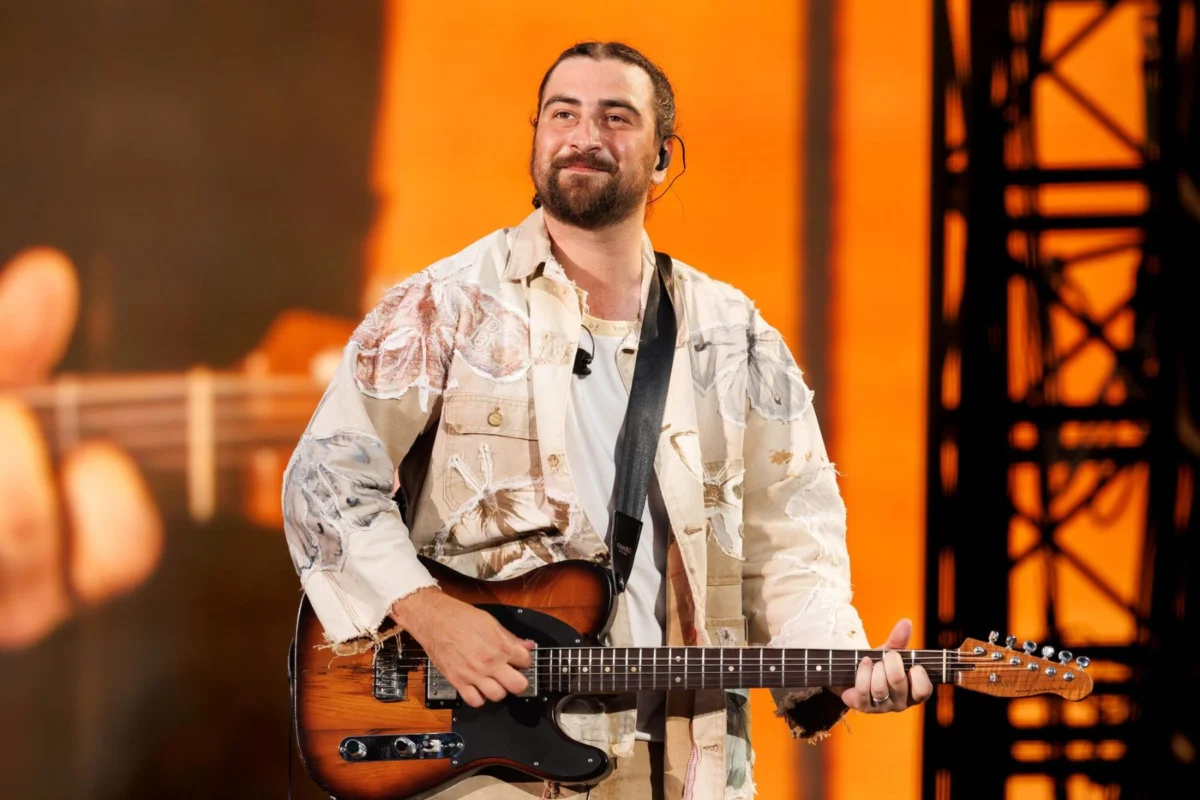
The popular singer-songwriter Noah Kahan has become the latest prominent musician to publicly denounce the White House for its unauthorized use of his music in a political social media campaign. Kahan adamantly took issue with the administration’s appropriation of his song "American Cars" in a promotional clip featuring President Trump’s recent visit with autoworkers in Michigan. This incident follows a series of similar complaints from other high-profile artists, including Katy Perry and Ariana Grande, highlighting an ongoing tension between creators and political entities regarding intellectual property rights in the digital age.
The Incident: "American Cars" and the Michigan Auto Plant Visit
The controversy erupted after President Trump’s visit to a Michigan auto plant earlier this week, an event intended to highlight American manufacturing and the domestic automotive industry. Following the visit, the administration’s social media team posted videos and photos on official White House accounts across platforms like TikTok and Instagram. These clips were notably set to Kahan’s song "American Cars," a track from his critically acclaimed fourth studio album, The Great Divide, which notably reached No. 1 on the Billboard 200 chart. The choice of song, seemingly innocuous given its title and thematic resonance with the visit, quickly drew the artist’s ire.
Kahan, the 29-year-old Vermont-bred singer-songwriter, responded forcefully to the unauthorized placement. In comments posted on Instagram, where the sound for the video appeared to have been disabled at the time of reporting, Kahan explicitly stated, "Would never approve of my music being used in support of you or this administration." This direct and unambiguous statement, made on Monday, July 27, garnered significant attention, accumulating over 21,000 likes as of press time, indicating strong public and fan support for his stance.
Despite the apparent removal of the audio from the Instagram post, the song remained featured in an accompanying video on the White House’s official TikTok account. This particular TikTok clip showcased President Trump signing a white Corvette during his visit to the General Motors proving grounds in Milford, Michigan, with Kahan’s track playing in the background. Adding another layer of strong disapproval, Noah Levine, Kahan’s frequent co-writer and co-author of "American Cars," also weighed in with a more direct and unvarnished comment on the Instagram post, which some fans later reported as having been removed or scrubbed from the platform. The immediate and vocal reactions from both Kahan and Levine underscore the deep personal and professional offense taken by artists when their work is used in contexts they do not endorse. At the time of publication, a spokesperson for the White House had not responded to Billboard’s request for comment regarding the incident or the artists’ complaints.
A Broader Pattern: Artists vs. Political Campaigns on Intellectual Property
Noah Kahan’s protest is not an isolated incident but rather the latest in a burgeoning trend of artists taking a stand against political figures and administrations for using their music without explicit permission. This ongoing struggle highlights a fundamental conflict between intellectual property rights and the often-unilateral actions of political campaigns and government bodies operating in the fast-paced, high-reach environment of social media. The digital landscape has made it easier than ever for political entities to incorporate popular music into their content, often leveraging the widespread appeal and recognition of a track to enhance their message, sometimes without fully understanding or respecting the legal and ethical implications of copyright.
The core of the issue lies in copyright law, which grants creators exclusive rights to reproduce, distribute, perform, and display their original works. While political campaigns often argue "fair use" or rely on blanket licenses from performance rights organizations (PROs) like ASCAP and BMI for public venues, these licenses typically cover public performances at rallies, not synchronization rights required for video use on social media or in campaign ads. Synchronization licenses, which are necessary when music is paired with visual media, must be obtained directly from the copyright holders (typically the artist and their publisher/record label). The lack of such direct permission is consistently at the heart of these disputes.
A Timeline of Recent High-Profile Objections

Kahan’s situation closely mirrors similar incidents that have occurred just in recent weeks, demonstrating a pattern of unauthorized usage:
-
Katy Perry and "Firework": Just days before Kahan’s complaint, pop superstar Katy Perry voiced her outrage when the White House utilized her iconic 2010 hit "Firework" in a TikTok video. This particular video controversially featured footage of military strikes, synchronizing Perry’s "boom, boom, boom" lyrics with black-and-white visuals of explosions and carrying the caption, "Iran has been warned." Perry took to X (formerly Twitter) to express her dismay, writing, "I am deeply appalled and angry to see ‘Firework’ used on the @WhiteHouse TikTok account as a backing track for video footage of military strikes. I did not approve this, I was not asked, and I absolutely do not condone it." She further clarified her artistic intent, stating, "My music is for bringing people together, not celebrating warfare." This incident not only highlighted the copyright issue but also the stark contrast between the artist’s message and the political context in which it was employed.
-
Ariana Grande and "Bye": In June, Ariana Grande similarly objected to the White House’s use of a version of her 2024 song "Bye" in a TikTok clip. This video depicted ICE (Immigration and Customs Enforcement) agents arresting and handcuffing individuals, a highly sensitive and politically charged subject. Grande’s response, also in a comment that is no longer visible, was unequivocal: "Please do not ever use my music in relation to this barbaric, inhumane, heinous nonsense. F–– ICE." Her strong condemnation underscored her moral opposition to the actions depicted in the video and her refusal to have her art associated with them.
These recent examples are part of a much larger narrative. Over the past several years, a substantial roster of artists has publicly criticized various political campaigns, most notably the Trump administration, for using their music without consent in campaign rallies, advertisements, and social media hype videos. This extensive list includes a diverse array of global music icons such as Beyoncé, Adele, Celine Dion, Foo Fighters, Guns N’ Roses, Jack White/White Stripes, Kenny Loggins, Neil Young, Olivia Rodrigo, Ozzy Osbourne, Rihanna, and many others. Each instance adds to the growing legal and ethical challenge faced by artists seeking to protect their creative output from political appropriation.
Legal Framework and the Challenges of Enforcement
The legal landscape governing the use of music in political contexts is complex and often contested. While performance rights organizations (PROs) such as ASCAP, BMI, and SESAC issue blanket licenses that permit political campaigns to play copyrighted music at rallies and public events, these licenses do not extend to all forms of usage. Crucially, they do not cover "synchronization rights," which are required when music is paired with visual content in videos for advertising, social media, or any other media where music is synchronized with images. These synchronization licenses must be negotiated directly with the copyright holders – typically the songwriter(s), publisher(s), and record label(s).
Political campaigns frequently argue that their use of music falls under "fair use," a doctrine in U.S. copyright law that allows limited use of copyrighted material without acquiring permission from the rights holders for purposes such as criticism, comment, news reporting, teaching, scholarship, or research. However, courts typically evaluate fair use based on four factors: the purpose and character of the use (including whether such use is of a commercial nature or is for nonprofit educational purposes), the nature of the copyrighted work, the amount and substantiality of the portion used in relation to the copyrighted work as a whole, and the effect of the use upon the potential market for or value of the copyrighted work. Political campaign videos, especially those designed to persuade or promote a candidate, often struggle to meet the criteria for fair use, particularly concerning the commercial nature and potential market impact.
Furthermore, artists often assert their "moral rights," even if not explicitly codified in U.S. copyright law as strongly as in some European countries. Moral rights relate to the right of an artist to protect the integrity of their work and to prevent its distortion, mutilation, or modification, or its use in a context that they find objectionable or that might damage their reputation. While moral rights are not typically invoked in U.S. copyright infringement cases as a standalone claim, the underlying sentiment of protecting the artistic integrity and authorial intent is a powerful motivator for artists like Kahan, Perry, and Grande.
The enforcement of these rights against political entities presents unique challenges. Sending cease-and-desist letters is a common first step, but actual litigation can be lengthy, costly, and carry the risk of appearing politically motivated, even when the dispute is purely about copyright. Moreover, by the time legal action is pursued, the political message associated with the song may have already widely disseminated, making it difficult to fully undo the perceived endorsement.
Implications for Artists, Political Entities, and Social Media Platforms

The recurring nature of these disputes has several significant implications:
-
For Artists: These incidents underscore the constant vigilance required for artists to protect their intellectual property. It forces them into a difficult position: either remain silent and risk their music being associated with causes they oppose, or speak out and potentially face backlash from political supporters of the administration or campaign in question. The artists’ public statements, however, also serve to clarify their personal brand and political alignment for their fan base, which can be crucial for maintaining authenticity and trust. For Noah Kahan, whose music often carries themes of introspection, nature, and community, its use in a specific political context might be seen as a distortion of its original meaning and intent.
-
For Political Entities: The persistent objections from artists highlight a legal and public relations minefield for political campaigns and administrations. While using popular music might seem like an effective way to connect with voters or amplify a message, doing so without permission carries significant risks of copyright infringement lawsuits and negative publicity. It can alienate large segments of the electorate who align with the artists’ views or who value artists’ rights. These incidents also contribute to a perception that political entities disregard legal and ethical boundaries in their pursuit of influence.
-
For Social Media Platforms: Platforms like TikTok, Instagram, and X are caught in the middle. They are hosts for the content but also have responsibilities under copyright law (e.g., the Digital Millennium Copyright Act, DMCA). When artists report unauthorized use, these platforms are often compelled to remove the infringing content or disable the audio, as seen with Kahan’s Instagram post. This process, however, is reactive rather than proactive, meaning the content often circulates widely before removal, underscoring the challenge of real-time content moderation. Platforms also face pressure to balance free speech with copyright protection, a complex tightrope walk.
Public and Fan Reactions
The public and fan reactions to these incidents are typically polarized but often lean in favor of the artists. Fans generally appreciate artists taking a stand against what they perceive as exploitation of their work, especially when it involves political associations that clash with the artist’s known values or the broader message of their music. Comments sections and social media discussions often fill with support for the artist, condemnation of the political entity, and broader discussions about intellectual property rights. The strong reaction to Kahan’s comment and the rapid dissemination of news regarding Perry and Grande’s objections demonstrate the cultural weight these artists carry and the public’s engagement with issues of authenticity and control over artistic expression.
Conclusion: An Ongoing Battle for Artistic Autonomy
The repeated clashes between artists and political campaigns over music usage underscore an ongoing, fundamental battle for artistic autonomy and intellectual property rights in the modern political landscape. As social media continues to be a primary battleground for political messaging, the temptation to leverage popular culture, including music, will likely persist. However, the increasing willingness of artists like Noah Kahan, Katy Perry, and Ariana Grande to publicly confront these appropriations sends a clear message: their art is not public domain for political purposes, and their consent is not merely a formality but a fundamental right. This continuous tension demands greater respect for copyright law from political actors and a more proactive approach from social media platforms to protect creators’ rights, ensuring that music continues to serve as a medium for connection and expression, rather than a tool for unauthorized political leverage.
