

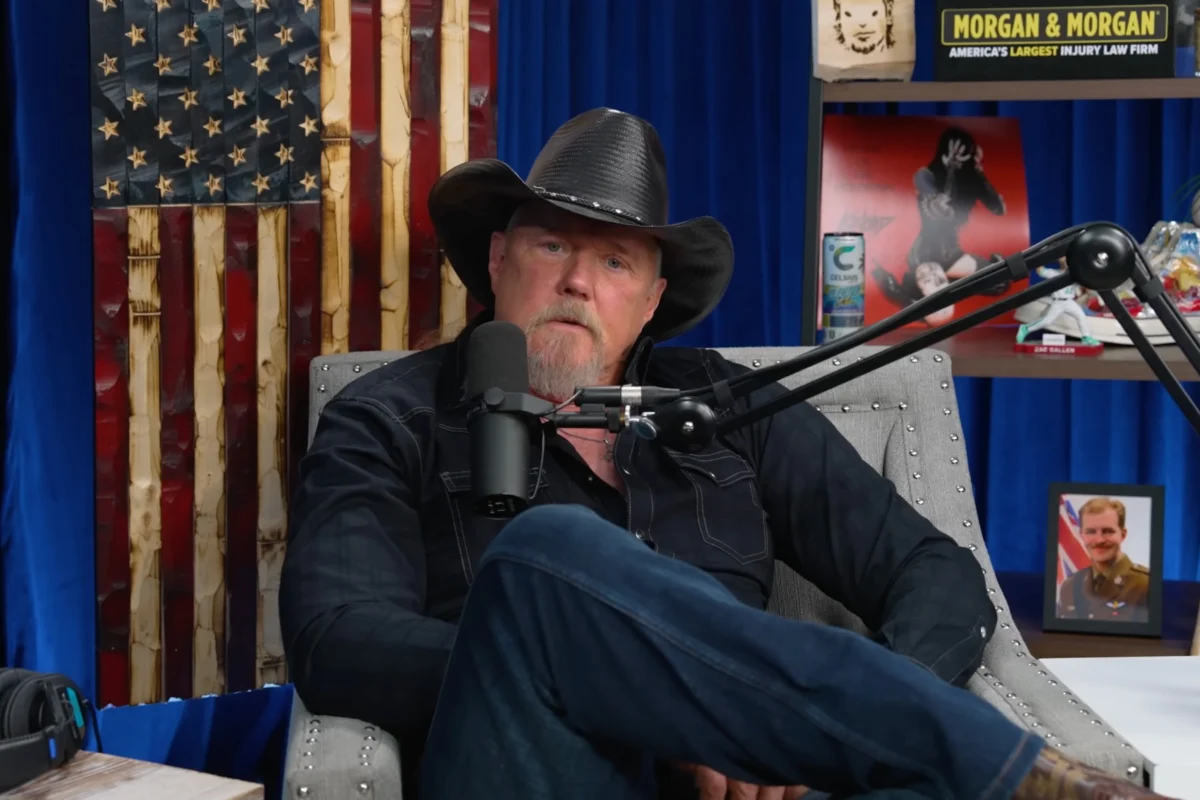
In a candid and revealing interview, country music legend Trace Adkins recently revisited a harrowing chapter from his past, discussing the near-fatal 1994 shooting incident involving his then-wife, Julie Curtis. Appearing on Theo Von’s popular podcast, This Past Weekend, Adkins offered a detailed, albeit characteristically understated, account of the event that saw him shot at point-blank range, necessitating emergency trauma and subsequent open-heart surgery. His reflections, marked by a surprising degree of humor and profound forgiveness, shed new light on a deeply personal trauma that predates his rise to mainstream stardom.
The Revelation on This Past Weekend
During the July 28 episode of This Past Weekend, host Theo Von engaged Adkins in a conversation that veered into the darker corners of the singer’s personal history. Adkins, known for his deep baritone voice and imposing stage presence, spoke with remarkable frankness about the 1994 incident. When prompted, he recounted the circumstances surrounding the shooting with a blend of gravity and gallows humor. "Yeah, that took it a little far, I thought," Adkins quipped, referring to the moment his ex-wife fired a handgun at him. He continued, "That was totally uncalled for. Just leave. Let’s just call it quits, we don’t have to go that far." This casual delivery belied the severity of the event, providing listeners with a unique glimpse into Adkins’ stoic resilience and his capacity to find levity even in the face of profound personal adversity. The podcast, known for its conversational and often raw approach to celebrity interviews, provided a platform for Adkins to share details that have largely remained in the periphery of his public narrative for decades.
A Deep Dive into the 1994 Incident: Chronology and Critical Details
The year 1994 found Trace Adkins, then in his early thirties, navigating the complexities of his personal life before achieving widespread recognition in the country music scene. He was married to Julie Curtis, his second wife, and the couple resided in an undisclosed location when a domestic dispute escalated dramatically. According to Adkins’ recounting, the argument reached a critical point where Curtis retrieved a firearm. Adkins expressed his belief that his wife had no prior experience handling a gun, stating, "I’d never seen her hold a gun, I’d never seen her shoot a gun. I knew she had one, but I’d never seen her use it." This detail suggests a possible lack of intent for lethal harm, portraying the act as potentially impulsive and born out of extreme emotional distress rather than premeditation.
Adkins elaborated on the moments leading up to the shooting, suggesting that Curtis may have viewed the weapon with a degree of unfamiliarity, perhaps even perceiving it "as a toy." He recalled her anger and her desire for him to leave, a request he evidently resisted. The fatal shot occurred at an extremely close range, with Curtis placing the firearm "under my left arm." The bullet then traveled straight through his body, exiting from his right arm. This trajectory indicates a path that traversed critical organs, particularly the thoracic cavity.
The Perilous Aftermath and Life-Saving Interventions
The immediate aftermath of the shooting was nothing short of harrowing. Adkins described the event as a "kill shot," emphasizing the lethal potential of the close-range projectile. Medical professionals later informed him that his survival was, ironically, due to the very proximity of the shooter. The lack of distance prevented the bullet from gaining sufficient velocity to "mushroom" or fragment upon impact, which often causes more extensive internal damage. This close-range dynamic, while initially terrifying, inadvertently became a critical factor in his survival.
Following the incident, Adkins required immediate emergency trauma surgery. Such procedures are typically performed to address life-threatening injuries, control bleeding, repair damaged organs, and stabilize the patient. Given the bullet’s path through his torso, it is highly probable that vital structures such as lungs, blood vessels, or even the heart were compromised.
The severity of the injury, particularly its proximity to the heart, became apparent months later. Adkins revealed that he underwent a follow-up open-heart surgery approximately six months after the initial shooting. This subsequent major operation was necessary to repair the septum of his heart, which had not healed properly in the interim. The cardiac septum is the wall dividing the heart’s chambers, and damage to it can lead to serious complications, including abnormal blood flow, heart failure, and increased risk of stroke. The need for open-heart surgery underscores the profound and lasting impact the bullet had on his cardiovascular system, highlighting the extraordinary nature of his recovery. This complex medical journey illustrates not only the physical trauma but also the extended period of recuperation and monitoring required for such grave injuries.
The Path to Forgiveness and Unwavering Resilience
Despite the life-altering nature of the event and the extensive medical interventions required, Trace Adkins harbors no ill will toward his ex-wife, Julie Curtis. When asked by Theo Von if he had forgiven her, Adkins unequivocally stated, "Oh, yeah." His rationale for this profound forgiveness stems from his conviction that she did not intend to inflict fatal harm. "I just always felt… she didn’t mean to do it, man. She thought I was indestructible," he explained. This perspective speaks volumes about Adkins’ character, showcasing a rare capacity for empathy and understanding even in the face of extreme personal betrayal and physical harm.
Crucially, Adkins chose not to press charges against Curtis following the incident. This decision, made in the immediate aftermath of a near-death experience, had significant legal and personal implications. In many jurisdictions, domestic violence involving firearms is treated with severe penalties, irrespective of the victim’s willingness to press charges, due to the inherent danger and societal implications. However, Adkins’ stance likely influenced the legal trajectory of the case, allowing him to move forward without the additional burden of protracted legal proceedings against the mother of his children (though Adkins shares no children with Curtis, he did have children from a previous marriage and would later have more). His belief that the act was an unintended consequence of emotional turmoil, rather than malicious intent, formed the bedrock of his forgiveness. This philosophy underscores a deeply personal approach to justice and healing, prioritizing emotional resolution over punitive measures.
Trace Adkins’ Enduring Career and Public Persona
The 1994 shooting occurred at a pivotal, albeit pre-fame, moment in Trace Adkins’ life. He signed his first major record deal with Capitol Nashville in 1995, just a year after the incident, releasing his debut album, Dreamin’ Out Loud, in 1996. This timeline indicates that Adkins navigated this profound personal trauma before stepping into the national spotlight, suggesting a resilience that was foundational to his burgeoning career.
Throughout his career, Adkins has cultivated an image as a strong, authentic, and often humorous country artist. His distinctive baritone voice, imposing stature, and traditional country sound have earned him a loyal fanbase. He has notched an impressive 20 entries on the Billboard Hot 100 chart and 37 songs on the Hot Country Songs chart, with four of his hits reaching No. 1, including classics like "(This Ain’t) No Thinkin’ Thing," "Ladies Love Country Boys," and "You’re Gonna Miss This."
His public persona often reflects a man who has faced adversity and emerged stronger. Beyond the 1994 shooting, Adkins has openly discussed other personal challenges, including battles with alcoholism, a house fire that destroyed his home in 2011, and a subsequent relapse and treatment for alcohol addiction in 2014. These experiences, coupled with his willingness to discuss them, have contributed to an image of an artist who is both relatable and formidable. The revelation of the shooting incident adds another layer to this narrative of overcoming adversity, portraying Adkins as a figure whose personal struggles have often been as impactful as his professional triumphs. His ability to joke about such a life-threatening event, even decades later, speaks to a remarkable coping mechanism and a profound acceptance of his past.
Marriages and Family Life: A Complex Tapestry
Trace Adkins’ personal life has been marked by several marriages, each contributing to the rich tapestry of his family. His first marriage was to Barbara Lewis, with whom he shares two daughters, Tarah and Sarah. This union laid the groundwork for his role as a father, a role he has embraced throughout his life.
His second marriage, to Julie Curtis, lasted from 1991 to 1994, culminating in the shooting incident that nearly claimed his life. Despite the dramatic end to their relationship, Adkins’ subsequent decision not to press charges and his public declaration of forgiveness reflect a nuanced understanding of their shared past.
Following his divorce from Curtis, Adkins married Rhonda Forlaw, a music industry consultant, in 1997. This was his longest marriage, spanning 17 years until their divorce in 2014. Together, they welcomed three more daughters: Mackenzie, Brianna, and Trinity. The dynamics of a long-term marriage and raising a family while navigating a demanding career in country music presented their own set of challenges, some of which Adkins has also publicly addressed.
In 2019, Adkins found love again and married Canadian actress Victoria Pratt. Their union represents a new chapter in his personal life, demonstrating his continued belief in partnership and companionship. Across his marriages, Adkins has become a father to five daughters, a central and enduring aspect of his identity that often features in his public discussions and lyrics. His complex marital history, punctuated by dramatic events and enduring commitments, offers a comprehensive view of the man behind the music.
Broader Implications: Celebrity Narratives and Human Resilience
Trace Adkins’ decision to openly discuss the 1994 shooting, nearly three decades after it occurred, highlights several broader implications concerning celebrity narratives, personal trauma, and human resilience. In an era where public figures often control their stories meticulously, Adkins’ unvarnished account on a popular podcast offers a departure from traditional, carefully managed media disclosures. It underscores a growing trend of celebrities using less formal platforms to share deeply personal experiences, fostering a more direct connection with their audience.
The story itself serves as a powerful testament to human resilience and the capacity for forgiveness. To survive such a severe injury and subsequent medical ordeal, and then to publicly forgive the perpetrator, offers a compelling narrative of overcoming adversity. It challenges conventional notions of justice and retribution, instead presenting a path of empathy and emotional healing.
Furthermore, Adkins’ story enriches the understanding of his artistic journey. Knowing the depth of personal struggle he endured before achieving fame provides a new lens through which to appreciate his music and his steadfast presence in country music. It reinforces the idea that an artist’s life experiences, however traumatic, often contribute to the authenticity and depth of their craft. The casual, almost humorous way he recounts the incident, while startling, also provides insight into his coping mechanisms and perhaps a philosophical outlook on life’s unpredictable turns. It reminds audiences that behind the public persona of any celebrity lies a complex individual with a unique history of trials and triumphs.
