

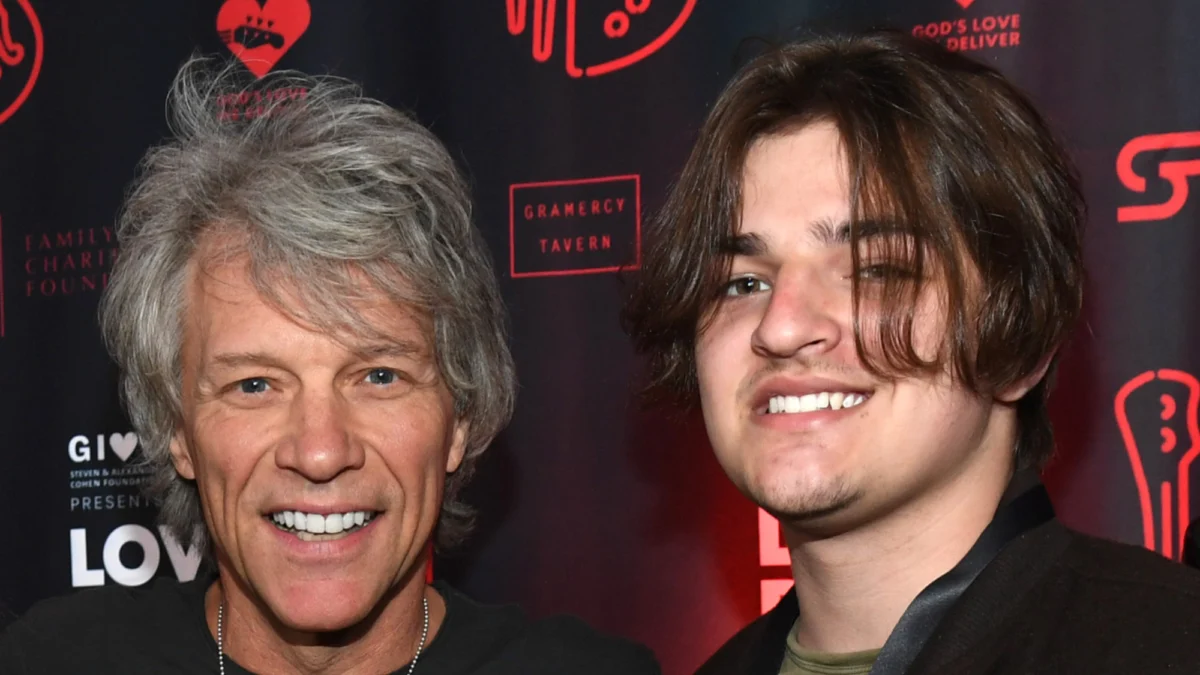
The pursuit of a career in the music industry is often perceived as a natural progression for the offspring of global rock icons, yet for Romeo Bongiovi, the youngest son of Jon Bon Jovi, the journey toward professional artistry was defined by a rigorous academic foundation and a period of significant self-doubt. At 22 years old, Bongiovi is stepping into the spotlight not merely as a legacy act, but as a classically trained musician and the co-founder of the indie-rock trio Lawn. Having recently graduated from the University of Miami’s prestigious Frost School of Music, Bongiovi is navigating the complexities of modern rock music while balancing the weight of his family’s monumental heritage.
The narrative of Bongiovi’s emergence as a serious contender in the music scene is rooted in a pivotal realization that occurred during his mid-teens. In a recent comprehensive interview with Dory Jackson, Bongiovi recounted the specific moment he committed to his craft. While many children of celebrities find themselves thrust into the industry through social connections or reality television, Bongiovi sought a more traditional, academic route. This decision was solidified during a visit to the University of Miami when he was 16 years old.
Reflecting on that period, Bongiovi noted that touring the campus and witnessing the environment of the Frost School of Music served as the final confirmation he needed to pursue music professionally. He described the experience as the "nail on the coffin," a moment of clarity where he finally felt "at home." This sense of belonging was essential for a young man who, despite his pedigree, initially viewed the prospect of formal music education with a degree of trepidation and skepticism.
The Academic Foundation and the Frost School of Music
The Frost School of Music at the University of Miami is widely regarded as one of the most demanding and prestigious music institutions in the United States. Its curriculum is known for blending traditional classical and jazz training with contemporary music technology and business. For Bongiovi, the transition from a fan and casual songwriter to a formal student of music was an intimidating prospect. He admitted that the initial stages of his collegiate career were "scary," primarily because he lacked formal training in composition.
Despite his lifelong exposure to the inner workings of the music industry through his father’s career, Romeo Bongiovi entered university with the humility of a novice. He acknowledged that while he possessed a passion for performing and a love for the songwriting process, the technical aspects of music theory and arrangement were foreign to him. This admission highlights a departure from the "rock star" archetype, favoring instead a path of technical mastery and intellectual engagement with the medium.
During his four years at the University of Miami, which culminated in his graduation in May 2024, Bongiovi immersed himself in the technicalities of the craft. It was within this environment that he met his future collaborators, Daniel Coppola and Cliff Dobson. The formation of their band, Lawn, was a byproduct of the collaborative atmosphere of the Frost School, where students are encouraged to experiment across genres and form ensembles that challenge traditional boundaries.
Overcoming the Poser Dilemma and Internal Conflict
One of the most candid aspects of Bongiovi’s recent reflections is his discussion of the internal conflict he faced regarding the "authenticity" of studying music. In the world of rock and roll, there is often a romanticized notion that true talent is raw, unrefined, and born from the streets rather than the classroom. Bongiovi was not immune to these cultural tropes.
He recalled that during his middle school years, he harbored a prejudice against formal music education, believing that attending a college for music would make him a "total poser." This perspective is common among young aspiring musicians who equate academic study with a lack of "soul" or "street credibility." However, Bongiovi’s maturation process involved dismantling these adolescent preconceptions. He joked that his 12-year-old self would likely view his current path with disdain, but he dismissed those earlier views as the byproduct of youthful ignorance.
By embracing the academic route, Bongiovi has positioned himself as part of a new generation of musicians who value the intersection of theory and practice. This approach allows for a level of versatility and longevity that is often missing in artists who rely solely on image or heritage. For Bongiovi, the decision to study was not about seeking a shortcut to fame, but about earning his place in the industry through hard work and skill acquisition.
The Emergence of Lawn and the Debut of House Party Hero
The culmination of Bongiovi’s academic and creative efforts is the band Lawn. Comprised of Bongiovi, Coppola, and Dobson, the group represents a modern take on the indie-rock genre. Their debut EP, titled House Party Hero, was released in April 2025, marking the official start of Bongiovi’s professional discography.
The band’s sound and branding reflect a conscious effort to distance themselves from the polished, stadium-rock aesthetic associated with the senior Bon Jovi. The name "Lawn" itself suggests a more grounded, perhaps even mundane or suburban, sensibility that aligns with current trends in the indie and "slacker rock" scenes. This stylistic choice was a point of contention between Romeo and his father, Jon Bon Jovi, illustrating the generational shift in how rock music is packaged and consumed in the 2020s.
Jon Bon Jovi’s Perspective on the New Generation of Rock
Jon Bon Jovi has been a vocal supporter of his son’s endeavors, though he has not been shy about his initial reservations regarding the band’s branding. During an appearance on the Artist Friendly with Joel Madden podcast, the elder Bon Jovi revealed that he initially tried to convince Romeo to change the name of the band.
Jon Bon Jovi’s skepticism was rooted in a different era of marketing, where band names were often grander or more evocative of a specific persona. However, Romeo defended his choice by citing contemporary successful acts like Mannequin Pussy, Beaches, and Geese—bands that utilize unconventional, often non-sequitur names to carve out a unique identity in a crowded digital marketplace.
Ultimately, Jon Bon Jovi conceded, expressing his admiration for the quality of the music produced by his son and his bandmates. He noted that he was "so pleased" to see young men in their early twenties championing rock music in a way that feels fresh and vital. For the senior Bon Jovi, the success of Lawn serves as a validation that the genre he helped define is not only surviving but evolving through the hands of a new generation.
Chronology of Romeo Bongiovi’s Musical Development
To understand the trajectory of Romeo Bongiovi’s career, it is helpful to look at the timeline of his development:
- 2018 (Age 16): Bongiovi tours the University of Miami and decides to pursue music professionally, describing the Frost School of Music as the place where he felt "at home."
- 2020: Bongiovi enrolls in the Frost School of Music at the University of Miami, beginning a four-year journey into composition and performance.
- 2020–2023: During his time at university, he meets Daniel Coppola and Cliff Dobson, eventually forming the band Lawn.
- May 2024: Bongiovi graduates from the Frost School of Music, officially transitioning from student to professional musician.
- Early 2025: Jon Bon Jovi discusses his son’s band on the Artist Friendly podcast, highlighting the generational differences in band naming and the vitality of modern rock.
- April 2025: Lawn releases their debut EP, House Party Hero, marking Bongiovi’s formal entry into the commercial music market.
Broader Implications and the Legacy of Rock Dynasties
Romeo Bongiovi’s entry into the music industry occurs at a time when the conversation around "nepo babies"—the children of successful celebrities—is at its peak. However, Bongiovi’s path suggests a strategy aimed at mitigating the criticisms associated with his background. By spending four years in an intensive music program and forming a band that operates in a genre distinct from his father’s, he is establishing an independent creative identity.
This trend is observable in other musical dynasties as well. Artists like Jakob Dylan (son of Bob Dylan) and Wolfgang Van Halen (son of Eddie Van Halen) have navigated similar paths, often facing immense pressure to replicate their parents’ success while striving for individual recognition. Romeo’s decision to keep his surname "Bongiovi"—the original family name—while his father uses the stage name "Bon Jovi," also serves as a subtle distinction between his personal identity and his father’s global brand.
The success of Lawn and the reception of House Party Hero will likely be a bellwether for how the industry treats legacy artists who prioritize technical education over immediate celebrity. By grounding his career in the fundamentals of music theory and collaborative performance, Romeo Bongiovi is not just following in his father’s footsteps; he is charting a new course that respects the past while embracing the aesthetic shifts of the future.
As the music industry continues to grapple with the rise of AI and the fragmentation of traditional media, the emergence of young, classically trained rockers like Bongiovi provides a glimmer of hope for the endurance of live, human-centric performance. With the support of a rock legend and the credentials of a top-tier music school, Romeo Bongiovi is well-equipped to define his own legacy in the years to come.
