

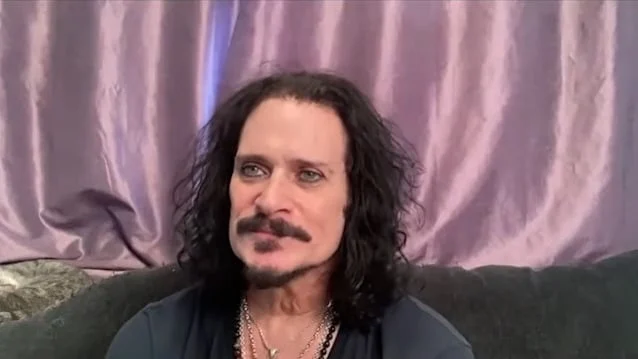
In a candid and wide-ranging interview with Anthony Bryant of The Hair Metal Guru, Steven Sweet, the veteran drummer for the multi-platinum rock band WARRANT, has shed light on a series of significant health challenges he has navigated in recent years. Sweet’s revelations, transcribed by BLABBERMOUTH.NET, offer a stark glimpse into the personal toll that demanding careers and the inevitable march of time can take, even on those who project an image of unyielding strength. The discussion primarily centered on a prostate cancer scare in 2018, the subsequent surgical intervention, and a constellation of other physical ailments that continue to test his resilience.
A Battle with Prostate Cancer and Its Profound Aftermath
The most alarming revelation from Sweet concerned a diagnosis of prostate cancer in 2018. He described the diagnosis as "moderately progressive," a term that, while not indicating the most aggressive form of the disease, still necessitated urgent action. "The cancer issue, that’s gone. It’s gone," Sweet affirmed, providing a measure of relief to listeners. He elaborated on the decision-making process that followed the diagnosis, explaining that the cancer was found to be "encapsulated" – confined solely to the prostate and not having spread to other parts of his body. This crucial detail significantly influenced his treatment path.
"So, they determined that the cancer was encapsulated. It was still just in the prostate – it hadn’t spread beyond, so I opted to have it surgically removed," Sweet stated. This decision led to a prostatectomy, a procedure that, as Sweet candidly explained, carries profound and often understated implications for men.
The Unforeseen Consequences of Prostatectomy
Sweet’s description of life after prostate removal was particularly poignant, highlighting the often-unspoken physical and psychological adjustments required. He admitted that the full scope of what prostate removal entails was not entirely grasped until after the surgery. "When you have your prostate removed as a guy, not that nobody tells you, but it doesn’t really sink in to what that affects in the long run and what that means to you as a guy," he confessed.
The primary concerns, as articulated by Sweet, revolved around two critical functions: erectile function and urinary control. The prostate gland is intricately intertwined with a complex network of nerves that are essential for erectile function. During surgical removal, preserving these delicate nerves is paramount but also exceptionally challenging. "Leaving the nerves intact is the hardest thing to do, so that’s what controls your function, your erectile function," Sweet explained. He described the outcome as a "hit-or-miss situation," where nerve damage can lead to interrupted function.
Beyond erectile function, Sweet also illuminated the prostate’s role as a physiological valve, crucial for urinary control. "What they also don’t tell you, and you can’t understand it when they do, is that the prostate is a valve, and it controls how easily you pee or you don’t pee and how you hold it in or you don’t hold it in," he stated. The absence of this natural valve necessitates a learning process, requiring the use of different muscles to achieve continence. Sweet characterized this adjustment as "the strangest thing."
He also touched upon the alteration in the experience of orgasm. "When you have an orgasm, it doesn’t involve any product coming out. There’s no muss, no fuss. That’s the good thing. You can just shoot joy. It doesn’t make a mess. There’s nothing. But it does feel different without that warm love flowing through your body. It does feel different." This description underscores the profound physiological changes that impact even the most intimate aspects of life following such a procedure.
A Cascade of Surgeries and Lingering Ailments
The prostate cancer surgery in 2018 was not an isolated event in Sweet’s recent medical history. He revealed that a mere two weeks after his prostatectomy, he underwent another significant surgery: a spinal fusion. This proximity of major procedures speaks to a broader pattern of addressing health issues head-on. "I did have another spinal fusion, so I’d be, like, ‘Get it done, get it done one after the other,’" he said, expressing a desire to tackle multiple issues concurrently. He noted that the medical team advised against back-to-back surgeries due to concerns about anesthesia and recovery, forcing a staggered approach.
Sweet indicated that these were not the only health challenges he has faced since 2018. "I’ve had more [health issues] since 2018, but not cancer – thankfully," he clarified, emphasizing his gratitude for remaining cancer-free in other areas.
The Ongoing Struggle with Physical Degeneration
When asked about his current health status, Sweet offered a nuanced response, acknowledging both his outward appearance of well-being and the underlying physical struggles. "I’m pretty good, yeah. I like to put on a good façade. I’m crumbling inside in other ways," he admitted.
His ongoing ailments include significant shoulder issues and severe arthritis in his hands. These are chronic conditions that impact his daily life and his ability to perform. He also revealed that he had a hip replacement two years prior to the interview. The list of physical challenges continues to grow: "I ruptured a bicep tendon, which means my bicep is half hanging on my arm now, so it just doesn’t end."
The Unwavering Determination to Keep Playing
Despite this litany of physical setbacks, Sweet expressed an unwavering commitment to his passion for drumming. His perspective on continuing to play, even with significant injuries, is remarkably stoic. "I’ll keep going as long as I can keep going," he declared. "I mean, I can work through pain issues. It used to bother me more than they do now."
The torn bicep tendon presents a particularly complex challenge. Sweet explained that the injury is "inoperable" because the tendon has torn from its attachment near the shoulder joint. This detachment is believed to be a consequence of his severely compromised shoulder, where bone friction against the tendon led to fraying and eventual rupture. The anecdote of closing a dishwasher drawer leading to the complete tear vividly illustrates the fragility of the injured tendon.
However, even this severe injury has not entirely sidelined him. "But that doesn’t affect my playing, which is an amazing thing to hear from your doctor," he said, drawing a parallel to legendary quarterback John Elway, who famously won two Super Bowls with a torn bicep. This comparison highlights Sweet’s determination to draw strength from others who have overcome significant physical adversity to continue their careers.
Sweet’s outlook on his drumming future is one of enduring dedication. "I will go as long as I can, and I foresee that being till forever. I’m just gonna keep going," he stated with resolute conviction.
Understanding Prostate Cancer: A Broader Perspective
Steven Sweet’s personal narrative brings to the forefront the significant health challenges faced by men, particularly concerning prostate cancer. Prostate cancer is a widespread malignancy, ranking as one of the most common cancers diagnosed in men and the second leading cause of cancer-related deaths in the male population. Despite its prevalence, it is also recognized as one of the most treatable forms of cancer, especially when detected early.
Statistics from health organizations consistently indicate that approximately one in seven men will be diagnosed with prostate cancer at some point in their lifetime. This statistic underscores the importance of regular screenings and open discussions about men’s health. The treatability of prostate cancer, as exemplified by Sweet’s successful surgical intervention, relies heavily on early detection and prompt medical intervention. The "moderately progressive" nature of his cancer, coupled with its encapsulated state, allowed for a curative surgical approach, avoiding the need for more aggressive treatments like radiation or chemotherapy, which often carry more severe side effects.
The implications of prostate cancer treatment, as Sweet’s experience illustrates, extend beyond the immediate eradication of the disease. The surgical removal of the prostate gland, while life-saving, can introduce a new set of physiological challenges that require adaptation and can impact a man’s quality of life. Awareness of these potential long-term effects is crucial for both patients and healthcare providers, enabling comprehensive pre-operative counseling and post-operative support.
WARRANT’s Enduring Legacy and Musical Output
Steven Sweet’s health journey unfolds against the backdrop of his long-standing career with WARRANT, a band that achieved massive success in the late 1980s and early 1990s with their signature blend of hard rock and power ballads. The band’s most recent studio album, "Louder Harder Faster," was released in May 2017 by Frontiers Music Srl. This album marked a continued output from the band, demonstrating their enduring commitment to creating new music.
The resilience of musicians like Steven Sweet, who continue to perform and create despite significant physical challenges, is a testament to their passion for their craft and their connection with their fanbase. While the physical demands of drumming are immense, Sweet’s dedication suggests that the creative drive and the desire to connect with audiences through music can often transcend physical limitations. His openness about his health struggles serves not only as a personal reflection but also as an inspiration and a source of valuable information for others facing similar health battles.
